

Eating More Ultraprocessed Foods May Shorten Cancer Survivors’ Lives
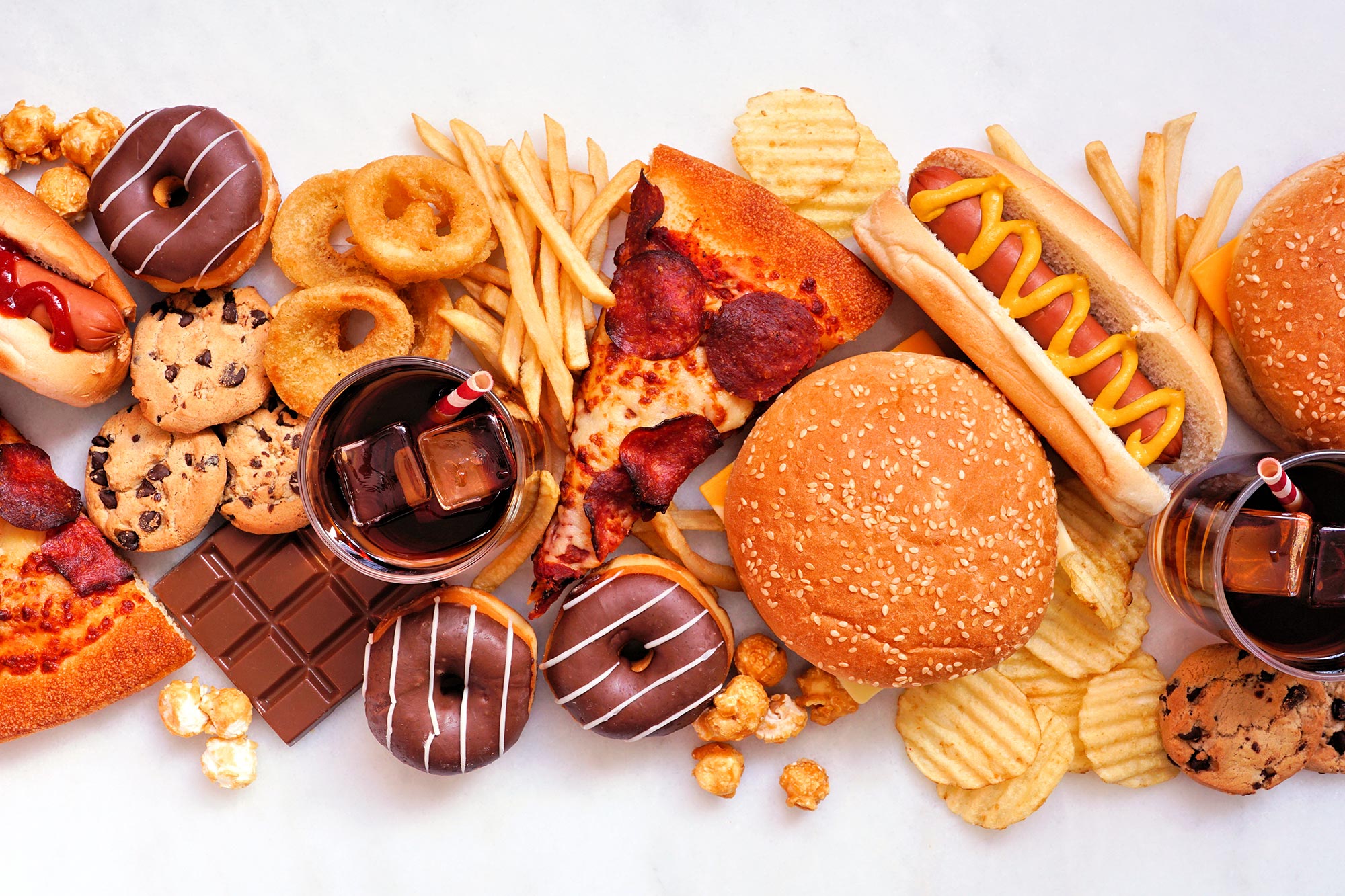
Cancer survivors who consumed more ultraprocessed foods had significantly higher risks of death from any cause and from cancer over long-term follow-up.
Cancer survivors who reported eating larger amounts of ultraprocessed foods were found to have a higher risk of dying from both any cause and from cancer itself, according to research published in Cancer Epidemiology, Biomarkers & Prevention, a journal of the American Association for Cancer Research (AACR).
Ultraprocessed foods are widely considered unhealthy because they tend to contain fewer essential nutrients such as vitamins, minerals, and fiber. Industrial production methods often introduce additives, artificial flavorings, preservatives, emulsifiers, and high levels of added sugars and unhealthy fats that the human body is not well adapted to process, explained lead author Marialaura Bonaccio, PhD, of the Research Unit of Epidemiology and Prevention at IRCCS Neuromed in Pozzilli, Italy.
As these foods become more common in diets around the world, Bonaccio noted that researchers are increasingly interested in whether reducing their consumption could help cancer survivors live longer and maintain better health.
“What people eat after a cancer diagnosis may influence survival, but most research in this population has focused only on nutrients, not how processed the food is,” Bonaccio said. “The substances involved in the industrial processing of foods can interfere with metabolic processes, disrupt gut microbiota, and promote inflammation. As a result, even when an ultraprocessed food has a similar calorie content and nutritional composition on paper compared to a minimally processed or ‘natural’ food, it could still have a more harmful effect on the body.”
Long-term cohort tracks cancer survivors
The findings come from the Moli-sani Study, a large prospective cohort investigation that followed 24,325 adults living in the Molise region of Southern Italy. Participants were enrolled between March 2005 and December 2022 and were at least 35 years old at the start of the study. Within this population, researchers identified 802 individuals who were already cancer survivors at baseline (476 women and 326 men).
Each participant provided detailed dietary information using the European Prospective Investigation into Cancer and Nutrition (EPIC) food frequency questionnaire. Researchers then used the NOVA classification system to determine whether foods fell into the ultraprocessed category. NOVA divides foods into four groups based on how much industrial processing they undergo and the purpose of that processing.

The investigators calculated each participant’s intake of ultraprocessed foods in two different ways. The first method used a weight ratio, which compared the total daily weight of ultraprocessed foods to the total weight of all foods and beverages consumed. The second method used an energy ratio, which compared calories from ultraprocessed foods to total daily calorie intake. Participants were divided into three groups according to the weight ratio of ultraprocessed foods in their diets. Researchers also accounted for several additional factors that could influence health outcomes, including demographic characteristics, smoking status, body mass index, leisure-time physical activity, medical history, cancer type, and overall diet quality based on the Mediterranean Diet Score.
Higher intake tied to increased mortality
Over a median follow-up period of 14.6 years, 281 deaths occurred among the 802 cancer survivors. Participants in the highest third of ultraprocessed food consumption by weight ratio experienced a 48% higher risk of death from any cause and a 57% higher risk of death from cancer compared with those in the lowest third. When researchers evaluated the energy ratio of ultraprocessed foods, they observed a similar relationship with cancer mortality, although the link with deaths from all causes was not as clear.
“Some foods may weigh a lot but contribute few calories, or vice versa, which is why the results can differ depending on the measure used,” Bonaccio explained. “But the fact that the association between ultraprocessed foods and all-cause death persisted even after adjusting for overall diet quality suggests that the negative health effects are not explained solely by poor nutrient profiles, but that the level and nature of industrial food processing itself play an independent role in influencing long-term health outcomes.”
Inflammation may help explain the risk
To better understand possible biological pathways behind these findings, the research team also examined a range of inflammatory, metabolic, and cardiovascular biomarkers using samples and health data collected from participants. When the analysis accounted for inflammatory scores and resting heart rate, the strength of the relationship between ultraprocessed food intake and all-cause mortality decreased by 37.3%.
“These results suggest that increased inflammation and elevated resting heart rate may partially explain the link between higher consumption of ultraprocessed foods and increased mortality, and help to clarify how food processing itself could contribute to worse outcomes among cancer survivors,” Bonaccio said.
Dietary patterns matter more than single foods
The researchers also explored whether the nutritional composition of different ultraprocessed foods might influence the results. They organized foods into seven ultraprocessed categories: artificially and sugar-sweetened beverages, artificial sweeteners, and spirits; dairy and cheese products; processed meat; salty snacks and savory foods; fatty spreads and sauces; starchy foods; and sugary foods and sweets.
Some of these categories showed associations with higher mortality, while others did not display a consistent pattern. Bonaccio emphasized that interpreting individual food types within the ultraprocessed category is difficult. Instead, the broader pattern of dietary habits appears to be more meaningful than any single product.
“The main message for the public is that overall consumption of ultraprocessed foods matters far more than any individual item,” Bonaccio said. “Focusing on the diet as a whole and reducing ultraprocessed foods overall and shifting consumption toward fresh, minimally processed, home-cooked foods is the most meaningful and beneficial approach for health. A practical way to do this is by checking labels: Foods with more than five ingredients, or even only one food additive, are likely to be ultraprocessed.”
Study limitations temper conclusions
The researchers noted several limitations in their work. Because the study was observational, it cannot prove that ultraprocessed foods directly cause higher mortality. Dietary information was self-reported, which means some participants may have misreported what they ate.
Eating habits may also have changed during the follow-up period. In addition, the study may be affected by survival bias because diet was assessed an average of 8.4 years after cancer diagnosis. The relatively small number of deaths limits the statistical power of the analysis, and the dataset did not include detailed information about cancer stage at diagnosis.
Reference: “Ultra-processed Food and Mortality among Long-Term Cancer Survivors from the Moli-Sani Study: Prospective Findings and Analysis of Biological Pathways” by Marialaura Bonaccio, Augusto Di Castelnuovo, Simona Costanzo, Emilia Ruggiero, Simona Esposito, Teresa Panzera, Giuseppe Di Costanzo, Amalia De Curtis, Sara Magnacca, Chiara Cerletti, Maria Benedetta Donati, Giovanni de Gaetano, Licia Iacoviello and for the Moli-sani Study Group, 11 February 2026, Cancer Epidemiology, Biomarkers & Prevention.
DOI: 10.1158/1055-9965.EPI-25-0808
This study was funded by the Fondazione AIRC per la Ricerca sul Cancro ETS. Bonaccio reports no conflicts of interest.
Never miss a breakthrough: Join the SciTechDaily newsletter.
Follow us on Google and Google News.
Source link
