

Everyone Thinks Iran ‘Closed’ the Strait of Hormuz — What It Actually Did Is Worse
The Strait of Hormuz Energy Hostage Crisis Explained
On March 31, Donald Trump said the war with Iran could end in “two weeks, maybe three,” adding that the United States might not need a formal agreement to declare victory.
His stated objective is now much narrower, though it reflects comments he has made since the 1980s: degrade Iran to the point that it cannot build a nuclear weapon or reconstruct the conventional military shield that would allow it to restart the program.
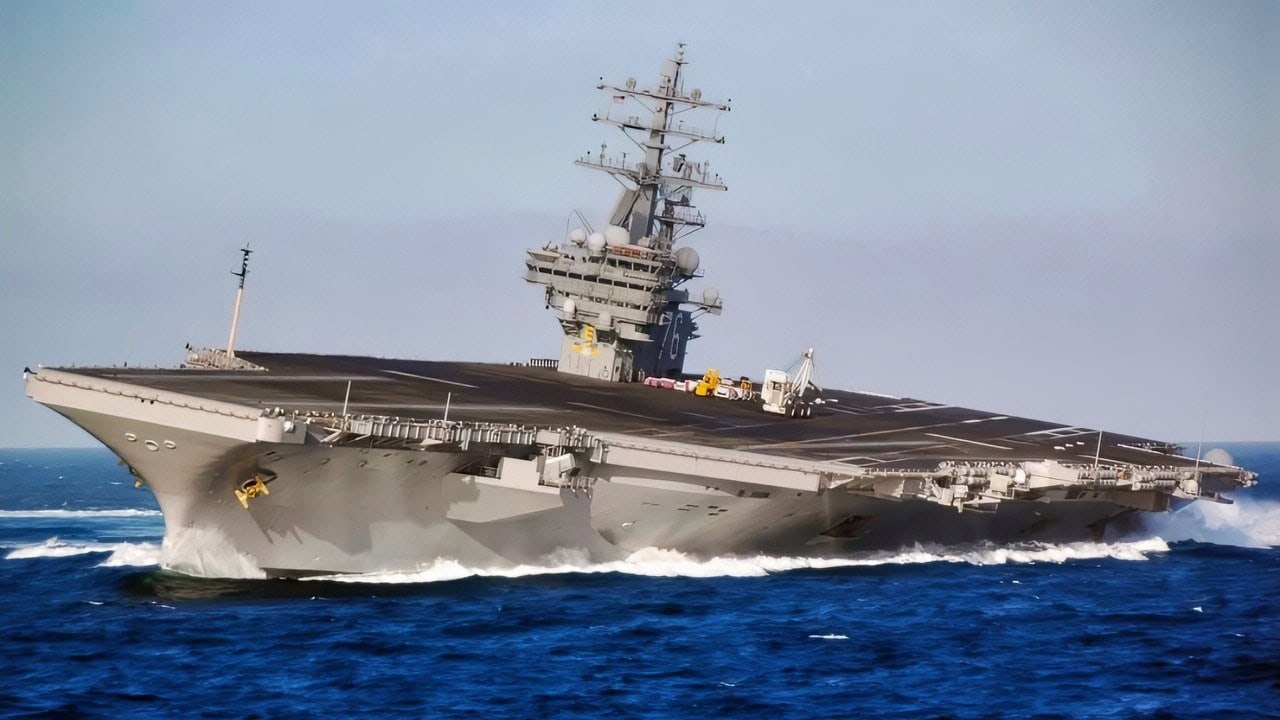
The USS George H.W. Bush Carrier Strike Group sails in formation during a strait transit exercise in the Atlantic Ocean, Feb. 8, 2026. The George H.W. Bush Carrier Strike Group is at sea as an integrated warfighting team. Composite Training Unit Exercise (COMPTUEX) is the Joint Force’s most complex integrated training event and prepares naval task forces for sustained high-end Joint and combined combat. Integrated naval training provides combatant commanders and America’s civilian leaders highly capable forces that deter adversaries, underpin American security and economic prosperity, and reassure Allies and partners. (U.S. Navy photo by Mass Communication Specialist 3rd Class John R. Farren)
That definition of victory does not include reopening the Strait of Hormuz. The United States can plausibly argue that it does not need the strait as much as other economies do, and, in fact, Trump has done so. But the global system still does, and if Washington leaves without reopening it, the burden shifts immediately to Europe, Asia, and other global players.
Why Trump Thinks America Can Walk Away
The argument that the United States can tolerate a closed Hormuz is generally true. The U.S. now imports relatively little oil directly through the Strait compared to previous decades.
Domestic production and North American supply chains have reduced the United States’ direct exposure, allowing the White House to argue that disruptions in the Gulf are not an existential threat to U.S. energy security in the way they once were. But that logic only holds at the level of direct supply.
It does not hold in terms of price.
The Strait of Hormuz still carries roughly 20% of the world’s oil and liquefied natural gas. Even if the U.S. is not importing that oil directly, global benchmark pricing still influences American gasoline and diesel markets.
As the U.S.-Israeli campaign continues, oil prices have risen, with Brent crude increasing by more than 40-50% in March alone, and analysts warn that prices could reach $150-$200 per barrel if the disruption persists. U.S. gasoline prices have already climbed above $4 per gallon for the first time since 2022.
Obviously, the U.S. is already feeling pressure – but the White House has argued that the economic impact remains manageable. The evidence, however, points to the fact that if the Strait of Hormuz remains closed and vessels waiting to pass continue to be held hostage, prices will rise.
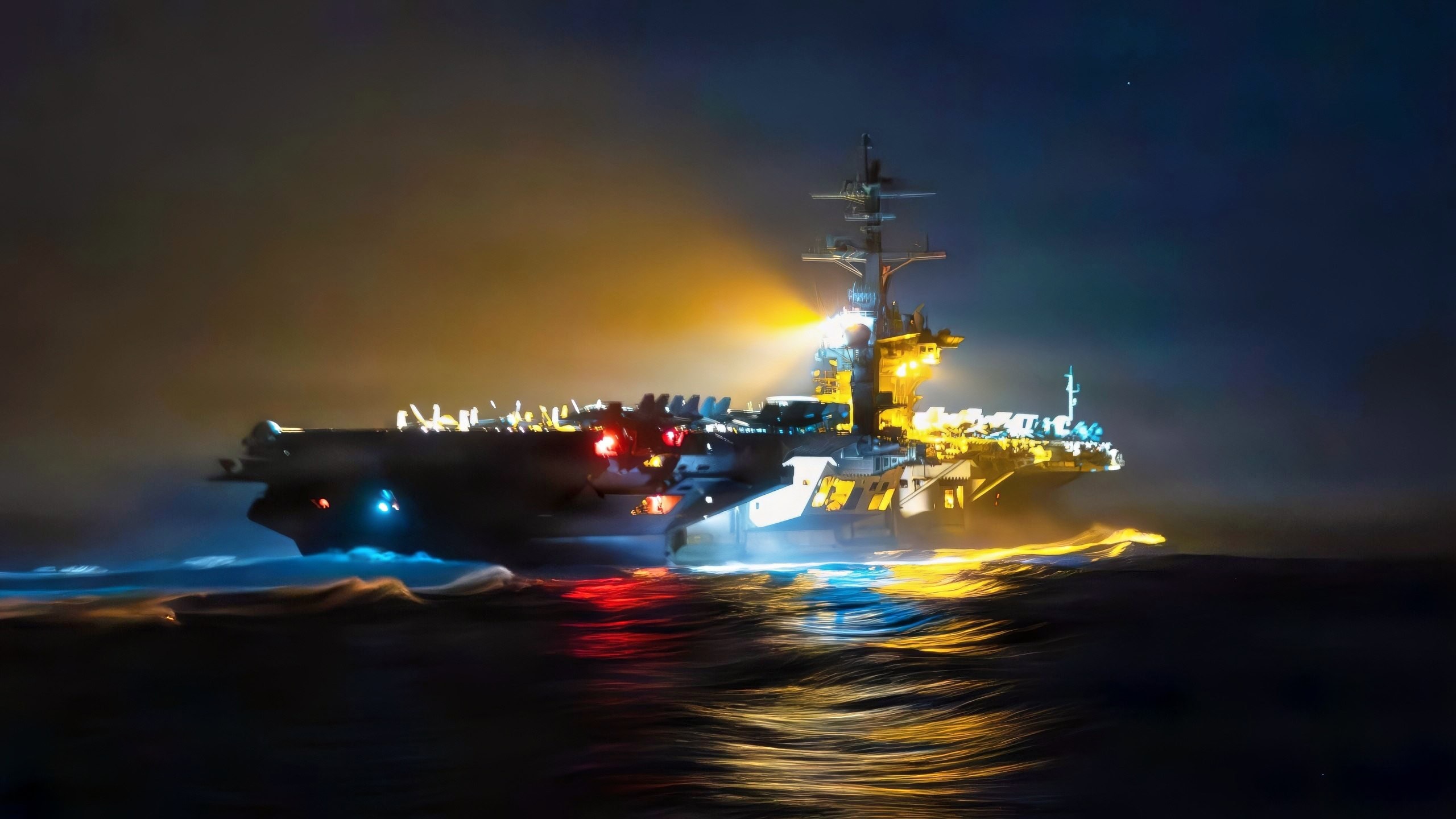
Nimitz-class aircraft carrier USS Abraham Lincoln (CVN 72) departs following a replenishment-at-sea with fleet replenishment oiler USNS Henry J. Kaiser (T-AO-187) during Operation Epic Fury, March 18, 2026. (U.S. Navy photo)
Why Europe Cannot Ignore Hormuz
The U.S. may be able to tolerate a partial disruption, but Europe cannot afford to ignore it. European countries may be less directly dependent on Hormuz than Asian importers, but their economies are deeply exposed to the global price shock that follows disruption. Diesel and jet fuel are tied to global energy markets, and supply shocks are already creating cost pressures – and European governments are reacting.
Since President Donald Trump warned that he may withdraw from the Strait without securing it, the British government announced plans to establish closer economic ties with Europe.
In early March, the British government had already confirmed it was working with allies to support shipping through the Strait of Hormuz, and while Prime Minister Keir Starmer insists Iran is not his country’s war, those efforts are now expected to expand.
Europe receives only around 3.8% of its oil directly via Hormuz, but it still sources roughly 20% of its oil imports and 5% of its gas from the Gulf region, tying it to that supply chain. What’s more, 57% of Europe’s total energy is imported, with oil and gas making up over 90% of those imports. That means price shocks will translate directly into inflation and industrial cost spikes. That could all mean reduced growth in the medium- to long-term, too.
If the Strait remains closed, Europe faces higher energy prices and industrial contraction, even without direct supply cuts, forcing it to act alongside naval and market partners to reopen the route.
For decades, securing maritime chokepoints has been treated as a U.S.-led burden. If Washington decides that victory in Iran doesn’t include reopening the strait, Europe is faced with a choice between accepting prolonged disruption or assuming a role in preventing Iran from blocking access.
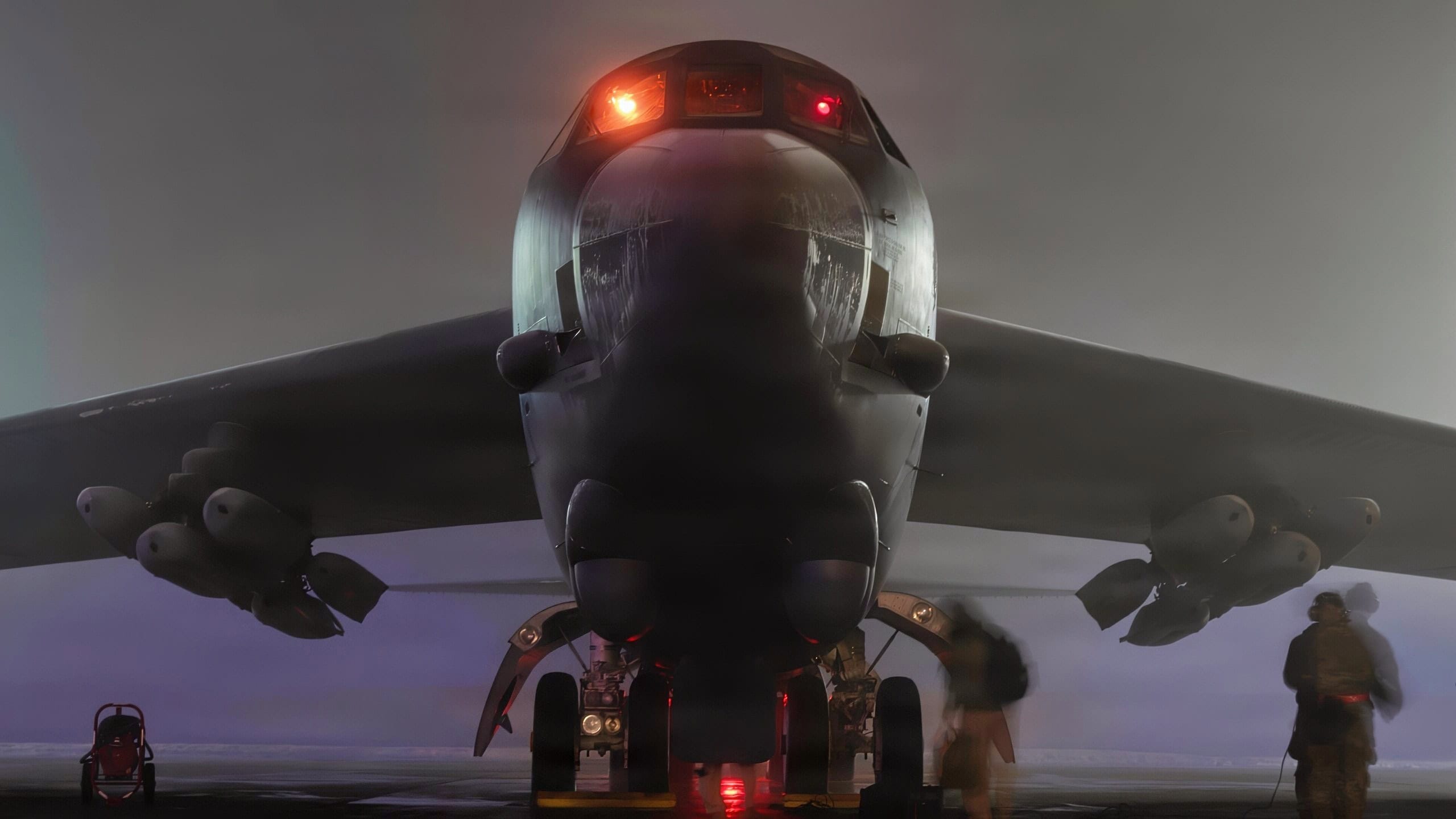
Aircrew members board a B-52H Stratofortress prior to taking off in support of Operation Epic Fury, March 4, 2026. (U.S. Air Force photo)
How Iran Turned Hormuz Into A Controlled Chokepoint
While Iranian officials have repeatedly claimed to have “closed” Hormuz over the last month, what the regime has really done is make it unstable and expensive for selective vessels to pass.
This has been achieved through a combination of laying naval mines, which create persistent uncertainty even when they’re not detonated, deploying fast attack boat swarms to overwhelm large vessels, and using missiles and drones to target ships and energy infrastructure.
There has also been selective enforcement, with some vessels allowed to pass while others have been threatened. Reports have described how vessels waiting to transit the waterway have been forced to pay fees in cryptocurrency and Chinese currency before being escorted through.
In some cases, payments have reportedly reached up to $2 million per vessel.
That system is legally shaky and very much contested. International maritime law generally protects transit through straits used for global navigation, but Iran disputes that framework. The result is effectively a managed chokepoint – or a hostage situation, as some have put it – where passage really depends on how much risk a vessel or country is willing to accept or how much it is willing to pay.
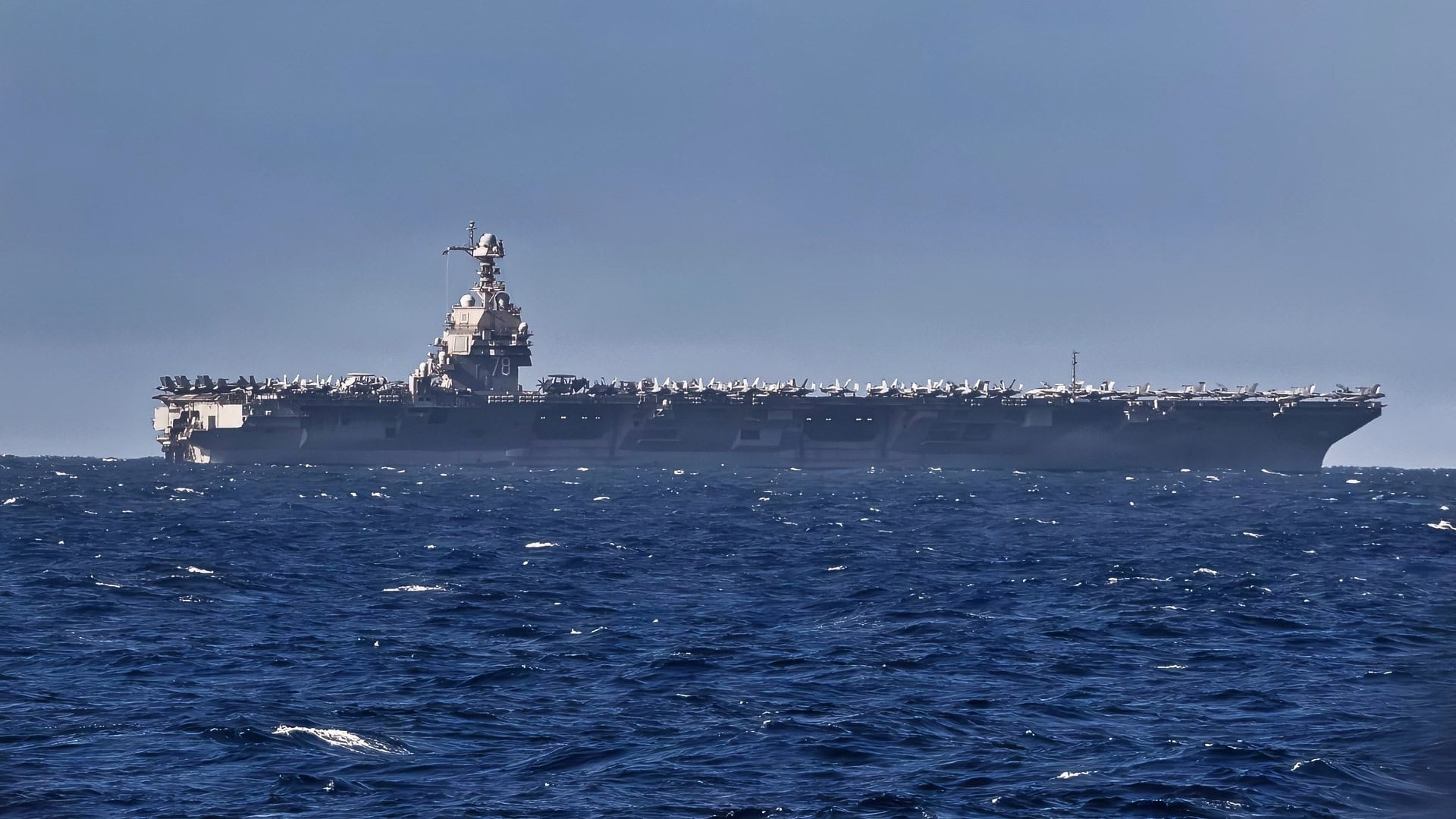
The world’s largest aircraft carrier, USS Gerald R. Ford, as seen from Arleigh Burke-class guided missile destroyer USS Bainbridge (DDG 96) before a replenishment-at-sea with Henry J. Kaiser-class fleet replenishment oiler USNS Kanawha (T-AO 196) while underway during Operation Epic Fury, Mar. 8, 2026. (U.S. Navy Photo)
Why Reopening the Strait Could Take Months
Even if the United States ultimately decides to reopen Hormuz, the timeline is not likely to be short. The central problem here is the mines, which do not need to be numerous to be effective. Once deployed, every shipping lane must be systematically cleared, starting with the detection of mines using sonar and remote systems.
The mines must then be classified and neutralized, and routes must be re-cleared to confirm that they are safe. Throughout that entire process, the mine-clearing forces must be protected by military assets to ensure that they are not struck by Iranian missiles.
This is slow and methodical work, and it is extremely dangerous. Mine countermeasure vessels and helicopters deliberately operate at low speeds and are therefore highly vulnerable.
The U.S. has the ability to clear mines in the Strait of Hormuz, but some would argue that capability is not as robust as it should be.
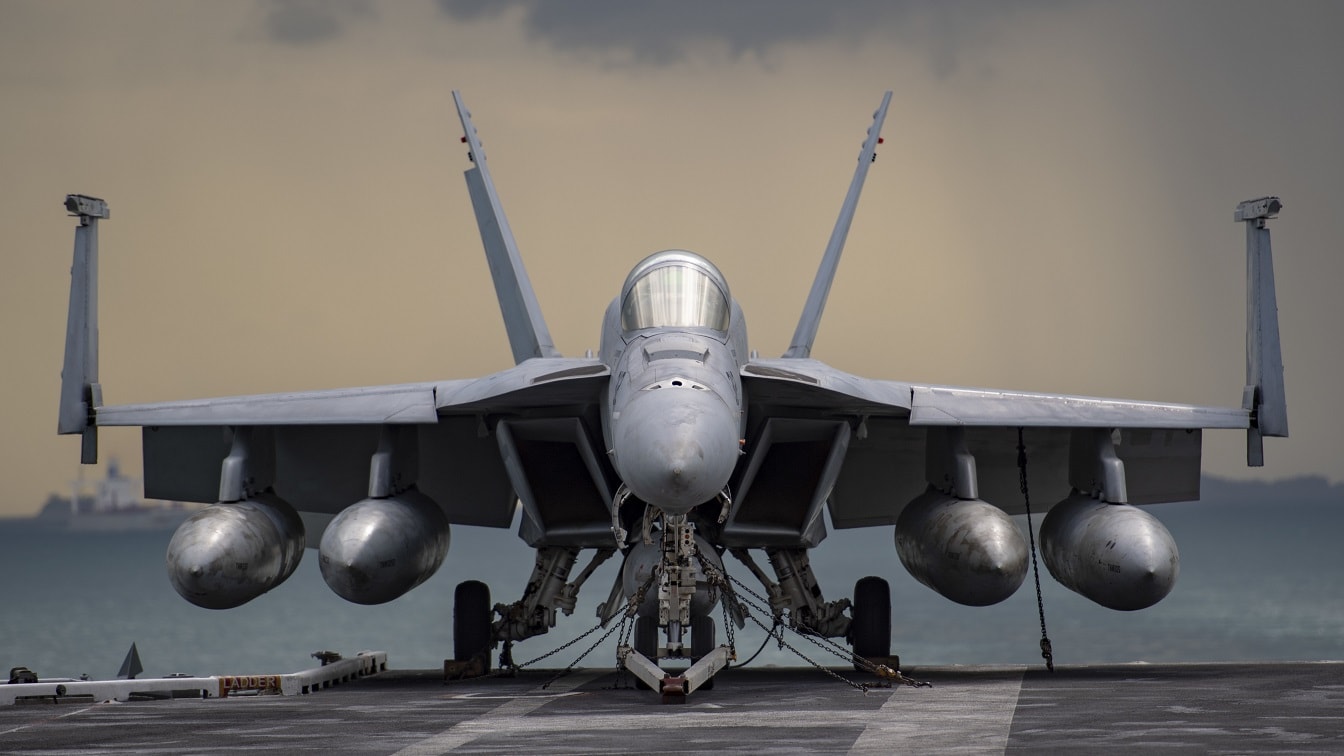
A (Feb. 5, 2021) An F/A-18E Super Hornet, from the “Kestrels” of Strike Fighter Squadron (VFA) 137, rests on the flight deck of the aircraft carrier USS Nimitz (CVN 68) during a strait transit. Nimitz is part of the Nimitz Carrier Strike Group and is deployed conducting maritime security operations and theater security cooperation efforts. (U.S. Navy photo by Mass Communication Specialist 3rd Class Elliot Schaudt/Released)
For decades, the Navy relied on 14 Avenger-class mine countermeasures ships, but that fleet has been steadily drawn down, with several already decommissioned and the remainder nearing the end of their service lives. In the Gulf, the U.S. typically keeps four forward-deployed in Bahrain under the 5th Fleet, but that presence is sustained by a shrinking global pool – and the replacement is not a direct ship-for-ship swap.
Instead, the Navy is transitioning to modular mine warfare packages built around the Littoral Combat Ship, a mix of unmanned surface and underwater systems, and airborne assets such as the MH-60S.
And even if the mines are cleared, there’s no telling when more may be deployed.
Can Iran Sustain This?
Nobody can say whether the United States will reopen the Strait of Hormuz – but assuming Trump follows through with his threat, the question becomes: can Iran sustain a “closure” of the strait?
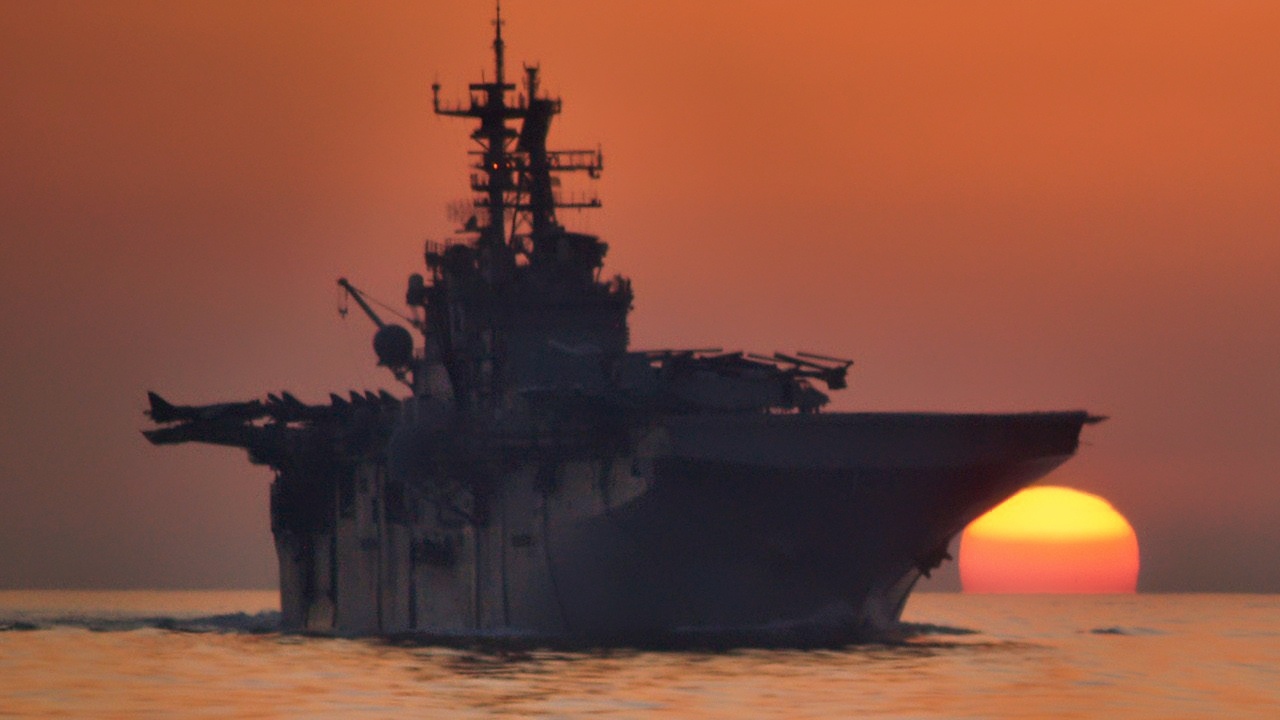
The amphibious assault ship USS Bataan (LHD 5) transits the Strait of Hormuz.
Iran’s conventional capabilities have been significantly degraded by U.S. and Israeli infrastructure, with its missile infrastructure, air force, naval assets, and command networks all having taken significant losses. But Iran doesn’t necessarily need that high-end capability to continue holding the strait hostage.
A reduced force can still intermittently deploy mines and launch occasional drone or missile strikes, thereby maintaining uncertainty in the insurance market.
The real danger, then, is not that Iran can permanently seal the Strait of Hormuz – it can’t – but that it can keep it just dangerous enough, and just expensive enough, to turn what could be an unresolved military campaign into a prolonged economic crisis for much of the rest of the world.
MORE: The A-10 Warthog Has Entered the Iran War
About the Author: Jack Buckby
Jack Buckby is a British researcher and analyst specializing in defense and national security, based in New York. His work focuses on military capability, procurement, and strategic competition, producing and editing analysis for policy and defense audiences. He brings extensive editorial experience, with a career output spanning over 1,000 articles at 19FortyFive and National Security Journal, and has previously authored books and papers on extremism and deradicalization.
Source link
