

Fallout from Iranian strike on Dimona plant would be symbolic, not radioactive
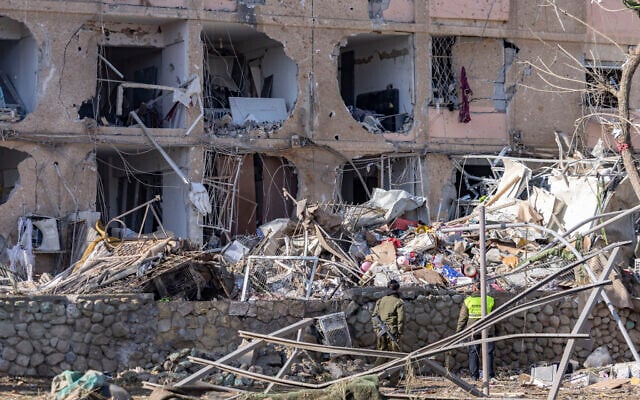
Iran’s ballistic missile strike this weekend on the southern city of Dimona, which left dozens injured, sparked fears of a different kind of destruction as the US-Israeli campaign against Iran went into its fourth week.
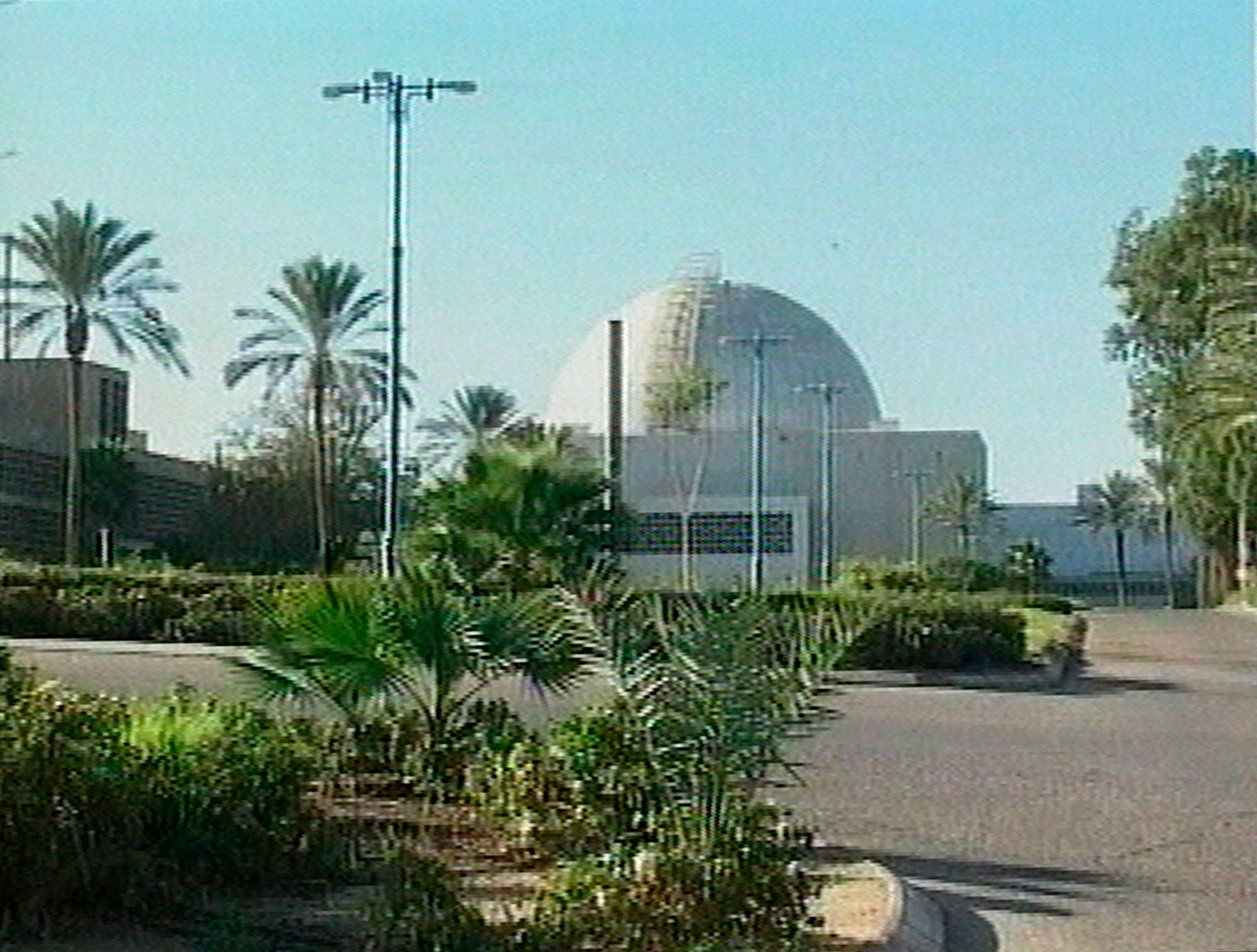
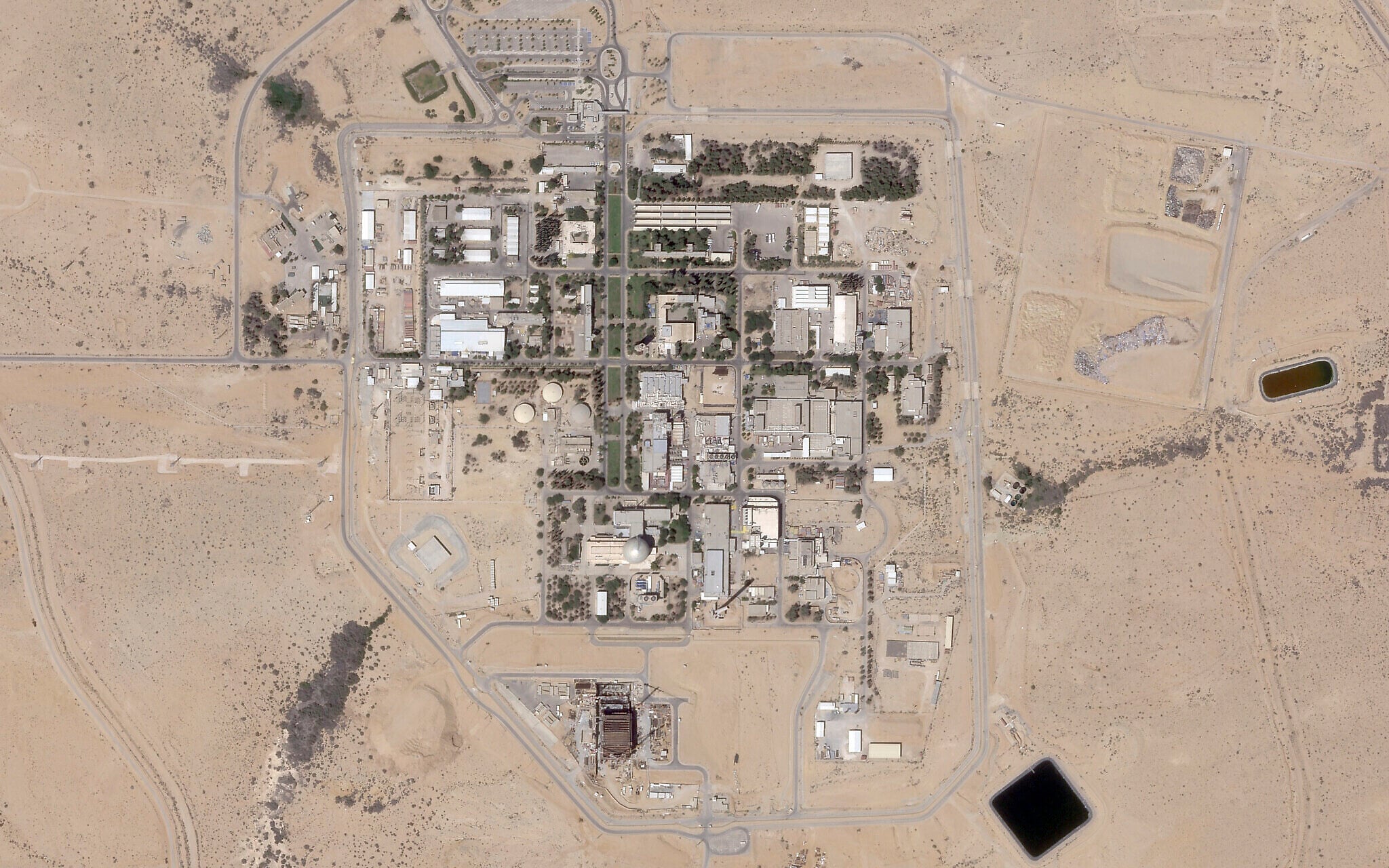
Saturday’s strike heavily damaged residential buildings in the dusty desert city. But it also raised urgent questions about the ostensible vulnerability of the Shimon Peres Negev Nuclear Research Center, which lies 9 kilometers (5.6 miles) away, and Iran’s willingness to target it.
Despite those fears, a missile strike on the facility, even a direct hit on its underground reactor, would be unlikely to produce a radiological disaster — though it would certainly be a major symbolic win for Tehran.
Israeli nuclear experts stressed to The Times of Israel that the Dimona plant houses a small research reactor rather than a giant commercial power reactor, and that it is heavily defended by both active and passive defense measures.
Experts based their analysis solely on open sources about the research center, due to the largely classified nature of the facility.
According to foreign media reports, the site produces fissile material for nuclear weapons.
Foreign governments and media believe Israel to be the Middle East’s sole nuclear power, but Jerusalem has long refused to confirm or deny that it has nuclear weapons, and officially maintains that the Dimona plant focuses on research and energy provision.
Physical danger
“The most dangerous thing to bomb is an active nuclear reactor used for energy production. That’s not what exists in Israel,” explained Ori Nissim Levy, Chairman of the World Nuclear Forum and lecturer at Afeka Academic College of Engineering.
The Dimona reactor is estimated to be around 150 megawatts. For comparison, the Soreq Nuclear Research Center outside the central town of Yavne has a reactor of about five megawatts. Both fall far below the scale of large electricity-producing reactors, which typically have a production capacity of around 1,000 megawatts or more.
Attacks on active nuclear reactors in Iran’s Bushehr, or in countries like France, the United States, Canada and others, “would be far more dangerous,” Nissim Levy said, but for Israel, “the most dangerous element is actually the fuel — especially spent fuel after use, which is the most radioactive material.”
Even if the fuel supply were attacked, “the danger should not be very great,” he added, noting that “these systems are very heavily protected” both by physical protection of infrastructure and layered air defense systems like Arrow 2, Arrow 3 and others.
If radiation did leak, it would probably only affect a radius of hundreds of meters at most, depending on the nature and size of the explosion, Nissim Levy estimated. The leakage would remain confined to one area within the facility where employees are unlikely to be present, he said.
“In wartime, what is typically done [at nuclear plants] is to scale down or shut down activity. That reduces the severity of potential damage,” Nissim Levy added.

Still, Home Front Command might instruct people within a kilometer to evacuate, more as a precaution than as a response to confirmed danger, he said.
Israel also has sensors in place that precisely monitor the results of such a leak and how significant it is based on the level of radioactivity, in order to determine whether broader evacuation is necessary.
“The radiological damage would likely be very localized,” Nissim Levy said, unlike the Chernobyl disaster in 1986 or the 2011 Fukushima nuclear accident. “It’s not going to be some massive catastrophe… because there’s a fundamental difference between incidents in large, active power reactors and what we’re talking about here.”
Even if a missile did hit the reactor, there’s no reason to fear that it would cause a nuclear explosion.
“If Israel has any [nuclear] weapons, they are almost certainly not stored [in Dimona]. That’s nearly certain. This is a site for production, research and technological development — not storage of finished weapons,” he stressed.
Even if a nuclear bomb were hit in an attack, it would not set off a nuclear blast.
“A uranium, plutonium, or hydrogen bomb cannot be triggered by an external explosion,” explained Nissim Levy. “It requires a very precise internal detonation system.”
Only “a very complex and precise warhead system” built into the bomb can set it off, he said.
Symbolic blow
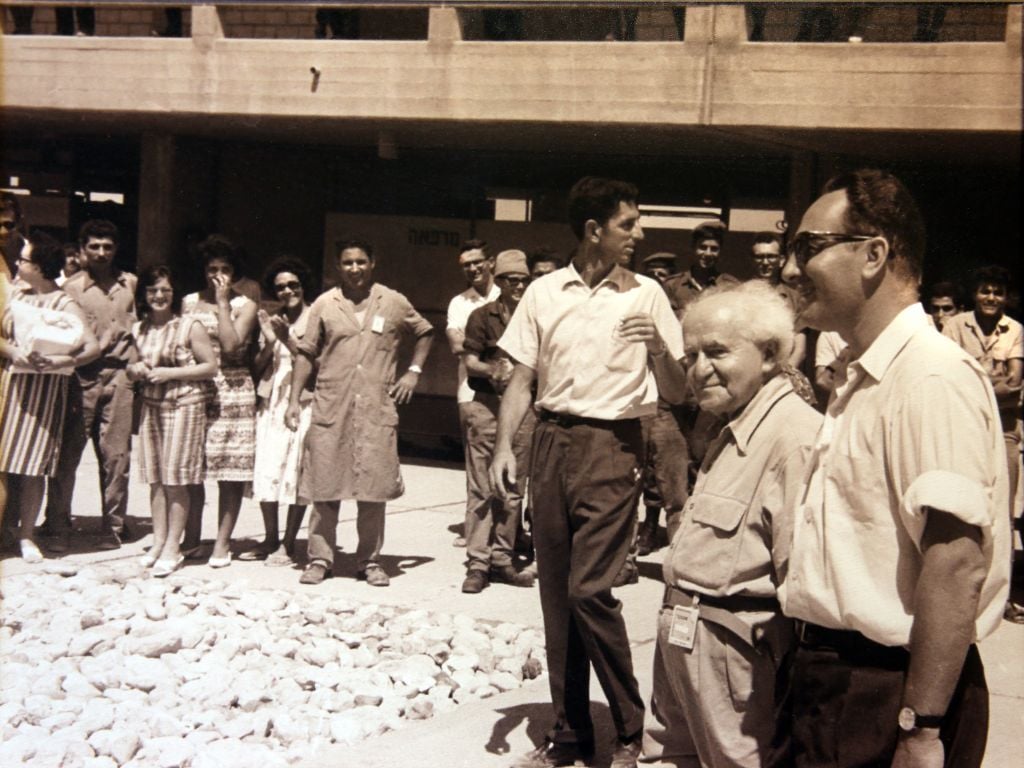
For Israel, the greatest danger of a strike on the Dimona site would likely be a byproduct of the facility’s status as a symbol of Israel’s strength.
“The primary significance of a strike on the reactor would not lie in physical danger, but in a major psychological and symbolic achievement for Iran,” said Zaki Shalom, senior fellow at the Misgav Institute for National Security & Zionist Strategy.
The reactor has long been singled out as a primary target for Hezbollah, Hamas and other Iranian proxies, as well as the Islamic Republic itself.
Israel would need to respond in an exceptional manner. It would not be able to suffice with a parallel strike on nuclear sites in Iran.
In 2018, in rare public remarks, the head of the Israeli Atomic Energy Commission, Ze’ev Snir, said the country had been reinforcing the Dimona nuclear reactor in light of threats made by Iran and Hezbollah.
“We cannot ignore the repeated and explicit threats made by Iran and its proxies to attack Israel’s nuclear sites,” he said.
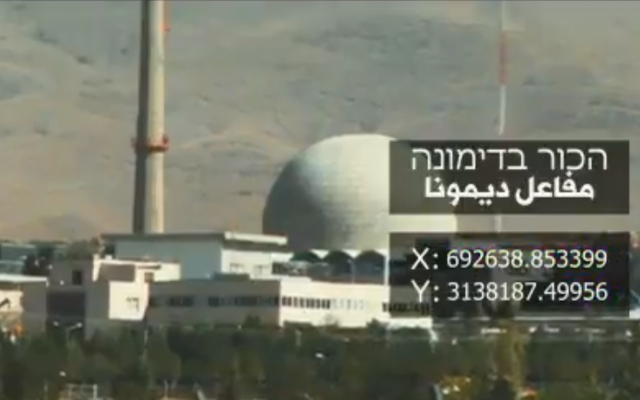
According to Shalom, the Iranians “would likely claim — with considerable justification — that they had succeeded in striking one of the central pillars of Israel’s security doctrine.”
“The prestige of Israel’s highly sophisticated defense system, built over many years with enormous investment, would be severely damaged if missiles were to hit the Dimona reactor.”
That, Shalom argued, would likely warrant an extreme response from Israel.

If such a sensitive security site were damaged, even minimally, “it can be assumed that Israel would need to respond in an exceptional manner. It would not be able to suffice with a parallel strike on nuclear sites in Iran, since it is already doing so in any case,” Shalom said.
While the nature of such a response is difficult to predict, strikes on Iran’s power plants could become a strong consideration, “should the Dimona project, heaven forbid, be damaged in any way,” he said.
Judah Ari Gross contributed to this article.
