

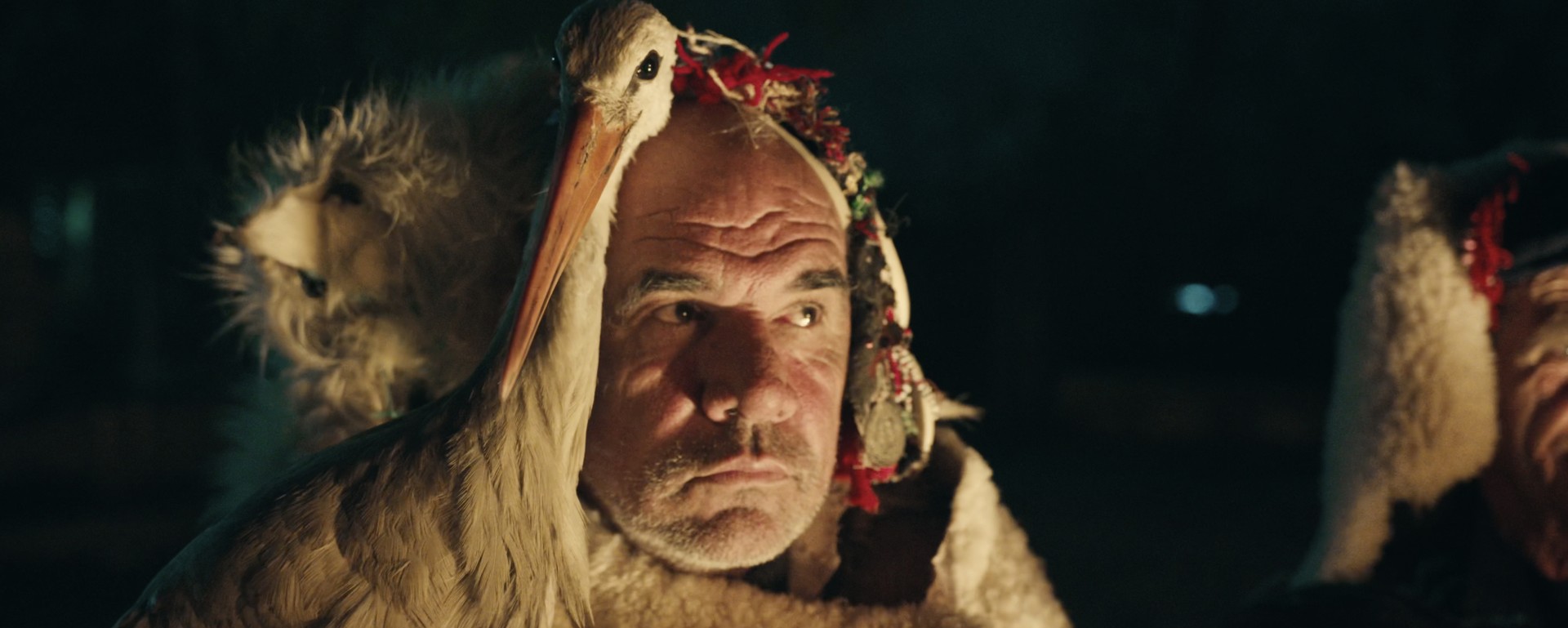
A few years ago, the Macedonian film “Honeyland” made history as the first documentary to be nominated in both the Best International Feature Film and Best Documentary Feature categories at the 92nd Academy Awards. This year, its co-director Tamara Kotevska is back with the equally poetic, searingly political documentary “The Tale of Silyan,” which could very easily receive that same double honor this awards season.
Inspired by the heartbreaking knowledge that storks, the national bird of North Macedonia, were becoming ill after farmland was converted into landfills, Kotevska reteamed with her longtime cinematographer and producer, Jean Dakar, to film the storks as they followed their new migration paths. As they filmed, they uncovered the story of Nikola, a farmer in North Macedonia whose farm was failing due to new government policies, forcing his family to immigrate abroad in search of financial stability. Finding work in one of the landfills, Nikola befriends an injured stork, a relationship that would prove transformative for both the farmer and the filmmakers.
Kotevska soon realized that what was happening to the people of her country mirrored the traditional folktale that gives the film its title, using its text and lesson as a framing device and a form of narration. With its lush cinematography and deeply humanist tone, Kotevska’s film marries observational filmmaking techniques with magical realism to craft a fiery screed against capitalism, industrialization, governments that profit over people, and an elegy for our fragile connection with nature.
Born in Prilep, Republic of Macedonia (now called North Macedonia), during her junior year of high school, Kotevska earned a study abroad scholarship, which took her to Tennessee, in the United States. She later studied dramatic art at the Sts. Cyril and Methodius University in Skopje, with an emphasis on documentary film. Her first feature-length documentary, “Lake of Apples,” co-directed with Ljubomir Stefanov, follows one year in the life of Lake Prespa, one of the oldest freshwater lakes on Earth. She reteamed with Stefanov for “Honeyland,” a portrait of Hatidže Muratova, a beekeeper of wild bees whose way of life in the remote mountain village of Bekirlija is threatened by the arrival of newcomers.
Kotevska went solo for her next feature film, “The Walk,” which centers on a young Syrian refugee named Asil who uses a giant puppet, Amal, to process her trauma. Her latest film, “The Tale of Silyan,” debuted at the Venice Film Festival and was selected as the Macedonian entry for the Best International Feature Film for this year’s Academy Awards.
For this month’s Female Filmmakers in Focus column, RogerEbert.com spoke to Kotevska over email about the importance of learning from past generations, the dangerous times in which we live, and finding hope in all the madness.
How did you first develop your observational-cinema-meets-magical-realism style of filmmaking?
I’m from a country without a culture of watching documentaries, and I have loved them since I was a child. It has been my passion to make documentaries since I was twelve. I was looking for creative ways of storytelling that would bring documentaries closer to audiences. Eventually, the entire world came to like my new approaches, not just Macedonians.
Can you talk about your collaboration process with Jean Dakar?
This is our second collaboration out of four films we have shot together as a Director-cinematographer. We are extremely devoted to our work. We are extremely passionate about giving it all in to make a film, and we don’t do any commercial work. We are fully devoted to making auteur films with all the time and resources we have.
I love the vet scene and how comical moments like this ground the film in humanism. Can you talk about finding that balance in the edit?
I was editing while we were shooting. This way, I had a sense of what I had and where this film was going. I love working with my editor, Martin Ivanov from Macedonia. Together with Jean Dakar, we are like the Three Musketeers: one for all, all for one. We would go to endless lengths to make a film even when all the odds are against that film. I personally enjoy editing very much. We often get stuck for 20 hours straight in nonstop editing because the process so absorbs us. We are willing to experiment a lot in editing until we find the best solutions; we just don’t stop.
I found the scenes where the storks began foraging for food in the landfills heartbreaking. How early on did that become part of the film’s narrative?
These were the first shots we ever did: storks eating in landfills. This was my initial idea to make this film. Understanding that storks were dying out because they fed on landfills was devastating for me. The stork is my favorite animal. It’s the national symbol of my country. I went after this story only to discover an entire universe afterwards.
You spent months learning how to film storks, then months with Nikola and his family. At what point did you notice the similarities to the traditional Tale of Silyan and decide to incorporate it as a narrative frame for your film?
Towards the second year of shooting, when Nikola found the stork.
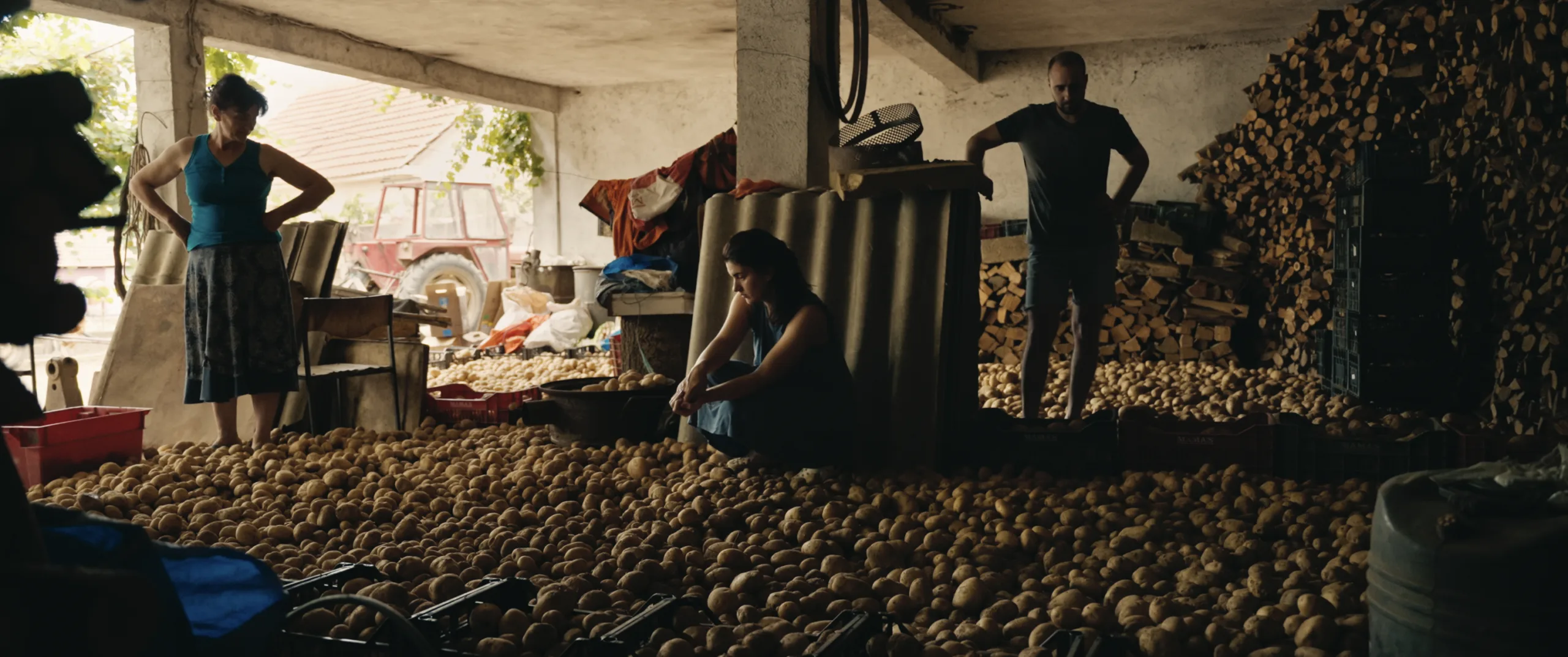
Can you talk a bit about the way the film critiques capitalism? Specifically, I’m thinking about how the government doesn’t support farms, and how his family migrated to Germany to make more money, yet everything is more expensive there.
We are living in perilous times when governments worldwide are trying to monopolize the basic human resources, such as food and water, and make absolutely everything paid for. They want to control price increases on their own terms and at their own pace. I find this the greatest issue, whose consequences will yet be felt in the long run, for generations to come. The farmers’ protests are happening across the world today because governments won’t pay them fair prices for their crops and the heavy work they do. The governments are trying to discourage individual food production and buying out all the land, taking the ability and the knowledge from the common people to produce their own food, will turn it into a form of contemporary slavery of humanity.
Similarly, the film explores how industrialization (aka capitalism) leaves behind traditional agrarian life, but folktales help keep us connected to ancient knowledge. Can you talk a bit about how you connect to these themes in your work?
I love mythology, and I always find a deeper meaning in it. A message that can be applied today in modern society. I believe we should not cut the strings of our past, because life didn’t start today with us, and this contemporary approach to life is very self-centered and destructive. I believe we should be able to look back and learn from our past to create better lives for future generations.
You’ve mentioned in another interview that there are other ways to define success in life besides capital gains, and that there are different ways to feel fulfilled. Do you think your films help bring that concept into focus for audiences?
This is actually my statement from the very first interview we did at the Venice Film Festival. I have been asked if I feel any guilt for making films about poor people. My answer to that was that I absolutely don’t make films for poor people. I make films that show how wealthy some people are because there are other ways to define richness, measured in self-sustainability, humility, love, family, and the perceptiveness of nature. My film is about very rich people, in that sense, who are threatened with losing it all because of government policies.
I love this quote from you: “Rather than create empathy for the poor, I want to raise the revolution of these people who have everything, and they shouldn’t give up on what they have.” Can you talk more about how you hope people feel when they finish watching the film?
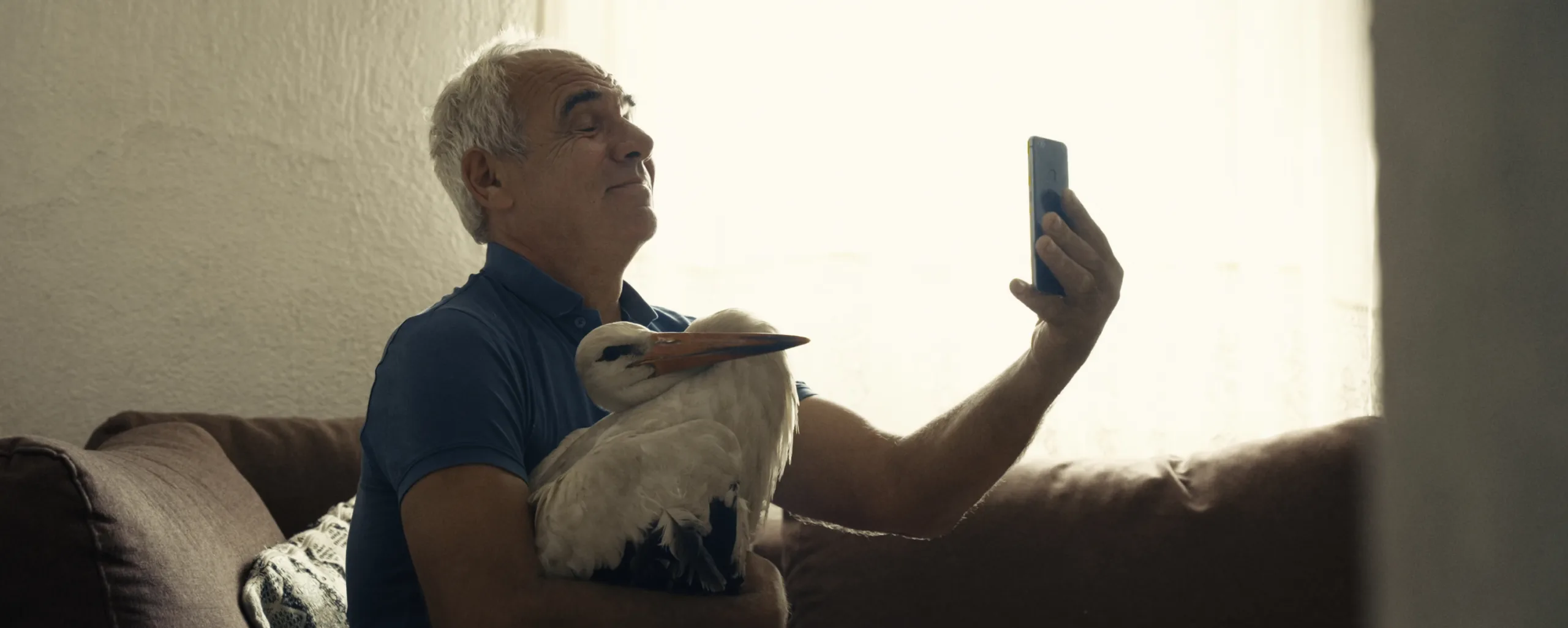
It wasn’t my intention to make a hopeful ending, because I didn’t see one. I thought this film would end up in the landfills, with both humans and storks being thrown away there. But life had different plans. It showed me that there is hope even in the darkest places. The story took a completely different direction when Nikola found that stork, which I loved much more.
Are there any female filmmakers who have either inspired you or whom you think readers should seek out?
There are several. Alice Guy-Blaché was a French filmmaker considered one of the first directors in cinema history, who also directed films in the documentary style. Japan’s first female director, Tazuko Sakane, was one of the world’s earliest documentary filmmakers. She directed documentaries about the ill effects of war during the Japanese invasion of Manchuria.
Soviet editor Yelizaveta Svilova worked on the iconic documentary “Man with a Movie Camera.” She also directed political documentaries in the 1940s, such as “The Fall of Berlin” and “The Nuremberg Trials.” Of course, there is Agnès Varda, a key figure in the French New Wave, recognized as a documentary filmmaker and a pioneer of social commentary in her work.
Jane Campion, who is best known for films like “The Piano” and “The Power of the Dog,” is a filmmaker whose work explores complex female characters and relationships. Mila Turajlić (Serbian Cyrillic: Мила Tураjлић) is a Serbian filmmaker who directed and produced the award-winning films “The Other Side of Everything” and “Cinema Komunisto.” Documentarian Gabriela Cowperthwaite produced a number of television documentaries over the past two decades, but is best known for 2013’s “Blackfish,” which gained her worldwide recognition as a director and a BAFTA nomination.
Barbara Kopple has appeared on every decent Top Documentarians list since the mid-90s. She has won not just one but two Academy Awards for her documentary work, which often dissects American culture. She is also not afraid to make films about intriguing figures, particularly their controversies, such as Woody Allen and his relationship with Soon-Yi Previn (“Wild Man Blues”), or the Dixie Chicks’ anti-war backlash (“Shut Up and Sing”).
Source link
