


New Orleans
—
This city’s new mayor-elect prays many times a day, for big things and small ones and often, she says, to a holy guardian known for helping defy lost causes.
“My favorite patron saint is St. Jude,” Helena Moreno explains. “I don’t know what that says about me.”
More than 40 days before she is due to take her oath, Moreno faces a double-barrel of city crises that indeed may seem impossible.
The first is crushing and categorically local: a projected $222 million city budget deficit left by a term-limited mayor largely absent from public view since she pleaded not guilty this summer to federal conspiracy and fraud charges.
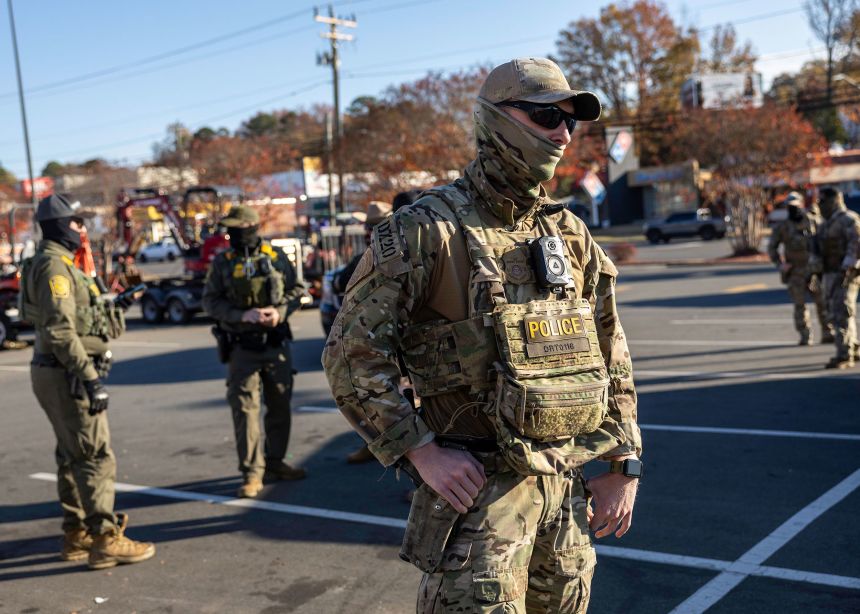
The other is unfolding on a far bigger stage: the expected arrival of a key Border Patrol official and some 250 of his agents as part of a coast-to-coast enforcement campaign that has terrified immigrant communities and spurred grassroots resistance in Democratic-led cities from Los Angeles to Charlotte, North Carolina.
Until January 12, Moreno’s official power to tackle either problem goes only as far as her at-large seat on the City Council. But she already has begun tugging at the somewhat-risky levers within her reach to enact her priorities, including nudging back against a White House agenda that hits close to home while stretching far beyond the Crescent City.
Her approach, some political heavyweights note, aligns with how Moreno has taken on obstacles across her life and public service.
“She’s basically the de facto leader of the city right now,” University of New Orleans Assistant Professor of Political Science Ed Chervenak says. “The voters gave her the mantle of power, and even though she’s not the mayor, she’s out there at the forefront.”
Born in her father’s native Mexico, Moreno was 8 when her family moved to the United States, where the Spanish speaker crammed to master reading and writing in English with the help of her American-born mom. She later studied journalism at Southern Methodist University, then landed an on-air gig as an investigative reporter at CNN affiliate WDSU in New Orleans.
A newcomer to a place where families often trace back many generations, Moreno soon found herself covering the unparalleled inhumanity of Hurricane Katrina’s aftermath, then the start of the long rebuilding effort that would draw construction workers from across Latin America to south Louisiana, many to stay.
The stunning governmental failures revealed in the storm’s wake also stirred Moreno “to not just report, but do something about it,” her official bio says.
She didn’t start small. In 2008, Moreno took on Rep. William Jefferson, a political machine boss whose star had dimmed after the FBI found $90,000 in cash related to a series of alleged bribery schemes stashed in his freezer. Still, she could not edge him out in the Democratic primary before a Republican denied him a 10th term.
“When she ran as a newscaster for Congress and lost, the average person might have been like, ‘Well, that didn’t work out, right?’ But that didn’t even occur to her. She literally fought for the lowest possible office in government, which is state legislator,” recalls JP Morrell, a Democrat who had been in the state House a few years when Moreno arrived in 2010.
Representing key tourist enclaves – among them the French Quarter, the Garden District and Tremé, one of the nation’s oldest African American neighborhoods – Moreno proved to be “a progressive but not a hardcore partisan” and someone “able to reach across the aisle and get policy passed … despite the fact that she’s a D, and many of them are Rs,” Chervenak says.
Moreno spearheaded bills supporting survivors of domestic violence and sexual abuse, then bounced those successes in 2017 into a citywide seat on the higher-profile New Orleans City Council, where she championed issues from marijuana decriminalization to higher minimum wages for city employees to utility regulation.
“Helena was always measured; she was not histrionic; she always showed up,” says former New Orleans Mayor Mitch Landrieu, who in 2010 took over from an embattled predecessor at City Hall before going on to a key post on President Joe Biden’s team.
Moreno’s own mayoral campaign, taking shape over two years, boasted both a wide fundraising advantage and broad grassroots support. She won outright in October’s multiparty primary, becoming the city’s first Hispanic mayor as the fevered anti-immigrant rhetoric that helped deliver President Donald Trump a second term was playing out in violent scenes on US streets.
New Orleans already had been pegged as the next stop in the Border Patrol crackdown effort when Moreno sat for the homily on a Sunday before Thanksgiving at Our Lady of Guadalupe Catholic Church, with its International Shrine of St. Jude, at the edge of the French Quarter.
Anxiety had simmered for months after Immigration and Customs Enforcement arrests in June of a 64-year-old Iranian mother gardening outside her New Orleans home and in May of a Marine Corps wife breastfeeding her 3-month-old in Baton Rouge. Neither had a criminal record, their families said, and both had since come home.
In the week leading up to this Mass, Moreno’s priest had needed a few extra hands to help move a donated treadmill to a new spot in a parish building, he told his flock, and so he headed to a Lowe’s parking lot to hire a day laborer, Moreno recalls.
Two agreed to follow him back in their car when “all of a sudden, all these vehicles pulled around these two men and grabbed them, took them away and left their truck there,” Moreno recounts of the sermon, unsure of exactly what went down.
It reminded her of a bill from her days in the legislature that would have required immigrants to show proof of legal status if law enforcement asked, she says. “So, my father, for example, who has dark skin, dark hair … and talks with an accent, like, he would now have to be walking around with his documentation that he’s an American citizen? That doesn’t make sense to me.”
The same anxiety, she says, is potent now.
“It’s one thing if you would have a real strategic approach on going after people … who have criminal felonies or are being accused of some very serious and violent crimes. But that’s not what the public is seeing,” she says.
“They’re seeing people who are just trying to survive and do the right thing – and many of them now have American children who are not causing problems in our community – treated like they are violent, violent criminals,” Moreno continues.
“So, my job is to do all that I can to protect people within my city,” she says, nodding especially to the 23,400 immigrants – about 6.5% of the population, with about half noncitizens – who call New Orleans home, US Census data shows.
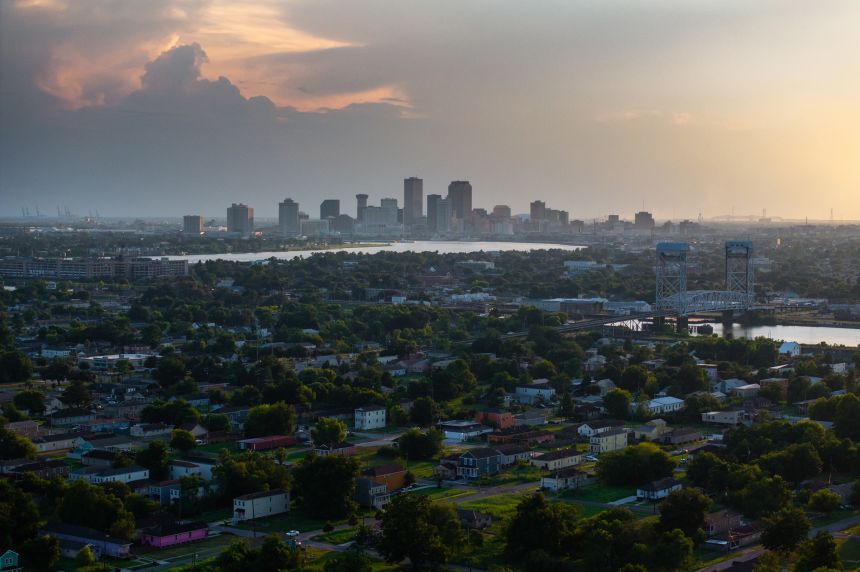
With the Department of Homeland Security’s Operation Swamp Sweep expected any day in this 307-year-old city with French, Spanish, African and Native American roots, Moreno’s options as mayor-elect are limited.
But they’re not nothing.
Louisiana’s Republican governor and his top police official stand ready to support federal immigration agents, they’ve said, leaning heavily into Trump’s stated priority to “focus on the bad ones” accused of violent crimes, even as most people the government aimed to deport in recent months did not have serious criminal convictions.
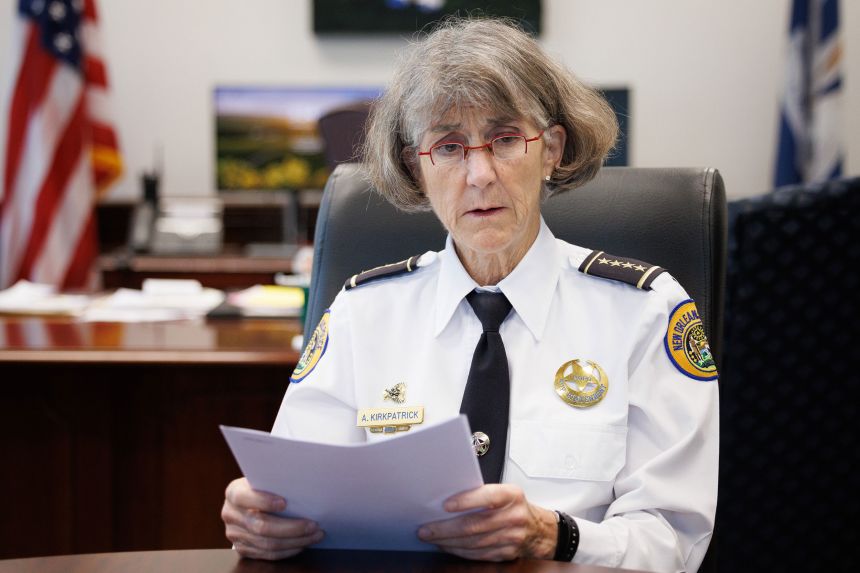
But New Orleans’ police superintendent, whose role is not yet in Moreno’s purview, has been clear: Immigration enforcement is not her force’s job.
“To be in the country undocumented is a civil issue. We will not enforce civil law,” Superintendent Anne Kirkpatrick said November 19. “And, so, our support is to make sure they’re not going to get hurt and our community is not in danger.”
Meanwhile, Moreno in recent days has taken steps within her narrow sphere to get ahead of any aggressive immigration enforcement tactics, including connecting with Democratic mayors whose cities have become the backdrop this year of sometimes-brutal arrests of immigrants and anti-ICE protesters, she tells CNN.
“One of the suggestions … is that it’s really important that there be a depository (for) videos and documented incidents of ICE pickups,” she says. “And the folks in Chicago said you really need a government entity to do it.”
So, via the City Council, Moreno, with Morrell, is setting up such an online storage bank that “will keep your information anonymous” and allow “the council (to) figure out what are the appropriate next steps that need to be taken,” she tells CNN.
Moreno also topped her campaign website with a community resource guide for “announced ICE/CBP enforcement operations,” including a know-your-rights sheet, a callout to lawyers willing to represent immigrants and training resources for those who don’t specialize in that kind of law.
But the mayor-elect still worries about the masks immigration officers are known to wear on duty, particularly given Louisiana’s law letting virtually any adult carry a concealed gun in public. “That is a safety issue” for residents, police and federal agents, she says.
And Moreno knows exactly what she would say to Trump about immigration enforcement: “This is not what the city of New Orleans needs or wants.” Instead, she would ask for the resources to really help her city, she says: more federal prosecutors, help to stand up a police DNA lab, more domestic violence survivor services and social workers to help city police handle reports of sexual assault.
How she navigates it all, observers say, is key.
“You can’t appease a bully, that doesn’t work,” Landrieu says pointedly of Trump. “You have to fight back. That’s the only thing he respects.
“But there’s only one mayor at a time,” the former holder of that office tells CNN. “Helena is not the mayor; she’s the mayor-elect. I think she’s respectful of that, (and) there is absolutely a leadership void.
“That does not mean that she should not say anything,” he adds. “You don’t have to help them do their thing, but you can’t get in their way.”
The danger is real, especially if the White House were to double down on immigration enforcement personnel as New Orleans’ winter and spring tourism period peaks, a concern even the state’s Republican lieutenant governor has raised. Also in play is the president’s demonstrated willingness to threaten federal money to leverage ideological compliance from cities to states to universities.
“Understand: You’ve got to blow with the wind here because if you push back too hard, they’re just going to come harder,” says retired Lt. Gen. Russel Honoré, the US Army leader and Louisiana native who in the desperate days after Katrina admonished soldiers to “Put those weapons down, dammit!” as women and children sought higher ground in the submerged city.
“It can’t be about policy,” he tells CNN of Moreno’s strategy right now. “It’s got to be about attitude.”
Morrell, who just won another four years in his at-large City Council seat, suspects that won’t be a problem. Moreno “could do a lot of performative things to get some free airtime,” he says, “but when you are dealing with real crises, you don’t have time to be performative.”
“I just don’t know if it’s fair for people to assume that the mayor-elect – who’s inheriting a budget that is off by $222 million, who has had to engage with the council and the state and our legislators to save us from a state takeover – if it’s too much to ask, ‘And by the way, could you lie on the train tracks for ICE, too?’”
But, of course, he adds, that moment will come soon enough.
“After January 12, she gets the whole job, with belt and suspenders.”
Correction:
A prior version of this story mischaracterized the official role of the Border Patrol leader expected in New Orleans.
