

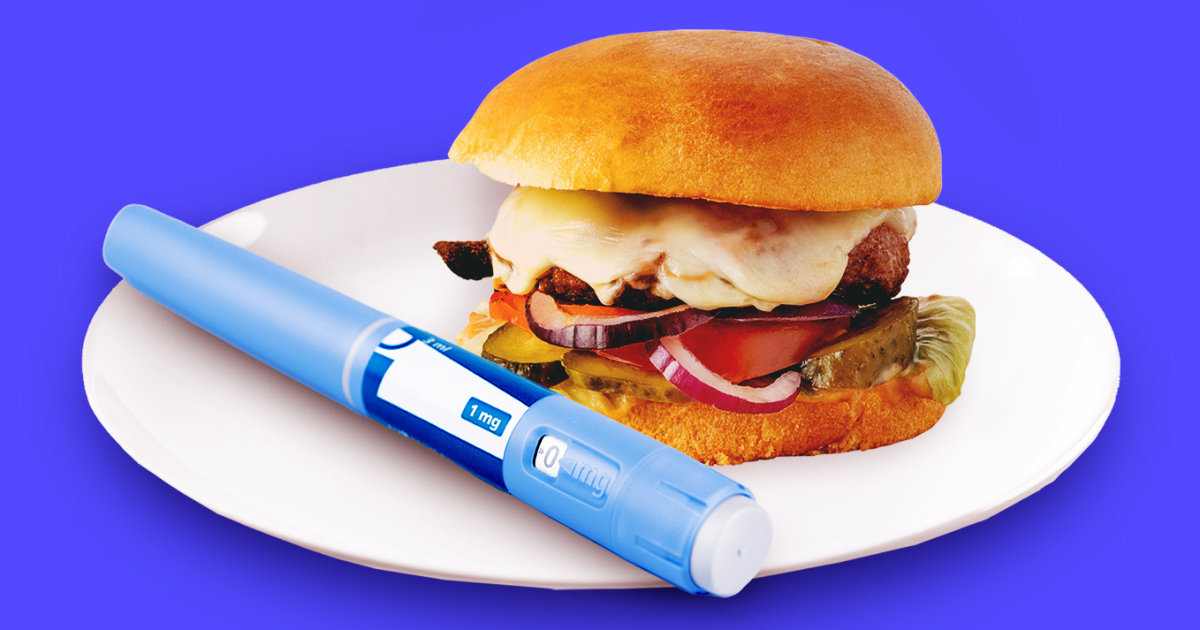
As GLP-1 medications normalize smaller appetites and higher protein intake, national restaurant chains are quietly redesigning their menus — offering customers scaled-down portions at lower prices, whether they’re on the drugs or not.
Once exclusively a treatment for diabetes, GLP-1 drugs such as Zepbound and Wegovy, which suppress appetite and slow digestion, have become a mainstream weight-loss tool. The drugs’ rise has coincided with a broader wellness and health-focused shift that seems to emphasize protein, forcing restaurants built on abundance and bottomless refills to rethink how much food consumers actually want.
Smoothie King is among the restaurants that capitalized on this movement as early as 2024, introducing a GLP-1 menu featuring smoothies with high protein and fiber content, and with zero grams of added sugar. Now, some of the biggest names in American dining appear to have followed suit.
Olive Garden announced in December that it was adding a “lighter portion” section to its menu, offering seven dishes with smaller portions at lower prices. Chipotle now offers a high-protein menu, including a serving of cubed chicken with 32 grams of protein for around the price of a latte. At Shake Shack, customers can enjoy lettuce-wrapped versions of the chain’s famed smash burgers on the “Good Fit Menu.”
This month, Subway added “Protein Pockets,” small snack wraps with more than 20 grams of protein.
For those taking GLP-1s, eating higher-protein foods goes hand in hand with eating smaller portions. The medications severely curb users’ appetites, so when they do eat, they need nutrient-rich foods to ensure they are still eating a balanced meal. Protein also keeps you fuller for longer, so eating foods packed with protein helps with weight loss, as you do not have to eat as frequently or as much.
But even if only some of these restaurants explicitly state that these medications — and their customers’ changing appetites — are the driving force behind the new menu items, experts say the connection is clear.
“People on GLP-1s are prioritizing protein because it’s the macronutrient that they need to preserve muscle mass,” said Jenna Werner, a registered dietitian. She added that restaurants are “utilizing this weight loss cultural movement to hop on that train.”
Restaurants cater to rising GLP-1 use
In the last two years, GLP-1s for weight loss have become both popular and easier to access, Werner said.
The drugs skyrocketed in mainstream popularity after the Food and Drug Administration began approving GLP-1 medications for weight loss over the last five years, in addition to their pre-existing approvals to treat diabetes. As the drugs became more available, a growing number of actors, influencers and athletes began crediting the drugs with their drastic weight loss.
According to a November poll from the Kaiser Family Foundation, 12% of Americans reported taking a GLP-1 drug, which doubled from the previous May.
Novo Nordisk, the maker of Wegovy and Ozempic, declined a request for comment.
A spokesperson for Eli Lilly, the maker of Mounjaro and Zepbound, said the company values “efforts to make healthy living easier for everyone.”
“When restaurants offer more menu options and flexible portion sizes they help empower diners, including those managing complex conditions like obesity and diabetes, to make healthier decisions and reduce food waste,” the Lilly spokesperson said in a statement.
The protein obsession is not all due to the rise in GLP-1 use. Last week, the Trump administration released updated U.S. dietary guidelines recommending that Americans consume 1.2 to 1.6 grams of protein per kilogram of body weight daily, up from the previous recommendation of 0.8 grams per kilogram.
Werner, who called the increased recommendation “significant,” noted that a healthy, protein-focused diet is essential for GLP-1 users. She added that restaurants also “know people not on GLP-1s need to eat more protein, so it just kind of all fits together.”
“I do think that people are seeing it as an opportunity to push [protein] more because it makes sense for more people,” she said.
Some restaurant executives agree.
Damien Harmon, Subway’s president for North America, told NBC News the chain’s Protein Pockets were driven by a demand for higher protein and fewer calories. He agreed that the use of GLP-1 drugs in the U.S. was a key driver behind the new menu wraps.
The Protein Pockets are now available in 96% of U.S. stores, in addition to Subway’s long-standing Fresh Fit menu, which was first introduced in the early 2010s and was recently reintroduced due to high demand.
Ricardo Cardenas, CEO of Darden Restaurants Inc., which owns Olive Garden, said in a December earnings call that the inclusion of smaller portions “is designed to give guests more choices” alongside Olive Garden’s regular supersized portions. For example, a chicken parmigiana from Olive Garden contains 1,020 calories and 64 grams of protein, according to the restaurant’s menu nutrition breakdown. Its lighter-portion counterpart has 630 calories and 36 grams of protein.
The new menu “just so happens to benefit the consumers that might want smaller portions that are on GLP-1 medications,” Cardenas said.
Chris Brandt, Chipotle’s president and chief brand officer, told NBC News that the brand’s “High Protein Cup” — which appears on the restaurant’s “High Protein Menu” — came in response to a “growing demand for protein-forward options across more occasions, especially snack-sized portions at accessible prices.”
He also pointed to a social media trend in which customers were “hacking” their meals by ordering a side of protein as a stand-alone snack. The “High Protein Cup” formalizes that behavior, Brandt said.
While Brandt didn’t specifically cite GLP-1s, he noted “a clear shift toward diets rich in protein and fiber, and for some guests, smaller portions throughout the day” — all habits consistent with the medication’s use.
Shake Shack’s “Good Fit Menu” was born because “many of our guests are increasingly looking for more flexibility in how they enjoy their favorite restaurants,” said Luke DeRouen, the chain’s chief communications officer.
Smoothie King, however, has not shied away from the core reasoning behind its GLP-1-friendly menu.
“As GLP-1 usage has become more common, Smoothie King also saw a growing population trying to navigate appetite changes while still getting enough nutrients,” the company said in a January news release. “In response, the brand developed a GLP-1 Support Menu — created with a registered dietitian — designed to make it easier for guests to stay nourished with options that are high in protein and fiber and contain zero grams of added sugar.”
Werner said these changes make sense but cautioned against the belief that simply adding more protein is healthier.
“Not everybody needs 50 grams of protein in one sitting,” Werner said. “If we’re only eating protein, where are our carbohydrates? Where are our fats? Where are other micronutrients that we’re probably not getting?”
Werner said each person needs variety in their diet, and that the popular high-protein push isn’t necessarily the best option, even though the essential macronutrient is a key component of any balanced meal.
For example, at Smoothie King, the 20-ounce Gladiator GLP-1 Vanilla smoothie contains more calories, sodium and cholesterol than a Krispy Kreme glazed donut, according to The Associated Press.
“This is just another example of how the word ‘healthy’ means something different to everyone, and you have to understand what your nutrition needs are in order to make the healthier choice for you,” Werner said.
Source link
