

- Details
- By Shaun Griswold
-
The Indigenous Food Lab has a spicy drink to boost immunity and cut through any congestion in your lungs and throat this winter.
The Minneapolis-based food resource brought out the Fire Cider recipe with the community in mind, including those reacting to the surge of U.S. Immigration and Customs Enforcement officers that have disrupted every facet of public life for Twin City residents since federal police operations escalated during the first week of 2026.

“Our city and our state have been under attack for the past two weeks. ICE’s occupation of our streets has been both terrifying and unconstitutional,” Indigenous Food Lab shared on social media. “Something we can always count on in times like this is good medicine.”
The Fire Cider recipe from the Indigenous Food Lab is shared by Linda Black Elk, an ethnobotanist and expert in wild plant foraging.
“If you happen to find yourself walking or marching down the street with a group of your friends, perhaps you’re holding signs in crowds, it’s really good to stay healthy, “ Black Elk said in a video posted on Instagram. “It’s good to boost your immune system.”
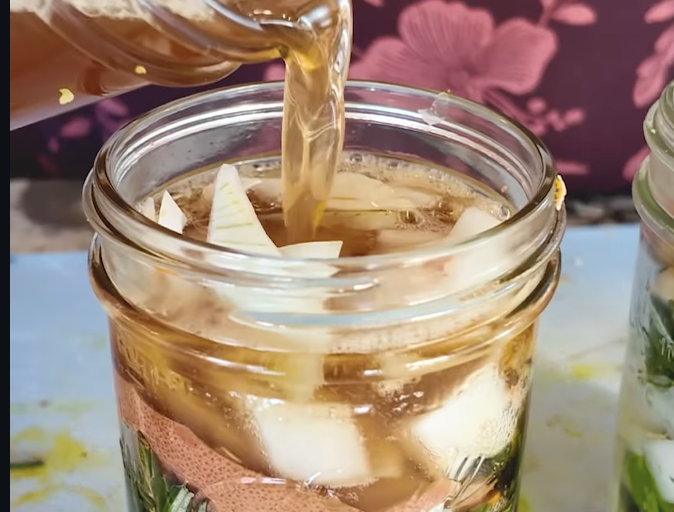
Fire Cider combines simple, pungent ingredients like peppercorns, onions, garlic, peppers and ginger in a jar that is filled with a mixture of apple cider vinegar and honey. It sits sealed in the jar for two weeks. The spice blooms from the jar when it is opened and packs a punch that provides immediate immunity boosters that can also clear lung and throat congestion.
After the jar is opened in two weeks, the liquid is ready to drink in small quantities — think 1.5 fluid ounce shots —each morning or before bed. The veggies can be snacked on as is or added to any dish.
“One of the best things about Fire Cider is that you can add whatever you have available. We happened to have some celery and cranberries left over from the holidays,” Indigenous Food Lab wrote in Instagram.
The Indigenous Food Lab shares recipes and other food suggestions under the direction of the North American Indigenous Food Systems (NATIFS) based in the Twin Cities. NATIFS was created by Oglala Lakota Chef Sean Sherman, a prominent figure in the Indigenous Food Sovereignty community through the collective, best-selling cookbooks and a fine-dining establishment.
Sherman’s celebrity in the scene is pronounced by the responsibility he carries for both global and local Indigenous communities. On January 7, ICE officer Jonathan Ross killed U.S. citizen Renee Good during a traffic stop in a South Minneapolis neighborhood less than 3 miles from Sherman’s popular restaurant, Owamni. He decided to close the restaurant that day as protests and police filled the streets. Owamni also donated some of its proceeds to Good’s family.
As news spread about tribal citizens taken into ICE custody, the Native American Minneapolis food scene responded with community support and resources. Today, Pow Wow Grounds coffee shop continues to serve as a support network for local Native Americans in the Twin Cities.
On Substack, Sherman outlined the history of federal genocidal policies that detained and starved Dakota people at Fort Snelling in 1862. That site is now home to the Whipple Building, the headquarters for ICE operations in Minneapolis, which has seen daily protests and arrests.
Sherman wrote that restaurants are seeing fewer customers as Minnesota streets are a danger to many.
“Restaurants are quieter than usual, but we are communicating and learning from each other. Parents are afraid to take their kids to school because they don’t want to be killed by their own government, yet people are organizing to act as human shields to protect our youth and teachers,” he wrote.
Owamni will also be closed Friday, Jan. 23, as part of the general city-wide strike, ICE Out of Minnesota: Day of Truth and Freedom. The strike encourages Minnesotans to stay home in protest of ICE and has support from faith leaders, lawmakers and community activists, according to reporting from the Minnesota Reformer.
Native-owned restaurants Pow Wow Grounds and the Fry Bread Factory are also closed Jan. 23 for the strike, joining more than 100 restaurants in the Twin Cities, according to a list updated by Bring the News.
“Hunger is now being weaponized,” Sherman wrote. “Threats to SNAP and USDA funding loom. Hundreds and thousands of Minnesotans rely on these programs. Children. Elders. Disabled community members. People of every color. This tactic is old, but we know how to protect each other. We feed each other. We are prepared to see food relief coming from Indigenous kitchens, Black kitchens, mutual aid networks. Our food shelves will be stocked full and we will create safe passage to move food to those in need. We have never waited for permission to feed our people and we will always feed the resistance.”
LINDA’S FIRE CIDER RECIPE
In a quart jar, add:
2TB black peppercorns
1/2 an onion, chopped
1/2 bulb of garlic (8-10 cloves), chopped
1 4 inch piece ginger, chopped
1 4 inch piece turmeric, chopped
1 4 inch piece horseradish, chopped
1 fresh jalapeño, chopped
2 dried Thai chilies
1/2 small lemon with skins on, sliced
In a cup or bowl, mix 1 cup raw apple cider vinegar and 1 cup of honey.
Pour the apple cider vinegar and honey mixture over the veggies. Add enough to fill the jar. Let it sit in a cool, dark place for at least two weeks. At this point, strain the veggies from the liquid. Pour 1.5-ounce shots to drink daily, and consume veggies to your desire.
More Stories Like This
Native News Weekly (August 25, 2024): D.C. Briefs
US Presidents in Their Own Words Concerning American Indians
Education Department Accuses New York School District of Civil Rights Violation Over Mascot Change
FBI Offers $25,000 Reward for Information on Death of 8-Year-Old Diné Girl
Cheyenne River Youth Project Launches Annual Dress Drive for Passion for Fashion and Prom Season
Help us defend tribal sovereignty.
At Native News Online, our mission is rooted in telling the stories that strengthen sovereignty and uplift Indigenous voices — not just at year’s end, but every single day.
Because of your generosity last year, we were able to keep our reporters on the ground in tribal communities, at national gatherings and in the halls of Congress — covering the issues that matter most to Indian Country: sovereignty, culture, education, health and economic opportunity.
That support sustained us through a tough year in 2025. Now, as we look to the year ahead, we need your help right now to ensure warrior journalism remains strong — reporting that defends tribal sovereignty, amplifies Native truth, and holds power accountable.
 The stakes couldn’t be higher. Your support keeps Native voices heard, Native stories told and Native sovereignty defended.
Stand with Warrior Journalism today.
Levi Rickert (Potawatomi), Editor & Publisher
