

IDF says almost done targeting ‘critical’ Iranian military sites as waves of strikes hit Tehran
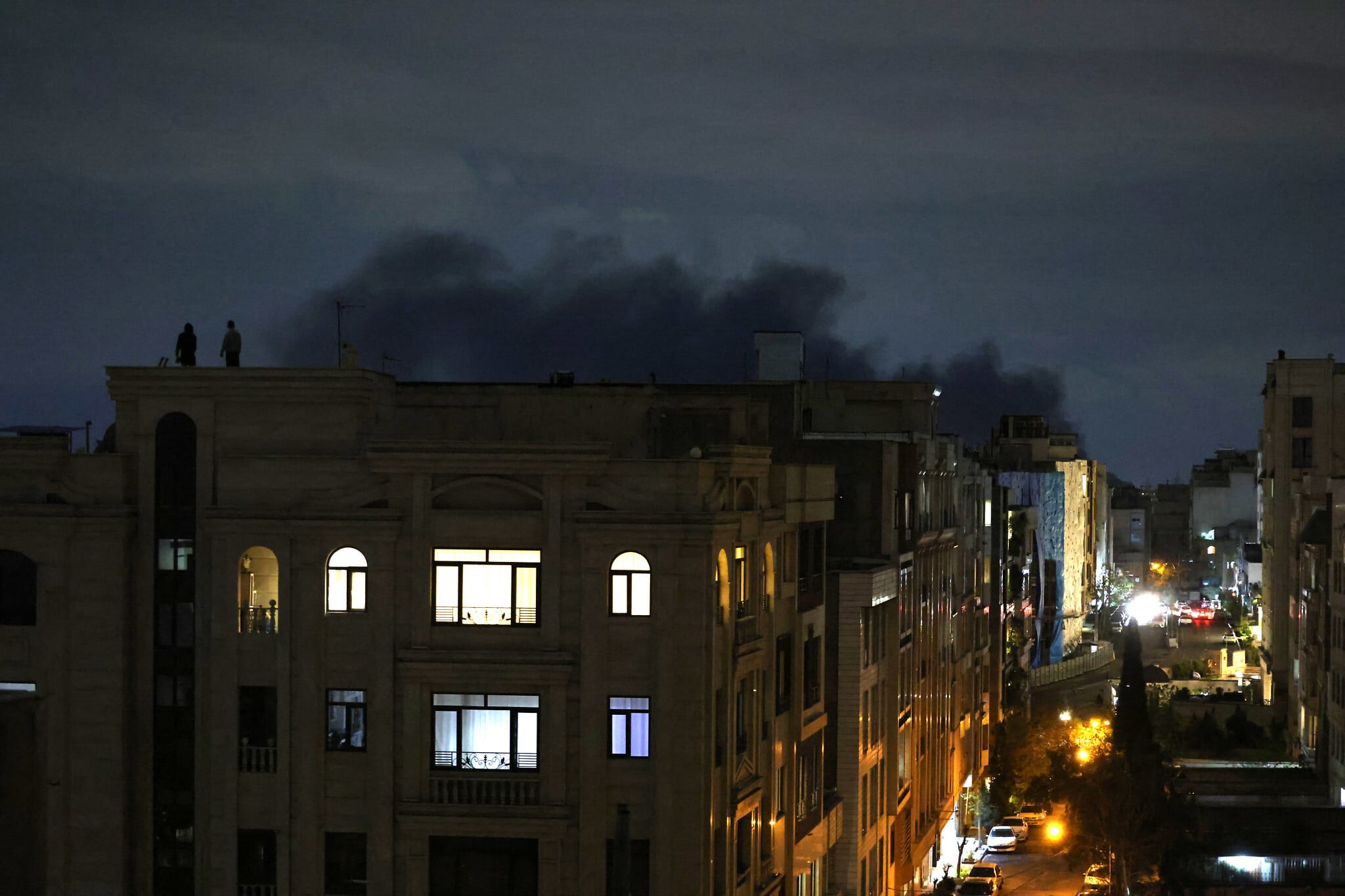
The Israel Defense Forces assessed on Saturday that it would finish targeting nearly all of Iran’s key military industry sites in the coming days, as the war hit its one-month anniversary, and Vice President JD Vance suggested that Washington would soon begin winding down its fight against the Islamic Republic.
The remarks came against the backdrop of heavy airstrikes over Iran, which the IDF said had targeted, among other things, the headquarters of the regime’s Marine Industries Organization, tasked with the production of naval weapons and vessels.
IDF spokesman Effie Defrin said at a press conference on Saturday evening that “within a few days” the military would finish targeting all of the “critical” assets of Iran’s military production industries.
“This means we will destroy most of the military production capabilities, and it will take the regime a long time to restore them,” he said.
Iran’s defense industry is extensive, with numerous military bodies and private companies manufacturing weapon systems — or components — including ballistic missiles, air defenses, naval weapons, cyber capabilities, and even spy satellites.
The Israeli Air Force has so far targeted thousands of assets of Iran’s military industry amid the war, or around 70%, and the IDF assesses that it is now close to having targeted around 90% of the key sites used to develop weapons that threaten Israel.
‘A little while longer’
Like Defrin, Vance suggested in remarks published Saturday that Washington was close to completing the goals it set out for the joint offensive on Iran.
The vice president addressed the war in a conversation with conservative political commentator Benny Johnson on his podcast, “The Benny Show.”
The war, he said, would continue for “A little while longer,” with the goal being to “neuter” the Islamic “for a very, very long time.”
He said the US had “accomplished the vast majority of our military projects,” and claimed that one could even argue the objectives had actually already been met.
JD Vance | Saving Western Civilization by Fighting Demons, Will We Survive?
0:00 – Intro
1:13 – Advice to Young Men
3:00 – Fighting Fraud
5:59 – Ilhan Omar Immigration Fraud
7:16 – Tim Walz
7:48 – The SAVE America Act
11:50 – Mass Deportations
13:44 – Response to Joe Rogan
15:12… pic.twitter.com/A2fwHVTLVu— Benny Johnson (@bennyjohnson) March 28, 2026
“The president’s going to keep at it for a little while longer to ensure that once we leave, we don’t have to do this again for a very, very long time,” Vance said, in a rare acknowledgement that the military gains made by the US will not be permanent.
“This country is threatening us in all these ways. They’re still trying to build a nuclear weapon. We ned to neuter them for a very, very long time, and that’s the purpose,” he added.
Asked by Johnson about the rising gas prices due to the war, Vance acknowledged the issue, but called it a “very temporary reaction to what is going to ultimately be a short-term conflict.”
“We’re not interested in being in Iran a year down the road or two years down the road. We’re taking care of business. We’re going to be out of there soon, and gas prices are going to come back down,” he stressed.
Another blow to Iran’s naval capabilities
As the war entered its second month on Saturday, the IDF said that the Air Force had targeted the headquarters of Iran’s Marine Industries Organization overnight.
It said the MIO headquarters, located in Tehran, were responsible for “research, development, and production of a wide range of naval weaponry, including surface and sub-surface vessels, manned and unmanned equipment, as well as engines and weapons.”
The strike was carried out following intelligence provided by the Naval Intelligence Division, the military said, adding that it “deepens the damage to the Iranian terror regime’s naval capabilities, with a particular impact on its ability to produce advanced maritime weapons.”
The IDF said it also struck other sites used by Iran to develop weapons and air defense systems during the wave of strikes.
It was the latest blow to Iran’s naval operations, after the IDF announced on Thursday that the commander of the Islamic Revolutionary Guard Corps Navy, Adm. Alireza Tangsiri, had been killed in an airstrike.
Later on Saturday, the IDF said it had completed another “extensive” wave of strikes in Tehran, targeting dozens of Iranian regime infrastructure sites.
It said further details on the targets would be provided at a later point.
Separately on Saturday, the Saudi Al Arabiya news outlet reported that an Iranian nuclear scientist had been killed in a strike several days ago in northern Iran.
The nuclear scientist, named by the outlet as Mohammed Reza Kia, was killed along with his wife in a strike in the Kiashahr district, it said.
Kia specialized in nuclear physics and atomic engineering, the report said, and he was associated with several government nuclear research institutions.
An IRGC commander and a commander in the Basij paramilitary force were both killed in the same strike, Al Arabiya reported.
‘Powerless’
Amid the repeated waves of airstrikes, an AFP journalist in Tehran reported intense explosions and a plume of black smoke overnight.
On Saturday evening, another wave of blasts rang out in the capital for several minutes, with no immediate word on what was targeted.
“I miss a peaceful night’s sleep,” an artist in Tehran told AFP, saying the previous night’s strikes were “so intense it felt like all of Tehran was shaking.”
“We are powerless to change a government that kills, and we don’t want this war either. We just want a normal, simple life.”

Israel launched its campaign against Iran, alongside the US, to degrade the Iranian regime’s military capabilities, distance threats posed by Iran — including its nuclear and ballistic missile programs — and “create the conditions” for the Iranian people to topple the regime, the military and other Israeli leaders have said.
Since the war began on February 28, 16 Israeli civilians and foreign nationals have been killed in Israel in Iranian ballistic missile attacks, along with four Palestinians in the West Bank.
More than 450 ballistic missiles have been launched from Iran at Israel in that time, with the military reporting an interception rate of 92 percent of attacks heading for populated areas and key infrastructure.
The Israeli Air Force, at the same time, has conducted hundreds of waves of strikes in Iran, dropping over 13,000 bombs on Iranian regime and military sites, including air defense systems, ballistic missile launchers, weapon production sites, nuclear facilities, and various headquarters.
The IDF has estimated that some 5,000 Iranian soldiers have been killed in Israeli strikes, along with tens of thousands more wounded, many of them members of the internal security forces and Basij paramilitary force.
