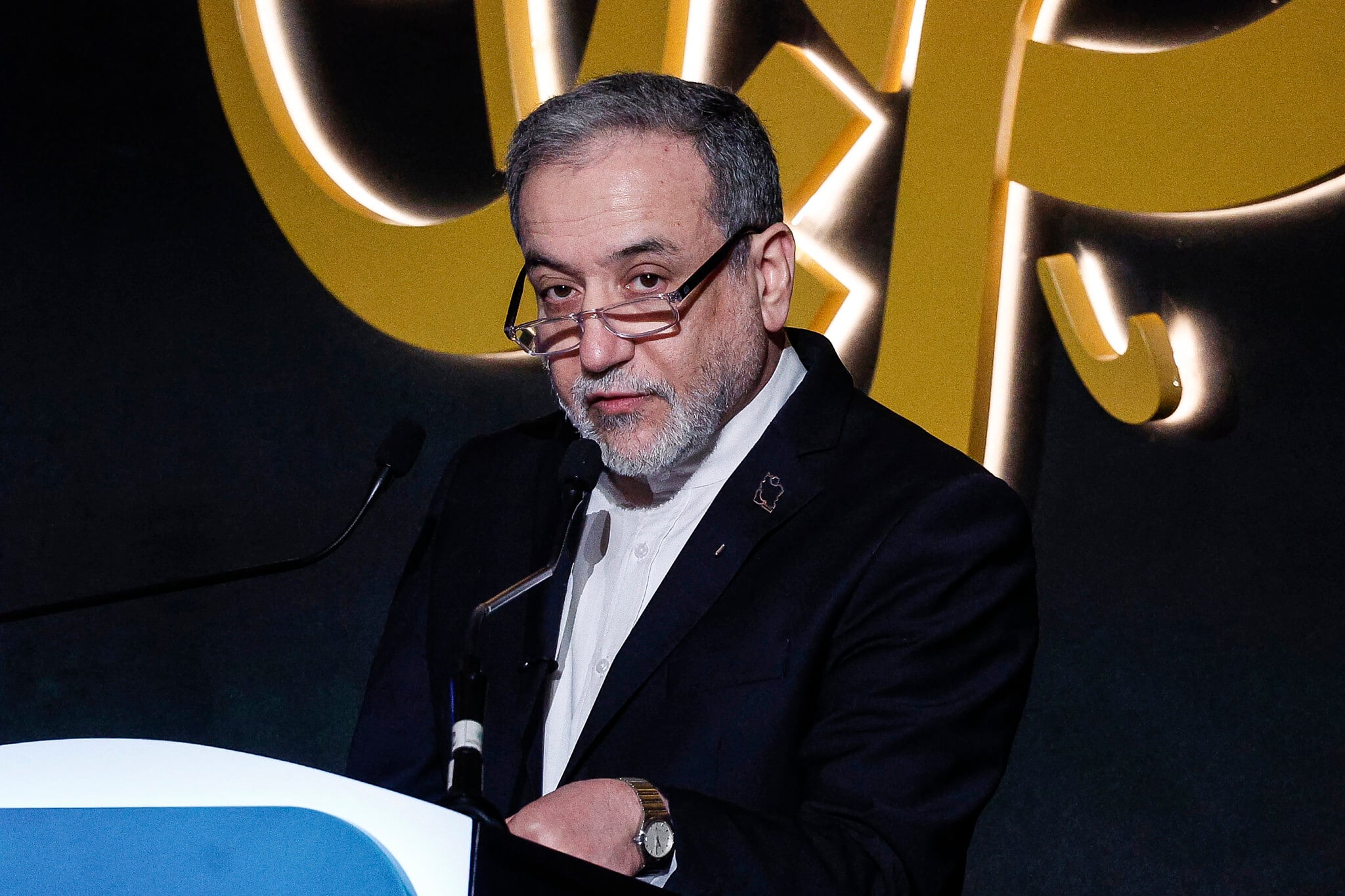
Iranian Foreign Minister Abbas Araghchi on Sunday ruled out Tehran ever giving up uranium enrichment in its negotiations with Washington, insisting it will not be intimidated by the threat of war with the United States.
Araghchi told a forum in Tehran that Tehran had little trust in Washington, and even doubted that the US side was taking renewed negotiations seriously.
“Why do we insist so much on enrichment and refuse to give it up, even if a war is imposed on us? Because no one has the right to dictate our behavior,” Araghchi declared.
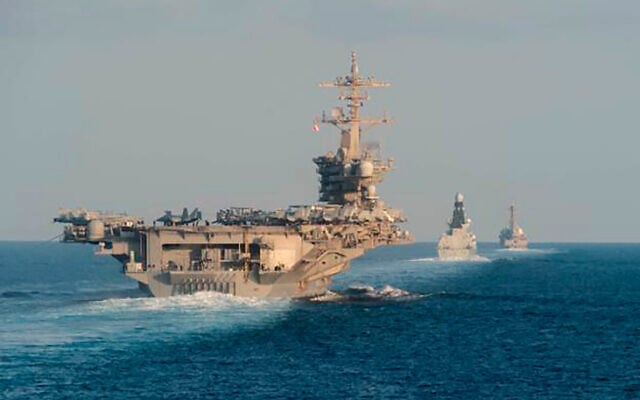
“Their military deployment in the region does not scare us,” he added, referring to the buildup of US forces, including the arrival of the aircraft carrier USS Abraham Lincoln in the Arabian Sea.
The United States and Iran reopened negotiations on Friday in Oman, after the previous talks between the two countries were suspended due to Israel’s 12-day war with Iran in June 2025, which ended with a US strike on several Iranian nuclear sites.
Iran is seeking to have US economic sanctions on the country lifted, in exchange for what Araghchi said at the forum could be “a series of confidence-building measures concerning the nuclear program.”
“They fear our atomic bomb, while we are not looking for one. Our atomic bomb is the power to say ‘no’ to the great powers,” Araghchi said.
Western countries suspect Iran is seeking to acquire a nuclear bomb. Iran has denied seeking to acquire nuclear weapons. However, it has enriched uranium to levels that have no peaceful application, obstructed international inspectors from checking its nuclear facilities, and expanded its ballistic missile capabilities. Prior to the June war, Israel said Iran had recently taken steps toward weaponization.
‘Peace through strength’
Araghchi’s comments came after US lead negotiators Steve Witkoff and Jared Kushner visited the USS Abraham Lincoln on Saturday, signaling the persistent threat of US military action against Iran.
The US military’s Central Command (CENTCOM) said the two top officials visited the nuclear-powered vessel.
In a social media post, Witkoff said the aircraft carrier and its strike group were “keeping us safe and upholding President Trump’s message of peace through strength.”
The threat of war continues to hover over the negotiations, even as Trump called the talks “very good” and Iran’s President Masoud Pezeshkian posted on social media that they “constitute a step forward.”
Following Friday’s first round in Oman, Trump signed an executive order calling for the “imposition of tariffs” on countries still doing business with Iran despite US sanctions.
The United States also announced new sanctions against numerous shipping entities and vessels, aimed at curbing Iran’s oil exports.
It remained unclear on Sunday when and where, or if, there will be a second round of talks. Trump, after the talks Friday, offered few details but said: “Iran looks like they want to make a deal very badly — as they should.”
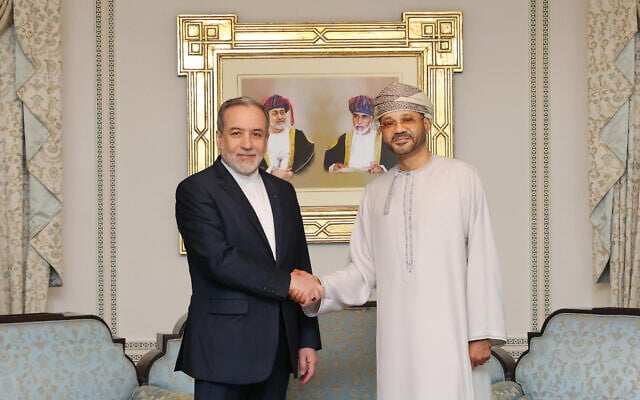
Araghchi appeared to be taking the threat of an American military strike seriously. He said that after multiple rounds of talks last year, the US “attacked us in the midst of negotiations” when it joined Israel’s war.
The top Iranian diplomat called into question the United States’ commitment to negotiations.
“The continuation of certain sanctions and military actions raises doubts about the seriousness and readiness of the other side to conduct genuine negotiations,” he said.
“We are monitoring the situation closely, assessing all the signals, and will decide on the continuation of the negotiations,” he said. “It is not clear up to where it will go.”
Protests’ toll
Talks between the two archenemies came amid a major US military buildup in the region in the wake of Iran’s brutal crackdown on protests that began in late December, driven by economic grievances.
Authorities in Iran have acknowledged that 3,117 people were killed in the recent protests, publishing on Sunday a list of 2,986 names, most of whom they say were members of the security forces and innocent bystanders.
International organizations and media have put the toll far higher, possibly in the tens of thousands.
The US-based Human Rights Activists News Agency (HRANA), which has kept a running toll since the onset of the protests, says it has verified 6,961 deaths, mainly of protesters, and has another 11,630 cases under investigation. It has also counted more than 51,000 arrests.
Times of Israel staff contributed to this report.