

Israel pounds Iran missile sites, airport as Tehran fires back repeated salvos, threatens Europe
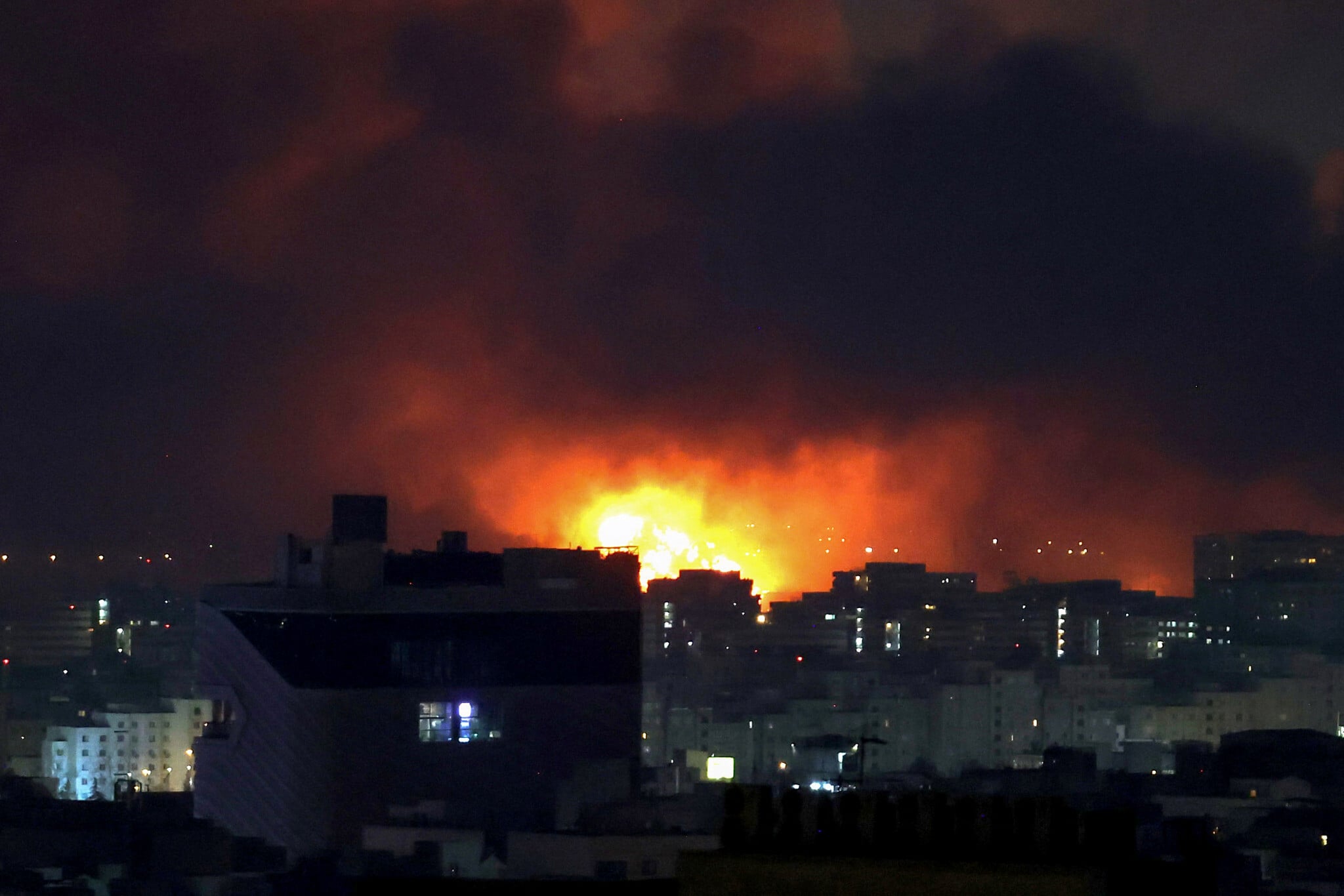
Israel continued its military campaign against Iran overnight Saturday, striking key missile infrastructure and IRGC aircraft, as Tehran launched repeated salvos of ballistic missiles at Israel and issued new threats against European countries that might join the war.
As the war entered its second week, the Israel Defense Forces said that more than 80 air force fighter jets carried out a wave of strikes overnight on several Iranian military sites in Tehran and central Iran, dropping around 230 bombs on the targets.
Among the targets was a subterranean site “for the storage and production of ballistic missiles, from which hundreds of soldiers from the armed forces of the Iranian terror regime operated,” the IDF said.
The military said the site “contained bunkers and military headquarters of regime elements.”
Additionally, the IDF said it struck another missile storage site, which included bunkers and launch infrastructure, as well as Imam Hossein University, the Islamic Revolutionary Guard Corps military academy, which the IDF says “served as an emergency asset and an assembly complex for the IRGC,” including during the war.
As the war entered a new phase, the military said it was ramping up strikes on Iran’s weapon production facilities across the country, including those used to manufacture missiles and launchers.
Earlier, footage posted to social media showed strikes and large fires at Tehran’s Mehrabad International Airport, after the Israeli military said it was carrying out an “extensive” wave of strikes against regime targets in Iran’s capital.
On Saturday, the IDF confirmed that it had attacked the airport, saying that it ha destroyed 16 aircraft used by the IRGC Quds Force. The military said that Mehrabad Airport was used by the Quds Force “as a central hub for arming and funding the regime’s terrorist proxies in the Middle East,” including Lebanon’s Hezbollah.
“Aircraft loaded with weapons and cash took off from the airport numerous times and landed across the region for the use of the Iranian terror regime’s proxies,” the military said.
As part of the strikes, the IDF says it destroyed 16 aircraft that had been used to transfer weapons to Hezbollah, other military infrastructure at the airport, as well as several Iranian fighter jets that “posed a threat to Israeli Air Force aircraft operating in Iranian airspace.”
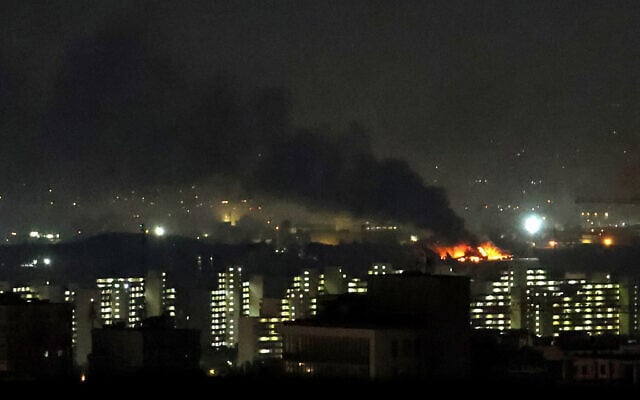
The IDF also said it struck a key command center of Iran’s Islamic Revolutionary Guard Corps’ air force overnight.
According to the military, the command center in Tehran served the IRGC air force’s air defense unit, “whose purpose is to create an aerial picture and defend Iran’s skies.”
“This is the most central air defense operations room of the IRGC air force,” the military said, adding that it also struck air defense systems, headquarters, logistical warehouses, and other buildings near the command center.
Also Saturday, a military source told The Times of Israel that Air Force chief Maj. Gen. Tomer Bar took part in a strike sortie in Iran on Friday, flying an F-15 fighter jet.
Iran launches missiles at Israel
Even as Israeli strikes intensified inside Iran, Tehran continued firing missiles toward Israel overnight and into Saturday morning.
Frequent launches throughout the night triggered sirens in Jerusalem, Beersheba and northern Israel, repeatedly sending millions of people scrambling for bomb shelters.
At around 6:20 a.m., the IDF said it detected the fifth launch of ballistic missiles from Iran since midnight, triggering sirens in Tel Aviv and other parts of central Israel.
While the attacks came every few hours, there were a relatively small number of missiles in each salvo and most were intercepted. Medics said there were no reports of injuries following the attacks, and there were no reports of missile impacts.
Short warnings
On Friday evening, several Iranian missile barrages prompted sirens across central Israel, though the advance warning time before the alarms sounded was shorter than in previous attacks.
A review of Home Front Command alerts showed that at 7:16 p.m., an early warning was issued for central Israel, with sirens sounding three minutes later at 7:19 p.m. Another alert at 8:40 p.m. was followed by sirens just one minute later, and a third warning at 9:54 p.m. preceded sirens by about two minutes.

Earlier attacks during the war had typically provided civilians four to eight minutes of preparation time.
The IDF Home Front Command on Saturday morning clarified that the shorter-than-usual early warnings issued for the Friday night attacks were related to a variety of factors surrounding the detection of the projectiles, rather than a technical issue.
“The detection of barrages and launches is influenced by a variety of operational factors, and therefore it is not always possible to provide a long preparation time between the advance notification and the sirens,” the military said in a statement.
“At times, the notification may be received relatively close to the sirens. It is important to clarify that there are situations in which sirens may be sounded without a prior advance notification, depending on operational conditions,” the IDF said.
The military said that the Home Front Command “sends an advance notification to mobile phones in the relevant areas as early as possible, as part of its public warning policy.”

The early alerts are issued based on the detection of launches from Iran and the stage of flight the missile has reached, meaning that in some cases, the warning may come only shortly before the siren itself.
Some unverified reports have attempted to tie the shorter warnings to damage caused to US radars in the region in Iranian strikes; however, this is highly unlikely.
The radar systems were damaged days ago, not on Friday night, and overnight attacks saw typical early warnings of three to seven minutes before sirens sounded.
Tehran presses attacks on Gulf states
The conflict has also spilled across the Gulf region, where Iran has targeted countries hosting US forces.
On Saturday morning, AFP journalists reported hearing two explosions in Dubai and another blast in Bahrain’s capital Manama, where warning sirens sounded, and authorities urged residents to seek shelter.
A friend shared this video of Dubai airport being hit by an Iranian drone a few minutes back.
Seems very close to the @Emirates plane
Really scary situation
✈️#iran #israel #dubai #us #war pic.twitter.com/8ICMtIM3kh
— Tarun Shukla (@shukla_tarun) March 7, 2026
Saudi Arabia, meanwhile, said it had intercepted an Iranian missile fired at an airbase southeast of the capital Riyadh. The nation also reported at least two drone attacks earlier in the week that targeted the Ras Tanura refinery in the east.
Saudi Defense Minister Prince Khalid bin Salman warned Iran against further escalation.
“We stressed that such actions undermine regional security and stability and expressed hope that the Iranian side will exercise wisdom and avoid miscalculation,” he wrote on X after meeting Pakistan’s army chief to discuss the attacks.
Iran’s warning to Europe
As the conflict widens, Tehran has also issued direct warnings to European governments.
Iran’s deputy foreign minister Majid Takht-Ravanchi said any European Union member states that join the US and Israel in attacks against Iran would become “legitimate targets” for Iranian retaliation.
“Any country that joins in the aggression against Iran, joins America and Israel in the aggression against Iran, definitely, they will also be legitimate targets for Iran retaliation,” Takht-Ravanchi said in an interview with France 24.
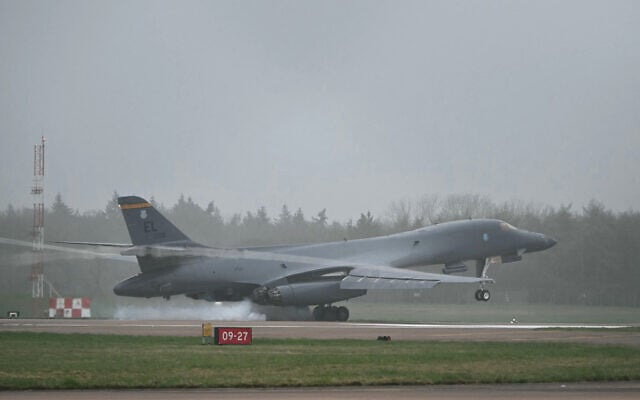
While some EU countries, such as France, Greece and Italy, have sent warships towards the Middle East and most EU top officials have condemned Iranian strikes in the region, they have mostly called for an end to the conflict and called for a diplomatic solution.
German Chancellor Friedrich Merz said on Friday that Berlin was working with partners to find an approach to end the fighting with Iran, while saying his country shared the aims of the US and Israel.
US mulls future of war
In Washington, the White House sought to reassure the public about America’s readiness as the war entered its second week.
White House press secretary Karoline Leavitt said the United States has sufficient weapons stockpiles to meet operational needs related to the conflict in Iran.
Her comments came as US President Donald Trump prepared to meet with major defense contractors alongside Defense Secretary Pete Hegseth, in talks expected to focus on expanding weapons production as the war continues.
This came as Trump has privately expressed interest in deploying ground forces to Iran, according to NBC News.
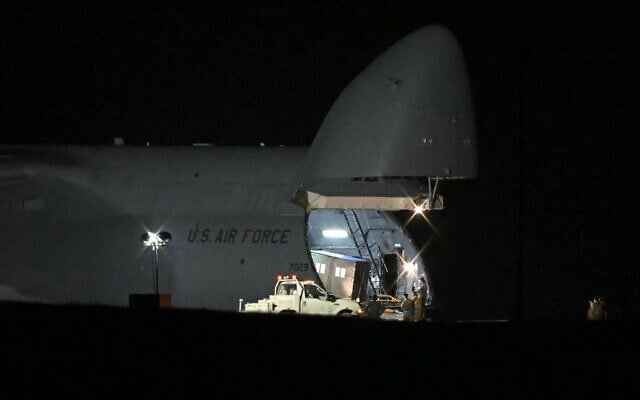
In a report citing several sources, the US broadcaster said that Trump had raised the idea with White House aides and Republican officials while laying out his vision for Iran after the war, which he envisions will include cooperation between Tehran and Washington on oil similar to the US and Venezuela.
The sources cited in the report said Trump hasn’t discussed a major ground offensive in Iran, but instead a small group of US forces to carry out missions that the report describes as having specific strategic purposes. The sources add that Trump hasn’t yet made any decision on the matter.
Meanwhile, Trump said unconditional surrender in the American-Israeli war against Iran could mean the total destruction of the Islamic Republic’s military capabilities and not necessarily a formal capitulation by Tehran.
“Unconditional surrender could be that [the Iranians] announce it. But it could also be when they can’t fight any longer because they don’t have anyone or anything to fight with,” he told Axios.
