

JBL Go 5 review: Stellar sound for just $54
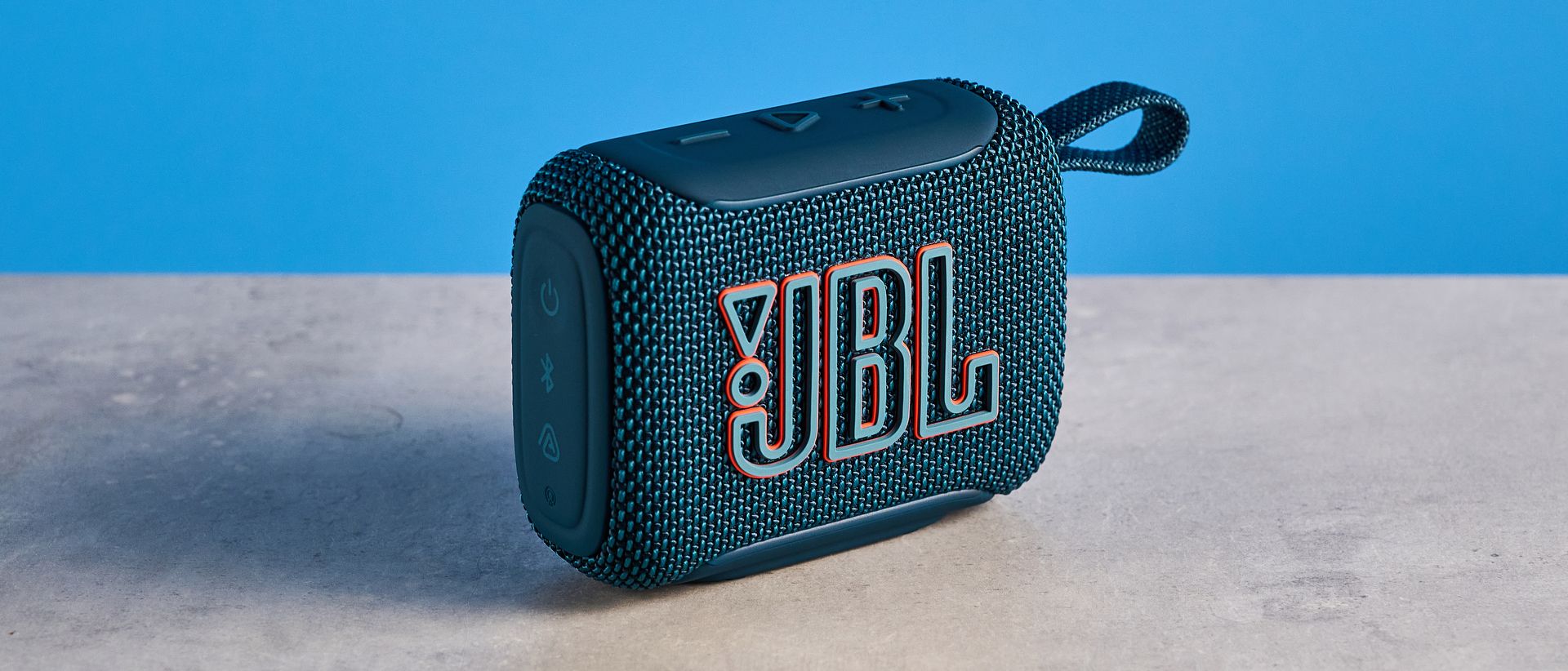
As someone who loves music, I don’t think any party (or shower karaoke session) is complete without a speaker. The JBL Go 5 is one of the best budget Bluetooth speakers you can buy today, period. It improves on its predecessor by offering more refined sub-bass, and the overall sound quality is dynamic thanks to the wide soundstage.
The Go 5 retains most of the Go 4’s design while adding LED lighting strips. It’s highly waterproof, dustproof and even drop-proof, so it’s perfect for the outdoors. Small and compact, the Go 5 is pocketable so it’s great for your travels. Auracast-enabled, it can be paired with other JBL speakers, and creating stereo channels with another Go 5 is easy as pie too.
JBL Go 5 review: Specs
JBL Go 5 review: Price & availability
Launched in April 2026 alongside the JBL Xtreme 5, the JBL Go 5 succeeds the two-year-old JBL Go 4. Priced at $54 / £39 at Amazon, it’s $5 more expensive than its predecessor, which isn’t a huge jump (and is justified by the Go 5’s improved sound). It’s available in a range of colors, including Black, Blue, Pink, Squad (camo) and White.
The Go 5 is a budget Bluetooth speaker, and it finds itself competing with the likes of the Tribit StormBox Mini+ ($39), the Tozo PE1 ($39) and the Tribit StormBox Micro 2 ($59). There’s no dearth of speakers in the sub-$50 range, so why should you buy the Go 5 and not, say, the StormBox Mini+, the PE1 or the Go 4 ($49)? The Go 5 is more rugged thanks to its IP68 durability rating and it boasts loud volume and better bass performance.
JBL Go 5 review: Design

- Compact and pocketable
- Bluetooth 6.0 with SBC, AAC and LC3
- IP68 waterproofing and dust resistance
If you put the JBL Go 5 next to the Go 4, you probably wouldn’t be able to tell the difference. The Go 5 bears striking resemblance to its predecessor as it continues to sport a boxy, rectangular design with mesh covers over the front and rear faces. The rear face, however, doesn’t feature two grip rubber strips anymore. Instead, they extend down from the top and bottom, lending the speaker a more premium look.
The base and top of the Go 5 are also fairly similar to the Go 4’s. There’s textured rubber feet at the bottom to make the Go 5 stand upright. In terms of size, the Go 5 remains pocketable and portable, measuring 3.98 x 3.05 x 1.7 inches and weighing 8.16oz. It’s a little heavier than the Go 4 which weighs 6.7oz but the difference is hardly noticeable. I’ve had no trouble carrying the speaker in my backpack, a tote bag, and even in my jacket’s pocket. The Go 5 is smaller and more portable than the Tribit StormBox Mini+, the Tribit StormBox Micro 2 and the Tozo PE1 too.

JBL has added two strips of LED lighting which run along the base and the top plate. There are four effects to choose from, within the companion app (more on that shortly): Bounce, Loop, Freeze, and Switch. You can’t change the color as the default is blue on the Blue model (red on the Red, pink on the Pink, and so on). I don’t mind that as it makes the speaker look classy. If you want customizable RGB lighting, I’d recommend the Tribit StormBox Mini+ instead.
Weatherproofing

If you want to use the Go 5 to soundtrack a pool party, a karaoke session in the shower, or a bonfire in the Sahara, you can confidently do so as the speaker is IP68-rated. This means that the speaker can be submerged in 1.5m of water for 30 minutes, and it’s dust-proof too, so it won’t get damaged by dirt and dust. Oh, and it’s drop-proof. Although JBL doesn’t specify how much of a tumble the Go 5 can sustain, I dropped it from a height of approximately 2m onto a wooden floor and it was unscathed.
Controls

The playback controls (play and volume) are located on the top plate. Other buttons — power, Bluetooth and Auracast — can be found along the Go 5’s left edge. Straightforward enough that you shouldn’t have any issues getting to grips with them.
Connectivity

Just like its predecessor, the Go 5 is Auracast-enabled which means you can link multiple speakers together for bigger sound — or if you want to play the same song in different parts of a room. Auracast pairing is simple as all you need to do is press the triangle on two (or more) Auracast-enabled speakers and et voilà. While we found the process on the Go 4 a little finicky, I had no problem pairing the Go 5 with my friend’s JBL Clip 5 ($79).
The Go 5 also features AirTouch stereo pairing if you have another Go 5 at hand, as I did. All you need to do is touch the two speakers together and left and right stereo channels are instantly created. It worked flawlessly in my testing, and considering the Go 5 doesn’t cost a lot, you might as well buy two for a more immersive experience.
JBL Go 5 review: Sound quality

- Better sub-bass than the Go 4
- Crisp treble and refined mids
- Can get very loud!
One of our complaints with the JBL Go 4 was that the sub-bass was practically non-existent, but thankfully, the JBL Go 5 doesn’t suffer from that problem. The sound quality is refined and fine-tuned and straight out of the box, it doesn’t give you much to complain about. The Go 5 can get very loud too, especially for the size, and it doesn’t sound tinny at high volumes either, unlike the Tozo PE1.
To test the Go 5, I listened to my range of testing songs on Qobuz, in our opinion the best music streaming service for hi-res audio. I kicked things off by listening to ‘Elma’ by Yin Yin, an atmospheric psychedelic rock and funk track. The Go 5 handled the track beautifully, with the shimmering guitar and synth waves boasting impressive separation. Each string plucked on the bass guitar had plenty of low-end impact. While I couldn’t feel the sub-bass in my chest due to the Go 5’s frequency response going only as low as 100Hz, it still sounded thick, warm and enjoyable.

I then listened to ‘First Light’ by Lana Del Rey and the song felt remarkably intimate, with Lana’s vocals shining and not getting drowned out by the David Arnold-produced orchestration. “T” and “s” sounds remained crisp without becoming hissy. The Go 5 also did an excellent job at reproducing the high-frequency tension of the string section with plenty of agility, and the song sounded energetic throughout.
‘Who Will You Follow’ by Evanescence proved to be a good test for the Go 5’s dynamic management, as in this gothic alternative metal, Amy Lee’s vocals compete with a dense wall of sound. The Go 5 handled the distorted, low-tuned guitars with surprising grit, and the track never sounded muddy — something small speakers, like the Tribit StormBox Micro 2, can get overwhelmed by. Amy’s high-pitched vocals never pierced through the soundstage either, and they didn’t sound too shrill or unpleasant.
If you want a compact speaker that doesn’t compromise on sound quality due to its size, the Go 5 should be your port of call. It sounds better than the Tribit StormBox Mini+, a speaker I use nearly every day, and doesn’t feature poor bass reproduction like the Tribit StormBox Micro 2.
Listen along to my review with the JBL Go 5 testing playlist:
JBL Go 5 review: App

- JBL Portable app on iOS and Android
- User-friendly
- Straightforward EQ customization
To customize the JBL Go 5, you’ll need to download the JBL Portable app for free on your iOS or Android smartphone. Intuitive to use thanks to its clean interface, the JBL Portable app lets you update the Go 5’s firmware, customize stereo channels and group speakers together, customize the equalizer, and choose an EQ preset. That’s about it and it’s all you really need for a portable, budget speaker.
JBL Go 5 review: Battery life

- 10 hours of battery life
- Rivals offer longer
According to JBL, the Go 5 offers up to 8 hours of playback time and 10 hours with Playtime Boost enabled via the app. This is a three-hour improvement over the Go 4. To test the battery life, I played the Go 5 at approximately 50% volume, and after nine hours, I was prompted to charge it. If you’re planning on soundtracking a barbecue or party, the Go 5 should last you comfortably.
It’s important to note, though, that the Go 5’s rivals offer longer battery lives — but not by much. The Tribit StormBox Mini+ lasted 13 hours in my testing; the Tribit StormBox Micro 2 nets you about 12 hours of usage; and the Tozo PE1 lasts around 15 hours at moderate volumes.
JBL Go 5 review: Verdict

I’ve tested my fair share of Bluetooth speakers: the good, the bad, and the ugly. The JBL Go 5 falls into a secret fourth category: the excellent. Compact and pocketable, the Go 5 can be taken anywhere, and its robust IP68 waterproof and dustproof rating means you can use it by the pool or in the desert.
The Go 5 boasts a wide soundstage too, and while its predecessor struggled with sub-bass, the Go 5 thankfully doesn’t. The bass is meaty, especially for the size, and the treble is crisp and refined. Pairing the Go 5 with other Auracast-enabled speakers is a walk in the park, which is great for large gatherings where you want everyone to listen to the same tunes.
While the battery life isn’t the best, I don’t believe that should put you off from buying the Go 5. That’s a tradeoff I’m willing to make for the dynamic sound quality.
Source link
