

Leica M EV1 review: The most approachable M-series camera yet
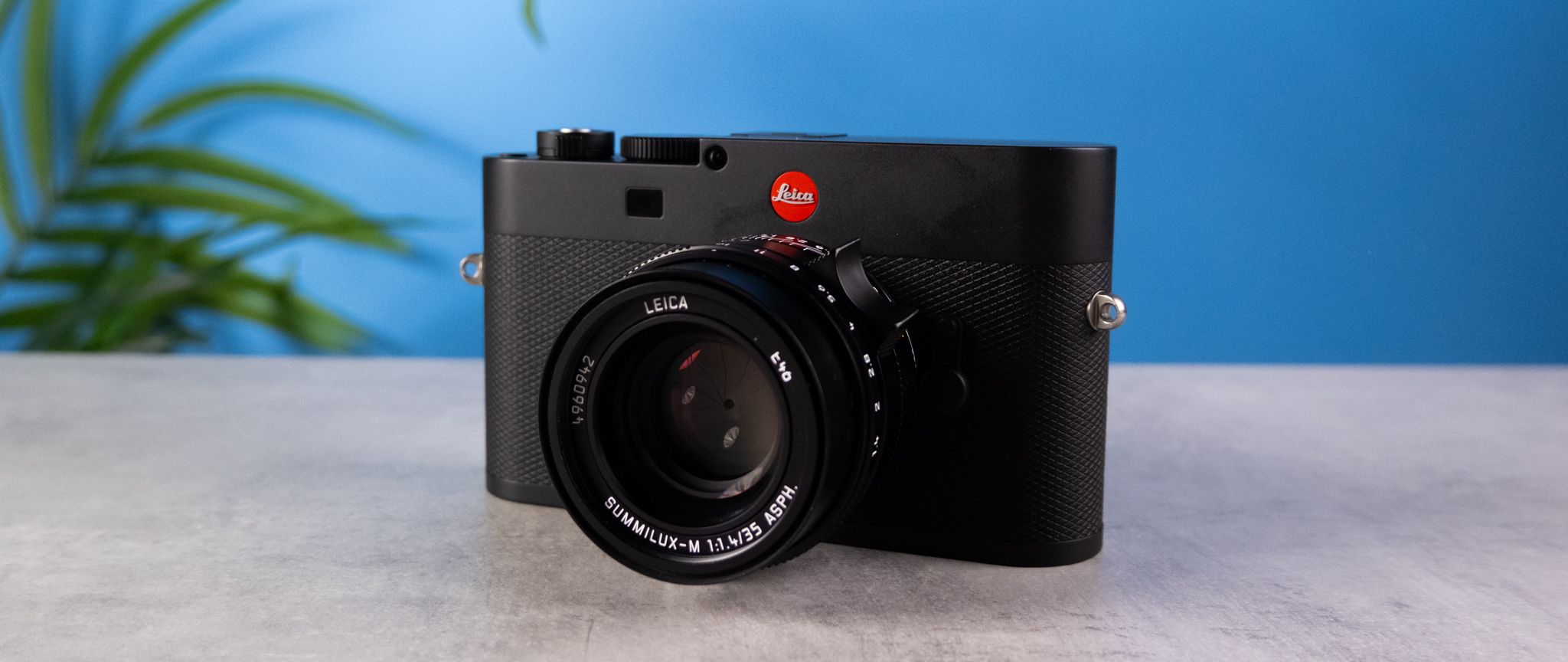
In 2024, Leica celebrated 70 years of its M-system, a lineup of digital rangefinder cameras that has evolved but mostly retained the rangefinder soul. In October 2025, the Leica M EV1 was announced, and it divided the internet and Leica purists. Why? Because Leica introduced an OLED EVF with focus aids, while retaining manual focusing operation, breaking with the core tradition of M-series cameras featuring optical rangefinders.
Though online forums can’t make up their mind about how they feel, I’ve been testing the M EV1 for nearly three weeks and I really, really like it. The hi-res EVF along with focus peaking make the camera easy to use, while its 60.3MP sensor captures detailed, colorful, bright images. It also features an impressive dynamic range of up to 15 stops, and all of this is packaged into a compact, premium body.
It isn’t without its flaws, but if you want one of the best cameras on the market right now, you wouldn’t go wrong with this one. For the complete breakdown, read my full Leica M EV1 review.
Leica M EV1 review: Cheat sheet
- What is it? A rangefinder-style M-series camera with manual focusing and focus aids, such as peaking
- Who is it for? For anyone who wants a rangefinder with the convenience of an EVF and focus assist
- How much does it cost? A bucketload! The Leica M EV1’s body retails for $8,995 / £6,840
- What do we like? The premium build, 60MP sensor that captures detailed images, hi-res EVF, and impressive dynamic range
- What don’t we like? It’s very expensive, and features an immovable fixed monitor
Leica M EV1 review: Specs
|
Specs |
Leica M EV1 |
|---|---|
|
Price |
|
|
Sensor |
60.3MP BSI CMOS |
|
Processor |
Leica Maestro III |
|
Stabilization |
No |
|
AF system |
No, rangefinder only |
|
Focus modes |
Manual |
|
Viewfinder |
OLED EVF, approx. 5.76 million dots |
|
Display |
2.95-inch Active Matrix TFT LCD touchscreen, approx. 2.33 million dots |
|
ISO range |
64-50,000 |
|
Internal storage |
Yes, 64GB |
|
Ports |
USB-C, 1x SD/SDHC/SDXC UHS-I/UHS-II |
|
Wireless/Bluetooth |
Wi-Fi, Bluetooth |
|
Max shooting speed |
4.5fps (electronic) |
|
Max shutter speed |
60min to 1/4,000s (mechanical) | 60s to 1/16,000s (electronic) |
|
Battery life (Stills, CIPA) |
244 shots |
|
Size |
5.5 x 3.2 x 1.5 inches |
|
Weight |
14.56oz (body only) |
Leica M EV1 review: Price & availability
Much like every other camera made by the German manufacturer, the Leica M EV1 doesn’t come cheap. Launched in October 2025, its body has a retail price of $8,995 at B&H Photo / £6,840 at Park Cameras, and the camera is available in one color only: black.
As an M-mount camera, the M EV1 is compatible with a vast array of M-mount lenses. I tested the Leica Summilux-M 35mm f/1.4 ASPH lens which, on its own, costs a whopping $6,415 / £4,798, so you’re looking at an expenditure of around $15,000 if you buy the M EV1.

The M EV1 feels like a cross between the full frame mirrorless Leica Q3 43 ($7,380) and the rangefinder Leica M11-D ($9,799), and it’s priced as such — though it’s slightly cheaper than the M11-D, but if you’re buying a Leica, I’m assuming money isn’t an object here. As a digital rangefinder-style camera, the M EV1 finds itself competing against the likes of the Fujifilm GFX100RF ($4,899) and the 61MP Sony RX1R III ($5,099). The difference, however, is that the GFX100RF is a medium format 100MP camera, while the RX1R III features a fixed lens, making the M EV1 the more versatile pick.
But is the M EV1 worth the premium price tag? It’s a polarizing addition to the M-series as for the first time, Leica has replaced the traditional optical rangefinder with an electronic viewfinder (EVF) and this has divided online forums (primarily the r/Leica subreddit). For the photographer who loves M-mount lenses and Leica’s excellent color science now combined with an easier focusing mechanism, I’d say the M EV1 is worth the price of admission.
Leica M EV1 review: Design

The Leica M EV1 bears resemblance to its other M-series stablemates, such as the Leica M11-D, M-11 P and the M11. Given that you’re paying an arm and a leg for the privilege of using a Leica, you can expect premium, sturdy build quality. The M EV1 looks nothing short of beautiful, sporting an all-black design, the coveted red dot, and minimal branding on the top plate.

It’s easy to travel with too, thanks to the compact size as it measures just 5.5 x 3.2 x 1.5 inches and weighs only 14.56oz (body only). It’s slightly bigger than both the Fujifilm GFX100RF and the Sony RX1R III, but it’s not unwieldy. I had no issues wearing the M EV1 around my neck or carrying it in my backpack.

Although the M EV1 doesn’t feature a protruding/sculpted grip, I still felt that the camera handled beautifully, thanks to good weight distribution and the handle on (most) M-mount lenses which helps you grip the system better.
Viewfinder

As I mentioned earlier, the M EV1 is a departure from traditional M-system cameras. The traditional optical rangefinder on, say, the M11-D, has been replaced by an electronic viewfinder (EVF) for the first time in over 70 years. No wonder purists are having a hard time coming to terms with the existence of the M EV1, and I get it, as omitting the rangefinder makes the M EV1 feel a little soulless… but the shooting experience is nothing short of fantastic, in my opinion.
The M EV1’s OLED EVF has a resolution of approximately 5.76 million dots, similar to the Leica Q3 43 and the Fujifilm GFX100RF, and much better than the Sony RX1R III’s 2.36M-dot viewfinder. The M EV1’s EVF also features a 60fps refresh rate which relays smooth motion. It’s comfortable to look through and lets you view and frame your subject accurately.

What I really like about this camera is that it feels like a modern evolution of Leica’s M-system, and I can see arguments both for and against the M EV1. Sure, it isn’t offering the same purist shooting experience as other M-series cameras, but it does well to combine useful elements from Leica’s Q-series with the convenience of a wide array of lenses.
The M EV1 retains the manual focus shooting experience while introducing focus peaking where the subject’s edges are highlighted in bright red, resulting in more in-focus shots compared to those taken with an optical rangefinder. The EVF, then, makes the M EV1 the most approachable M-series camera, in my opinion.
But this is also dependent on skill level, of course. It can make it easier to focus more quickly if you aren’t accustomed to manual focus. This is also a feature found on virtually every other DSLR and mirrorless camera — even entry-level ones — so it isn’t unique to the M EV1.
Monitor

Similar to the M11-P and unlike the M11-D, the M EV1 is fitted with a 2.95-inch Active Matrix TFT LCD touchscreen with a resolution of approximately 2.33 million dots. Its resolution is higher than the Q3 43’s 1.84 million dots and the Fujifilm GFX100RF’s 2.1 million dots, but slightly lower than the Sony RX1R III’s 2.36 million dots. It’s bright and easy to see in direct sunlight.

The screen is, however, fixed to the body so it can’t be tilted which makes shooting from the hip or at awkward angles cumbersome. I personally don’t mind this because given that there’s no autofocus, framing through the EVF is much easier if you want in-focus shots. And the viewfinder works like a charm, as I said, so it doesn’t feel like much of a drawback.
Ports

Leica’s M-series cameras are much more stripped back than other Leicas, both in terms of controls and connectivity. You won’t find many physical ports on the M EV1 as there’s just one present: a USB-C port on the bottom plate for charging and data transfer.
Located between the USB-C port and the battery compartment is a silver release lever, pushing which ejects the battery, revealing a SD card port. Though the M EV1 features 64GB of internal storage, it’s also compatible with one SD/SDHC/SDXC UHS-I/UHS-II card. Similar to the Fujifilm GFX100RF and the Sony RX1R III, the camera doesn’t support CFExpress cards, which isn’t a problem as the M EV1 isn’t intended for high-speed wildlife or sports.
Weather-sealing

There is no official statement saying the M EV1 body is weather-sealed — much like other M-series cameras, such as the M11-D. The M EV1 does, however, feature special rubber seals which can provide some protection against light exposure to rain and dust. I didn’t have any issues using the camera when it was drizzling, but I’d advise exercising caution when you’re out and about.
Leica M EV1 review: Controls

Sporting a simple, stripped-back control scheme, the Leica M EV1 is extremely straightforward to use. A dial on the top plate lets you adjust the shutter speed between 60min and 1/4,000s when using the mechanical shutter, or 60s and 1/16,000s with the electronic shutter. Located next to it is the shutter button which doubles as the power button. I found both easy to reach with my right index finger, and the shutter button gives great tactile feedback when pressed too.

Located on the left-hand side of the lens, there’s an Fn lever. Pushing this toward the lens enables focus peaking while pushing it away from the lens toggles one of two digital crops: 1.3x and 1.8x. Photographing with the 1.3x crop captures 36MP images while the 1.8x crop captures 18MP images. Again, the Fn lever is easy to reach, and both its functions can be customized via the settings menu.

Around the back where the monitor is located, you’ll find a multi-function thumbwheel for adjusting settings during shooting and menu navigation as well as zooming into images in gallery mode. There’s also your usual array of menu, playback and Fn buttons, as well as a navigational direction pad. There’s no focus joystick but the M EV1 doesn’t feature autofocus, so it isn’t missed. The lack of a joystick is a much bigger problem on the Sony RX1R III which has AF.

As a manual focusing camera, you’ll be relying on the controls present on the lens you’re using with the M EV1 — whether that’s first-party or third-party glass. The Leica Summilux-M 35mm f/1.4 ASPH lens I tested features an aperture control ring which meant I could adjust it without having to dive into camera settings or rely on a command dial.
Leica M EV1 review: Stabilization
Image 1 of 2


Similar to the Leica M11-D, the Leica M EV1 doesn’t feature any in-body image stabilization (IBIS) or digital stabilization, which limits image quality at slow shutter speeds. I was able to shoot at shutter speeds as slow as 1/8s (first photo above), but any slower than that, and images came out blurry (second photo above), impacted by camera shake.
Leica M EV1 review: Image quality
Image 1 of 7


Given that you’re paying nearly ten grand for the Leica M EV1, you’d expect the camera to take photos that are nothing short of stunning — and at that, the M EV1 excels. Its 60.3MP BSI CMOS sensor works in conjunction with the Leica Maestro III processor to capture images packed with plenty and plenty of detail. Color reproduction is downright fantastic, as you can see in the gallery above.
The M EV1 utilizes a 4.5fps electronic shutter so it isn’t designed for high-speed wildlife or sports shooting. This camera is all about slow, considerate photography, bolstered by its manual focusing. It’s best suited to portraits, architecture and even studio photography. The photos this camera captures are suited to large format printing.
Image 1 of 4


Having 60.3MP at your disposal gives you plenty of headroom for cropping too, and the crops retain lots of detail. You can see examples in the gallery above, which shows original images followed by crops. As you can see in the second image, the veins in the plant’s leaves are clearly visible and the different patterns are pronounced. In the fourth image, the leaves and stems appear sharp too.
Image 1 of 3


As I mentioned above, the M EV1 can capture 1.3x (36MP) and 1.8x (18MP) images for more flexibility, in lieu of an actual zoom. You can see what the images look like in the gallery above (1x, 1.3x and 1.8x). Even the third image is detailed and you can clearly make out the legends on the Lomography Lomo’Instant Automat instant camera.
Image 1 of 7


With manual focusing, its rangefinder nature, and focus peaking, the M EV1 lets you focus very precisely on your primary subject. In the first image above, I love the Christmas tree, clearly out of focus, in the foreground, which gives depth to the photo of Bunny, my friend’s cat. Similarly, I adore the last photo of my friends, with one of them fully in focus and the other just out of focus.
Image 1 of 3


As with other Leica cameras, the M EV1 has a few color profiles for you to play around with: Standard, Vivid, Natural, Monochrome and Monochrome (High Contrast). These can further be customized in the camera, if you please. Monochrome (High Contrast) is my favorite of the lot, and it reminds me a lot of Fujifilm’s Acros black and white film simulation. It makes images look very dramatic.
ISO performance
As I do with other cameras I test, I put the M EV1 through an indoors ISO test. The camera has a native ISO range of 64-50,000, and it captures DNGs alongside JPEGs. DNGs are generally 15-20% smaller than RAW but with negligible differences.
Image 1 of 2


The M EV1 performs as you’d expect at ISO6400, but it’s higher sensitivities it struggles at. Shot at ISO10,000, the first photo in the gallery above is a JPEG export of the DNG file, and the second is the straight-out-of-camera (SOOC) JPEG. As you can see, the camera’s internal noise reduction technology has reduced some noise but it’s still noticeable in the bobblehead’s face. Though the image is usable, there’s a loss in sharpness around the bobblehead’s nose as well as the hair.
Image 1 of 2


Noise gets considerably problematic when shooting past ISO20,000. The images above were taken at ISO32,000, and though grain has been reduced in the SOOC JPEG (second image), it is still very visible throughout the image. At ISO50,000? The photos are unusable. As always, I’d recommend shooting at such high ISO only as a last resort.
Dynamic range
Image 1 of 2


The M EV1 boasts impressive dynamic range performance too, offering up to 15 stops, just like the M11-D. This gives you plenty of flexibility in challenging lighting conditions, enabling super dark shadows and bright highlights.
To test the M EV1’s dynamic range, I captured a photo of my friends sitting in front of a bright bottle rack in a dimly lit bar. In the gallery above, the first slide is the original image while the second is the same shot but with shadows boosted and the highlights reduced in Adobe Photoshop Lightroom.
As you can see, the shadows remain noise-free with plenty of detail captured in the dark areas. I’ve been able to save some of the highlights in the background as well, and more detail in the bottles has been revealed.
Leica M EV1 review: Video

The Leica M EV1 is incapable of shooting video of any kind, just like its M-series siblings. If you want a Leica that shoots stills as well as video, consider the Leica Q3 43, the Leica SL3 ($7,485), or the Leica SL3-S ($5,665) — the last of which is a dedicated video camera. Both the Sony RX1R III and the Fujifilm GFX100RF are capable of recording 4K/30fps video if you still want a rangefinder-style camera.
Leica M EV1 review: Battery life
On paper, the Leica M EV1’s battery life doesn’t sound impressive at all. It utilizes a rechargeable BP-SCL7 Lithium-ion battery pack, and the camera is CIPA-rated for just 244 shots. It’s rated lower than the Sony RX1R III’s 270-shot and the Fujifilm GFX100RF’s 800-shot battery lives.

But this is purely in theory. CIPA testing is conducted under strict conditions, and more often than not, cameras end up lasting longer in real-world scenarios — and this is true in the M EV1’s case too. As is the nature of Leica’s M-mount cameras, the M EV1 is designed for slow and considered photography rather than intensive burst shooting (thanks to the omission of autofocus and video capabilities).
Shooting in JPEG-only, I comfortably got through over 500 photos before needing to charge the M EV1. This is better than the RX1R III which needed charging after 300 shots. Of course, it’s best to take the CIPA rating as the reference point as the battery life will heavily depend on the usage and environmental conditions.
If you’re going to be shooting a lot on, say, a trip with little access to a charger, I recommend buying extra battery packs. The BP-SCL7 can be purchased for $240 / £150.
Leica M EV1 review: Verdict

It’s a no-brainer that the Leica M EV1 is a highly competent camera. It’s built extremely well, oozes class, and it’s easy to use. Fitted with a 60.3MP sensor, it takes sharp, detailed images with fantastic color reproduction. Though it’s part of Leica’s M-series lineup of rangefinder cameras, it’s fitted with an EVF instead of an optical one, and features focus aids.
This has been deemed as a controversial choice by many online users as it strays away from the ‘purist’ shooting experience the M-system is known for. The M EV1 feels like a Q-series camera compatible with high-quality M-mount lenses, which isn’t necessarily a bad thing. It’s the perfect camera for those who want manual focusing and already own M-mount lenses.
I, for one, have thoroughly enjoyed using the M EV1. It’s powerful yet compact, and it’s a sheer joy to use. Granted, battery life isn’t the best (something many other Leicas suffer from) and the fixed screen can be restrictive, but the introduction of the EVF and focus assist make the M EV1 the most approachable M-series camera yet.
Source link
