

In an evolving health landscape, emerging research continues to highlight concerns that could impact everyday wellbeing. Here’s the key update you should know about:
As probiotic skincare products claim benefits ranging from anti-aging to mood enhancement, researchers reviewed the scientific evidence and found that while some probiotic strains affect mental health when consumed, there is currently no proof that applying them to the skin can influence emotional well-being.
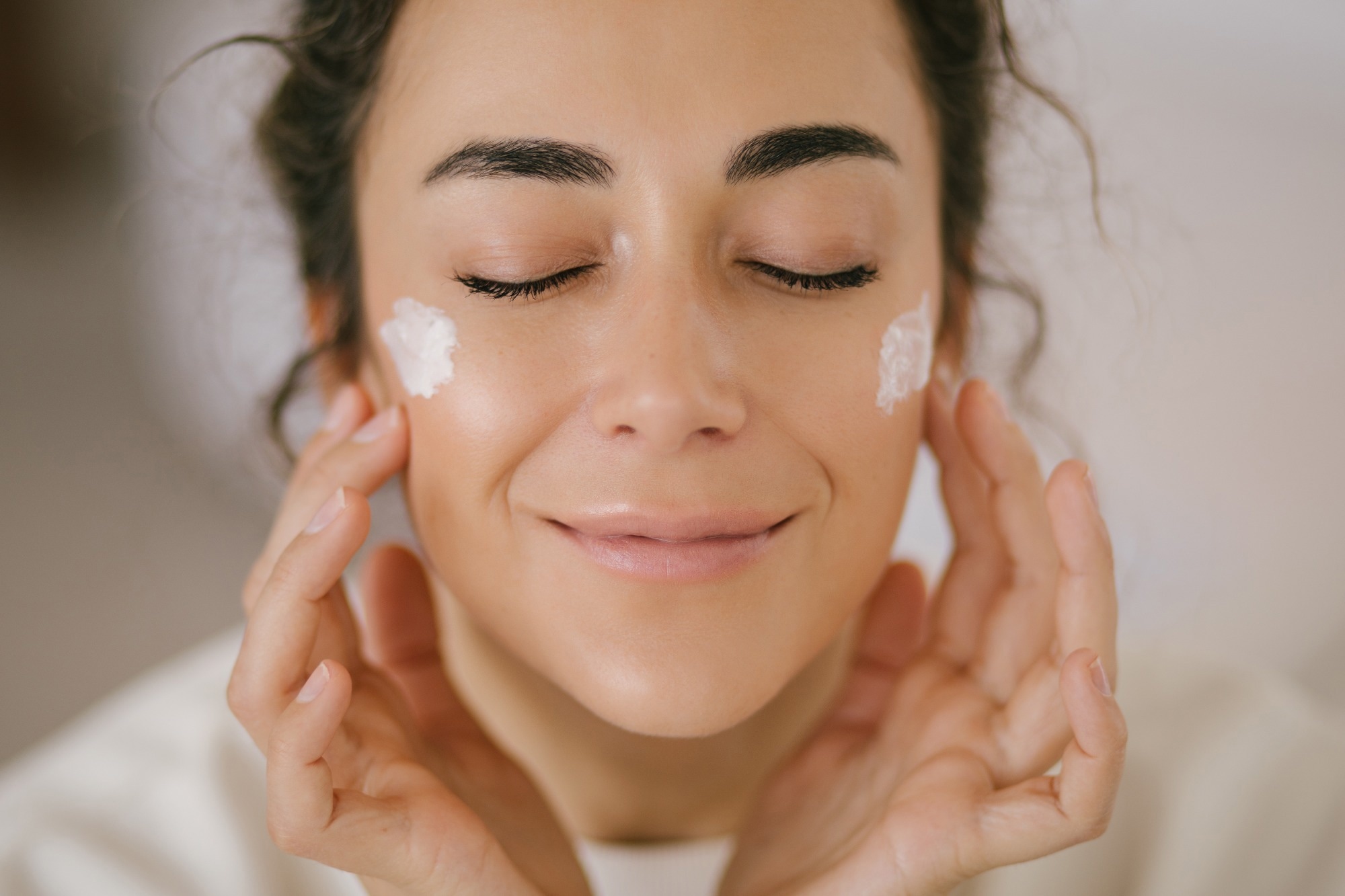
Study: Neurocosmetics or Hype? Psychobiotic Potential of Strain-Specific Cosmeceuticals. Image credit: polinaloves/Shutterstock.com
The rising popularity of probiotic skincare raises questions about ethical and safe research support. Cosmetics marketing currently claims medical benefits beyond simple skin care, including immunomodulation and neuroactive properties. A recent paper in the journal Nutrients examines these claims based on published literature.
Probiotic skincare claims
The US Federal Food, Drug, and Cosmetic Act defines cosmetics as “articles intended to be applied to the human body for beautifying, promoting attractiveness, or altering the appearance”. This is echoed in the European Regulation, confirming that cosmetics are intended to affect the skin or its appendages. As such, the safety and microbiological quality of the cosmetic products must be demonstrated. The skin is an organ in close contact with and intimately interacting with the skin microbiota, often called the fourth layer of the skin.
The skin-brain axis has garnered recent interest. It comprises multiple neurotransmitters and neuromediators produced by nerve endings, skin cells such as keratinocytes and melanocytes, and immune cells in the skin. Two-way interactions between them result in cutaneous manifestations produced by emotional stress, neuroinflammation, and skin dysbiosis, which, in turn, are influenced by the skin.
Recently, the use of bacteria and related products to restore the microbiome has become a popular research target. Cosmetics are now on the market that contain probiotic bacteria in live or nonviable form, or postbiotics, namely bits of their cell wall or their metabolites. These are called cosmeceuticals because they contain bioactive ingredients with claimed medical benefits.
According to the authors, a scientifically supported cosmeceutical should contain specific probiotic strains that have been fully genetically and phenotypically characterized; be supported by peer-reviewed papers explaining the rationale for their use; and have the delivery technique, dose, and duration supported by human studies. It is claimed that their topical use can alter the composition and abundance of the skin microbiome, counteract inflammation, and inhibit signs of aging, such as wrinkles, lines, and pigmentation. They are also claimed to enhance skin hydration and elasticity by altering the epithelial barrier.
In addition, some researchers claim that cosmeceuticals can improve emotional and mental health, as well as enhance skin appearance. These are called neurocosmetics. Their mood-enhancing effect is claimed to result from the release of chemicals that act on the brain via the skin-brain axis. This claim has received considerable backlash from skin specialists and psychiatrists, who questioned whether their use was ethical and/or safe.
Probiotics associated with improved mental health when taken orally are called psychobiotics. They release neuroactive substances that act on the brain-gut axis and contribute to relief in mental disorders like anxiety, stress, and depression. The underlying mechanisms remain unknown or poorly explored.
Interestingly, the current authors found only 14 papers supporting the use of probiotic- or postbiotic-containing cosmetics in a previous study. In contrast, a 2023 publication reported as many as 928 probiotic-containing cosmetic patents, mostly from the US, China, and Korea. Since there is little well-defined research on these claims, the current paper focuses on a targeted review of the published literature on neurocosmetics rather than a fully systematic review. The authors also emphasized strain-level specificity, noting that probiotic effects cannot be generalized across species or strains.
Evaluating probiotic strains used in cosmeceutical products
The current study examined peer-reviewed publications, selecting only those that addressed cosmeceuticals containing fully characterized, specific strains of probiotic microbes with established benefits for the skin. The investigators then searched the existing literature for clinical or experimental evidence that these strains have psychobiotic effects, primarily when administered orally rather than through topical cosmetic use.
Only three probiotic strains show oral psychobiotic evidence
The researchers identified 33 distinct strain-specific probiotics reported in cosmeceutical studies. Among these, they found three strains with evidence of benefit for mental health when taken orally, mostly in preclinical studies. These strains were:
Lactococcus lactis subsp. cremoris H61
This is one of the earliest strain-specific probiotic cosmetic ingredients studied and has been reported to have psychobiotic activity. Its use is supported by four papers, all by the same authors.
Limosilactobacillus reuteri DSM 17938
Oral consumption of L. reuteri has been reported to improve skin and hair health in animals, with twofold faster skin wound healing. Human trials in small samples found it acceptable for cosmetic use, with a tendency toward reduced skin inflammation rather than definitive clinical benefit. Preclinical studies also suggest stress- and cognition-related effects following oral administration, but human evidence remains limited and indirect.
Weizmannia coagulans MTCC 5856
This is a spore-forming lactic acid-producing bacillus, thus sharing the characteristics of both the above strains. It may help modulate the skin microbiota, improve immunity and address metabolic disorders, alleviate non-alcoholic fatty liver disease, and counteract inflammation. It is also claimed to reduce acne and promote healthy skin aging. In a small trial involving patients with irritable bowel syndrome and comorbid depression, oral supplementation improved depression scores, possibly linked to improvements in gastrointestinal symptoms.
For all three strains, the psychobiotic effects occur only when they are used orally, and through their effect on the gut-brain axis. The current evidence fails to support any direct effect on the user’s emotional states when used in cosmetics.
Neurocosmetic claims remain unsupported by clinical evidence
At present, there is no evidence to support the claim that topical application of cosmeceuticals can directly affect emotional states. The same probiotic strain very rarely shows both cosmeceutical and psychobiotic properties.
Further targeted research, possibly incorporating combinations of probiotics to achieve this effect, is essential before neurocosmetics claims can be regarded as evidence-based.
Download your PDF copy by clicking here.
Journal reference:
-
Menni, A., Theodorou, H., Tzikos, G., et al. (2026). Neurocosmetics or Hype? Psychobiotic Potential of Strain-Specific Cosmeceuticals. Nutrients. DOI: https://doi.org/10.3390/nu18050817. https://www.mdpi.com/2072-6643/18/5/817
