

One in 4 Hyderabad households smoke; gutkha consumption up 6-fold: Govt study
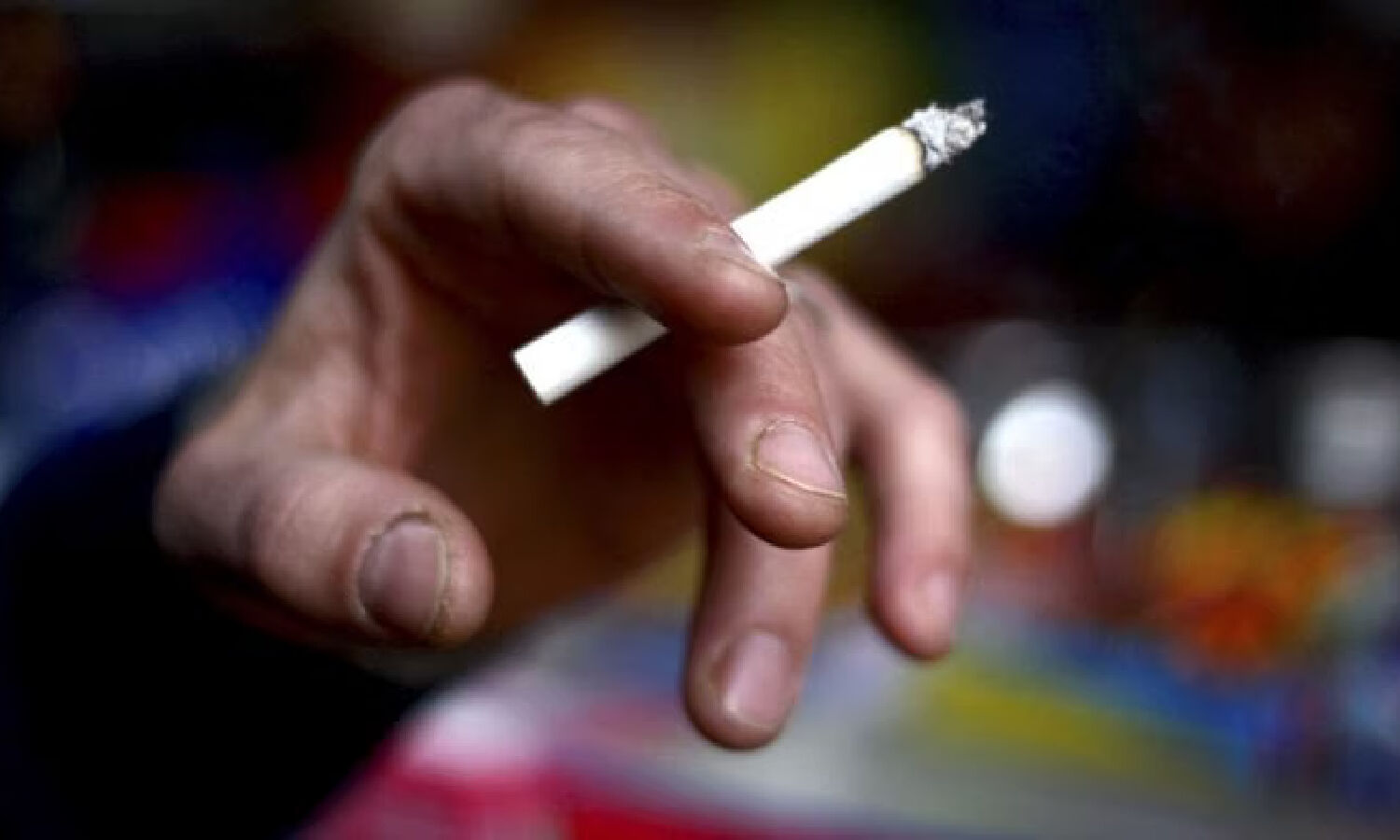
Hyderabad: A new government survey has delivered an uncomfortable portrait of Hyderabad’s relationship with tobacco.
According to a survey, one in four households in Hyderabad now smokes cigarettes. Gutkha, once considered a rural vice of the central belt, has quietly multiplied sixfold in the city. And overall, roughly one in three Hyderabad households consumes some form of tobacco, up from fewer than one in four a decade ago.
These are not numbers from a public health advocacy report. They come from the government’s own Household Consumption Expenditure Survey (HCES) 2023-24, analysed in a working paper by the Economic Advisory Council to the Prime Minister (EAC-PM).
The paper delivers what its authors call “an uncomfortable truth India can no longer afford to ignore: tobacco consumption is rising fast, spreading wider, and embedding itself deeper into the lives of poorer households, just as the state expands publicly funded healthcare.”
For Hyderabad, that truth has a very specific and local face.
The cigarette city: nearly doubled in a decade
Start with the number that defines Hyderabad’s tobacco story. Cigarette consumption in urban Telangana, of which Hyderabad is overwhelmingly the dominant centre, has nearly doubled in a decade, rising from 14.52% to 25.16% of households.
That means one in four Hyderabad households now smoke cigarettes. In 2011-12, it was fewer than one in seven.
This is not a story of stagnation or slow drift. It is a sharp, sustained rise that has unfolded across a single decade, through the smartphone boom, the startup surge, and the rapid expansion of Hyderabad’s middle class. If anything, prosperity appears to have accelerated the habit rather than curbed it.
The national data support this reading. Cigarette consumption rises with income; it is, in the paper’s framing, an aspirational product. The top 20% of urban households consume more cigarettes than the bottom 40%. In a city that has seen rapid income growth and an expanding aspirational class, the rise of smokers is not surprising. But it is alarming.
The gutkha surprise: sixfold rise from near zero
If cigarettes are Hyderabad’s known problem, gutkha is its emerging one — and in many ways the more troubling story.
In 2011-12, gutkha was barely present in urban Telangana. Just 1.33% of urban households consumed it. By 2023-24, that figure had risen to 7.46%, a nearly sixfold increase. Roughly one in thirteen Hyderabad households now consumes gutkha, and the trajectory suggests penetration is still in its early stages.
This matters because of what gutkha does. It is a smokeless tobacco product that causes oral cancer, oesophageal cancer, and pancreatic cancer. It is cheap, widely available, and aggressively marketed.
The paper identifies the engine driving its spread: “Gutkha advertisement goes unabated, and big Bollywood stars promote gutkha under the fig leaf of ‘silver coated cardamom’. Cricket is the most widely watched sports event in India, and gutkha products dominate in the ad breaks. These subtle steps go a long way in normalising tobacco consumption.”
For a city that consumes cricket as voraciously as Hyderabad does, that observation carries particular weight.
In rural Telangana, the gutkha story is even more dramatic, a tenfold rise, from 1.0% to 10.4%. If urban Hyderabad is following the rural trajectory with a lag, the city’s numbers could look very different by the next survey.
The one bright spot
Bidi consumption is declining in urban Telangana, from 4.87% to 3.13%. But bidi is not being replaced by abstinence. It is being replaced by cigarettes and gutkha — products that are more dangerous, more addictive, and more aggressively marketed.
A decline in bidi that is offset by a rise in gutkha and cigarettes is not progress. It is a product migration toward greater harm.
The paper makes clear that bidi, despite its declining market share, remains deeply harmful: “Bidi has poorer combustibility than cigarettes, leading to frequent puffs and deeper inhalation, which are relatively more damaging.”
Who bears the burden?
The tobacco epidemic is not equally distributed. Poorer households bear a disproportionate share of both the consumption and the consequences. Nationally, over half of bottom-40 urban households consume tobacco, while usage among the top 20% stands below 37%.
The poor spend nearly twice the share of their monthly expenditure on tobacco compared to the rich.
The paper draws a comparison that should give Hyderabad’s policymakers pause: “bottom-40 households spend just 2.5% of MPCE on education, while spending 4% on pan, tobacco, and intoxicants. A welfare state cannot credibly champion human capital development while allowing addictive products to crowd out spending on education, nutrition, and health.”
This collision between rising tobacco use and expanding public healthcare creates what the paper describes as a classic moral hazard problem. For every ₹100 received as excise taxes from tobacco, ₹816 of costs is imposed on society through its consumption.
What Hyderabad could learn from Kerala
Two hundred kilometres to the west lies the most instructive counterexample in India. Kerala is the only state in the country where overall tobacco consumption has declined in both rural and urban areas — across every major product category.
Bidi down. Cigarettes down. Leaf tobacco down. Even gutkha has barely registered, creeping up from zero to just 0.1% of rural households.
Hyderabad is not without Kerala’s assets. It has world-class hospitals, a large educated population, and a media ecosystem capable of driving public conversation. What it appears to lack is the sustained political and institutional will to deploy them against tobacco.
Karnataka, just across the border, offers a starker warning. Rural gutkha consumption there has risen 23-fold in a decade. A state that once seemed relatively protected has been comprehensively penetrated. Telangana is following a similar path, at an earlier stage.
“India’s progress toward universal health coverage will be incomplete if preventable risk factors continue to expand unchecked,” the EAC-PM paper concludes. “Curbing tobacco consumption is therefore central to safeguarding both population health and the long-term sustainability of public finance.”
For Hyderabad, the data is clear. The direction of travel is clear. What remains to be seen is whether the city’s leaders, institutions, and citizens have the will to change course — before the next survey delivers an even more uncomfortable truth.
Source link
