There are very few family movies you can put in the ring with The Wizard of Oz without sounding reckless. That film is a classic for multiple reasons. Firstly, generations grew up on it. Secondly, it understands the deepest thing family storytelling has to understand: childhood wonder is never pure wonder. It is fear, displacement, curiosity, loneliness, relief, and longing all hitting at once.
In my opinion, only three family movies are better than The Wizard of Oz in that regard. And they beat it at the thing that matters most: the ability to make a child’s emotional journey feel huge, dangerous, specific, and unforgettable. With real stakes. Real fear. Real tenderness and worlds that do more than sparkle. So if you’re ready, lock in.
3
‘Pinocchio’ (1940)
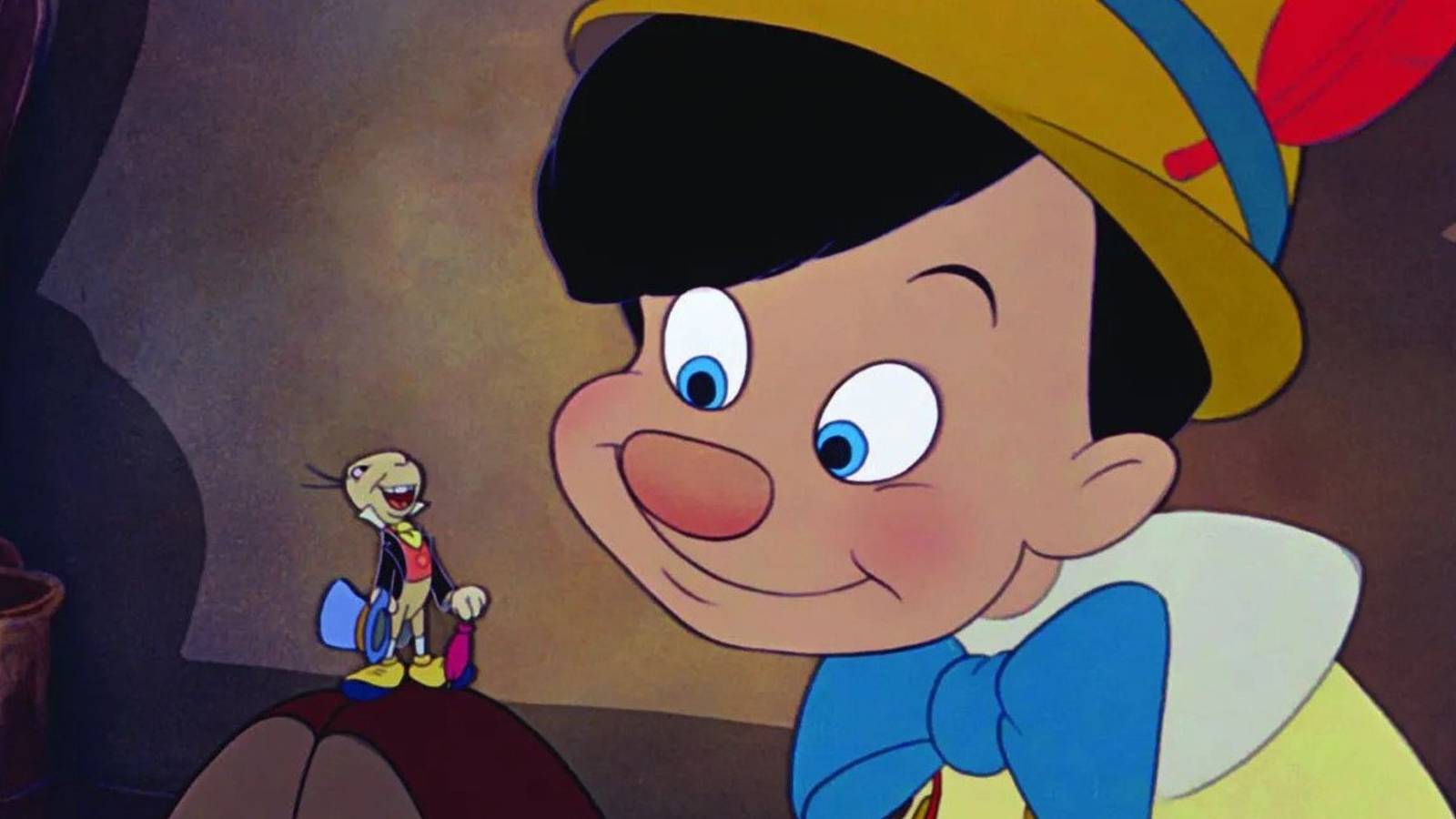
Pinocchio and Jiminey Cricket in Pinocchio (1940)Image via Walt Disney Studios Motion Pictures
What makes Pinocchio greater than almost every family movie ever made is how shockingly little it compromises. This is a film about how easily innocence gets manipulated, sold, humiliated, and nearly destroyed when it enters the world without judgment. Pinocchio (Dickie Jones) is impulsive, distractible, eager to please, easy to flatter, easy to fool, and constantly drawn toward whatever looks exciting before he understands the trap inside it. That makes him feel like an actual child. And it makes the film brutally honest. The greatness starts with Geppetto (Cliff Edwards). His love is immediate and complete. Before the story has even really begun, the movie has already given Pinocchio something worth protecting: a father whose joy feels so openhearted that the danger ahead instantly matters more. Then the world starts working on the boy.
Then it goes further. Pleasure Island is one of the most merciless things any major family film has ever put on screen, and that is a huge part of why Pinocchio remains so powerful. The boys are told that freedom means wrecking everything, mocking restraint, smashing rules, and laughing at consequences. For a while, it looks exhilarating. That is the point. The movie understands temptation from the inside. It knows self-destruction rarely arrives looking ugly. It arrives looking fun. Then the transformation into donkeys begins, and suddenly the whole fantasy curdles into panic, humiliation, and irreversible loss. And that is why Pinocchio rises above The Wizard of Oz. The Wizard of Oz is extraordinary at turning fear into adventure and longing into wisdom. Pinocchio does something even harsher and deeper. It makes childhood vulnerability the center of the whole experience.
Elliott, played by Henry Thomas, bikes with E.T. in his bicycle basket in E.T. the Extra-Terrestrial.Image via Universal Pictures
E.T. the Extra-Terrestrial beats most family films because it understands that the strongest fantasy stories are often really stories about emotional shortage. Elliott (Henry Thomas), a kid, living with absence, meets an alien and it’s just beautiful from that point onward. The family unit is still there, but the break inside it is visible. His father is gone. His mother is doing her best, but the house has that unmistakable feeling of things holding together rather than feeling whole. Elliott is at that age where loneliness becomes humiliating because you are old enough to feel it clearly but still young enough to have no real power over it. And E.T. enters it as an answer to a wound. Elliot bonds with this alien because the connection feels private, chosen, and total.
A being from somewhere impossibly far away sees him, trusts him, depends on him, and shares his emotional space. That is why the smallest scenes are so devastatingly good. Elliott introducing E.T. to his room. The secrecy of hiding him. Gertie (Drew Barrymore) adjusting from shock to affection. Michael (Robert MacNaughton) gradually moving from skeptical older brother energy into protective loyalty. And then E.T.’s presence starts to brighten the movie in all these funny, strange, affectionate ways. The psychic link creates chaos, yes, but also tenderness. Elliott is no longer alone in the same way. That is why the collapse hurts so much. That is the edge it has over The Wizard of Oz. Dorothy learns what home means by leaving it. Elliott learns what love and loss mean by finding something outside home that briefly makes home feel whole again. Then he has to let it go.
Chihiro standing among flowers and looking up in ‘Spirited Away’.Image via Studio Ghibli
Studio Ghibli’s Spirited Away is better than The Wizard of Oz because it does everything a family masterpiece is supposed to do, does it in the most bizarre way possible, and then somehow keeps going. It is a fantasy. It is a coming-of-age story. It is a work story. It is a ghost story. It is a survival story. It is a story about greed, memory, labor, loneliness, appetite, identity, and growing into courage when nobody is coming to rescue you. It is so much. And the miraculous thing is that none of those elements crowd each other out. And the reason it works at such a high level is Chihiro (Rumi Hiiragi).
This kid begins the movie in exactly the right place, as a child who is frightened, pouty, displaced, and deeply uncomfortable with change. That matters so much. Her parents wander into the spirit world and transform into pigs. The movie removes her adult protection and forces Chihiro into the most frightening version of childhood independence imaginable. That is what makes the bathhouse setting so extraordinary. And the film never stops enriching itself. Haku (Miyu Irino), Yubaba (Mari Natsuki), No-Face, among others, are all a group of greatest fantasy creations ever. What I love the most though is that Spirited Away understands that children do not need fantasy to be simplified for them. Hayao Miyazaki shows something a lot of family films miss: competence is emotional and a child becoming more capable is one of the most moving things in the world.
Collider Exclusive · Oscar Best Picture Quiz Which Oscar Best Picture Is Your Perfect Movie? Parasite · Everything Everywhere · Oppenheimer · Birdman · No Country
Five Oscar Best Picture winners. Five completely different visions of what cinema can be — and what it can do to you. One of them is the film that was made for the way your mind works. Ten questions will figure out which one.
🪜Parasite
🌀Everything Everywhere
☢️Oppenheimer
🐦Birdman
🪙No Country for Old Men
01
What kind of film experience do you actually want? The best movies don’t just entertain — they leave something behind.
02
Which idea grabs you most in a film? Great films are driven by a central obsession. What’s yours?
03
How do you like your story told? Form is content. The way a story is shaped changes what it means.
Your answers have pointed to one Oscar Best Picture winner above all others. This is the film that was made for the way your mind works.
Parasite
You are drawn to films that operate on multiple levels simultaneously — that begin in one genre and quietly, brilliantly migrate into another. Bong Joon-ho’s Parasite is a film about class, desire, and the architecture of inequality that manages to be darkly funny, deeply suspenseful, and genuinely shocking across a single extraordinary running time. Your instinct is for cinema that hides its true intentions until the moment it’s ready to reveal them. Parasite is exactly that — a film that rewards close attention and punishes assumptions, right up to its devastating final image.
Everything Everywhere All at Once
You want it all — and this film gives you all of it. The Daniels’ Everything Everywhere All at Once is one of the most maximalist films ever made: action comedy, multiverse sci-fi, family drama, existential crisis, and a genuinely earned emotional core that sneaks up on you amid the chaos. You are someone who responds to ambition, who doesn’t want cinema to choose between being entertaining and being meaningful. This film refuses that choice entirely. It is overwhelming by design, and its overwhelming nature is precisely the point — because the feeling of being crushed by infinite possibility is exactly what it’s about.
Oppenheimer
You are drawn to cinema on a grand scale — films that understand history not as a backdrop but as a force, and that place their characters inside that force and watch what happens. Christopher Nolan’s Oppenheimer is a film about the terrifying gap between what we can do and what we should do, told with the full weight of one of the most consequential moments in human history behind it. You want your films to feel important without feeling self-important — to earn their ambition through sheer craft and the gravity of their subject. Oppenheimer does exactly that. It is enormous, complicated, and refuses easy comfort.
Birdman
You are drawn to films that foreground their own construction — that make the how of the filmmaking part of the what it’s about. Alejandro González Iñárritu’s Birdman, shot to appear as a single continuous take, is cinema examining itself through the cracked mirror of a fading actor’s ego. You respond to formal daring, to the feeling that a film is doing something that probably shouldn’t be possible. Michael Keaton’s performance and Emmanuel Lubezki’s restless camera create something genuinely unlike anything else — a film that is simultaneously about creativity, relevance, self-destruction, and the impossibility of ever truly knowing if your work means anything at all.
No Country for Old Men
You are drawn to cinema that trusts silence, that refuses to explain itself, and that treats dread as a form of meaning. The Coen Brothers’ No Country for Old Men is a film about the arrival of a new kind of evil — implacable, arbitrary, and utterly indifferent to the moral frameworks we use to make sense of the world. It is one of the most formally controlled films ever made, and its controlled restraint is what makes it so terrifying. You want your films to haunt you, not comfort you. You are not interested in resolution if resolution would be dishonest. No Country for Old Men is honest in a way that most cinema never dares to be.
Digit is a versatile content creator with expertise in Health, Technology, Movies, and News. With over 7 years of experience, he delivers well-researched, engaging, and insightful articles that inform and entertain readers. Passionate about keeping his audience updated with accurate and relevant information, Digit combines factual reporting with actionable insights. Follow his latest updates and analyses on DigitPatrox.