

Pope Francis revealed: His final days, intimate friends and a legacy to keep
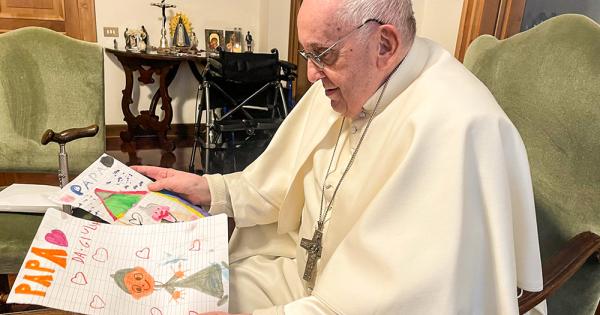
Right after his death on April 21, 2025, everything that had belonged to Pope Francis was packed, in a matter of a couple of hours, into several specially sealed boxes, under the careful supervision of his closest collaborators.
The situation was dictated by the practical need to clear out Casa Santa Marta, the Vatican building that has always existed as a kind of guesthouse to accommodate the cardinals participating in a conclave. In those days, there was a constant flurry with people doing repainting, cleaning and renovation work.
And yet, amid the hurried clearing of rooms one detail lingered.
As Vatican News journalist Salvatore Cernuzio tells it in his new book: “I was told that, during the general reordering, a photograph of me — with my wife and my children — was found in the pope’s study.” The image, taken during a Christmas trip to Assisi, Italy, had been donated to Francis and placed by him beneath a statue of St. Joseph, among the “cases” he entrusted to prayer every night. “So that he may pray for us.”
“I always pray for you. You must do the same for me,” Francis had told him repeatedly.
That small, intimate scene — part memory, part revelation — captures the essence of Padre: An Untold Portrait of Pope Francis, Cernuzio’s book, published April 7, that in two weeks, climbed Italian bestseller lists. Neither a traditional biography nor a strictly journalistic account, Padre unfolds as something closer to a personal testimony, a narrative built from proximity, trust and the unusual, intimate relationship between its author and the late pope.
“Even now I still ask myself why I did it,” Cernuzio said of his decision to write the book, after years spent covering the Vatican for official media and now continuing his work under Pope Leo XIV.
Cernuzio said that he felt it “could be something good — not to add anything to what people already know, namely how extraordinary this pope was. The only added value is the fact that I truly experienced unique situations.”
Those “unique situations” form the backbone of his book. Cernuzio’s relationship with the pope began almost by accident — on a papal flight to Iraq in 2021, when the young journalist handed Francis a letter. Months later, he received an unexpected phone call: “Good morning, this is Pope Francis.”
From there, a connection developed of regular conversations, emails, invitations and even gifts for Cernuzio’s four children.
“I had nothing written down, but everything was engraved in my heart,” he told the National Catholic Reporter. The impulse to write came later, prompted by a colleague’s suggestion: “In time you’ll grow old and forget, but you’ll have to tell it to your children.”
At its core, his book is a portrait of Francis who appears deeply engaged with the crises of his time. It also reveals how, in the final months of his life, the pope considered a series of symbolic and physically demanding journeys: to the Gaza Strip, where he had been calling the only local Catholic parish every evening during the bombings; to Cutro, in southern Italy, to honor dozens of migrants who died at sea; to Cape Verde and the Canary Islands, to confront firsthand the realities of migration.
At one point, Cernuzio revealed, Francis even entertained the idea of a solo diplomatic mission between Moscow and Kyiv, Ukraine, hoping — despite his age and declining health — to act as a mediator capable of ending the war.
These ambitions, as Cernuzio presented them, were not political calculations so much as extensions of a pastoral instinct. The same instinct that led Francis to maintain a nightly phone call with a small parish under bombardment, or to express a desire to spend Christmas “under any conditions” among its congregation. It was, in the author’s words, part of a broader vision: “the importance of opening up and engaging in dialogue with the world and with uncomfortable realities.”
But Padre is also equally concerned with the pope’s everyday humanity. The anecdotes scattered throughout its pages — many of them drawn from moments the author witnessed firsthand — reveal a man at ease with humor and contradiction, such as Francis teasing heads of government, the pope watching viral clips and laughing, or rolling down a car window in Rome’s busy traffic at a traffic light just to greet surprised strangers.
“He met so many people, spoke with everyone and opened his doors many times — perhaps even too many,” Cernuzio said. “I myself thought I was just one of many. But I realized that I had actually lived something unique: experiencing him almost daily, the kindness of his gestures, his phone calls, his gifts. And above all, having a truly personal relationship that went beyond work.”
That relationship also extended into the author’s family life. Cernuzio’s children, for instance, grew up with a pope who was a recurring presence. “For them, a pope calling the house during dinner to ask how we were doing was something normal,” he said.
“My eldest son once used as an excuse at school that he hadn’t done his homework because he was going to see the pope,” he said.
The normalization of the extraordinary is one of the book’s quiet themes. It surfaces again in a small but telling detail: the absence, after Francis’ death, of the chocolate Easter eggs he used to send Cernuzio for his children.
The emotional center of Padre lies in its final chapters, where the narrative narrows to the last encounters between the journalist and the pope. Cernuzio was among the very few secretly admitted to Francis’ private apartment after his final hospitalization.
In recounting those moments, Cernuzio’s tone shifts — from observer to participant, from narrator to witness. “We often said, ‘Ti voglio bene,’ ” which is an exquisitely Italian expression close to “I love you” but used in friendship contexts, “and that was the last thing I said to him,” Cernuzio recalled.
The next day, Cernuzio accompanied the pope on what would be his final visit to a prison, on Holy Thursday. Four days later came the end.
The book does not attempt to redefine Francis’ legacy in doctrinal or institutional terms. Instead, it reframes it through lived experience, suggesting that the essence of his pontificate might be found as much in private gestures as in public acts.
“I believe that what has not been understood at all about Francis’ pontificate is its prophetic nature,” Cernuzio said. “He has been described in every possible way. … I think the only truly valid label is that he was prophetic.”
For the author, that prophecy was expressed in choices — whom to meet, where to go, what risks to consider — and in a consistent emphasis on human connection over ideological alignment.
The success of Padre has not unfolded in isolation. In these same weeks, another Italian volume has entered the public conversation, offering a different but complementary way of reflecting on Francis’ legacy. Reactivating Pope Francis, edited by Italian theologians Piotr Zygulski, Andrea Bosio and Lucandrea Massaro, gathers the voices of 40 theologians, intellectuals, scholars and church leaders from around the world — prominent authors and theologians such as Massimo Faggioli, Cardinal Timothy Radcliffe, Gilles Routhier, Jesuit Fr. James Martin and Jesuit Fr. Antonio Spadaro, but also young religion teachers.
If Cernuzio’s book is rooted in lived experience, this second work seeks to interpret, question and “reactivate” a papacy that still resists easy definition.
The project, Zygulski told NCR, was not meant to celebrate or criticize Francis in a simple way, but to take him seriously as a figure who opened processes rather than closing debates. That idea — of a pope who preferred movement over certainties — runs through the entire volume.
“Part of the Catholic world expected clear answers and firm positions from Pope Francis on many issues,” Zygulski said. “Whereas Francis was the pope of open worksites, of the open door, of processes, of ongoing developments.”
At the center of this reflection is the idea of “process.” Francis, as Zygulski said, “initiated paths of synodality and dialogue. He made it possible to talk about certain topics that had been taboo, that were obstructed, and that were difficult to discuss openly. He opened doors, even if he did not always walk through them.”
This emphasis helps explain why the debate around his legacy remains so alive. For some, the lack of definitive answers was frustrating. For others, it was precisely the point. The reflections of top theologians in the book suggest that Francis’ real impact may not lie in single decisions he made, but in the habits he encouraged worldwide Catholics to practice: listening, questioning, engaging the world.
That outward movement — what Francis himself often called a “church that goes forth” — is another thread that connects the two books. In Padre, it appears in Francis’ desire to travel to places of suffering forgotten by mainstream media. In Reactivating Pope Francis, it is framed as a historic theological and pastoral shift.
Source link
