

Splashdown! NASA Artemis II Returns From Record-Breaking Moon Mission
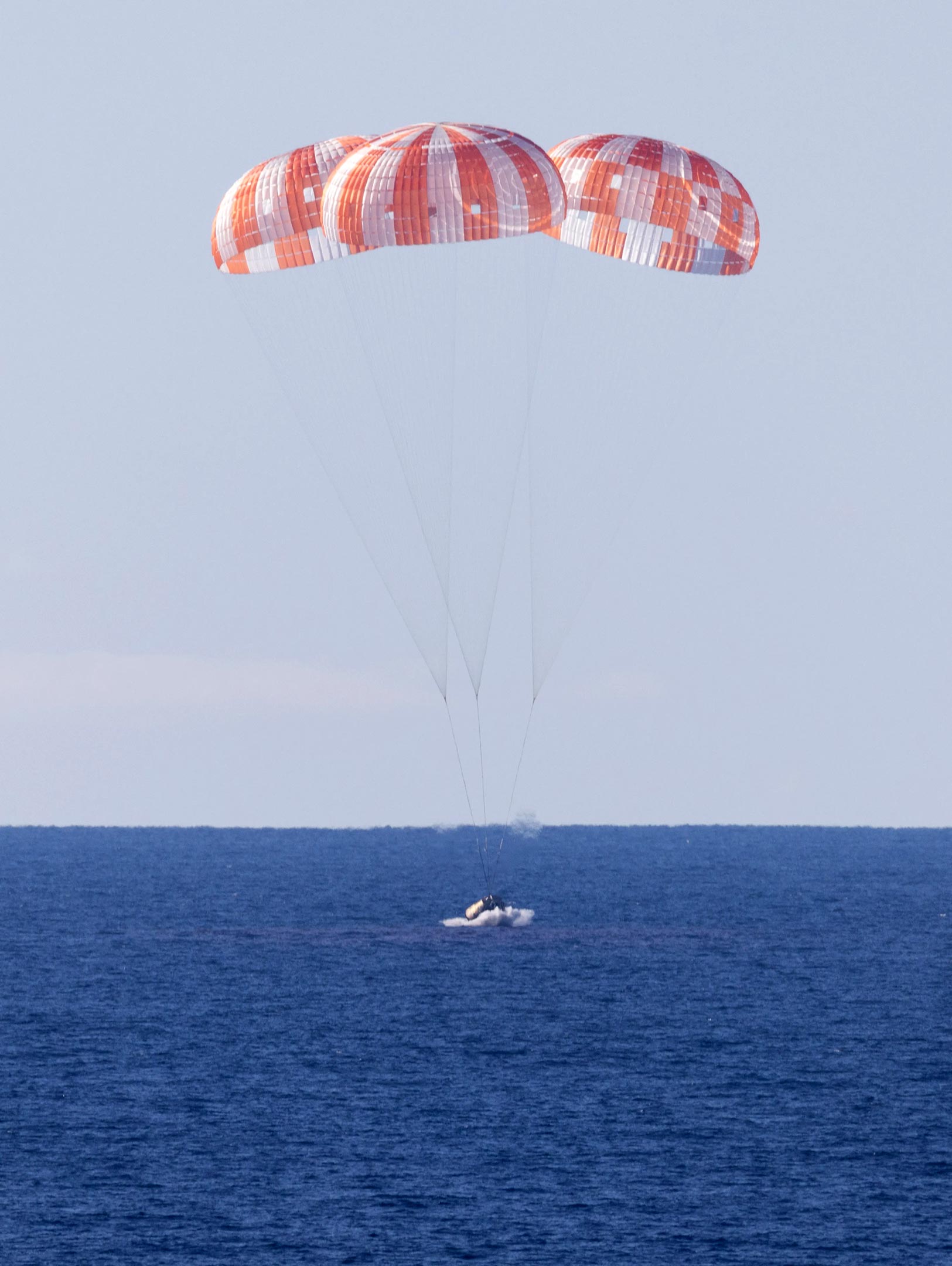
Astronauts aboard Artemis II have returned safely after a record-breaking trip around the Moon, proving NASA’s next-generation spacecraft is ready for deep space. The mission marks a major step toward returning humans to the lunar surface—and eventually heading to Mars.
The first astronauts to travel toward the Moon in more than 50 years have safely returned to Earth, completing a milestone mission aboard NASA’s Artemis II test flight.
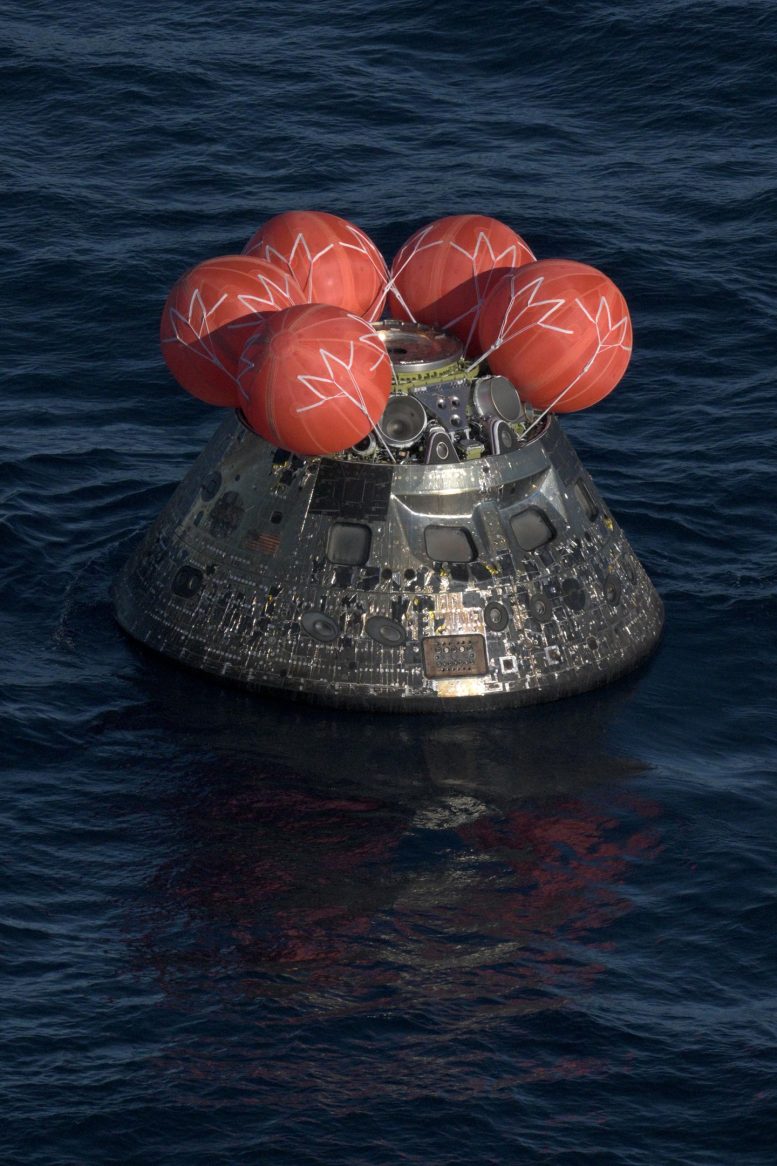
NASA astronauts Reid Wiseman, Victor Glover, and Christina Koch, along with CSA (Canadian Space Agency) astronaut Jeremy Hansen, splashed down in the Pacific Ocean at 5:07 p.m. PDT Friday off the coast of San Diego. Their journey lasted nearly 10 days and carried them as far as 252,756 miles from Earth at the mission’s most distant point.
“Reid, Victor, Christina, and Jeremy, welcome home, and congratulations on a truly historic achievement. NASA is grateful to President Donald Trump and partners in Congress for providing the mandate and resources that made this mission and the future of Artemis possible,” said NASA Administrator Jared Isaacman. “Artemis II demonstrated extraordinary skill, courage, and dedication as the crew pushed Orion, SLS (Space Launch System), and human exploration farther than ever before. As the first astronauts to fly this rocket and spacecraft, the crew accepted significant risk in service of the knowledge gained and the future we are determined to build. NASA also acknowledges the contributions of the entire NASA workforce, along with our international partners, whose expertise and commitment were essential to this mission’s success. With Artemis II complete, focus now turns confidently toward assembling Artemis III and preparing to return to the lunar surface, build the base, and never give up the Moon again.”
Recovery Operations and Safe Return to Earth
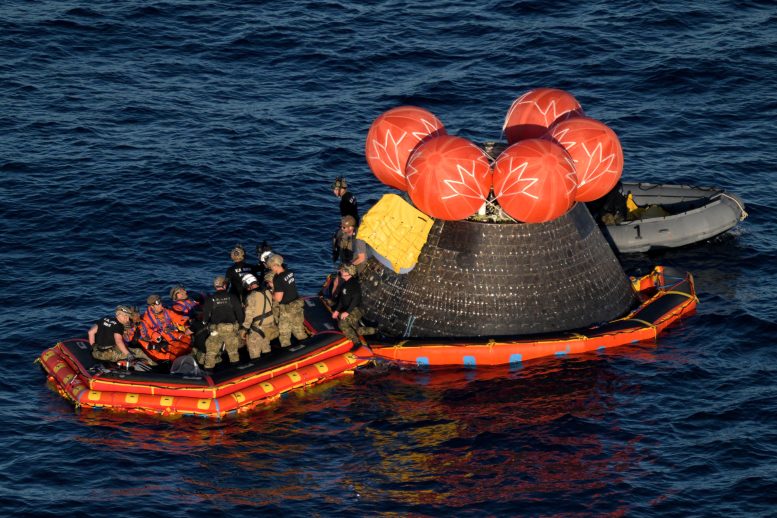
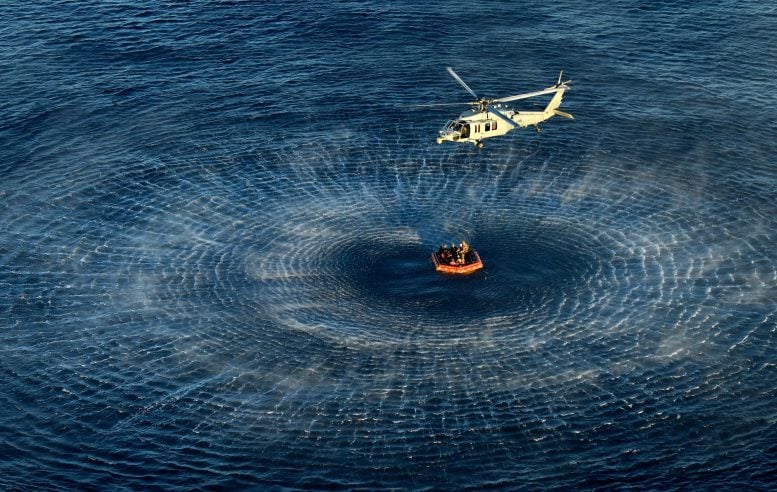
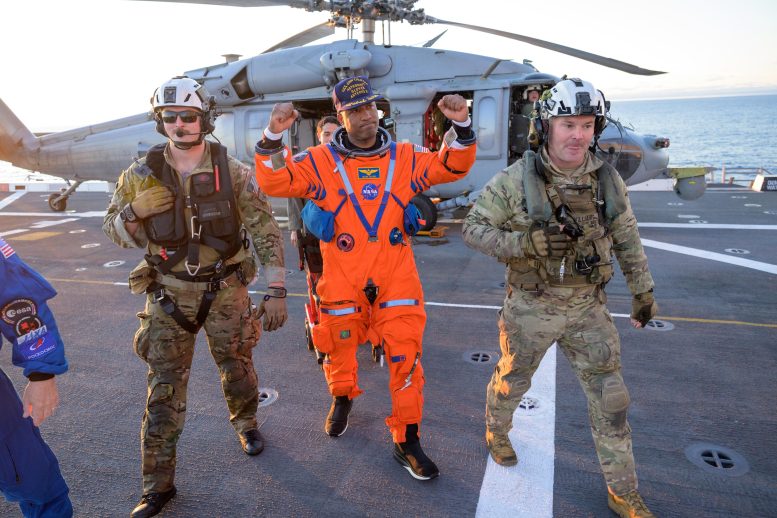
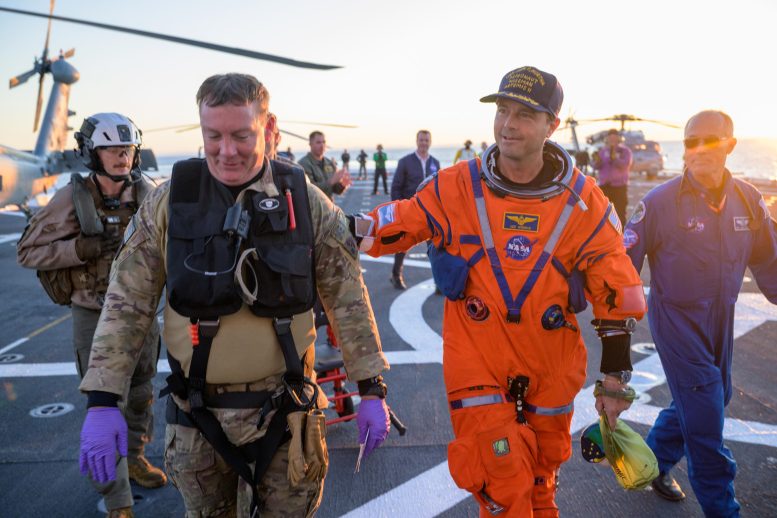
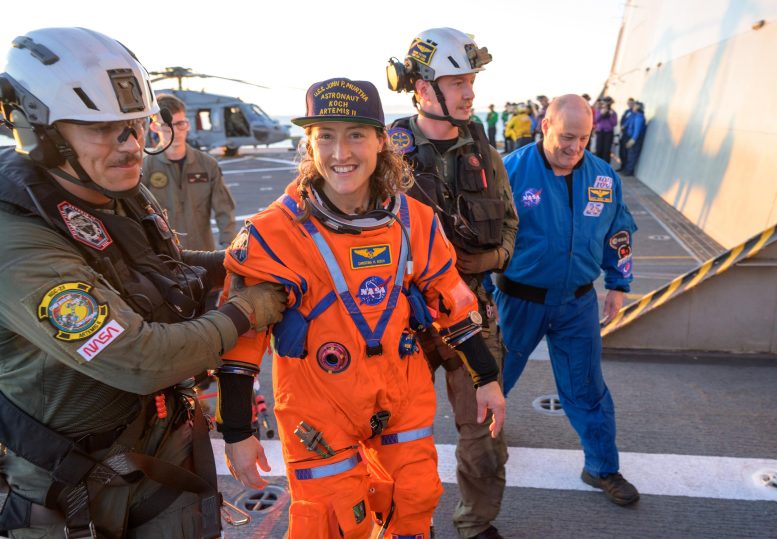
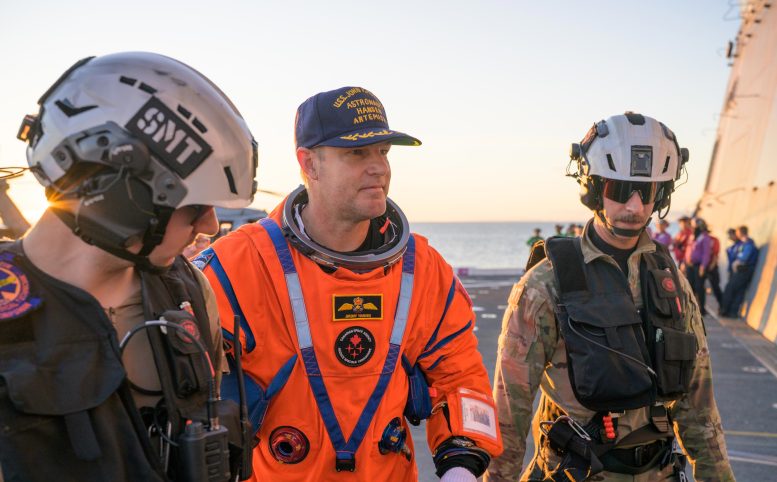
Following splashdown, recovery teams from NASA and the U.S. military reached the capsule in open water and helped the astronauts exit the spacecraft. The crew was then flown by helicopter to the USS John P. Murtha, where they underwent initial medical evaluations. They are expected to return to NASA’s Johnson Space Center in Houston on Saturday, April 11.
In total, the crew traveled 694,481 miles during the mission. Their path around the Moon carried them farther than any humans have ever gone, breaking the previous record set by Apollo 13 astronauts in 1970.
Launch and Journey to the Moon
The Artemis II mission began at 6:35 p.m. on April 1 with a launch from Launch Pad 39B at NASA’s Kennedy Space Center in Florida. The SLS rocket, generating 8.8 million pounds of thrust at liftoff, carried the Orion spacecraft into orbit with precise accuracy after a smooth countdown.
On the first day in space, astronauts and ground teams conducted system checks on the spacecraft, which the crew named Integrity, to ensure everything was operating properly before heading toward the Moon. NASA also released four CubeSats from international partners into Earth orbit.
By the second day, Orion’s service module fired its main engine, sending the spacecraft on a path that brought it within 4,067 miles of the lunar surface at its closest approach.
Record-Breaking Distance and Mission Milestones
“The Artemis II crew is home. The entry, descent, and landing systems performed as designed and the final test was completed as intended. This moment belongs to the thousands of people across fourteen countries who built, tested, and trusted this vehicle. Their work protected four human lives traveling at 25,000 miles per hour and brought them safely back to Earth,” said NASA Associate Administrator Amit Kshatriya. “Artemis II proved the vehicle, the teams, the architecture, and the international partnership that will return humanity to the lunar surface. Reid, Victor, Christina, and Jeremy carried the hopes of this world farther than humans have traveled in more than half a century. Fifty-three years ago, humanity left the Moon. This time, we returned to stay. The future is ours to win.”
With astronauts onboard for the first time, Orion underwent a complete in-flight evaluation. The crew tested life support systems to confirm the spacecraft can sustain humans during deep space missions. They also performed manual piloting exercises to assess how Orion handles in flight and to collect data for future docking and rendezvous operations with lunar landers during Artemis III and later missions.
Testing Systems for Future Moon Missions
Additional tests focused on how the spacecraft performs during daily crew activities, emergency scenarios, and the use of the Orion crew survival system spacesuits. These evaluations will help refine procedures and improve safety for future missions.
The astronauts also carried out scientific studies designed to prepare for long-duration stays on the Moon and eventual missions to Mars. Among them was the AVATAR investigation, which examines how human tissue reacts to microgravity and deep space radiation, along with other research into human performance in space.
Stunning Lunar Images and Scientific Observations
During their April 6 flyby, the crew captured more than 7,000 images of the Moon and a solar eclipse, when the Moon blocked the Sun from Orion’s perspective. The photographs include detailed views of earthset and earthrise, impact craters, ancient lava plains, the Milky Way galaxy, and variations in the Moon’s surface.
They also studied the terminator, the boundary between lunar day and night, where low-angle sunlight creates long shadows. These lighting conditions closely resemble those expected near the Moon’s South Pole, where astronauts are planned to land in 2028. The crew suggested names for two lunar craters and observed flashes from meteoroid impacts on the Moon’s night side.
Preparing for Artemis III and Beyond
The knowledge gained from Artemis II will help shape how NASA conducts future missions, including identifying scientifically valuable landing sites and improving astronaut decision-making in deep space.
With Artemis II complete, NASA and its partners are now preparing for Artemis III. That mission will involve a new Orion crew testing integrated operations with commercially developed lunar landers in low Earth orbit before returning astronauts to the Moon’s surface.
As part of a broader push often described as a Golden Age of exploration, NASA plans to send astronauts on increasingly ambitious missions. These efforts aim to expand scientific discovery, create economic opportunities, establish a lasting human presence on the Moon, and ultimately prepare for sending the first astronauts – American astronauts – to Mars.
Never miss a breakthrough: Join the SciTechDaily newsletter.
Follow us on Google and Google News.
Source link
