

Telangana to launch permanent Eye Care Clinics; Sarojini Devi Eye hospital to serve as hub
Hyderabad: Health Minister Damodar Raja Narasimha on Friday announced that the Telangana government will establish permanent ‘Eye Care Clinics’ across the State to improve access to eye health services. Replying to questions during Question Hour in the Legislative Council, the Minister said the clinics will be developed on the lines of the Day Care Cancer Centers.
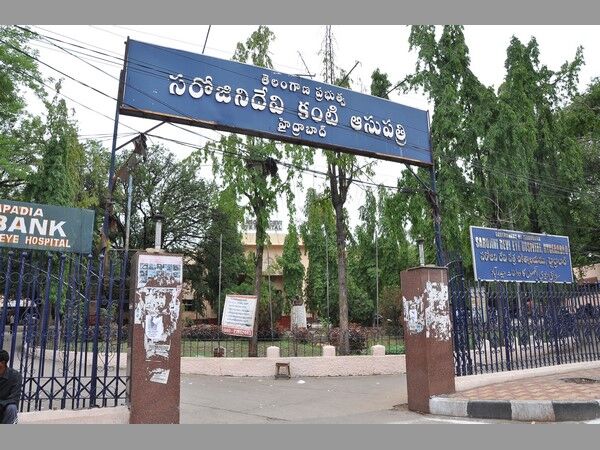
He stated that Sarojini Devi Eye Hospital, Hyderabad, will function as the central ‘Hub’ for the proposed network of clinics.
Modelled on day care cancer centers
Explaining the rationale, the Minister said the recently launched Day Care Cancer Centers had decentralised cancer care by offering screening, diagnosis and chemotherapy at district headquarters.
“This has eliminated the need for patients to travel to Hyderabad for chemotherapy and significantly reduced the burden on MNJ Cancer Hospital,” he said, adding that a similar approach would now be adopted for eye care.
Permanent alternative to temporary camps
The Minister said that eye-related ailments were increasing due to lifestyle changes and prolonged use of smartphones and computers.
“Instead of short-term eye camps, the government is moving towards permanent ‘Eye Care Clinics’ to ensure continuous and sustainable eye care services,” he told the House.
He noted that earlier initiatives such as Kanti Velugu were limited in duration and scope, whereas the new clinics are intended to provide long-term care, including treatment and surgeries.
Hub-and-spoke structure
According to the Minister, Sarojini Devi Eye Hospital will act as the ‘Hub’ to guide and support clinics across the State.
An ophthalmology expert has been appointed as the ‘Nodal Officer’ to coordinate between the Hub and the clinics, and to monitor screenings and surgeries.
A high-level technical committee has also been constituted to study the prevalence of eye diseases in Telangana and to recommend sustainable treatment models. “The final policy and operational guidelines will be framed after the committee submits its report,” he said.
Review of Kanti Velugu programme
Placing details of the previous government’s Kanti Velugu programme before the Council, the Minister said both Phase I (2018) and Phase II (2023) largely focused on screening and distribution of spectacles.
“Doctors had identified around 9.3 lakh individuals who required eye surgeries, but the programme concluded without these surgeries being performed,” he said.
Existing government infrastructure
The Minister pointed out that Telangana already has a strong public eye care infrastructure built over decades.
Sarojini Devi Eye Hospital, established in 1951, has been providing services for over 70 years. In addition, eye care wings are functioning in 35 Government General Hospitals and 64 Area Hospitals.
General Hospitals are staffed with Professors, Assistant Professors and Senior Residents, while Area Hospitals have Specialist Doctors. “All these facilities have functional operation theatres for eye surgeries,” he said.
National blindness control programme
The Minister said the State continues to implement the National Blindness Control Programme, which has been in operation since 1976.
He informed the House that a total of 6,12,973 cataract surgeries were performed in 2024 and 2025 combined.
Under school eye health initiatives, 33,65,832 children were screened over the last two years, and spectacles were distributed to 76,176 students.
Focus on treatment, not just screening
Clarifying the government’s approach, the Minister said, “Our objective is not limited to identifying eye problems through screening. We want to ensure that every person diagnosed with a vision issue receives complete treatment, including surgery wherever required.”
The proposed Eye Care Clinics, he said, are intended to bridge the gap between diagnosis and treatment and to provide accessible eye care across the State.
Source link
