

The rural towns fighting for survival as New Zealand grapples with a growing exodus | New Zealand
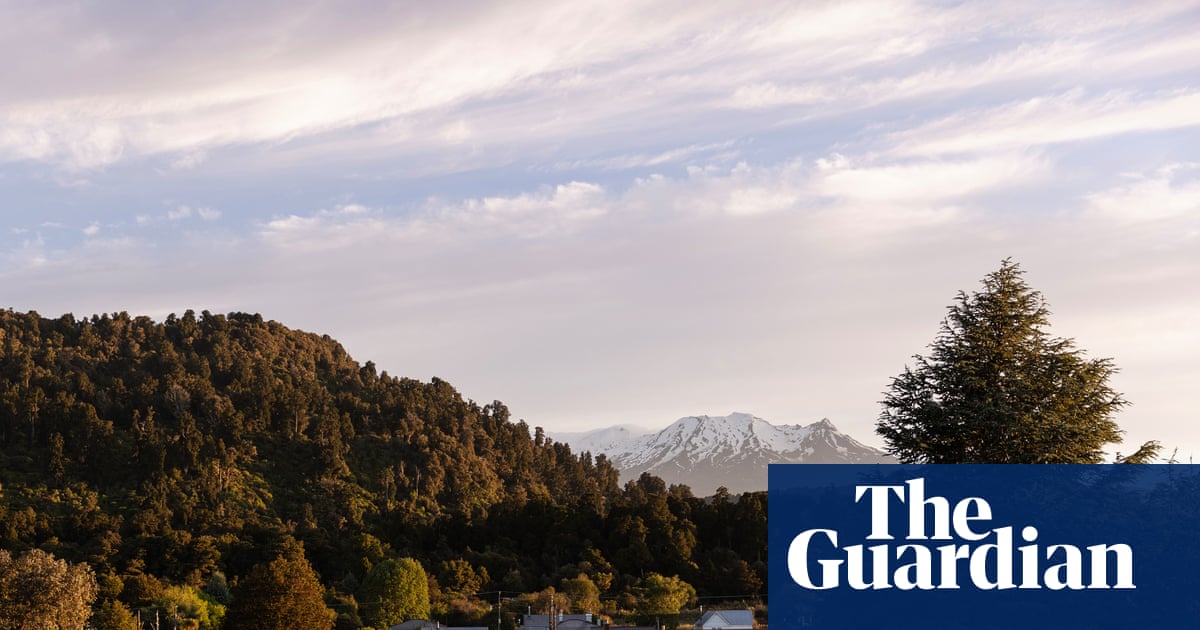
For generations, two centres of gravity in New Zealand’s central Ruapehu region had enough pull to entice people to the area and keep them there: the mountains and the mills.
Mount Ruapehu, the country’s largest active volcano, lured people to its snowy slopes for work and play, while the local mills – run by the region’s largest employer, Winstone Pulp International – kept generations of families in employment.
Then, those behemoths lost their grip, and with it Ruapehu became emblematic of a pressing question facing New Zealand: how to prevent some rural regions – and the country at large – from losing people as residents pack up and seek new lives elsewhere.
In Ruapehu, the decline came after global warming disrupted the mountain’s snow, leading to shorter seasons and worker layoffs. Further jobs were lost when the Chateau Tongariro hotel shut its doors in 2023, after nearly 100 years in operation. The earthquake-prone building now sits in limbo in the shadow of the mountain.
The biggest blow, however, occurred in October 2024. After nearly 50 years in business, Winstone Pulp announced it was closing its two mills near one of the region’s towns, Ohakune, due to high energy prices. More than 230 workers were laid off and scores of other businesses who relied on the mills suffered. Most of those workers hailed from Ohakune, population 1,360, and Raetihi, population 1,140, a settlement 10 minutes drive west.
“The mill closure was a stab to the heart,” says Janelle Finch, who owns a merino clothing company and cafe in Ohakune. “A lot of our friends had to move out of town … it had this chain effect.”
When the Guardian visited the towns in late November, dozens of shops sat empty and Ohakune’s residential streets were lined with “for sale” signs.
Ruapehu is not the only region being reshaped amid industry closures and economic headwinds. Since 2023, multiple towns and rural regions have suffered mill and factory closures, leading to more than 1,000 redundancies. The companies have cited high energy prices, weaker demand and rising costs.
In Ruapehu, some families are fighting to survive in the place they love. But others are leaving, joining the exodus of New Zealanders departing the country in record-high numbers, which experts have warned could lead to a “hollowing out” of the work force, or moving to different regions in search of work.
Brenda Burnard, a childcare centre manager in Raetihi, will soon move to Foxton, two hours away, to be with her husband who relocated there shortly after he lost his job at the mill and struggled to find work.
Leaving the region after 25 years was bittersweet, Burnard tells the Guardian from her family home in Ohakune, which is now on the market.
“We have a real physical connection to this area,” Burnard says. “I’m not looking forward to that point when we go ‘this is the end’, but you do have to look forward.”
Regional shifts
After years of decline, some of New Zealand’s rural economies and populations have started to pick up, partly due to immigration and the growth of the dairy industry, says Shamubeel Eaqub, a principal economist at Simplicity. But “the story falls apart” for regions that rely on one or two industries, which are vulnerable to global competition or global warming.
“When that engine of economic activity gets turned off, it can be quite damaging for those places,” Eaqub says.
The mill closures were about more than just job losses, says Helen Leahy, the chief executive of the local Ngāti Rangi tribe trust.
“It was about community disintegrating and that whole connection to place.”
Nearly 50% of the local population is Māori and many Indigenous mill workers felt torn about leaving the region.
“You’ve got a 1,000 year legacy that you want to be part of and want your kids to be part of – then suddenly you’re forced to leave,” she said, adding that 10-15% of the mill workers moved their families to Australia after the closures.
The iwi has been up-skilling and job-training affected families, as part of a wider ‘1000-year vision’ to help the region flourish.
“We don’t want to contribute to the exodus of young people leaving the country, we want to respond to the needs right in front of our face.”
Seven of New Zealand’s 16 regions had more people leave than arrive in the year to June 2025, according to Stats NZ.
New Zealand’s population is entering a “new era”, with many regions stagnating or declining, due to lower immigration, poor services and jobs, and ageing populations, said Massey University’s emeritus professor Paul Spoonley, a leading sociologist.
“The long-term impact is that New Zealand’s population will focus on the top of the North Island, with 40% in Auckland – we will see that imbalance between our major metropolitan centres and rural and regional centres.”
While New Zealand’s population is slowly growing thanks to more people being born than dying and migrant arrivals, a struggling economy and soft labour market is driving tens of thousands of New Zealanders to leave the country.
In the year to October, 71,400 left New Zealand – up 6% on the year prior – contributing to a net migration loss of 45,100 citizens. Nearly 60% of those moved to Australia, where average weekly incomes are higher and New Zealand citizens have work and residency rights.
“[Australia] is richer, its got a deeper labour market, has more career opportunities –why wouldn’t you go?,” Eaqub says, adding there is no easy fix to keeping people in New Zealand.
The minister for regional development, Shane Jones, declined an interview. However, the coalition government has said it will boost the economy by cutting new spending by $1bn to reduce borrowing and debt, with finance minister Nicola Willis previously telling the Guardian that growing the economy would address the issue of New Zealanders leaving.
But Ruapehu residents feel neglected and believe the government’s failure to protect the mills from surging energy prices was “reckless”, says Weston Kirton, the Ruapehu district mayor.
“At the same time the mills were closing, the government was the regular benefit of the profits of these power companies,” he said.
A recent injection of government money into local cycleways was positive but rural communities required more investment and better infrastructure to thrive and retain people, Kirton said.
“Our people want to live in the region and not anywhere else. There is a lot of pride.”
Austin Hobson, Finch’s husband who runs a beer brewery in Ohakune, said the community feels they are “all in it together”.
“It’s been really tough – but we’ve all survived things together and we’re still here because we support each other in whatever way we can.”
The fight for survival
Pride is also evident in Raewyn Sinclair, who lives in Raetihi with her partner Corey Brown and their four children. In a garden shed, Sinclair’s screen-printing machine is whirring away printing logos for a community sports event, at the same time she roasts beef for a catering gig.
Since Brown lost his job at the mill, the couple have been working multiple jobs to stay in the region. A calendar on the fridge details Brown’s security shifts at the mill, where he once held a highly paid position. The pair frequently start their days at 5am and finish after midnight.
“I won’t lie, it’s hard,” Sinclair says. “We’re working around the clock just to make do with what we had.”
Brown had been on good money, Sinclair says, but now the family is scrutinising every spend.
“Everyone’s really struggling – not just us, we see the other mills shutting down and we feel for them because we know the uncertainty.”
But despite a myriad of set backs and personal struggle there is a third centre of gravity keeping families like hers committed to the region: the community, where “everyone looks out for everyone”.
“There is heaps of potential for this place to take off, we’ve got a lot of spirit here,” she says. “It’s home, I wouldn’t want to be anywhere else”.
Source link
