

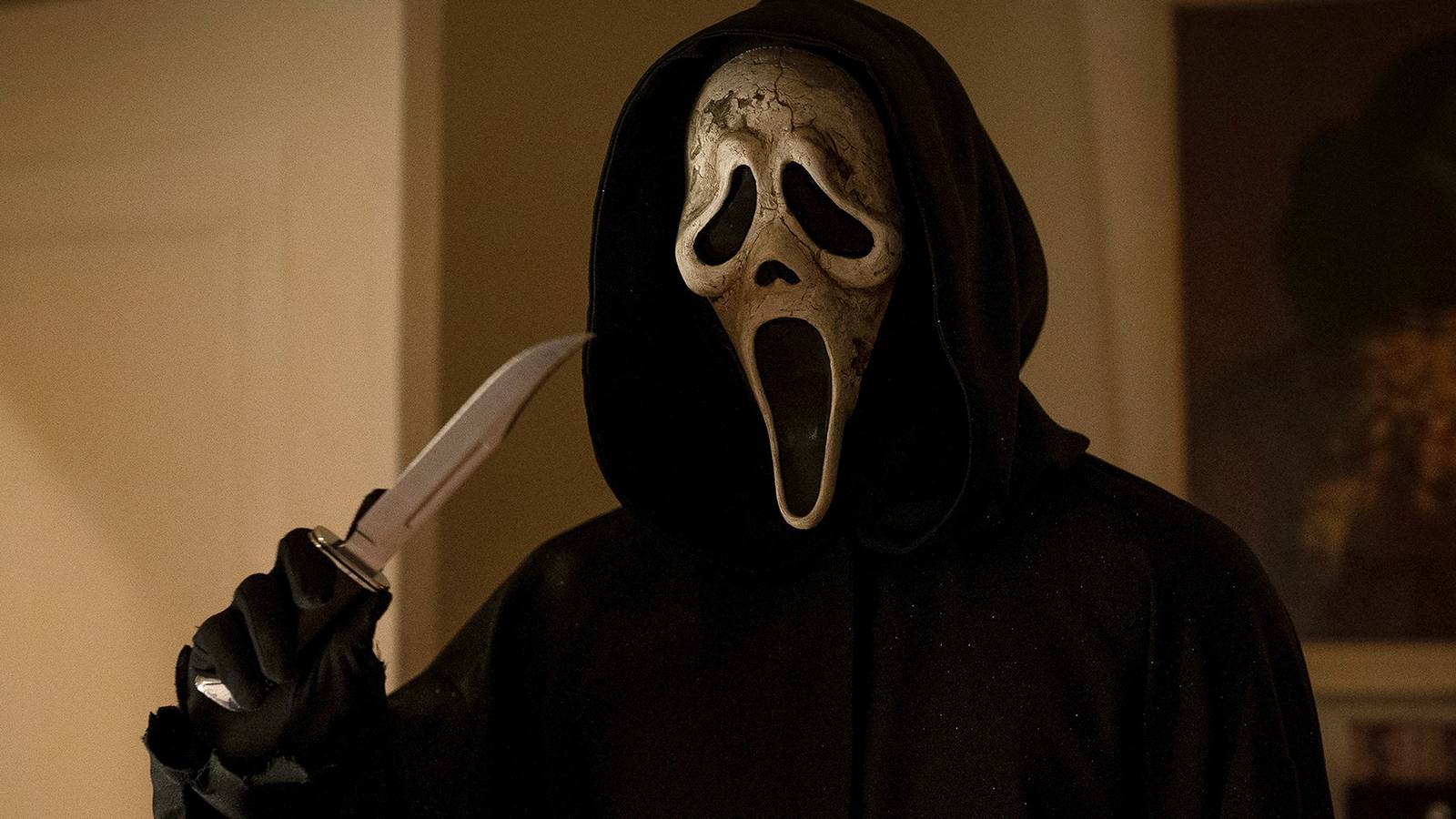
There is zero doubt that Wes Craven‘s meta slasher Scream completely revitalized the horror genre. Before the film premiered in 1996, the horror genre was becoming stale, with slashers and a litany of low-budget B-movie fare that failed to resonate with audiences. So, there weren’t a lot of high hopes for Scream, especially given that Craven’s last horror film, 1995’s Vampire in Brooklyn, was received poorly by critics.
But Scream turned out to be a box office and critical success, with critics raving about the film’s meta-commentary on the slasher genre, and creating horror’s most iconic modern villain: Ghostface. There was no question that Scream was a cultural hit that subsequent horror films looked to emulate, with varying degrees of success. However, as brilliant as Scream was in breaking down slasher movie tropes, the “whodunit” nature of the film sometimes took a front seat to the terror; so, it really isn’t farfetched to say that Scream is not a “traditional” horror movie, but one that mixes mystery and meta-comedy with traditional horror dread. So, if you’re looking for a movie that truly brings horror without winks to the camera, these films will fit the bill.
‘X’ (2022)
Some may find it subjective to make an argument that X, the 2022 horror hit directed by Ti West, has better horror than Scream; but there are certainly aspects about this modern slasher that make it better tailored for the traditional horror audience. The movie centers around an adult film cast and crew who find themselves threatened and murdered one-by-one by a homicidal couple in rural Texas. Because the film is set in the 1970s, West perfectly used that decade’s horror tropes to perfection, bringing a Texas Chainsaw Massacre vibe to a film that focused a lot on gritty, tense moments.
It made the atmosphere in X extremely uncomfortable, unlike in Scream, where, even though it had great moments of dread, the overall atmosphere wasn’t nearly as foreboding or uncomfortable, and it’s more of a “comfort watch” than X is. While Scream is famous for its meta-commentary on the horror genre as a whole, X had a more thematic depth, with the topic of aging and losing relevance blending seamlessly with the film’s slasher element, which made the kills here a lot more disturbing than what we saw in Scream. In short, X was a far better traditional horror movie than its Wes Craven counterpart, with disturbing kills and uncomfortable subject matter driving the plot rather than quick, ironic shocks.
‘Final Destination’ (2000)

As aforementioned in the introduction, Scream touched off a new era for horror, one that found other films emulating the template that Craven’s movie set into place, a template that often involved high school teens getting into some truly horrifying situations. While some may put 2000’s Final Destination into this category, the truth of the matter is that the James Wong-directed horror classic actually improved on what Scream did, considerably. Final Destination centers on the teen survivors of a tragic plane explosion, and because they were fated to die in that disaster, it messed up Death’s design, and to fix it, Death literally comes for them one-by-one. Right off the bat, the movie brings something far different to the table by introducing a villain that can’t be killed, Death. Unlike Ghostface, who is an actual person, the villain in Final Destination is an invisible force that makes it hard for the protagonist to fight back against.
Because the protagonists can’t see or fight back against Death, it creates an extremely suspenseful atmosphere in which viewers are trying to guess which character will die next; thus, the horror in Final Destination is far more palpable than in Scream, which was often interspersed with meta-comedy that lighten the film’s mood. We can’t talk about Final Destination without mentioning the death scenes, which are far better than they were in Scream. The deaths in this movie are more elaborate and gory, using ordinary environments to create death traps for its victims, which was unlike Scream, in which most of the kills came courtesy of Ghostface’s blade. All in all, Final Destination was far more unique and creative in its horror, which makes it an unsettling watch even 26 years after it was first released.
‘A Nightmare on Elm Street’ (1984)

Scream was the perfect film at the perfect time, a horror movie that brought the slasher genre back to prominence with its iconic villain and expert meta-comedy. But, even for a revolutionary film like Scream, you can see that bits-and-pieces of it were inspired by A Nightmare on Elm Street, the 1984 horror classic that featured an incredibly iconic villain in Freddy Krueger (Robert Englund) and also incorporated some meta elements that Scream took to another level.
Directed by Craven, A Nightmare on Elm Street followed the teens on Elm Street in Springwood, Ohio, who are all haunted and killed in their sleep by Krueger, an undead child killer. While Craven pioneered the self-aware satire that would be the bedrock of Scream, back in 1984 he was a pioneer in the surreal and psychological dread that came with supernatural horror. A Nightmare on Elm Street doesn’t rely on jump scares and gore, as there is surprisingly very little of both in the original film, but, instead, it exploits our subconsciousness and loss of control when we’re asleep, thus, making for a more terrifying experience. In fact, the psychological horror of the film was so pronounced, that some audiences at the time were actually afraid to go to sleep after watching the movie. A Nightmare on Elm Street perfectly used its dreamscape atmosphere to create a horrifying experience and make Krueger a more terrifying villain than Ghostface, and one that still takes a psychological toll on you.
‘The Exorcist’ (1973)

While Scream brought a jolt of energy to the horror genre in the mid 1990s, the same could be said about The Exorcist in the 1970s. Directed by Willian Friedkin, the movie follows a young girl who is possessed by a demonic figure and the attempts to rescue her by two Catholic priests by using an exorcism. While Scream focused on meta commentary within the slasher format, The Exorcist was much more terrifying in the sense that it relied a lot on supernatural and psychological dread to bring home the terror.
For readers who may have grown up with horror movies that tried to emulate Scream‘s template, most of The Exorcist may seem boring; but, it’s within this slow burn where the unsettling atmosphere and suspense builds towards an ending that’s shocking and also quite controversial. The horror in The Exorcist feels a lot more rooted in realism than the metafiction of Scream, which offers a detachment from the horror tropes that it comments on. You can have a lot of fun with Scream, which is what separates the movie from traditional horror tropes and makes it more watered-down compared to the likes of The Exorcist. You won’t find any jump scares or “horror movie rules” here, just a lot of foreboding dread, silence that will make your skin crawl, and visuals that are so disturbing that, even to this day, would have you sleeping with a light on. So while Scream delivers on horror fun, The Exorcist delivers on true, unapologetic, horror.
‘Hellraiser’ (1987)

The 1980s was the decade for slasher films, in which such horror villains such as Jason Voorhees, Michael Myers, and Freddy Krueger dominated the genre and led a pack of horror movies that Scream would make rules for in the 1990s. But during the decade of slashers, there was one horror movie that stood out from the pack, a movie that Scream would be hard-pressed to create rules for: Hellraiser.
Directed by Clive Barker, who also wrote the novel the film was adapted from, The Hellbound Heart, Hellraiser focuses on a mystical puzzle box that brings to the world the Cenobites, an extradimensional, sadomasochistic group led by the iconic Pinhead (Doug Bradley). Hellraiser was a horror movie that set out to be much different than its ’80s counterparts, using disturbing body horror and themes rather than slasher thrills and jump scares. Thus, the movie, which explores the blend of pleasure and pain, is not suited to Scream‘s movie rules when it comes to horror films, as this was a completely different and more terrifying world that Barker created. Once you watch it, you’ll find the horror in Hellraiser much more unsettling and satisfying than what you’ll find in Scream.
‘Black Christmas’ (1974)

Black Christmas was a horror slasher that was actually ahead of its time. Much like most of the movies listed here, the film succeeds in an area that was actually one of Scream‘s rare weaknesses: atmosphere. Before we dive into why, we first have to set the table. Directed by Bob Clark, Black Christmas follows a group of sorority sisters who get threatening phone calls from a killer. Those phone calls escalated into stalking and murder, as the sorority sisters were killed one-by-one.
Black Christmas was one of the modern era’s first slasher films, with its creepy and intense atmosphere making viewers feel uneasy while watching the film. Because the meta-humor within Scream was so strong, it sometimes overpowered the horror, giving it a lighter atmosphere that even those who aren’t really into horror could easily watch and enjoy the movie. That isn’t the case with Black Christmas, as it uses genuine terror by hiding the identity of the serial killer even from the audience.
So, while you’re watching the film, we’re in the same, terrifying boat as the sorority sisters, giving the film a tense, eerie feel made even more palpable with the POV shots that, while feeling viewers with a sense of dread, also make us feel like we’re totally complicit in the murder of the sorority girls. We can’t wrap up a discussion of Black Christmas, however, without mentioning the film’s “final girl,” Jessica “Jess” Bradford (Olivia Hussey), who subverted the usual trope by portraying Jess as a strong woman who could fight back against the killer, which contradicts some of the slash movie rules Scream set up 22 years later.
‘Halloween’ (1978)

While Wes Craven brought the slasher into the modern era with Scream, it was John Carpenter who helped bring the genre into the mainstream. Slashers were a thing in horror before the release of Halloween in 1978 (see Black Christmas above), but the Carpenter-directed horror film showed the horror world that slashers could be box office gold mines, raking in nearly $70 million at the box office against a $325,000 budget. The movie follows Michael Myers (Nick Castle), who was known as “The Shape,” as he escapes from a mental institution and returns to his hometown of Haddonfield, where he stalks a teenager named Laurie Strode (Jamie Lee Curtis) and her friends on Halloween night.
Everything you could ask for in a horror movie is present in Halloween. The atmosphere was dark and suspenseful, the slow-burn leading up to the Halloween night massacre was terrifying, and the emotionless Michael Myers gave us a horror character that was a pure, unstoppable evil. While Ghostface certainly had witty lines that tormented his victims before he took a blade to their hearts, Michael Myers’ lack of humanity and inhuman nature is what makes him a lot scarier than his Scream counterpart. While Scream set the template for the rules to follow in order for a slasher movie to be scary, you don’t need any rules when it comes to Halloween. It’s a slow-burn, menacing film that will keep your skin crawling long after the end credits roll.

Halloween
- Release Date
-
October 27, 1978
- Runtime
-
91 minutes


Source link
