

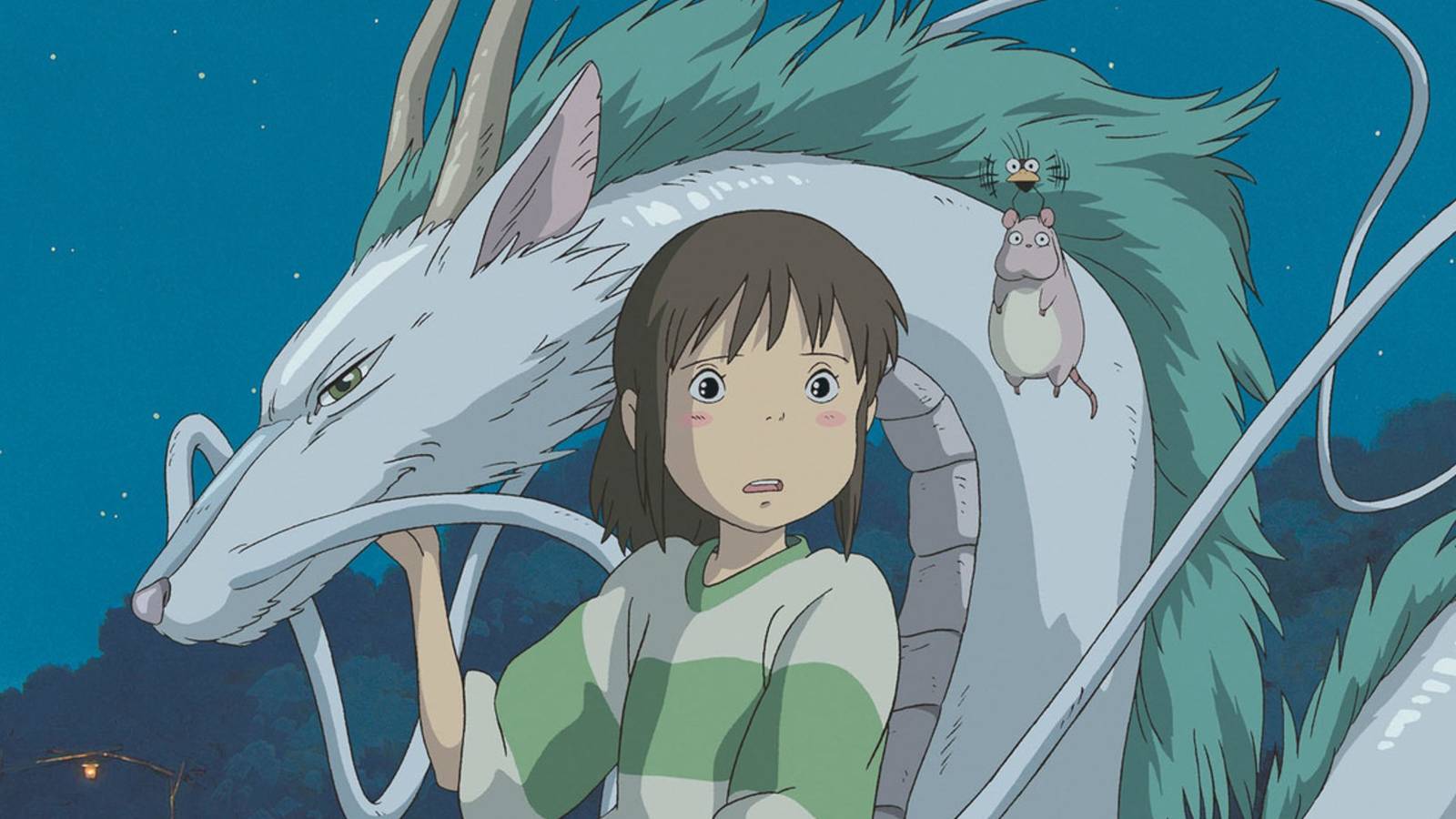
It would be wild to say that the only anime movies worth watching are those directed by Hayao Miyazaki, but at the same time, his contributions to that whole medium (yeah, more a medium than a genre) cannot be overlooked. Being a fan of anime and not watching anything by Miyazaki would be a bit like being a fan of gangster movies, but never watching one directed by Martin Scorsese. On both fronts, technically possible, yet also largely confounding. You’re missing out, either way. Hell, there are Miyazaki films you should watch even if you don’t really consider yourself all that fond of anime, much as it’s worth watching the likes of Goodfellas and The Irishman, even if you’re not crazy about gangster films (okay, sorry, last time Scorsese will be referred to).
There is no Miyazaki film that comes anywhere close to being bad, but if you want a rundown of the absolute best of the best, that’s what the following intends to do.
Hayao Miyazaki is also noteworthy as a producer and writer, as he’s been credited with doing those things for movies he didn’t direct, but were made within Studio Ghibli, the company he co-founded. He also started directing feature films later than you might’ve expected, as he turned 38 the year that his feature-length directorial debut, The Castle of Cagliostro, came out (1979). Since then, he’s directed 11 other movies, and honestly, all of them are, at worst, very good. There is no Miyazaki film that comes anywhere close to being bad, but if you want a rundown of the absolute best of the best, that’s what the following intends to do. Maybe it’s only going to be useful for those who are somehow new to Studio Ghibli and/or Hayao Miyazaki, but still, there’s merit in starting with these ones and then still making sure to watch the other seven he’s directed. You can’t go wrong with any, but you especially can’t go wrong with the following.
5
‘Nausicaä of the Valley of the Wind’ (1984)
There’s a bit of science fiction (and dystopian/post-apocalyptic stuff) to be found in Nausicaä of the Valley of the Wind, alongside the fantastical elements, which ensures it stands out within Hayao Miyazaki’s filmography. Plenty of the director’s movies belong to the fantasy genre, to the point where, come to think of it, not many don’t; really just the aforementioned The Castle of Cagliostro, and then also the biographical war film that is The Wind Rises. But back to Nausicaä of the Valley of the Wind. It’s the last film Miyazaki directed before Studio Ghibli was formed, though it does have certain elements that are found in his movies that he would direct after co-founding the company, including environmental themes and a conflict that revolves, in one way or another, around humanity and the natural world. Oh, and a character with a royal title, plus some unusual and creatively designed creatures.
There’s enough Ghibli-ness here to the point where Nausicaä of the Valley of the Wind sometimes gets labeled as a Studio Ghibli movie, but that just speaks to Miyazaki’s style, and the way he brought so much to the films he did direct once that studio was actually formed. You might expect a film made so long ago to be a bit rough around the edges, or unpolished compared to what came later, but that really isn’t the case with Nausicaä of the Valley of the Wind. This still feels like a great and pretty much timeless film, and even if the best was still to come for Miyazaki, this 1984 release was already excellent, and demonstrated the director at close to his full potential.
4
‘Castle in the Sky’ (1986)

As was the case with Nausicaä of the Valley of the Wind, it’s wild to consider how Castle in the Sky is now 40 years old. Well, with the other, it’s more than 40 years old, technically, and Castle in the Sky is 40, at the time of writing, but still. Four decades feels like a while in the filmmaking sphere, and movies from that long ago don’t always hold up for obvious reasons, but Miyazaki’s do, and in all likelihood, his more recent movies will still be striking decades from now, too, when they themselves turn 40… or older.
This was the first Miyazaki movie made after the formation of Studio Ghibli and has lots of his trademarks on display, all the while being typically imaginative with its story about a race to find a flying castle, and a whole chase that involves the two main characters being pursued by a large group of adversaries. Saying the Miyazaki film about the floating castle is better than the one about the moving castle might be a bold take, but again: all Hayao Miyazaki films are worth watching (yes, including Howl’s Moving Castle. Of course. Consider that its honorable mention).
3
‘The Boy and the Heron’ (2023)

Of all the Hayao Miyazaki films, The Boy and the Heron might well be the most complex, and it’s also the one that might end up being Miyazaki’s final film. If you’re a fan of the filmmaker, you’ll know that he’s talked about retirement before, and then has kept on making movies regardless, but he turned 82 the year The Boy and the Heron came out, and since there was a decade between The Wind Rises and The Boy and the Heron, another film of his could still be many years away, if it’s to come out at all. So, The Boy and the Heron is bittersweet, but it’s worth celebrating the fact that it does exist, while also appreciating how much it has to say about legacy. It would be a good swansong for Miyazaki, in other words.
There’s a fantastical world here explored in a way that’s somewhat reminiscent of another Miyazaki film that was released in 2001 (more on that one later), but The Boy and the Heron goes in some other interesting directions narratively and thematically, all the while being quite a bit darker. The whole thing is fairly overwhelming after just one watch, but it’s the kind of thing where rewatches and reading up on what certain things mean help/enrich the entire experience a great deal. Time may prove such a guess wrong, but at the moment, it feels like The Boy and the Heron could really be considered just as great eventually as his older films are right now. There’s always significant enthusiasm for the movie, but it feels likely to strengthen as more time passes.
2
‘Princess Mononoke’ (1997)
With the two best Hayao Miyazaki movies, it’s easy to get hyperbolic. Princess Mononoke, being one of those two movies, really is quite masterful, judged by any standard (you know, not just animation or anime). It’s about a personal quest that leads to something much bigger, because it begins with a young man trying to rid himself of a curse, but then that whole journey takes him to a town filled with people warring against nature, essentially. They’re an industrialized village, and they’re using up environmental resources, with beings in the forest fighting back against the whole thing.
It’s familiar territory for a fantasy/adventure movie, with the environmentalism angle and stuff, but Princess Mononoke does interesting things, and so it ends up not feeling clichéd or overly familiar. It’s a well-told story with top-tier animation (obviously), and it also gives you almost as much to chew on as the aforementioned (and more complicated) The Boy and the Heron. If you wanted to argue that it’s Miyazaki’s most well-rounded movie, or that it offers a particularly large number of things to appreciate (the runtime helps, in that department), then such an argument would indeed be a fair one to attempt. People probably wouldn’t scoff at you too much for saying that.
1
‘Spirited Away’ (2001)

It could well be the definitive one, as far as anime movies go, and yeah, it’s Spirited Away. It’s the easiest to put in the #1 spot here, as it’s also the hardest to fault, and considering how strong all the previously mentioned movies were, that’s saying a lot. It’s a fantasy movie about growing up and maturing in unusual circumstances, to say the least, as it involves a young girl trapped in a strange world without the help of her parents, as they’ve been transformed into pigs. It all happens suddenly, when she and her parents get lost while driving to their new home, she has to work out how to get herself and her parents out of where they’re all trapped. Getting her parents back to their normal/non-pig form would obviously be a plus, too.
And maybe all that’s mostly just an excuse for Miyazaki to depict and explore another wild world that could only have come from his imagination and no one else’s, but no, there’s a lot more here. You get a lot with Spirited Away, and it’s the sort of great movie you can watch as a pure experience, like for the visuals and style alone, but then if you want to dig a little deeper, in terms of what it’s got to say about growing up, coming of age, and braving hardships, you can indeed get analytical. It’s easily one of the very best animated movies of all time, it can count itself as a legendary family film, and… actually, well, it’s just a great movie however you want to classify it. The hyperbole stops here, but it could go on for a whole lot longer, when talking about a movie like Spirited Away.
Source link
