

Action is relatable, no matter how little or much we’re physically fit. Yes, even a highly trained assassin with years of training is relatable to the ordinary person because they’re driven by human motivation and emotions. Action on film feels like taking control of one’s life, like taking the reins and making one’s own decisions; in fact, some of the greatest action heroes out there are people who are put behind, underestimated, or looked down on.
Since action is cinema’s purest adrenaline-driven genre, it’s a space where storytelling meets entertainment, where bodies in motion become visual poetry, and where the impossible becomes possible. A true Mount Rushmore must represent the pinnacle of this form: films that thrilled audiences and fundamentally rewrote the rules of what action cinema could be. This is the Mount Rushmore of action movies—the four titans that belong on that mountain.
‘Die Hard’ (1988)
If one film defines the modern action movie, it is John McTiernan‘s Die Hard. This film revolutionized action cinema by featuring a hero who was not an invincible superman but rather an ordinary man in extraordinary circumstances. He bleeds, cries, mutters sarcastic one-liners to himself, and spends the majority of the film fighting through excruciating physical pain to save his family and many innocent people. The movie was pitched as “Rambo in an office building,” but, more importantly, it had to have Christmas as its setting, making Die Hard more conceptually interesting; many people still consider Die Hard a Christmas movie and watch it on Christmas Day with their families.
The story of Die Hard‘s casting is also interesting. Before Bruce Willis was offered the role of John McClane, it was offered to nearly every other action star, from Mel Gibson and Sly Stallone to Burt Reynolds and Don Johnson. Willis was an unexpected choice for the producers because he was best known as a TV comedy actor; in contrast, when Arnold Schwarzenegger was asked, he stated that he wanted to move away from action to do comedy. That is how the comedic Willis became one of the most famous action heroes of all time. Furthermore, Alan Rickman, who plays the main antagonist, had never appeared in a film before Die Hard, and his character established a new standard for the intelligent, cultured villain.
Die Hard follows New York cop John McClane (Willis), who travels to Los Angeles on Christmas Eve to reconcile with his estranged wife, Holly (Bonnie Bedelia), at her company’s holiday party in Nakatomi Plaza. When German terrorists led by the brilliant Hans Gruber (Rickman) take over the building, McClane becomes the only hope for the hostages inside. The film’s influence is immeasurable, inspiring countless imitators, redefining the Christmas movie canon, and demonstrating that action heroes can be vulnerable and still win. Die Hard remains the gold standard for action films 35 years later with a flawless blend of tension, wit, and emotion that has never been surpassed.
‘Raiders of the Lost Ark’ (1981)
Steven Spielberg and George Lucas wanted to make Raiders of the Lost Ark as a tribute to the early 20th-century serial films they had grown up with. As a result, Raiders of the Lost Ark set the standard for action–adventure filmmaking through constant invention and beautiful action sequences, set pieces, and costumes. Some of its greatest scenes are imitated and referenced in many other films, from the Peruvian temple boulder chase and the bar fight in Nepal to the truck chase through the Egyptian desert and the funny marketplace shootout.
These moments came to be when Spielberg, Lucas, and their screenwriter Lawrence Kasdan had a three-day-long sit-down, conceiving the ideas for the outline. During this sit-down, they also changed the protagonist’s name from Indiana Smith to Indiana Jones, basing him on action heroes like James Bond and actors like Toshirō Mifune. Like with Die Hard, Harrison Ford was among the last picks, and the person who was basically cast before him was Tom Selleck; It seems CBS didn’t want to release Selleck from his Magnum P.I. contract, making it impossible for him to film Raiders. Funnily enough, the writers’ strike in 1980 coincided with the filming schedule of Raiders.
Raiders of the Lost Ark follows Indiana Jones (Ford), an archaeologist with a bullwhip and a fear of snakes, who is hired by the U.S. government to find the Ark of the Covenant before the Nazi army can find it and use its power for world domination. The film’s commitment to practical effects, life-size sets, and on-location shooting gives it a true authenticity that CGI-heavy blockbusters still struggle to replicate. Nominated for nine Oscars (winning five), Raiders proves that action films can be both populist entertainment and genuine artistic achievements; in spite of this achievement opening doors to other action films, Raiders still remains one of the greatest films ever made.
‘The Matrix’ (1999)

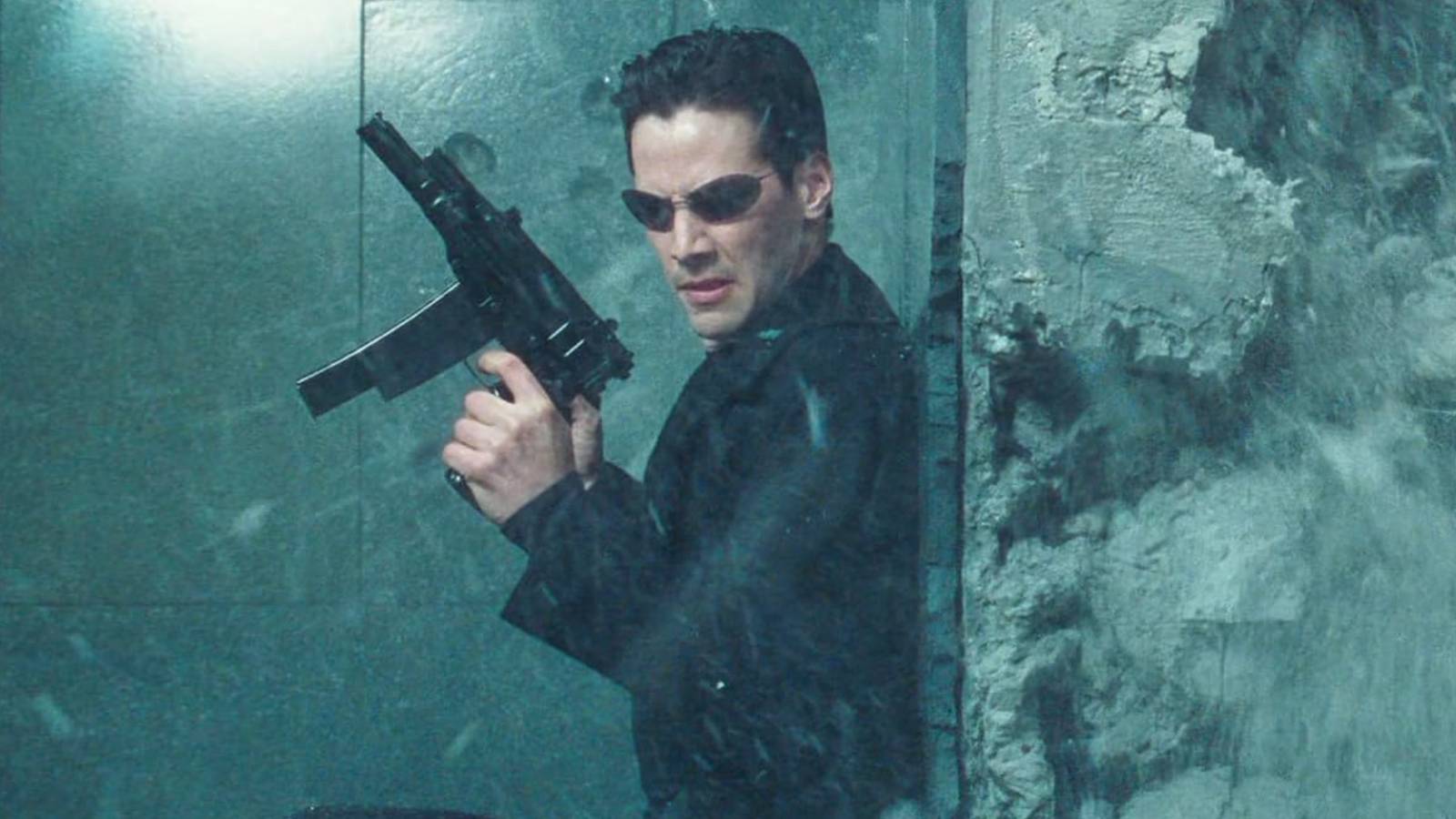
When The Matrix hit theaters in 1999, it did more than just raise the bar for action films; it also created an entirely new visual language, or, well, the Wachowskis did. Their love of wire fu, Hong Kong cinema, and martial arts clashed with the cyberpunk and Y2K aesthetics, including the Y2K paranoia about technology, which even the toughest people became concerned about. What can computers do now that they’re in homes? Taking a chance on the unknown and introducing characters who aren’t afraid of technology but instead learn how to use it to benefit humanity paid off for the Wachowskis, resulting in The Matrix, a marvel of action cinema.
The film’s impact was immediate and seismic. The “bullet time” effect, in which the camera appears to hover around frozen characters as bullets streak past, was the decade’s most imitated technique. By combining innovative filming with Hong Kong wire-fu choreography (choreographed by the legendary stunt coordinator Yuen Woo-ping) and adding a layer of philosophical questions about reality, identity, and freedom, this unexpected action film became a story that made audiences consider free will and life. While the terms “red pill” and “blue pill” are now used in somewhat toxic ways, it shows how much The Matrix genuinely influenced modern pop culture and continues to find ways to stay relevant as a work of art that is also highly educational.
The Matrix follows Thomas Anderson (Keanu Reeves), a computer programmer who leads a double life as the hacker “Neo.” One day, he’s introduced to a resistance movement against intelligent machines that have enslaved humanity within a simulated reality called the Matrix; joining the stoic Morpheus (Laurence Fishburne) and the fierce Trinity (Carrie-Anne Moss), Neo becomes one of the vital freedom fighters against the machines. The film won four Oscars and spawned three (now almost four) sequels, but its cultural influence is far greater than its franchise. It changed how action sequences were shot, how special effects were used, and how science fiction and action could engage with big ideas.
‘Mad Max: Fury Road’ (2015)

Decades after the last Mad Max film, George Miller returned to his post-apocalyptic wasteland and created what many critics consider the greatest action film ever made. Mad Max: Fury Road is essentially one long chase sequence, but Miller does an incredible job within that framework. The film is a masterclass in visual storytelling, with the plot conveyed almost entirely through images and minimal dialogue. Another intriguing aspect is that Fury Road contains feminist themes, which sparked some criticism from certain corners. Despite the criticism, the film’s power is undeniable, and winning six Oscars and appearing on countless “best of” lists is just one part of the evidence.
A particular round of applause needs to go to the practical stunts, because they are breathtaking; Miller used real vehicles, staged real crashes, and had real people doing impossible things. Since the movie was shot on location in the Namib Desert, the stunts look even more mesmerizing and intense; you feel the dirt, the sweat, and the parched efforts of the protagonists as they go through the wasteland. Miller shot over 480 hours of footage, which went to his wife, editor Margaret Sixel, who watched and edited the whole thing over three months; she wound up winning the Best Editing Oscar.
Fury Road follows Max Rockatansky (Tom Hardy), a haunted survivor captured by the tyrannical Immortan Joe (Hugh Keays-Byrne) and forced to serve as a blood bag for his war boys. When Imperator Furiosa (Charlize Theron) rebels, diverting Joe’s war rig to rescue his five enslaved wives, Max is drawn into a high-speed chase across the desert that never lets up for two hours. Furiosa emerges as the film’s emotional core: a one-armed warrior seeking redemption and hope in a world stripped of both. More than just a great action film, Fury Road is a work of art and proof that the genre can achieve the same heights as any other form of cinema.
Source link
