

January 28, 2026
WASHINGTON, D.C. – Last Wednesday, the House Budget Committee held a hearing, “Reverse the Curse: Skyrocketing Health Care Costs and America’s Fiscal Future.” The hearing examined the role rising health care costs play in limiting Americans’ access to affordable health care and driving the nation into a debt crisis. Republican members underscored the failure of Obamacare to lower health care costs and urged using reconciliation 2.0 to deliver health care affordability.
Watch the full hearing HERE
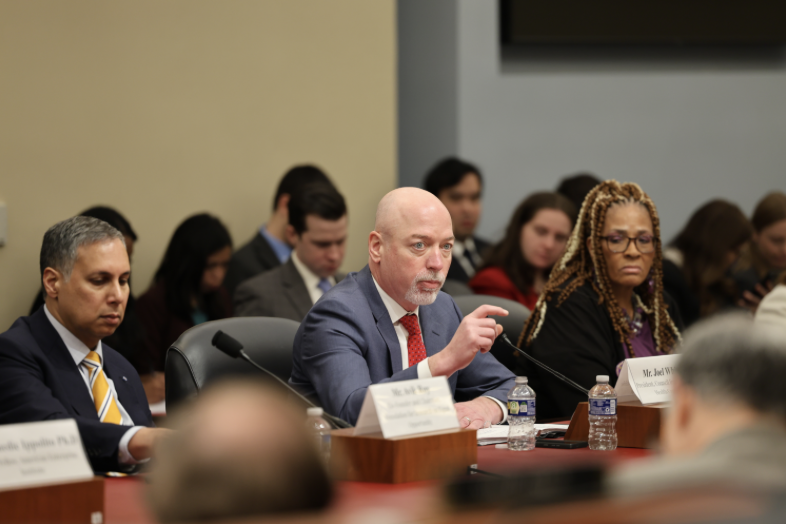
1. ON HOW AMERICA’S HEALTH CARE SYSTEM IS DESIGNED FOR TREATMENT, NOT PREVENTION—FUELING HIGHER HEALTH CARE SPENDING
Rep. Marlin Stutzman (R-Ind.): I want to talk a little bit about the chronic disease that’s plaguing our nation. Three in four Americans have at least one chronic disease, and over half have two or more chronic conditions. Chronic disease also comes with a significant cost, and according to the CDC, 90% of the nation’s annual health care expenditures are spent on chronic and mental health conditions.
So, Mr. White, I’d like to ask you: can you expand on how America’s health care system is designed to treat illness after it occurs, and how this contributes to the higher health care costs facing the nation?
Joel White, President, Council for Affordable Health Coverage: Yeah, I think we have a system that’s designed for sick care, not for preventing sickness before it begins, and that costs us a lot. And so I think the MAHA focus on health is really significantly important for lowering long-term health care costs.
I think there are three very smart things this Committee should consider in terms of policy. The first: under the ACA, premium discounts for wellness activities are illegal in the individual market. If people were given a financial incentive to eat healthy food, participate in a fitness program, or engage in other kinds of outcomes-based activities—and could earn a premium discount—that would send a strong signal that those behaviors are valuable. Currently, those incentives are illegal.
The second thing is Medicare Advantage. We’re going to spend about a trillion dollars over the next 10 years on what are called supplemental rebates. Medicare Advantage plans earn those rebates in the bidding process, and then they spend them on things like buying down premiums or lowering cost-sharing. They can also provide supplemental benefits. Right now, there aren’t a lot of guardrails. So some plans offer free bowling balls, movie tickets, or greens fees. Those are fitness activities, I guess. But when they try to provide healthy food, healthy food in Medicare Advantage is not considered primarily health related.
Because of that, plans have to go to a different program that requires the beneficiary to be diagnosed with a chronic condition, incur significant medical expenses like ER visits or hospitalizations, and be prescribed a healthy food regimen.
That’s really important for someone with diabetes or chronic heart failure. Diet is proven to lower medical costs and dramatically improve health for people like that.
So in Medicare Advantage, if we’re going to spend a trillion dollars over the next 10 years on supplemental rebates, we should at least have some rational rules around getting healthy food to people—make it a primarily health-related benefit, flex the rules for Medicare Advantage, and encourage healthy food as part of an overall health care strategy.
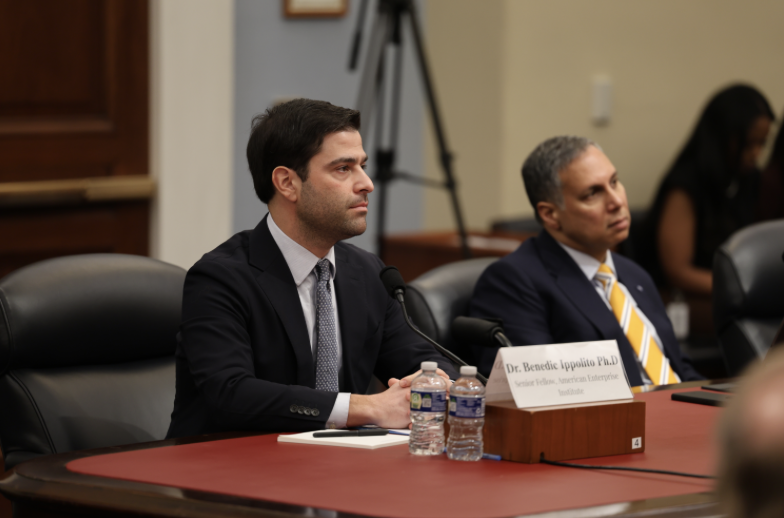
2. On growth of health care spending and its impact on the economy, the federal budget, and the national debt, as well as what Congress should prioritize to avoid these outcomes:
Dr. Benedic Ippolito, American Enterprise Institute: Yeah, I mean, the effects are broad. I’ll start with some fairly direct ones. If costs continue to grow at accelerated rates, we’re not going to be able to deliver what we are currently promising people, let alone any ideas you all have about future ways to expand benefits or expand coverage. So as a baseline, we need to get the budget in order before we can start thinking about any additional new policies. I think that’s a very important point to keep in mind.
Secondly, in terms of general approaches, one thing you touched on that I think is central to all of this is that if the federal government provides open-ended subsidies — in other words, subsidies that simply increase as health care costs increase — costs are going to go up. We see it in the Affordable Care Act, where a huge share of enrollees are entirely shielded from premiums. We see it in the employer-sponsored market. It does not matter how expensive that plan gets; the federal government continues to subsidize it. It happens in Medicaid. It does not matter how much the state spends; the federal government dutifully sends its check to the state for over half of the cost. And so, in terms of central conceptual approaches, that’s one area I’d prioritize.
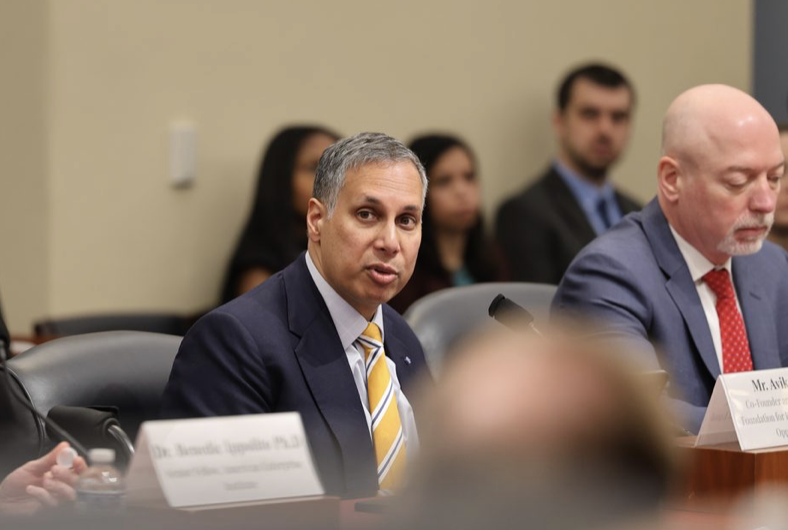
3. On how government interference under Obamacare has driven up health care costs and how free market health care principles can restore affordability and patient choice:
Rep. Josh Brecheen (R-Okla.): On average, we’re spending almost $12,000 as individuals in America, and many countries, developed countries, are spending $6,000 or less, half of what we’re spending. As this chart shows plainly, our life expectancy is significantly less—twice as much the expenditure, health outcomes less. So clearly, money does not result in better health outcomes. Free market principles have been squandered and traded out for more government interference and more regulations over the last 15 years to a greater level in the health care market. It’s proving the point that whenever the government tries to make something affordable, it makes it too expensive for everyone. If you go back to 2010, a family of four was paying about $13,000 to afford their employee-based health care premiums. Now it is $27,000 for that family of four. It’s almost a 100% increase, a 92% increase, in correlation with the same time of Obamacare. The distance between the doctor and the patient grows larger. This gap is filled by more government mandates, more insurance. Also rightly pointed out is that stock market prices, in exact time frame, have increased 600% for insurance companies. What we’re seeing is that the government perversion, intrusion of the free market principles, is leading to record stock market prices for the insurance industry. It is resulting in higher cost to the consumer, and what it’s showing is the unaffordability of the Affordable Care Act. I want the American people to hear from the experts. What are the free market principles?
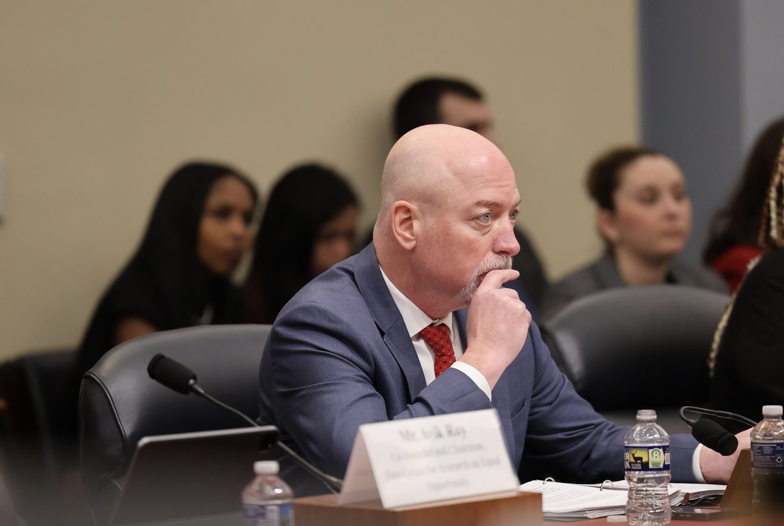
Mr. Avik Roy, Foundation for Research on Equal Opportunity: I’d encourage you to look at the World Index of Health Care Innovation that my organization puts out every year. FREOP, which looks at a lot of these metrics of how we measure the quality of the health care system, what we can learn from other countries, what they can learn from us. On the point about options other than health insurance, first of all, we have to make health insurance more affordable. You can do a lot to have alternatives to health insurance, and I will talk about that, but we, the people, still need affordable options for health insurance. The fact that the Affordable Care Act made health insurance massively more expensive for people who buy it on their own is a huge problem, because the foundation of free market health insurance is you buying that health insurance for yourself, not depending on your employer to buy it for you, not depending on the government to buy it for you. You buy it for yourself, and maybe the government helps you pay for that premium.
4. On what changes would actually drive down health care costs for all Americans:
Rep. Blake Moore: We have been hyper-focused on this smaller subset of the enhanced premium tax credits that were set to expire at the end of last year. That’s happened. We get that. But it’s still only a fraction of folks. Health care premium costs are going up for everybody in health care, right? I think there’s a lot of data that shows they’re going up a lot faster for those under ePTC’s or the ACA because whenever you just blatantly subsidize the market or give zero-dollar premiums, you’re going to see that increased rapidly. That’s a question I would like to be able to get to tomorrow but just opine a little bit more on where you think some of the biggest areas that we could focus to get premiums down for all Americans, not just the small subset.
Mr. Joel White on what should be included in Reconciliation 2.0: I think the big thing, building on Dr. Ippolito’s comment, is market consolidation is foundationally increasing prices in almost every area of the country, and so, addressing that upfront. The second thing I think is really important is what the President has suggested in giving money to consumers, not companies, that changes market dynamics. When you empower a consumer and that consumer has great information about price and quality and plan options, they are empowered to shop. And if they hold the money, they’re the purchasers. But the challenge and what we’ve heard previously is in every market in America, there’s a cheaper coverage option than Obamacare. But the law says, I can’t take my subsidy and buy that plan. So, we need to make subsidies portable. And then the last thing I would say is direct access to discounted prices through Trump RX, which would dramatically lower by 80% to 90 % the cost most Americans pay for prescriptions.
5. On the One Big Beautiful Bill strengthening Medicaid and tackling waste that drives higher health care costs:
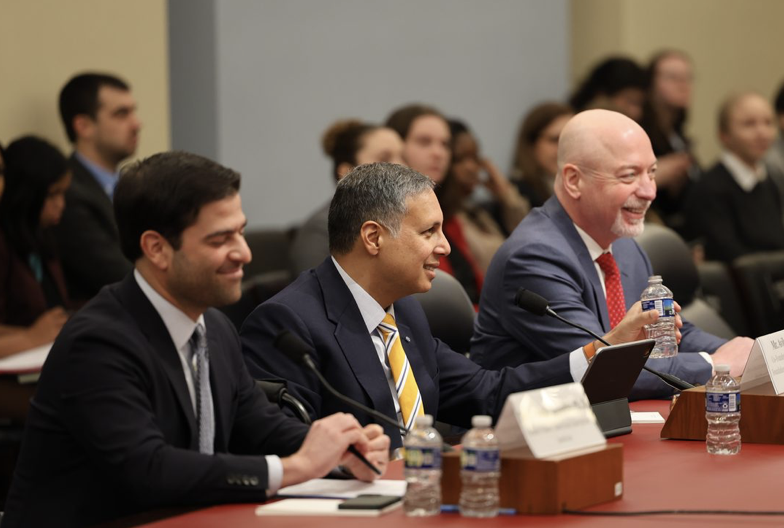
Rep. Tim Moore (R-NC): We have delivered meaningful wins to keep more money in the pockets of hardworking Americans. We increased the standard deduction, expanded the child tax credit for working families, and provided real relief at a time when families need it the most. In the Working Families Tax Cuts, we also strengthen the Medicaid program to serve those who rely on it. Mr. Roy, how do the changes made in the Working Families Tax Cut Act strengthen Medicaid and improve the program’s effectiveness?
Mr. Avik Roy: I think it’s really important to increase the program integrity, and that’s one of the things that the Working Families Tax Bill does, right? So, you’re going to have more people who are actually eligible for Medicaid, enrolling in Medicaid, and the ineligibility will go down. Also, I think one of the most important things in that bill that is really was very politically hard to do, and I give Congress enormous credit, was to start tackling as what’s been described as the shell game of state based provider and premium tax credits, which are a technically legal but spiritually fraudulent way for states to draw down excess federal dollars to inflate the cost of Medicaid, as I mentioned earlier in response to a different question, the cost of subsidizing Americans in the ACA Medicaid expansion is actually higher by several $1,000 per month per year than subsidizing people in the ACA exchanges. When the Affordable Care Act was passed in 2010, the CBO made the opposite projection that it would cost $9,000 per year to subsidize people in the ACA exchanges and 6000 per year in Medicaid. The actual ratio has been flipped because of those state provider and premium taxes that states have used to inflate Medicaid costs. I think that was incredibly important. I really am impressed that Congress was able to make some headway on that topic.
Rep. Tim Moore: I’ve noticed that Democrats keep using these preposterous adjectives to describe a bill that went after reducing waste, fraud, and abuse across various programs. This was about common sense reforms to stop programs from paying millions of dollars and often to dead people. The Trump Administration and Republicans, as we referenced earlier, have taken important steps to bring greater accountability to government spending, and also includes major fraud schemes like those in Minnesota, where, oversight failed. Dr Ippolito, what changes are needed to clear the vulnerabilities that currently exist in our Medicaid and our Medicare programs?
Dr. Benedic Ippolito: That’s a big question. I would say on the Medicaid side of the ledger, I think it all starts with incentives. As long as the federal government is paying for some populations, 90% including financing schemes, more than 90% of the cost, it’s going to be very, very hard to discourage at least fraud adjacent behavior in the Medicare program. I think there’s a number of opportunities. Traditional Medicare needs to do a better job of policing itself. There’s no other way to do it. Medicare Advantage, I think the biggest challenge there is simply making sure that when you send checks to those insurance companies. You send them a reasonable amount, and you said you don’t give them an incentive to play games with coding behavior and more.
Source link
