

On July 4 last year, a few hours after sundown, about a dozen left-wing activists gathered outside the Prairieland Immigration and Customs Enforcement detention facility in North Texas.
Some protesters set off fireworks while others spray-painted cars and a guard booth. As federal officers stepped outside to confront them, local police arrived, and shortly after, shots were fired. Investigators say an Alvarado police officer was hit in the neck by a bullet and released from the hospital the following morning.
Most of the activists were arrested. Nine of them face serious federal charges, ranging from attempted murder to providing material support to terrorists, in a trial that begins Tuesday.
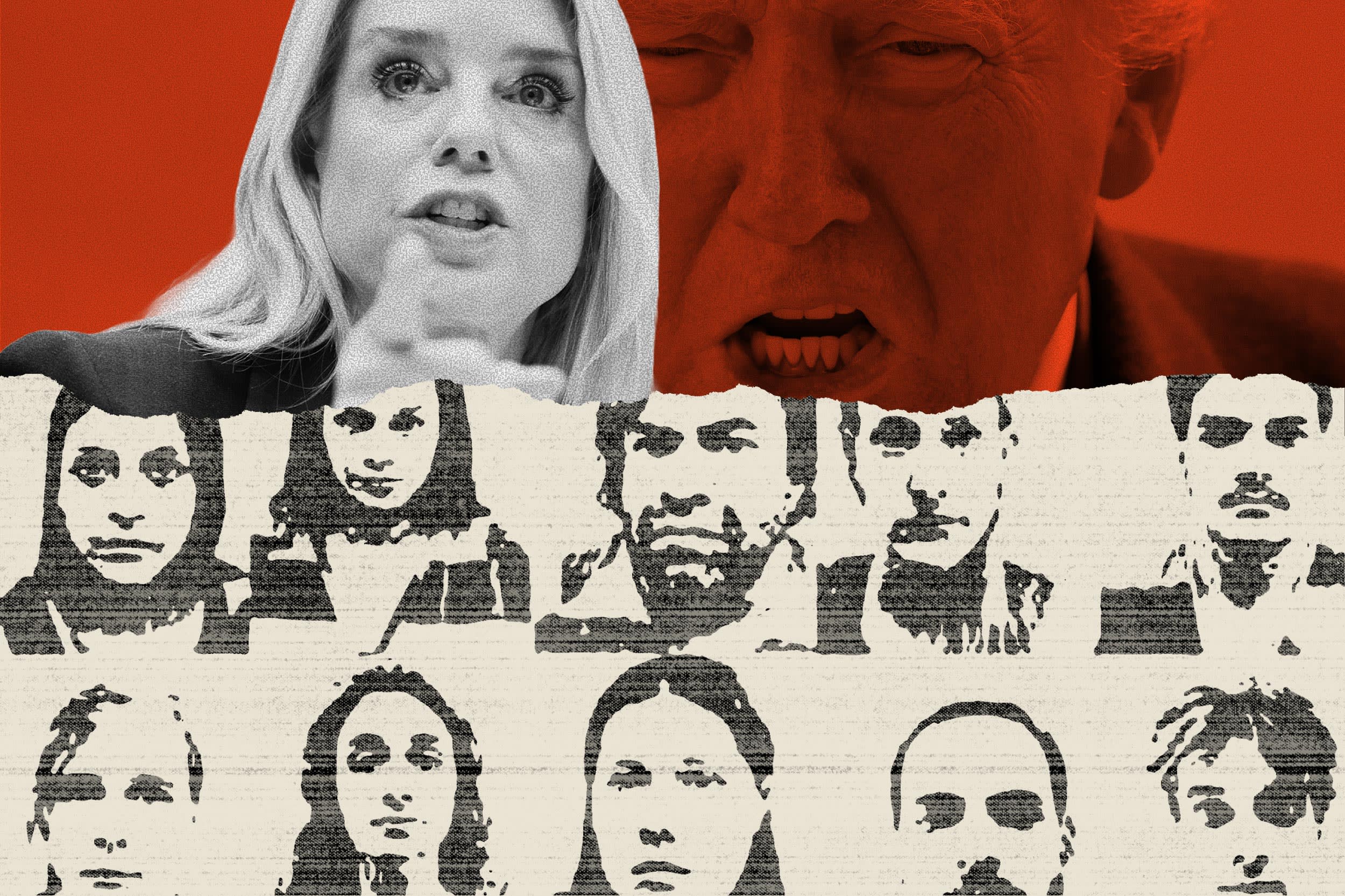
Prosecutors characterize the events that night as an “antifa attack” on the federal government. The defense calls it a protest gone wrong. But the implications of this trial extend beyond the fate of one group of activists: For the first time, federal prosecutors are seeking to convict protesters — most of them American citizens — on charges related to domestic terrorism. The outcome will test whether President Donald Trump’s yearslong campaign to brand leftist activists as terrorists can succeed in the courts.
“This is the first indictment in the country against a group of violent Antifa cell members,” acting U.S. Attorney Nancy Larson said in a November press release.
This is not just about antifa. Anything that feels at odds with this administration’s policies could be considered domestic terrorism, and will be pursued with the full force of the federal government.”
Rachel Levinson-Waldman, director of the Liberty and National Security Program at the brennan center for justice
Since charges were filed, senior members of the Trump administration have held up the Prairieland case as a proof point in their wider campaign against anti-government organizing, arguing that local activism and demonstrations are coordinated attacks by domestic terrorists. Trump’s Department of Justice portrays antifa — a contraction of “anti-facist” long understood as a loose left-wing ideology, not an organization — as a structured “militant enterprise” comparable to foreign terrorist organizations, one that calls for the overthrow of the U.S. government and poses a national security threat.
But legal experts tell MS NOW that the Prairieland case — in which defendants face decades in prison on state and federal charges — is more complicated than the government’s framing suggests, and that the prosecution appears to be motivated by politics. They warn that the DOJ’s targeting of progressive activists risks criminalizing protest activity, and reflects an expansion of executive power under the Trump administration that casts protesters and perceived political opponents as enemies of the state.
“This indictment stretches far beyond a specific, violent criminal action that might have taken place,” said Rachel Levinson-Waldman, director of the Liberty and National Security Program at the Brennan Center for Justice. “It characterizes these people who put together a protest as being in an antifa cell and tars all of them with this label of domestic terrorists.”
Levinson-Waldman said the overreach threatens the civil liberties of all Americans.
“This is not just about antifa,” she said. “Anything that somehow feels at odds with this administration’s policies could be considered domestic terrorism and will be pursued with the full force of the federal government.”
Trump’s first term coincided with the rise of the far right and energized a countermovement on the left. The president has always been quick to frame leftist resistance as terrorism.
His first few years in office were marked by sometimes violent street clashes between alt-right organizers and the far-left groups opposing them. After the white nationalist Unite the Right rally in Charlottesville — where one counterprotester was killed by a neo-Nazi and dozens more were injured — Trump publicly elevated the anti-fascist movement, placing it on equal footing with white nationalism.
“You had some very bad people in each group too,” Trump told radio show host Mark Levin in 2019. “Don’t forget, that was the beginning of antifa. That’s when you first started hearing the word antifa. I’m not sure I heard the name antifa before Charlottesville.”
Trump called antifa “sick, bad people” — and said he wanted to find a way to prosecute them.
“We’re looking at a lot of different things relative to antifa,” he told a gaggle of reporters in 2019. “Antifa, in my opinion, is a terrorist organization.”
In 2020, Trump announced plans to designate antifa a domestic terror organization. Experts wondered not only whether he would follow through, but also what the point would be, since the U.S. had no federal domestic terrorism charge to prosecute.
Expect similar cases to come as we dismantle antifa.”
U.S. Attorney General Pam Bondi
But the rhetoric in Trump’s first term became policy in his second. Weeks after his second inauguration, Vanity Fair reported that the FBI and DOJ would shift their domestic terrorism investigations away from far-right extremist groups — which were responsible for a surge of violence in America over the last decade and inspired multiple deadly mass shootings — and toward leftist groups.
Federal investigators hadn’t previously focused on antifa for good reason, according to Thomas Brzozowski, the DOJ’s former counsel for domestic terrorism.
“Antifa has always been construed as more of a politics or an activity of radical opposition to the far right as opposed to an actual organization,” Brzozowski told MS NOW.
“It strains credulity” to include antifa on a list of domestic terrorist organizations, he said. Brzozowski took an early retirement last year after the department shifted its focus.
“The manner in which they were going to undertake issues related to domestic terrorism departed significantly from what I thought was appropriate,” he said.
Trump’s campaign against antifa ramped up after the killing of conservative activist Charlie Kirk in September — alongside other high-profile shootings that administration officials rushed to blame on the far left before the facts were clear.
Days after Kirk’s death, White House deputy chief of staff for policy Stephen Miller vowed to target a “vast domestic terror movement” using the full force of the federal government.
A week later, Trump signed an executive order designating antifa a domestic terrorist organization, followed days later by National Security Presidential Memorandum-7, in which he directed agencies and local law enforcement partners to prioritize investigations into this new kind of domestic terrorism. The order came with new descriptors and motivating ideologies for terrorists, including “anti-Americanism, anti-capitalism, and anti-Christianity,” “extremism on migration, race, and gender” and hostility toward “traditional American views.”
By the next month, the DOJ announced its first big win in Trump’s fight against anti-fascism: a superseding indictment against the Prairieland defendants in Texas, which added new charges on top of the attempted murder counts, including rioting and providing material support to terrorists.
At the end of the day, we’re talking about freedom of speech.”
Meagan Knuth, president of The National Lawyers Guild, DALLAS-FORTH WORTH CHAPTER
There is no standalone federal crime called “domestic terrorism.” In the Prairieland case, prosecutors are using a law that makes it a felony to provide “material support” for certain violent federal crimes. The statute is rarely prosecuted and has typically been used in cases involving foreign terrorist groups.
Brzozowski said the new indictment provides the administration with a useful public-facing document that, for the first time, positions antifa next to a terrorism-related charge.
“That obviously turns into a convenient talking point for everybody in the administration,” Brzozowski said, qualifying his opinion with “I’m not privy to the facts on the ground.”
It did become a talking point.
“Expect similar cases to come as we dismantle antifa,” U.S. Attorney General Pam Bondi said on Fox News.
In December, Bondi issued a memo instructing federal prosecutors and law enforcement agencies to “zealously” investigate and prosecute these newly defined domestic terrorism cases and to encourage the public to turn in leaders of domestic terrorism organizations. The memo cites the Prairieland case.
As federal officials make policy changes and build new cases around domestic terrorism, they’ve also been invoking “terrorism” against demonstrators.
Courts have found that federal officers used excessive force against people protesting ICE in their cities — in recent months, those officers have beaten, blinded, gassed, arrested, shot and, in two high-profile cases, killed civilians. Senior Trump administration officials repeatedly labeled these civilians as “terrorists,” well before investigations were complete — including Minneapolitans Renee Good and Alex Pretti, hours after they were shot dead. Numerous cases brought by federal prosecutors against activists and bystanders have failed or been withdrawn due to scant or contradictory evidence.
In Maine, a civilian recorded an ICE agent claiming that the agency “has a nice little database, and now you’re considered a domestic terrorist.” ICE acting Director Todd Lyons denied that the agency had such a list, telling the House Homeland Security Committee this month, “I can assure you that there is no database that’s tracking United States citizens.”
Terrorism-related investigations and prosecutions in the U.S. have disproportionately targeted Muslim and Arab communities since the 9/11 attacks. But expanding the terrorist label to white protesters and ICE observers poses a challenge for the Trump administration.
“Conceptually, there’s a lot of hard work that needs to be done to call someone like that a terrorist,” said Wadie Said, a professor of law at the University of Colorado School of Law who studies national security and terrorism prosecutions.
Said explained that in news reports and indictments, a terrorism label functions less as a legal necessity and more as a rhetorical weapon — “a force multiplier” meant to single people out as “extra special bad” beyond their underlying alleged crimes.
“It’s not used in any type of neutral or objective way,” he said. “It’s just used as a cudgel or a slur to defame one’s enemies.”
Federal prosecutors are trying to paint the events of July 4 as a terror plot.
In all, 19 people were arrested on various charges related to the shooting and demonstration at the Prairieland facility. Several of those charged have already pleaded guilty to providing material support to terrorists.
Source link
