

Trump’s Iran Strategy Has a 170-Year-Old British Playbook — The 1856 Persian Gulf War Ended With a Treaty in Weeks
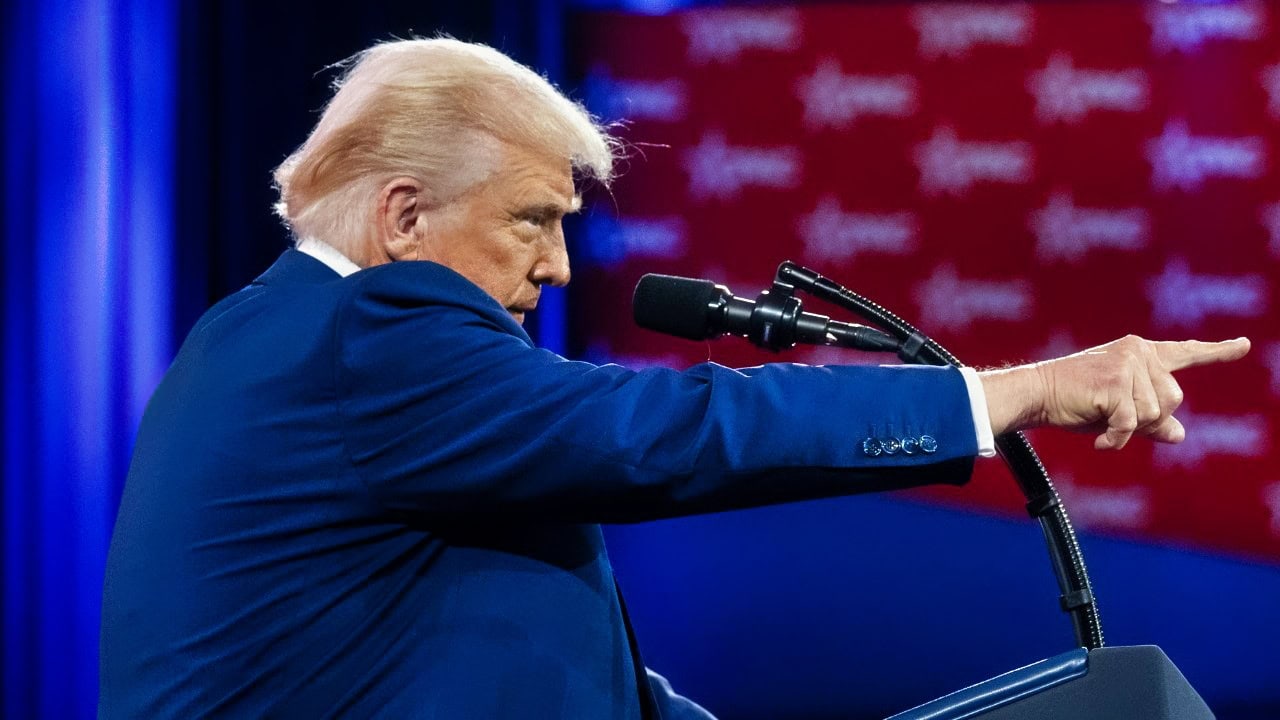
The British War in Iran That Trump Now May Be Replicating
President Donald Trump continues the war in Iran as the Islamic Republic responds with bluster, attacks on the Strait of Hormuz, and regional energy infrastructure. Perhaps 50,000 American troops are in the region, 10,000 more than usual. The deployment of the 82nd Airborne and a Marine Expeditionary Unit aboard the USS Tripoli suggests the Pentagon could be preparing for a ground invasion.
Such numbers are minuscule compared to previous U.S. ground campaigns, for example, in the 1991 Operation Desert Storm to liberate Kuwait, or the outright invasion of Iraq 12 years later. Iran itself is almost four times the size of Iraq, with U.S. allies slamming the door on Trump, the U.S. faces logistical hurdles.
Trump Could Be Repeating History
An F-35 Lightning II, assigned to the F-35 Demonstration Team, pays tribute to the past present, and future of Air Force aviation customs and capabilities during Luke Days airshow, March 23, 2024, at Luke Air Force Base, Arizona. Luke Days demonstrates the Air Force’s continuing progress in building the future of airpower with military and civilian air acts including the U.S Air Demonstration team the “Thunderbirds,” F-35A Lightning II, static displays, science, technology, engineering, and math exhibits, and military operations demonstrations. (U.S. Air Force photo by Airman 1st Class Mason Hargrove)
Trump may be bluffing, but just over a century and a half ago, there was a conflict that in some ways could mirror Trump’s strategy.
In 1856, the Persian shah Nasir al-Din was just 25 years old when he faced a potentially existential threat. He had been the shah for less than a decade, and the knives were out.
At the time, kings had to constantly defend their domains, not only from external enemies but also from internal rivals. In Persia, or Iran as it became known in 1935, the shah would appoint governors to various provinces, usually relatives and other elites.
It was a basic system of tax farming, with a twist. The shah would demand a set amount of tax revenue from each governor; they would then collect that amount to dispatch to Tehran; if they could extract more, they could make a profit.
When governors smelled weakness in Tehran, they might refuse to dispatch the taxes. The shah would then have a choice: allow the province’s de facto autonomy, if not secession, or dispatch an army to reassert control, a tremendously expensive prospect. The same dynamics would occur within a province among the district and tribal chiefs.
Throughout the 1850s, the frontier between Persia and Afghanistan was particularly fragile. Morad Mirza, the son of Crown Prince Abbas Mirza, was a long-time and repeated governor of Khorasan, where the Iranian city of Mashhad remains the capital. At the time, Khorasan, the region’s breadbasket, also included the Afghan city of Herat, at least in theory.
When Nasir al-Din Shah and Morad Mirza sought to force Herat to submit its tax revenue, Herati tribes refused. The shah dispatched an army to enforce discipline. It was not the first time the shah had to defend Persia’s frontiers against Afghan tribes, and he did not want it to be the last.
What happened next, however, changed the shah’s understanding of power and the world in which he lived. Afghanistan was long a marginal territory, but by the 19th century, it had become increasingly important as a buffer between the British Empire’s prized possession, India, and the Russian Empire. After Russia’s defeat in the Crimean War, the tsar accelerated Russia’s eastward expansion.
At the time, many diplomats assumed that when the Russian and British empires met, a world war would break out. If the Cold War dominated the second half of the 20th century, the “Great Game” between the United Kingdom and Russia and, to a lesser extent, Germany dominated the late 19th century.
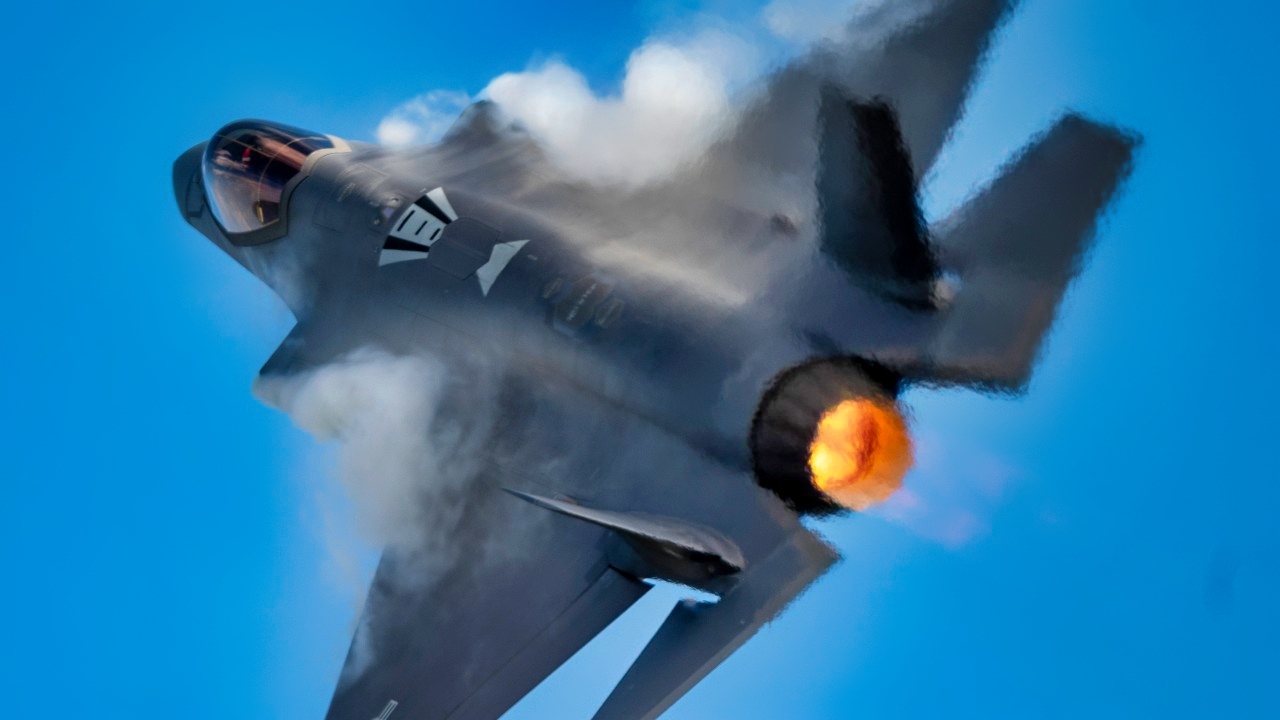
U.S. Air Force Maj. Melanie “Mach” Kluesner, the pilot for the F-35A Demonstration Team, performs aerial maneuvers in a USAF F-35A Lightning II during the practice day before the airshow at Jacksonville Naval Air Station, Florida, on 18 October, 2024. The practice day ensures that the team is able to safely and properly display the power, agility, and lethality of America’s 5th generation fighter jet. (U.S. Air Force photo by Senior Airman Nicholas Rupiper)
Time on the Ground
In 1997, I drove along the Wakhan Corridor from the Tajik city of Khorog to the Chinese border. In the 20th- or 21st-century context, I was driving in Tajikistan, looking across a small river into Afghanistan and through a mountain valley into Pakistan. But in the 19th-century world, I was standing in the Russian Empire, looking through no-man’s land into the British Empire. If the goal is to prevent a world war, a buffer zone that an observer can see through is not ideal.
Accordingly, the British decided to back the Afghans’ claims against the Persians. This infuriated Nasir al-Din Shah, the “pivot of the universe.” After all, how could a woman (Queen Victoria) on a faraway island dictate his actions?
He refused to back down. On October 25, 1856, the Iranians took Herat. A week later, the British Governor-General in India declared war.
He did not attack Herat, though. Instead, he sailed a flotilla into the Persian Gulf and landed near Bushehr, then a dusty port city but now the site of Iran’s civilian nuclear reactor. The battle for Bushehr began on December 5, 1856.
British and Indian troops landed and drove inland. The shah’s army had been depleted, though; there was a garrison of 4,000 Persian troops in Shiraz, but there was little they could do to stop the better-equipped British and Indians. The two sides clashed at the Battle of Khorsab, and the British slowly fanned out along the Persian Gulf coast to Mohammareh, today called Khorramshahr.
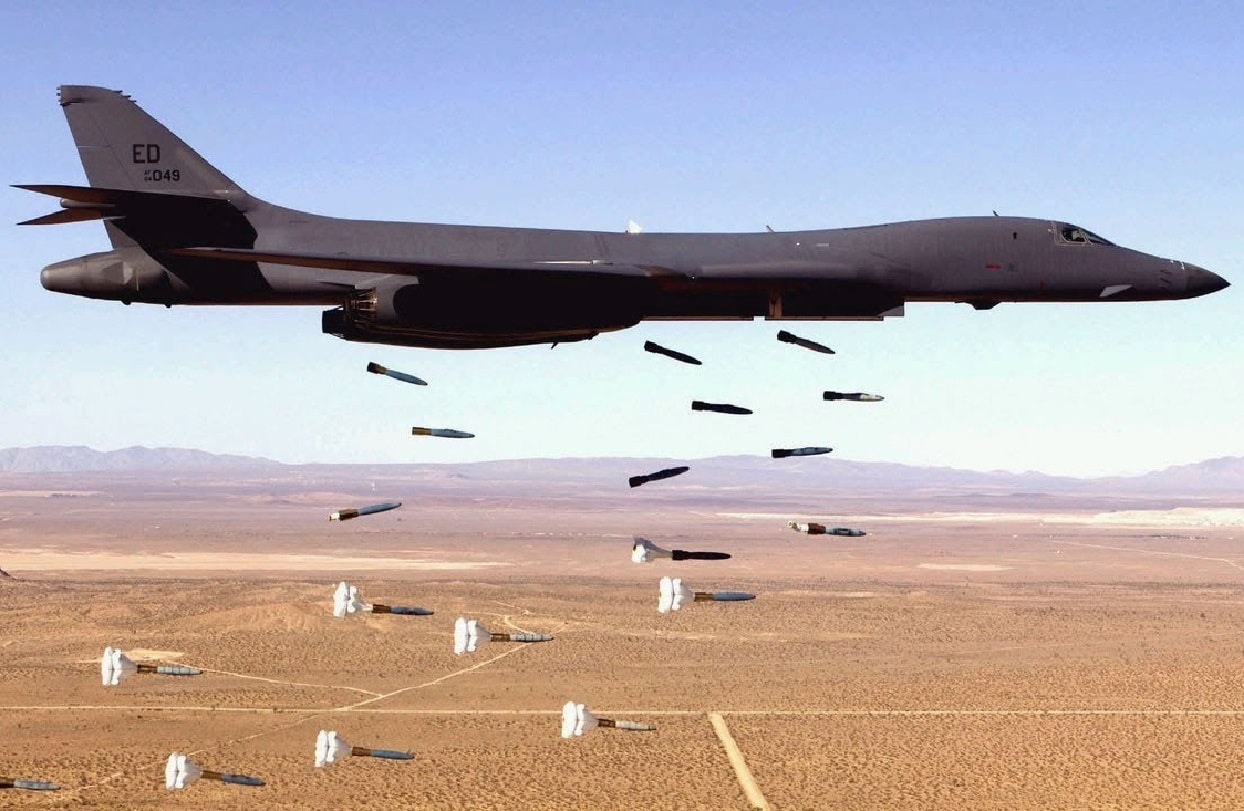
B-1B Lancer. Image: Creative Commons.
The British then gave an ultimatum: Evacuate Herat or lose the Persian Gulf coast. The shah chose the former. On March 4, 1857, the British and Persians signed the Treaty of Paris, though, as in the United States during the War of 1812, the war continued for a month before word reached the generals that an agreement had been reached. The shah kept his word—he had no choice—and renounced claim to Herat. The Treaty of Paris set the border between Iran and Afghanistan that exists today.
Trump’s Choice Iran Choice
While there is much talk about seizing Kharg Island, critics are right to voice concern: The island is flat and within artillery, drone, and missile range of the Iranian coast. Kharg is only one among many islands that dot the Persian Gulf.
If the Marines land, expect to hear names like Abu Musa, Greater Tonb, Lesser Tonb, Hengam, Farsi, Sirri, and Kish. Marines might also take Jask—a town outside the Strait of Hormuz and the site of an Iranian submarine base.
The Islamic Revolutionary Guard Corps runs “invisible jetties” along Iran’s rocky Persian Gulf coast, hubs for its smuggling operations. Expect U.S. forces to target gasoline storage tanks and sink every boat—from the smallest speed boat to the traditional dhows to larger frigates, the former of which the Islamic Revolutionary Guard Corps uses to harass ships and the latter two of which are large enough to lay mines.
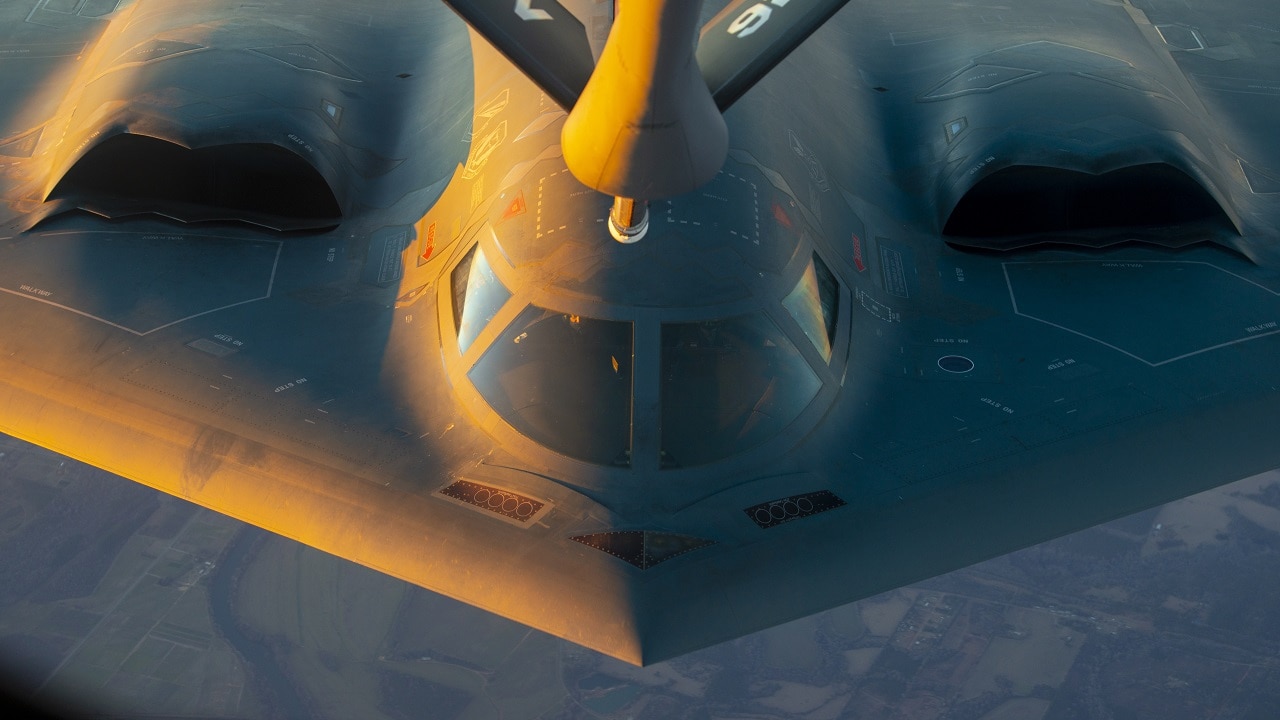
A B-2 Spirit assigned to Whiteman Air Force Base, Mo., prepares to receive fuel from a KC-135 Stratotanker, Feb 7, 2021. A B-2 Spirit performed alongside a B-1B Lancer and a B-52 Stratofortress for the Super Bowl LV flyover on Feb. 7, 2021. (U.S. Air Force photo by Airman 1st Class David D. McLoney)
Even if a precedent exists, though, Iran today will not be the relative cakewalk it was in 1856-1857. The British and Indians did not need to contend with drones, missiles, and over-the-horizon artillery. Nor are the war aims comparable:
The British did not seek regime change; they merely imposed constraints and dictated a new relationship to Nasir al-Din Shah.
Then again, a parallel is looming if Trump intends to anoint ambitious regime stalwart and four-time presidential aspirant Mohammad Bagher Ghalibaf as his Persian proxy in a Venezuela-style regime change.
About the Author: Dr. Michael Rubin
Michael Rubin is a senior fellow at the American Enterprise Institute and director of policy analysis at the Middle East Forum. The opinions and views expressed are his own. A former Pentagon official, Dr. Rubin has lived in post-revolution Iran, Yemen, and both pre- and postwar Iraq. He also spent time with the Taliban before 9/11. For more than a decade, he taught classes at sea on the Horn of Africa and the Middle East, covering conflicts, culture, and terrorism to deployed U.S. Navy and Marine units. The views expressed are the author’s own.
Source link
