US-Israeli plan for Kurdish invasion of Iran reportedly collapsed amid leaks, distrust
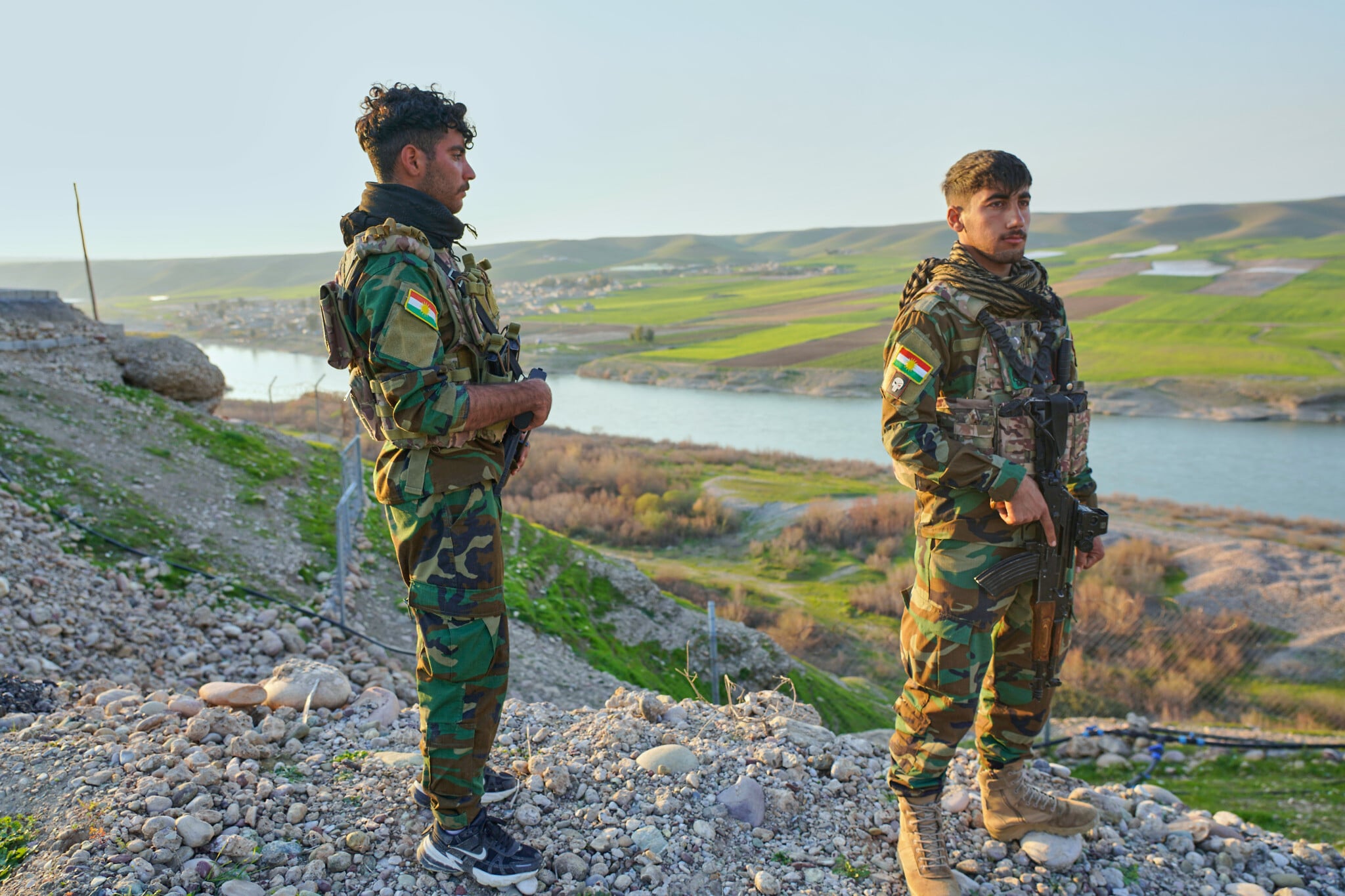
The United States and Israel planned for Kurdish militia forces to invade Iran early in the ongoing war, hoping to spur a rebellion that would bring down the Islamic Republic – but leaks to the media, lobbying by allies, and wariness among the Kurds themselves led Washington to pull the plug on the idea, according to a Saturday report.
The Channel 12 investigation came after Israeli and international media reported earlier this month that a ground campaign launched from Iraqi Kurdistan was imminent or even had already started.
Though Washington never acknowledged being part of the plan, US President Donald Trump initially welcomed the involvement of Kurdish fighters, before reversing himself later on.
According to the report, tens of thousands of armed Kurdish fighters planned to cross the border from Iraq in the first days of the war, under “massive” US and Israeli air cover.
The two militaries carried out heavy strikes against Iranian security forces – including regime officials, army bases, missile systems, police stations and Basij sites – in the country’s northwest in an effort to ease the Kurds’ path, the report said.
The invasion from Iraqi Kurdistan was set to include fighters from all six factions of Iranian Kurds, who would in turn provide weapons to Kurds inside of Iran, the report said.
The combination of the intensive US-Israel joint strikes on the regime’s leaders and the Kurdish invasion was intended to “break the fear barrier” among the Iranian opposition, which had seen thousands murdered by the regime in previous weeks, the report said.
The TV report said that Israel’s Mossad spy agency had been working on the plan for years, citing foreign reports that the Mossad and CIA have long been arming the Kurds, and said Mossad chief David Barnea had presented it to Prime Minister Benjamin Netanyahu and discussed it in Washington DC in the run-up to the war.
IDF Military Intelligence thought the plan had only a slim chance of success, the report said, and senior officials described it to Channel 12 as “imaginary” and “full of holes.” However, it was presented both in Israel and the US as “hermetic,” the report claimed, amid confidence that “the Kurds would do their part.”
This assessment helped Netanyahu convince Trump to proceed with the joint strikes on the regime from February 28, Channel 12 said, repeating a claim that has been widely reported.
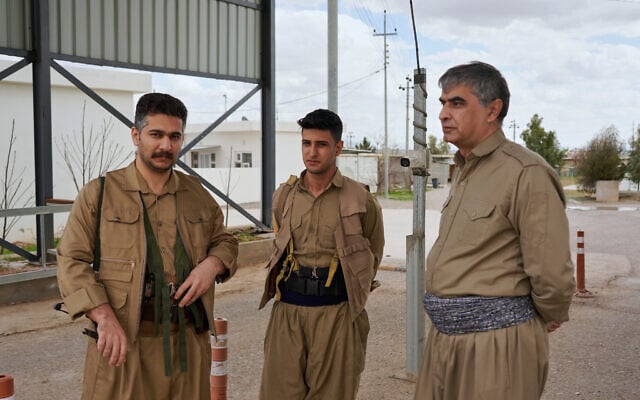
The report interviewed a member of the Kurdish Freedom Party (PAK) and other Kurdish commentators who asserted that there was wide agreement among Kurdish groups to “cooperate to bring down the regime,” and that there were two specific moments when the invasion was set to begin.
On the first of these, however, the invasion was postponed after news of its impending start was leaked in US media — with Fox News on March 4 reporting that an offensive had begun, and the White House press secretary Karoline Leavitt asked that same day whether the US was arming the Kurds for that purpose.
According to the report, the Iranian regime then bolstered its defenses in the northwest, ramped up military pressure on Kurds in northern Iraq, and exerted diplomatic pressure on Baghdad in an effort to thwart the plan.
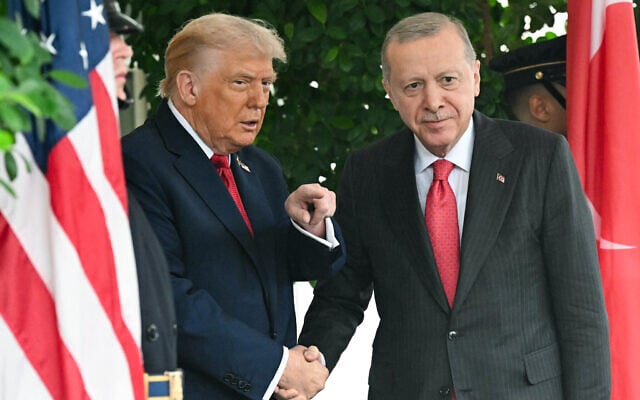
Meanwhile, Turkish President Recep Tayyip Erdogan, who is close to Trump, told the US president that Ankara would not tolerate Kurdish independence anywhere in the region. And Arab Gulf states warned that an ethnic partition of Iran could destabilize the Middle East as a whole.
Amid all of this, the Kurds themselves expressed wariness about their prospects against the Iranian regime, as well as about Washington’s reliability. They began demanding “political guarantees” as opposed to just military support, the report said.
The concern came after recent events in Syria, where the US relied on Kurdish fighters to defeat the Islamic State group in the country’s civil war only for Trump to back new president Ahmed al-Sharaa’s offensive to take over Kurdish-held areas and re-integrate them into the central state.
Given all these developments, and having lost the element of surprise, Trump decided the operation would be “too dangerous” and called off the planned invasion, according to the report.
Subsequently, when there was a second opportunity to invade, that too was scrapped, and the whole idea is now “off the agenda,” the report said.
Now, a month into the war, Netanyahu is “disappointed” at the failure of a plan he had “adopted,” the report said, echoing previous reports that the premier was frustrated with Barnea, the Mossad chief. Trump, meanwhile, “has long since changed direction,” the network reported.

The failure to quickly topple the Iranian regime has reportedly raised tensions between Netanyahu and Trump, and is said to have been the subject of a tense call between US Vice President JD Vance and Netanyahu on Monday.
After initially proclaiming a once-in-a-generation opportunity for Iranians to overthrow their government, Netanyahu and Trump have subdued their rhetoric about regime change since the start of the war, with Netanyahu saying several times this month that he cannot be certain that the Iranian public will rise up.
Israeli political and military leaders have said that Jerusalem launched its campaign against Iran, alongside the US, to degrade the Iranian regime’s military capabilities, distance threats posed by Iran — including its nuclear and ballistic missile programs — and “create the conditions” for the Iranian people to topple the regime.