

When the oceans died and life changed forever
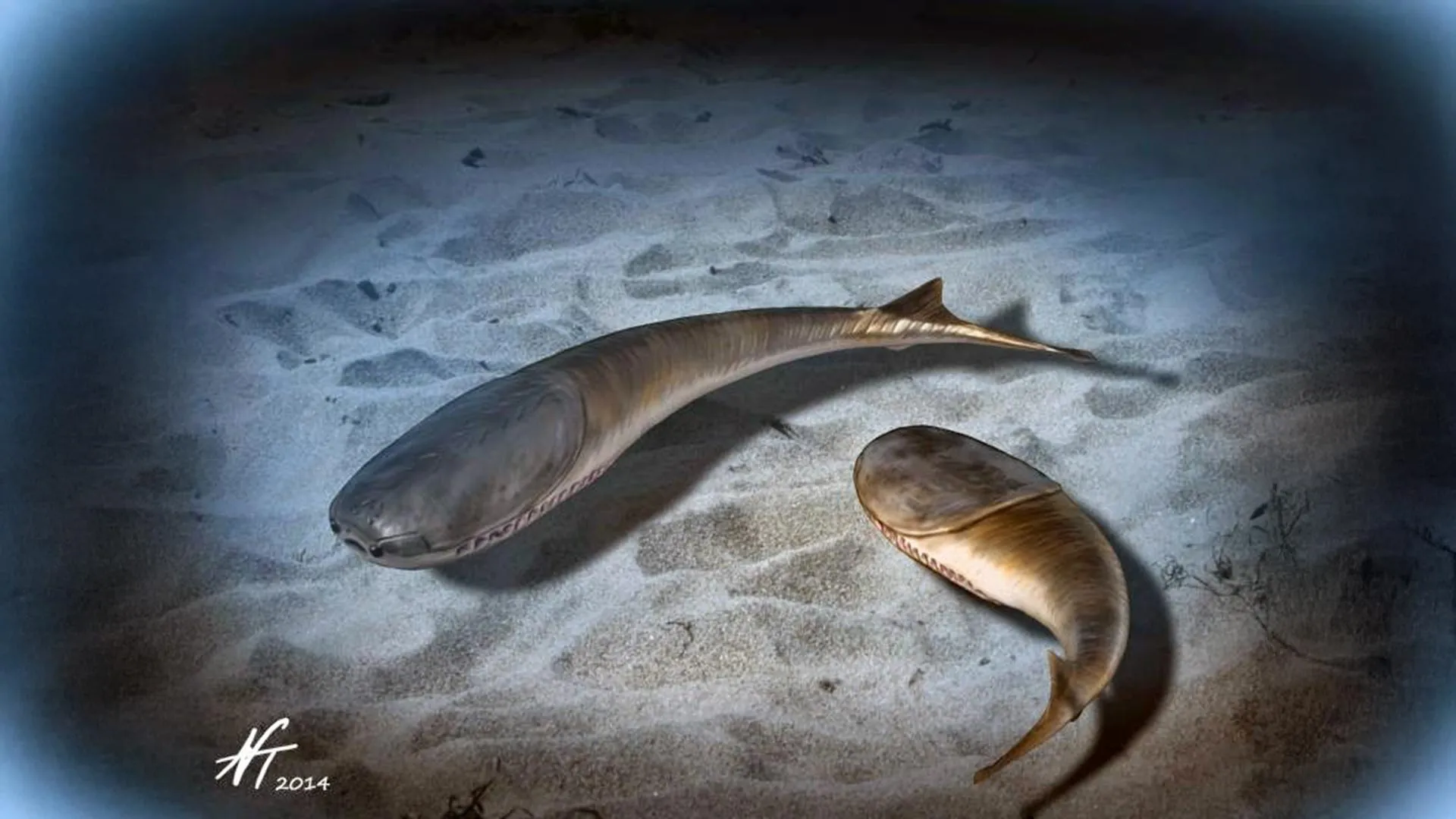
Around 445 million years ago, Earth underwent a dramatic transformation that reshaped the future of life. In a remarkably short geological period, massive glaciers spread across the southern supercontinent Gondwana. As ice locked up water, vast shallow seas dried out, triggering an “icehouse climate” and radically altering ocean chemistry. The result was catastrophic. Roughly 85% of all marine species vanished, wiping out most life on the planet.
Yet from this devastation emerged an unexpected outcome. According to a new study published in Science Advances, scientists from the Okinawa Institute of Science and Technology (OIST) have shown that this event, known as the Late Ordovician Mass Extinction (LOME), set the stage for an explosion of vertebrate diversity. During the chaos, one group gained a lasting advantage and ultimately reshaped life on Earth: jawed vertebrates. “We have demonstrated that jawed fishes only became dominant because this event happened,” says senior author Professor Lauren Sallan of the Macroevolution Unit at OIST. “And fundamentally, we have nuanced our understanding of evolution by drawing a line between the fossil record, ecology, and biogeography.”
Earth Before the Great Die-Off
The Ordovician period, which lasted from about 486 to 443 million years ago, looked nothing like today’s world. Gondwana dominated the Southern Hemisphere and was surrounded by warm, shallow seas. With no ice at the poles, the planet experienced a greenhouse climate that supported rich marine ecosystems. Early land was just beginning to host simple plants similar to liverworts, along with many-legged arthropods creeping along coastlines.
The oceans, however, were already bursting with strange and diverse life. Large-eyed, lamprey-like conodonts moved through forests of towering sea sponges. Trilobites scurried across the seafloor among dense clusters of shelled mollusks. Human-sized sea scorpions and enormous nautiloids with pointed shells stretching up to five meters hunted through the water. Among this alien cast were the early ancestors of gnathostomes, or jawed vertebrates, which were still rare and unremarkable at the time.
Two Waves of Extinction
Although scientists still debate what ultimately caused LOME, the fossil record clearly shows a sharp dividing line before and after the event. “While we don’t know the ultimate causes of LOME, we do know that there was a clear before and after the event. The fossil record shows it,” says Prof. Sallan.
The extinction unfolded in two distinct phases. First, Earth rapidly shifted from a warm greenhouse state to a cold icehouse climate. Glaciers expanded across Gondwana, draining shallow seas and destroying key marine habitats. Several million years later, just as ecosystems began to recover, the climate reversed again. Melting icecaps flooded the oceans with warmer water that was rich in sulfur and low in oxygen, overwhelming species that had adapted to colder conditions.
Survival in Isolated Refuges
During these repeated crises, surviving vertebrates were largely confined to refugia. These were isolated pockets of biodiversity separated by deep ocean barriers that most species could not cross. Within these refuges, jawed vertebrates appear to have held a crucial advantage.
To understand how this played out, the research team assembled an extensive fossil database spanning two centuries of late Ordovician and early Silurian paleontology. “We pulled together 200 years of late Ordovician and early Silurian paleontology,” says first author Wahei Hagiwara, a former research intern in the Macroevolution Unit who is now an OIST PhD student. By reconstructing the ecosystems within these refugia, the researchers were able to measure changes in genus-level diversity over time. Their analysis revealed a steady but striking rise in jawed vertebrate diversity following the extinction. “And the trend is clear – the mass extinction pulses led directly to increased speciation after several millions of years.”
Geography Shapes Evolution
The fossil database also allowed the team to examine where these evolutionary changes occurred. By tracking species distributions before and after the extinction, the researchers were able to study biogeography in unprecedented detail. “This is the first time that we’ve been able to quantitatively examine the biogeography before and after a mass extinction event,” explains Prof. Sallan. Mapping species movements helped identify key refugia that fueled the later diversification of vertebrates.
One example comes from what is now South China. Fossils from this region include the earliest complete remains of jawed fishes closely related to modern sharks. According to Hagiwara, these species remained concentrated in stable refuges for millions of years. Only later did they evolve the ability to cross open oceans and spread into new environments.
Why Jaws Became an Advantage
By combining fossil evidence with data on anatomy, geography, and ecology, the study sheds new light on a long-standing evolutionary question. “Did jaws evolve in order to create a new ecological niche, or did our ancestors fill an existing niche first, and then diversify?” asks Prof. Sallan. “Our study points to the latter.”
As jawed vertebrates were confined to small geographic areas, they encountered ecosystems with many open roles left behind by extinct jawless species and other animals. This abundance of available niches allowed them to rapidly diversify. A comparable pattern can be seen in Darwin’s finches on the Galápagos Islands, which adapted to different food sources over time. As their diets diversified, their beaks evolved to match the ecological roles they occupied.
A Reset Rather Than a Clean Slate
While jawed fishes remained isolated in South China, jawless vertebrates continued to thrive elsewhere and dominated the open oceans for another 40 million years. These groups diversified into a wide range of reef fishes, some with alternative mouth structures. Why jawed vertebrates eventually outcompeted them after spreading beyond their refuges is still not fully understood.
What is clear is that LOME did not simply erase life and start anew. Instead, it triggered what the researchers describe as an ecological reset. Early vertebrates moved into roles once filled by conodonts and arthropods, rebuilding familiar ecosystem structures with new species. Similar patterns appear repeatedly throughout the Paleozoic era after other extinction events driven by comparable environmental shifts. The team refers to this recurring pattern as a “diversity-reset cycle,” where evolution restores ecosystems by converging on the same functional designs.
Tracing Modern Life to Ancient Survivors
Prof. Sallan summarizes the broader impact of the findings. “By integrating location, morphology, ecology, and biodiversity, we can finally see how early vertebrate ecosystems rebuilt themselves after major environmental disruptions. This work helps explain why jaws evolved, why jawed vertebrates ultimately prevailed, and why modern marine life traces back to these survivors rather than to earlier forms like conodonts and trilobites. Revealing these long-term patterns and their underlying processes is one of the exciting aspects of evolutionary biology.”
Source link
