

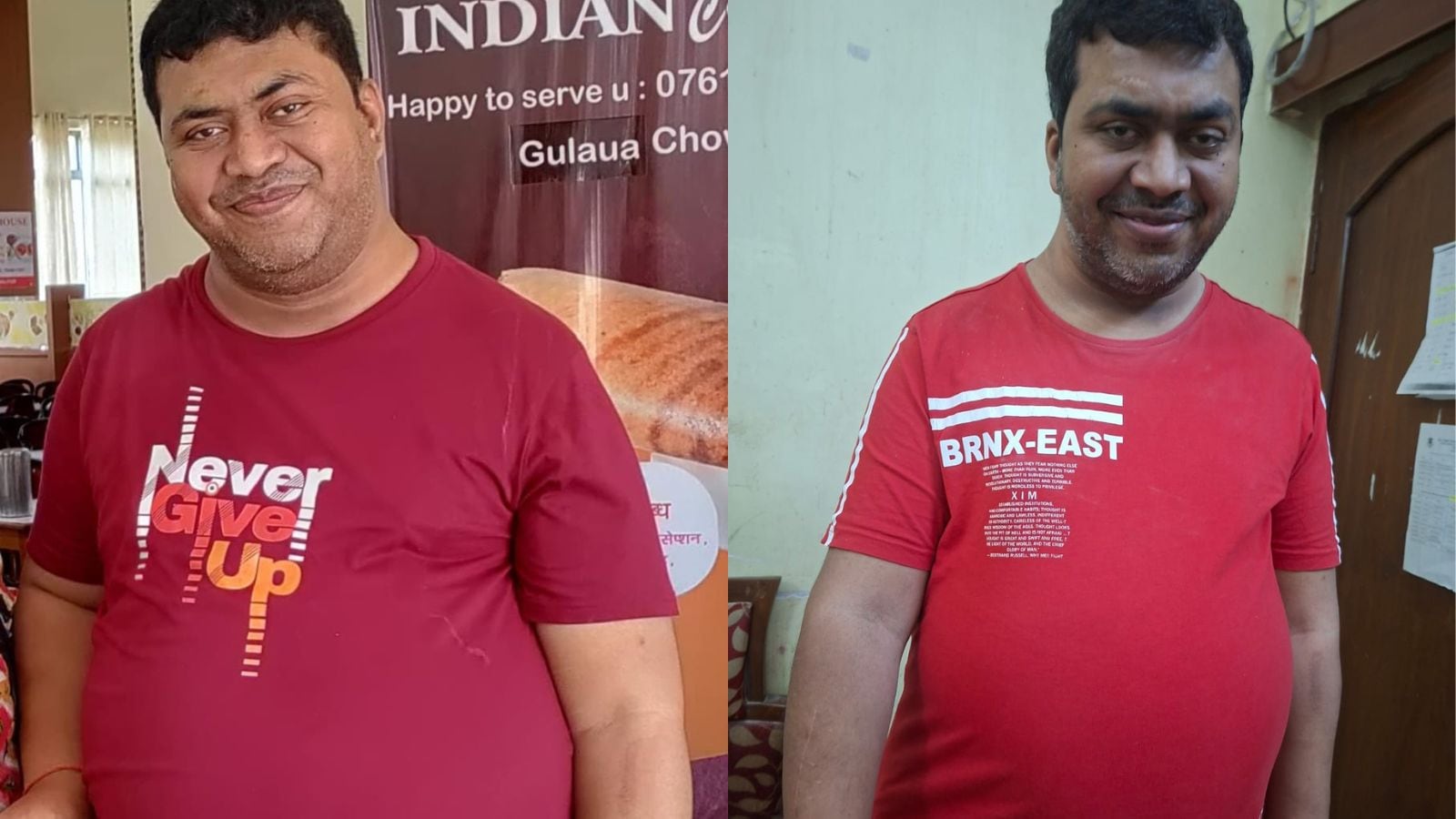
Pranav Gupta may be 25 kg lighter today thanks to a weight loss drug he started on last June but he does not want to be dependent on it. Currently on a Mounjaro injectable, he wants to get rid of it some day and doesn’t want it to define his life. “It got me off a dangerous ledge called obesity, made me confident, made me do things that I should have done in my 20s. It made me self-correct and value myself and that’s what I will choose once this drug does its job,” says the 44 -year-old telecom distributor from Prayagraj, who had been living with morbid obesity over decades.
Now, he is too self-aware to forget his exercise hour on the busiest of days, is fanatic about meal times and doesn’t negotiate sleep for anything.
At a time when obesity medicines are surrounded by hype and frenzy, Gupta remains grounded, watches his scale and makes sure to improve his lifestyle so that he doesn’t need a drug when he does get down to 85 kg from his current 94 kg and can maintain himself thereon. “I started out with the drug at 119 kg. And no matter what I did then, my body felt unwieldy and out-of-control. I needed help,” he says.
That’s when he met Dr Subhash Wangnoo, head of the Apollo Centre for Obesity, Diabetes, and Endocrinology (ACODE), New Delhi, who sees weight loss drugs as therapies within a larger medical frame. “Obesity is a chronic, relapsing, progressive disease. We now describe it as an adiposity-based chronic disease. It is driven by a combination of genetics, environmental factors and metabolism, rather than solely a lack of willpower. And it is disease-causing. The complications arise from unhealthy fat — particularly ectopic or out-of-place fat that lodges deep in the organs, particularly the abdomen. And that belly fat causes insulin resistance and inflammation, which unchecked leads to Type 2 diabetes and heart disease,” he says.
For Indian patients, the “thin fat” syndrome complicates diagnosis. “This is a type of obesity where a person has high abdominal fat while having normal body weight. This heightens risks of cardiovascular and kidney disease, fatty liver, and epicardial fat deposition around the heart,” Dr Wangnoo says. He prescribed Mounjaro, a once-weekly, injectable prescription medication approved for managing Type 2 diabetes, for Gupta. Its molecule tirzepatide functions by mimicking two hormones (GLP-1 and GIP) to regulate appetite and slow digestion, which results in significant weight loss as a side effect.
“Cardiologists are increasingly prescribing tirzepatide for patients with Type 2 diabetes and high cardiovascular risk, as recent studies indicate it offers significant heart-protective benefits, including a reduction in major adverse cardiovascular events. Gupta was one such patient,” says Dr Wangnoo.
The beginning of obesity
Gupta had been wrestling with diabetes, obesity and a family history since 2018. The diabetes drugs didn’t work well enough and he never thought that lifestyle changes could do much. The turning point was a severe road accident that left him paralysed for six months. He gained more weight during inactivity of the Covid years. “The road crash made me a quadriplegic. Though not permanently wheelchair-bound, my mobility was limited. I wanted the freedom to move around,” says Gupta.
Story continues below this ad
By 2024, diabetes and inactivity had extracted a visible price. Cellulitis, a bacterial skin infection set in, leading to a seven-day hospitalisation with IV antibiotics. “That episode was a wake-up call,” recalls Gupta. The blood sugar numbers were off the charts: fasting blood sugar was at 288 mg/dL and HbA1c (average blood sugar count of three months) at 8.8. High-dose insulin shots had become routine.
Not an easy journey with side effects
Dr Wangnoo put Gupta on Mounjaro last June and escalated his doses gradually from 2.5 mg to 10 mg per week, one of the reasons he lost weight rapidly in 10 months. “The initial days were uneventful but later my sense of taste changed completely. Sweet, salt, sour, everything felt the same. I also had constipation and nausea,” says Gupta. Metallic or bitter tastes are usually temporary side effects as the body adjusts. “This is because of reduced cravings, particularly for sweet or fatty foods, resulting from change in taste receptors and reduced reward signals in the brain,” explains Dr Wangnoo.
By September 2025, Gupta’s fasting sugar had dropped to 102 mg/dL and HbA1c to 5.4. Today, his fasting levels hover at 96 mg/dL. Insulin is no longer part of the regimen. His sleep apnea, when breathing repeatedly stops and starts during sleep, and for which he needed the C-PAP machine to keep his airways open, has improved. “The side effects settled. What began were control and self-discipline,” he says.
Why lifestyle correction must go hand-in-hand
One of the first advisories that Dr Wangnoo gives his patients is explain what the medication does. “It increases insulin release when blood sugar rises, reduces sugar release from the liver, slows stomach emptying, so sugar enters the bloodstream slowly and reduces appetite that helps with weight loss,” he says.
Story continues below this ad
He lays equal weightage on diet, exercise and sleep so that the gains made on medication can hold and are not frittered away. “Most won’t be able to continue the medication lifelong and giving up, as most trials show, means the weight returns and old risk factors resurface,” says Dr Wangnoo.
Gupta has a structured meal plan, has fibre and protein combinations with complex carbohydrates and keeps to his meal times. He also eats small portions throughout the day and drinks enough water in between. “I finish breakfast by 8.30 am, usually poha with nuts, idli made with yogurt, dalia and almonds. It’s fresh orange juice at noon. Lunch at 2 pm comprises vegetable salads and protein, a bowl of curd, dal or paneer. Brown rice or chapati some days. Late afternoon is about black coffee and a modest bhelpuri on days I do feel like eating. Dinner has been pared down to soup, two boiled eggs or a piece or two of boiled chicken. Earlier I could eat six to seven chapatis easily. No matter how late, if I didn’t have wholesome dinner, I couldn’t sleep. Now I often don’t feel like eating meals. But spreading out has kept me energetic,” Gupta has us know.
His mobility improved in parallel. Guided physiotherapy — stretching, strength training, balance drills, chair exercises, knee extensions, hand and elbow work, even picking a ball off the floor — fills an hour daily. “I couldn’t walk or climb stairs. Now I can,” Gupta says. The emotional arc is as significant. “I came out of depression and looking at my body changes; am even determined to go for high-intensity routines.”
He can fall asleep on time. “The secret is letting your body digest before sleep and signing out of the phone. Now I manage seven to eight hours of sleep.” Gupta is careful not to romanticise the injection. “It’s the push, not the magic. Discipline does the heavy lifting.”
Story continues below this ad
A word of caution
Dr Wangnoo worries about the social media hype around weight loss drugs and generics flooding the market, now that patents have expired. “These are prescription drugs requiring supervision. Without medical oversight, who ensures pharmacovigilance?” he asks.
Screening is non-negotiable, he stresses, ruling out gallbladder disease, pancreatitis, significant alcohol use, thyroid disorders including cancer history and gastroparesis. Doses must be escalated gradually. Then there is affordability. “If stopped prematurely — say after a year or 18 months — weight often rebounds. Patients must be counselled,” says Dr Wangnoo.
Quality control remains a concern in a crowded marketplace. “Original molecules undergo rigorous lab procedures. Real-world confidence comes after sustained prescribing experience,” he adds. Notably, Indian patients often show strong responses, possibly linked to differences compared to Caucasian populations, says Dr Wangnoo.
As for Gupta, his story is a reminder that while drugs can open the door, discipline should walk you through your weight loss journey. “Building muscle mass is insurance. Consistency beats intensity. Pair exercise with protein while good sleep supports weight stability,” advises Dr Wangnoo.
