
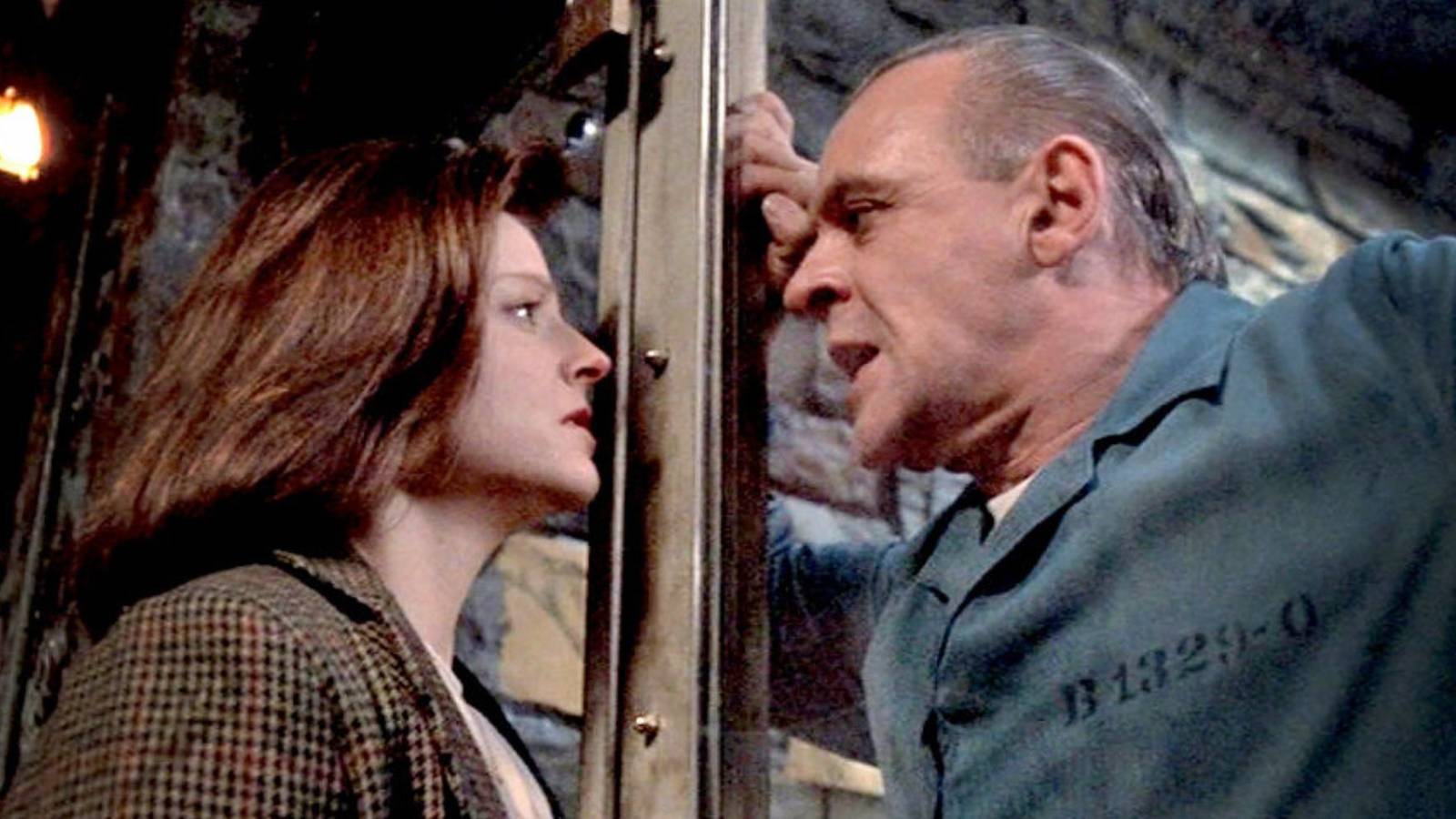
Almost every film fan loves a good mystery, but psychological thrillers such as Alfred Hitchcock‘s Rear Window, Se7en starring Brad Pitt and Morgan Freeman, and Christopher Nolan‘s Memento are tantalizing cinematic puzzles that have an uncanny way of getting under audiences’ skin. Unlike traditional mystery films, psychological mystery movies are fueled by a character’s mindset and internal conflict, ultimately tapping into the human psyche to create a suspenseful atmosphere through emotions instead of physical action.
Through the years, there have been a slew of psychological mysteries that have left an everlasting impression on movie lovers, but memorable hits such as David Lynch‘s Blue Velvet, Shutter Island starring Leonardo DiCaprio, and the intense adaptation of Gillian Flynn‘s novel, Gone Girl, fall into an exclusive category of thrilling cinema. From George Cukor‘s Oscar-winning classic, Gaslight, to the unsettling but fascinating psychological mystery thriller, The Silence of the Lambs, these are the ten best psychological mystery movies, ranked!
10
‘Gaslight’ (1944)
George Cukor’s Gaslight was one of the first psychological thrillers that effectively immersed the audience into the mindset of a young woman, Paula Alquist (Ingrid Bergman), who is driven to the brink of insanity by her conniving new husband, Gregory Anton (Charles Boyer). The movie is an adaptation of Patrick Hamilton‘s 1938 play of the same name and also stars Joseph Cotten and Angela Lansbury in her feature film debut.
Gaslight was a massive hit and universally praised for its infectiously alluring performances, specifically Bergman, who shifts between her character’s range of emotions with sheer perfection. The movie received seven Academy Award nominations, including Best Actor and Best Picture, and went on to win for Best Art Direction and Best Actress for Bergman’s legendary performance. Between the film’s cognitive depth and its intriguing story of greed and murder, Gaslight remains as relevant today as it was when it was originally released over eight decades ago, solidifying it as one of the greatest psychological mystery movies of all time.
9
‘Blue Velvet’ (1986)

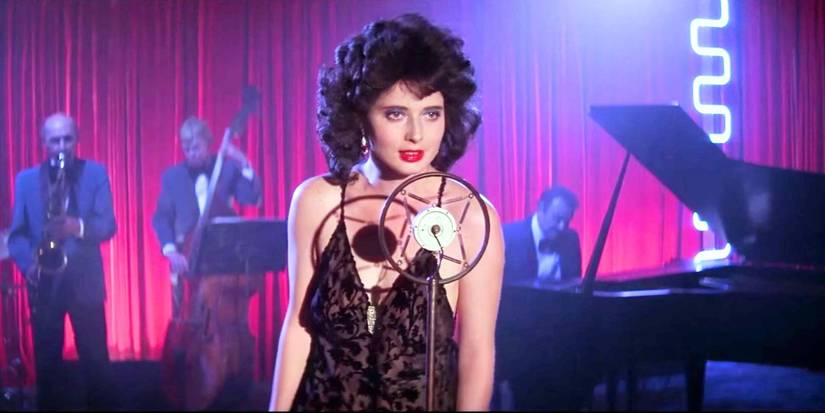
Blue Velvet is an iconic neo-noir and psychological mystery thriller that grips the audience’s attention with its fascinating collision of suburban America and human depravity. Kyle MacLachlan stars as a college student, Jeffrey Beaumont, who, after finding a severed human ear, finds himself in a seedy underworld where he meets a mysterious nightclub singer, Dorothy Vallens (Isabella Rossellini), and uncovers a dark criminal conspiracy involving a sadistic drug kingpin, Frank Booth (Dennis Hopper).
David Lynch’s Blue Velvet entices audiences with its malevolent blend of surrealism, horror, and crime, as well as its curious cast of characters, each of which is defined down to the finest and grittiest detail. Despite its initially mixed reception, Blue Velvet still resonated as a profoundly bold piece of cinema, inevitably earning several awards and nominations, notably Lynch’s second Oscar nomination for Best Director. Today, Blue Velvet is recognized as not only one of the best movies of the 1980s but also one of Lynch’s cinematic masterpieces.
8
‘Gone Girl’ (2014)

David Fincher‘s Gone Girl is a tedious psychological mystery and gripping thriller starring Ben Affleck as a husband and teacher, Nick Dunne, who returns home one night to discover that his wife, Amy (Rosamund Pike), is nowhere to be found. As Amy’s disappearance sparks national attention, the couple’s seemingly blissful and perfect marriage gradually begins to unravel, exposing a series of damning secrets that eventually lead to Nick becoming the prime suspect in the mysterious case.
Unlike other crime thrillers, Gone Girl lets the audience in on the truth behind Amy’s disappearance early on, but despite letting the cat out of the bag, it still catches viewers off guard with ruthless details and a brutal plot twist that maintains its overall shock value. Gone Girl was a monumental success and went on to become Fincher’s highest-grossing movie of all time. The majority of critics commended Pike for her cold and calculated performance, which earned her several award nominations, including an Academy Award nomination for Best Actress and a Golden Globe Award for Best Actress in a Motion Picture-Drama.
7
‘Shutter Island’ (2010)
Leonardo DiCaprio stars in Martin Scorsese‘s gritty psychological thriller, Shutter Island, as a 1950s hard-nosed U.S. Marshal, Edward “Teddy” Daniels, who, along with his partner (Mark Ruffalo), is sent to investigate the recent escape of a dangerous patient from an insane asylum located on a remote island. As Daniels and his partner begin their search for the missing patient, Daniels finds himself on a perplexing journey of self-discovery that ultimately forces him to face the darkest corners of his traumatic past.
Based on the 2003 novel written by Dennis Lehane, Shutter Island is a thrilling hybrid of a modern-day psychological mystery and a classic film noir, and features a series of showstopping performances by a stellar cast, which also includes Ben Kingsley, Max von Sydow, and Ted Levine. The film’s authentic backdrop transports audiences to a time when the human mind was still an enigma, utilizing the grotesque treatment and inhumane living conditions of the asylum to establish a tone of ominous curiosity. Despite some negative reception, Shutter Island became Scorsese’s highest-grossing box office opening to date as well as the director’s second-highest-grossing film worldwide.
6
‘The Conversation’ (1974)

Francis Ford Coppola’s The Conversation is an in-depth character study that utilizes paranoia and the gradual unraveling of the human mind to convey an atmosphere of unsettling tension. Gene Hackman stars as Harry Caul, a surveillance expert hired by an unknown client to follow a young couple and record their conversations. As Caul and his associate (John Cazale) conduct their investigation, Caul becomes obsessed with the tapes, and as he listens to them over and over, he begins to suspect that the young man and woman are in grave danger.
The Hitchcockian point-of-view shots and intimate close-ups in The Conversation submerge audiences into a tedious mystery, which, paired with a haunting backstory and questionable morality, elevates their emotional investment to an unprecedented degree. The movie was an overall success and received three Academy Award nominations, including Best Original Screenplay and Best Picture. Today, The Conversation is recognized as one of the best classics of 1974 and is a definitive example of how something as simple as a facial expression or lack of dialogue can incite more suspense than any external action or a lengthy speech could ever achieve, proving that sometimes less is more.
5
‘Vertigo’ (1958)


Image via Paramount Pictures
James Stewart stars in Alfred Hitchcock’s 1958 classic psychological thriller Vertigo as a former San Francisco detective, John “Scottie” Ferguson, who is asked by a former college friend to follow his wife, Madeline (Kim Novak), whose recently strange behavior has caused him to become concerned for her safety. When Ferguson and Madeline finally meet, the two spark a romantic affair that ends in tragedy and leads Ferguson to develop an all-consuming obsession that threatens his own sanity.
When it comes to silver screen suspense, Hitchcock was an expert in his craft who earned the fitting nickname of the Master of Suspense and delivered countless classics, such as Vertigo, which, today, still holds up as one of the greatest psychological mystery movies of all time. When Vertigo was originally released, it was well received, but some criticized Stewart, who was known for his morally upstanding roles, playing a mentally disturbed character. In hindsight, Stewart’s against-type performance ultimately enhances the film’s individualistic and suspenseful tone to a unique degree, making it one of Hitchcock’s definitive contributions to American cinema.
4
‘Memento’ (2000)

Christopher Nolan’s Memento is a must-see psychological mystery thriller that keeps you guessing at every scene. Guy Pearce stars as a former insurance investigator, Leonard Shelby, who, after being involved in an accident, is diagnosed with a rare form of memory loss that prevents him from forming new memories. Despite his current condition, Shelby leaves himself handwritten notes and photos to not only help him remember recent events, but also assist in his pursuit of finding the man who murdered his wife.
Based on the short story, Memento Mori, written by Jonathan Nolan, Memento is known for its complex, non-linear narrative, which is presented as two different sequences that eventually merge into one cohesive narrative. The labyrinth story structure effortlessly captures the audience’s attention, inducing an intense game of psychological warfare, paranoia, and intensity that is impossible to ignore. Memento was both a critical and commercial success, earning rave reviews for its fractured storytelling and Pearce’s immaculate performance. The movie earned several awards and nominations, notably two Academy Award nominations for Best Original Screenplay and Best Film Editing.
3
‘Rear Window’ (1954)

Rear Window is another Hitchcock classic starring James Stewart as a photojournalist, L.B. “Jeff” Jefferies, who begins to go stir-crazy as a result of being cooped up in his apartment while recovering from a broken leg. In an effort to entertain himself, Jefferies innocently spies on his neighbors and becomes familiar with their lives and daily routines. One night, Jefferies witnesses a heated argument between a couple across the courtyard, and when the wife is nowhere to be found the next day, Jefferies believes her husband (Raymond Burr) is behind her sudden disappearance.
Unlike other mystery thrillers, Rear Window primarily takes place in a single setting, but Hitchcock manages to compensate for the lack of versatile space with immersive point-of-view shots and a lively, eclectic courtyard, which also gives audiences the uncanny impression of being an accomplice in Jefferies’ amateur sleuthing. While Stewart is the main attraction, Grace Kelly and Thelma Ritter deliver exceptional performances that ultimately provide a bit of deadpan humor and romance to lighten up the film’s overwhelming suspense. Rear Window earned several Oscar nominations, including Best Director and Best Cinematography, and has been cited as Hitchcock exerting his full potential as the Master of Suspense, making it a timeless psychological mystery classic.
2
‘Se7en’ (1995)
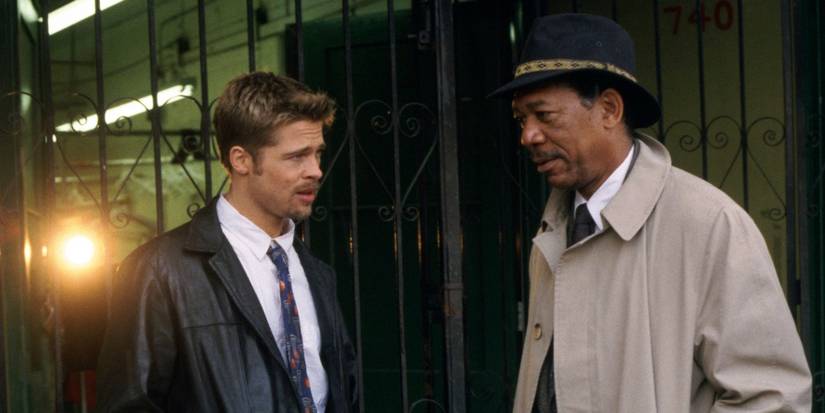
David Fincher’s Se7en is a gruesome psychological mystery and crime thriller set in the seedy streets of an unknown city, where a close-to-retiring detective, William Somerset (Morgan Freeman), and a recently transferred detective, David Mills (Brad Pitt), are in search of a sadistic serial killer (Kevin Spacey) who murders his victims based on the seven deadly sins. As the detectives race against the clock before he can strike again, they slowly begin to realize that they are dealing with a clever madman who continues to stay two steps ahead of them.
Se7en is not for the faint of heart, as its horrific displays of unspeakable brutality and depravity are seared into audiences’ minds forever. The movie features an alluring blend of noir and intensity, which coincides with the grim tone of the plot as well as the backdrop of an uncontrollable city plagued by decay and a loss of morality. After testing poorly with a test audience, the studio believed the movie was destined to flop, but contrary to their belief, Se7en was a massive sleeper hit that went on to become the seventh (irony at its finest) highest-grossing movie of the year. Despite its excessive violence and graphic imagery, the intricately woven mystery and the profound performances, especially by Freeman, Pitt, and Spacey, make Se7en all worthwhile.
1
‘The Silence of the Lambs’ (1990)
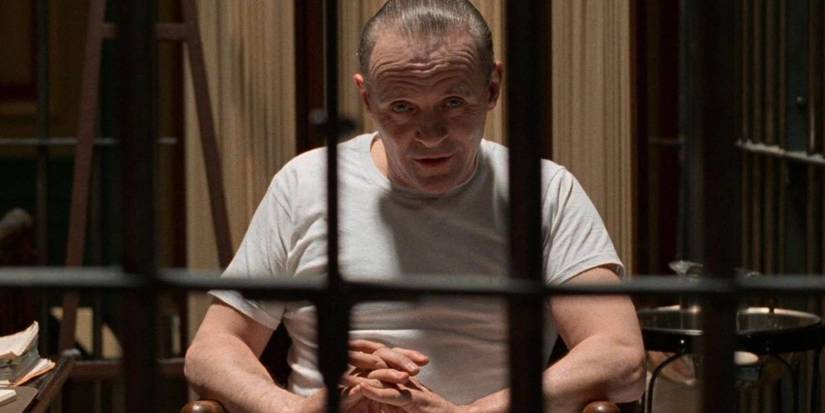
Jodie Foster stars in the Oscar-winning psychological mystery, The Silence of the Lambs, as a young FBI trainee, Clarice Starling, who is sent to speak with a brilliant psychiatrist and convicted murderer, Dr. Hannibal Lecter (Anthony Hopkins), in hopes of gaining crucial information that could help the FBI catch an active serial killer known as Buffalo Bill (Ted Levine). As Starling gradually dissects Lecter and his twisted mindset, she, in turn, piques the psychiatrist’s interest and forces her to confront herself and her traumatic past.
The Silence of the Lambs is based on Thomas Harris‘ 1988 novel of the same name and is undeniably the epitome of a great psychological mystery movie. Audiences are treated to a double feature of a fascinating mystery and an insightful character study that dives deep into the human mind, exploring what exactly makes a serial killer tick. Hopkins delivers a hypnotic performance that lures audiences in with his twinkling blue eyes and cheeky grin like a predator patiently waiting for his prey. The Silence of the Lambs was an astronomical success and went on to win five of its seven Oscar nominations, making it the third film in history to win the Big Five Academy Awards.
Source link
-

-

-
-

-


