
It would be boring if every movie ended happily, or even just bittersweet, at the worst. Certain stories inevitably have to end tragically (it’s the point, really, of something like Romeo and Juliet), and depending on the story, it can be good to have that downbeat ending be surprising, too. Not every hopeless ending has to be – or even should be – telegraphed.
Of the following, some are obviously going to end tragically, while others get bleak in ways that prove a bit more startling. Nothing here is recent, so hopefully, spoiler warnings aren’t really needed (the newest movie here is, at the time of writing, almost 20 years old). Still, if you really don’t want to know details, maybe just scroll past movies you haven’t seen. But it’s hard to talk about the extent to which these endings feel hopeless without, you know, going into some detail regarding what happens in those endings.
10
‘Dr. Strangelove or: How I Learned to Stop Worrying and Love the Bomb’ (1964)
There are so many genres within Stanley Kubrick’s filmography, including at least one genuinely epic war movie, but Dr. Strangelove or: How I Learned to Stop Worrying and Love the Bomb is a very different sort of war movie. It’s not about any conflict that’s actually happened, and is instead about a mismanaged series of events that eventually lead to the outbreak of nuclear war.
That thankfully hasn’t happened yet, but Dr. Strangelove, even while being farcical, does show how it could happen. Well, it shows the ultimate devastation and hopelessness of fighting a war now that nuclear weapons have been invented, and it’s the ending that drives home all the destruction and death. It’s sobering stuff, after a movie that’s been so consistently funny, but it really works and leaves you feeling tremendously easy afterward. It’d be hard to imagine someone getting to the end of this movie and feeling anything but existential dread and/or horror, really.
9
‘Come and See’ (1985)

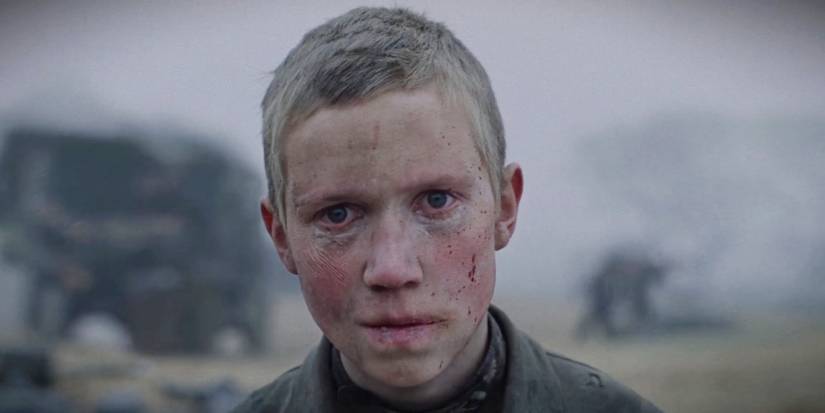
Despite not being a horror movie, Come and See is up there among the most terrifying films ever made, and the ending plays a pretty big part in giving the overall movie such a reputation. It takes place during World War II, and it showcases a desperate fight against invading German forces, in Belarus, from the perspective of a young boy who joins a group of resistance fighters.
You might think Come and See is merciful in not having its protagonist die at the very end, but it feels likely in the final scene that he’s marching off toward his doom anyway.
The whole film showcases how outgunned they are, and it does a horrifyingly good job of also showing how the fight becomes more desperate and ultimately hopeless the further it goes along. You might think Come and See is merciful in not having its protagonist die at the very end, but it feels likely in the final scene that he’s marching off toward his doom anyway. Even if not, he’s been completely broken psychologically from his experiences, and maybe physically, too, since he eerily has the appearance of someone much older than he actually is by the time Come and See concludes.
8
‘Ran’ (1985)
Ran is probably the best-looking Akira Kurosawa film, all the while also being his most harrowing and downbeat. It takes inspiration from King Lear, with its story about an aging warlord trying to get his legacy in line once he’s gone, by picking a successor and keeping all of his sons happy, but that’s so much easier said than done. Also, it’s not very easily said, because such an endeavor is always going to cause issues for obvious reasons.
Still, the problems caused here end up far worse than anticipated, and Ran pretty devastatingly depicts a conflict within a family unit spiraling out of control, and leading to a great – and widespread – amount of bloodshed, destruction, and death. Again, it’s spectacular to look at, but that’s only the smallest of chasers in the overall scheme of things, when it comes time to wash away the bitterness of the (also massive) drink that is Ran. Remarkable film, though, so long as you’re okay to feel pretty bad at the end of it all.
7
‘Requiem for a Dream’ (2000)

Of all the movies about addiction, Requiem for a Dream could well claim to be the least subtle, for better or worse. There are, of course, countless other movies about people becoming dependent on certain dangerous substances that don’t end well, but this one goes especially far in showcasing the worst-case scenario for a group of different people whose lives were all impacted in initially positive ways by drugs.
The highs (and the highs) give way to crushing lows, and no punches are pulled in showcasing those lows, by the film’s end. No one emerges from the end of Requiem for a Dream in good health or spirits, to put it mildly, and if you don’t find the whole thing a bit much, or even comical in how over-the-top it gets, then it might well work as a blunt warning of sorts about the things it depicts and explores.
6
‘Dancer in the Dark’ (2000)

Musicals are often fun, and only sometimes intense and/or not fun. Dancer in the Dark is… well, it’s in this ranking. It’s not fun. It’s in the other category. Damn is it in the other category. This one’s about a woman going blind while working a physically demanding job to support her son, and then she ends up in a situation where she shoots a man during a confrontation that turns physical.
It’s not a situation where she can defend herself well, or argue a certain complexity about the whole thing, so she ends up sentenced to death. And the movie ends with her coming to terms with that death and then being hanged, right before the end credits. If there’s one thing about Dancer in the Dark that’s not entirely miserable, it’s the suggestion that her son will be spared the condition that’s caused her to slowly go blind, but if you really wanted to call it bittersweet, the bitter overpowers the sweet completely (it’s like a 98-2 split, and that’s if you’re being optimistic/charitable).
5
‘The Godfather Part II’ (1974)

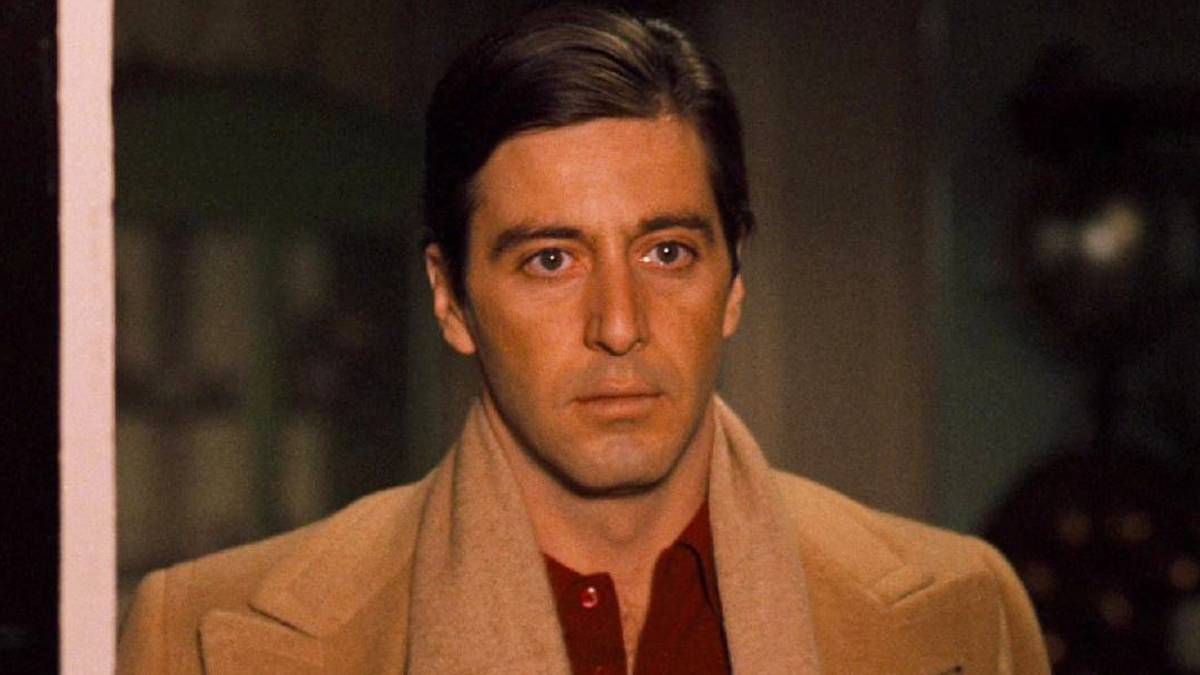
There was an attempt to make the ending of The Godfather Part III bleaker than the ending of The Godfather Part II, but it was arguably a bit overdone. It’s like a classic tragedy ending, though the more subdued bleakness of The Godfather Part II’s conclusion is ultimately more sobering, with Michael Corleone getting what he thinks he wants, but losing everyone important to him in the process.
His family’s shattered, pretty much entirely, and his friends/associates are dead or distancing themselves from him. And, for what it’s worth, much of his family’s dead, too. The loneliness of his whole situation is driven home by the way his father’s story, in those flashbacks, “ends,” and with the flashback he’s featured in, too. Then it’s capped off with the final shot, which is genuinely devastating, and arguably a better ending for The Godfather saga than what we got in the (still arguably somewhat over-hated) third film.
4
‘The Mist’ (2007)
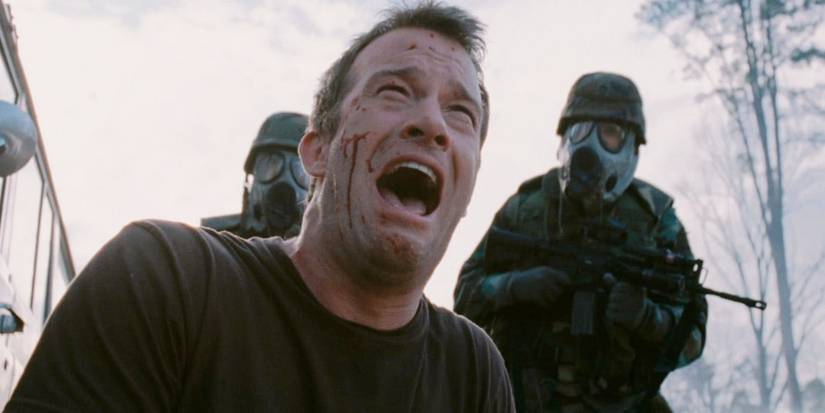
The easiest place to find Stephen King‘s The Mist is in Skeleton Crew, which is a collection of short stories and novellas. Well, two novellas. Plus some poetry. It’s all pretty varied, and The Mist kicks off the collection and is also easily the longest story there, being about people trapped inside a supermarket after a mist covers their town and seems to bring with it all sorts of confounding and unnatural monsters.
The movie takes a solidly written novella and arguably elevates it with the altered ending, as the novella’s somewhat ambiguous final note is transformed here into outright tragedy, with the main character mercy-killing several other characters (including his son) just moments before they would’ve been rescued. It’s cruel, but yeah, successful as something truly horrifying, and the brutality of that final sequence does clash against the B-grade feel – and occasional goofiness – of some of the movie’s earlier scenes.
3
‘Das Boot’ (1981)
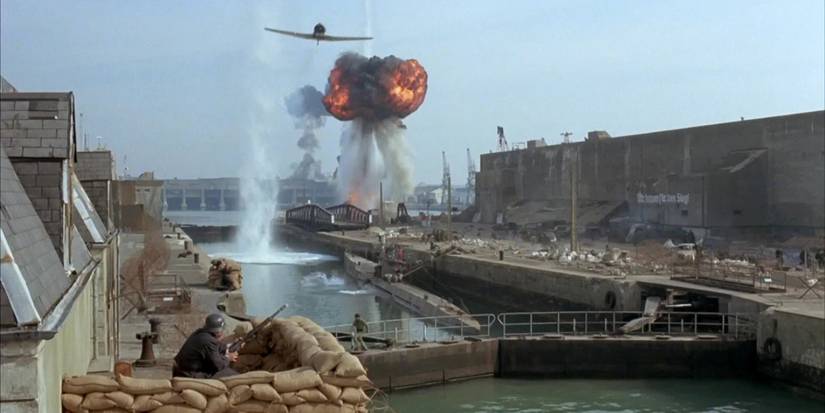
Yes, another war movie. And there are a couple more after this, but war movies probably should be bleaker and more upsetting to watch than films in any other genre, at least broadly speaking. When it comes to Das Boot, it’s about the Second World War, and much of it’s set on a German submarine, which keeps things very claustrophobic and high stakes, with the combat depicted being the kind where the enemy landing a single well-aimed (or lucky) shot could mean everyone dying.
The characters here don’t die underwater, but are instead pretty much all wiped out on land, right at the end of the movie, in a way that very effectively drives home the hopelessness of war for the individuals fighting in it. There’s no real release of all the tension throughout Das Boot, because after you feel on edge for the whole runtime, it then wraps up and intends to make you feel depressed. It’s the worst of both worlds, emotionally speaking, but that’s war, and this film is undeniably anti that, so it more or less had to be this way.
2
‘Grave of the Fireflies’ (1988)
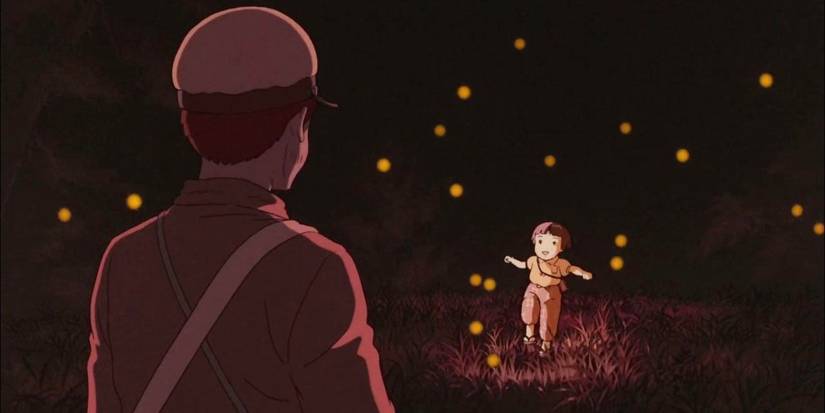
There might not be any other animated movies simultaneously so acclaimed and well-known for being devastating as Grave of the Fireflies, to the point where even mentioning this feels so obvious it might well be cheating. “Of course Grave of the Fireflies was going to be here,” you probably thought, clicking the article, and yes, congratulations. You were right.
It’s a movie that starts out heavy, given that it tells you where things will end up narratively, and then the whole thing builds agonizingly to that eventual tragedy. Also, the rest of the movie is tragic and upsetting; it’s really just that the ending of Grave of the Fireflies feels that way to a particularly great extent. If you only ever feel motivated to watch this the one time, and then never again, that’s perfectly understandable.
1
‘Threads’ (1984)

A little while ago, Dr. Strangelove was mentioned because of its bleak ending that depicted the world’s destruction, but it was relegated to a montage. An intentionally jarring and bleak montage, sure, but the despair was mostly contained to a couple of minutes. Enter Threads, which is also about nuclear war and the world falling apart, but the bombs fall so much earlier.
You get a first act that builds up to warfare breaking out, then some time spent in the immediate aftermath of the devastation, and, after that, a distressingly lengthy portion of the film that’s spent showing humanity falling apart further generations into the future. Threads drives home how lots of people would die instantly, yes, but then makes it clear how many people would die slowly. Oh, and further, how people born after the war ended would still be doomed, because of the condition of the planet. In every single way, it’s as miserable as a movie could conceivably be.

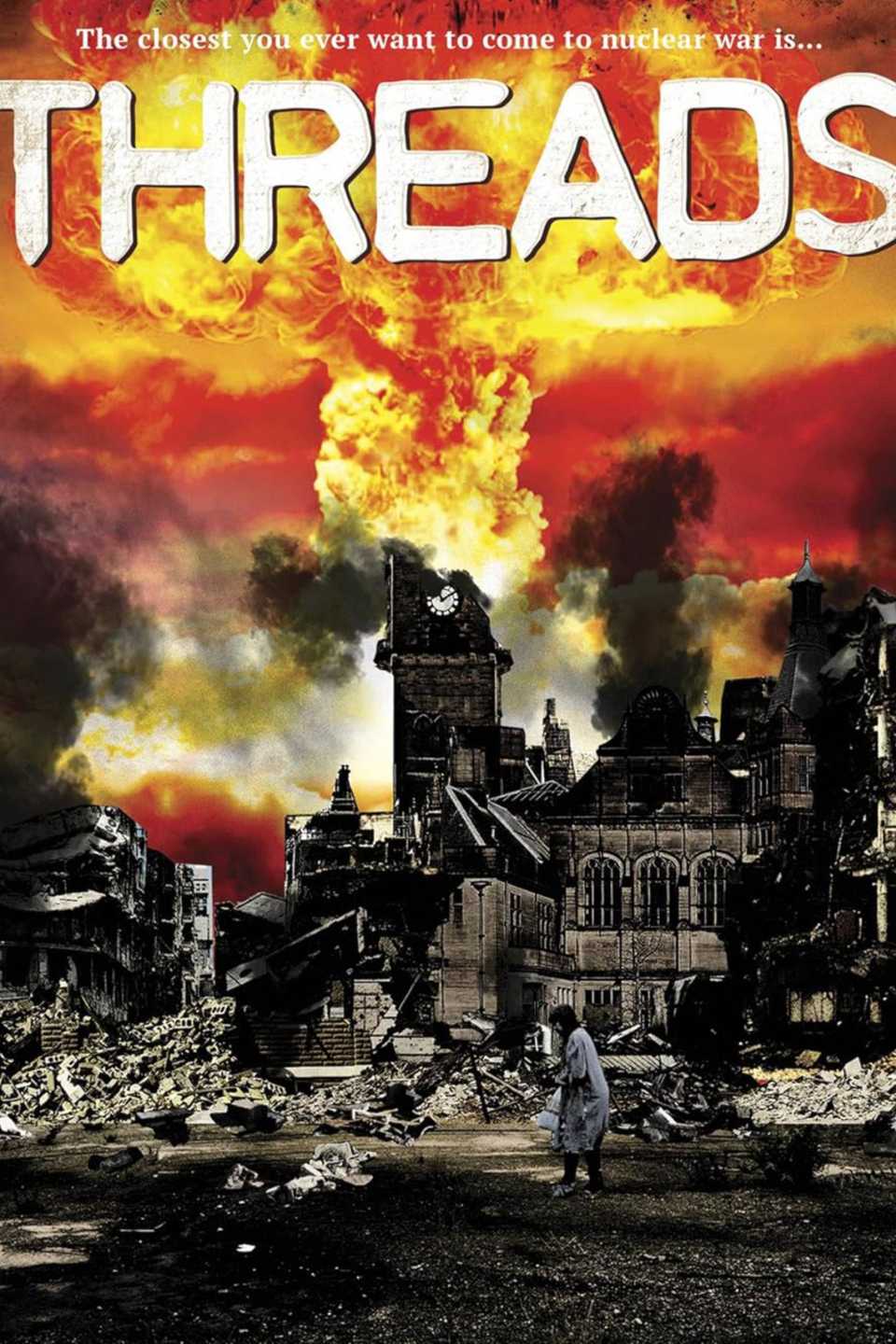
Threads
- Release Date
-
September 23, 1984
- Runtime
-
112 Minutes
-

Karen Meagher
Ruth Beckett
-
Reece Dinsdale
Jimmy Kemp

Source link
-

-

-
-

-


