
The 1980s, often remembered for its bold fashion and synth-pop soundtracks, was also the decade that redefined cinematic intensity across nearly every genre. Beyond the blockbusters and coming-of-age stories, this era produced a distinct breed of film that didn’t just entertain but emotionally and psychologically shook the audience. From action to horror films, the decade mastered the art of escalating tension.
Here we take a look at the most intense films of the 1980s. From iconic slashers and body horror masterpieces to harrowing foreign dramas, these films not only leave their marks on movie history but also on the audiences. They are sure to entertain and also make themselves memorable in their viewers’ minds, becoming fundamental in shaping the cinematic landscape that follows. Indeed, these classics prove that the ’80s were more complex and terrifying than just neon-colored clothes and disco hits.
10
‘To Live and Die in L.A.’ (1985)
To Live and Die in L.A. centers on two Secret Service agents in Los Angeles, Richard Chance (William Petersen) and Jimmy Hart (Michael Greene), who are part of a counterfeiting division. When Hart is ambushed and killed just days before retirement by the ruthless master counterfeiter Rick Masters (Willem Dafoe), the reckless Chance vows revenge. His new, by-the-book partner, John Vukovich (John Pankow), is dragged into Chance’s increasingly dangerous and morally gray pursuit.
The film may start using a traditional cop-movie structure, but it’s more interested in depicting how justice can be gray. Chance’s actions are violent and unpredictable, escalating the danger for himself and his new partner. William Friedkin doubles down on his visceral style with an intense synth soundtrack, making it an even more thrilling watch, while Petersen and Dafoe’s masterful performances are a blast from start to finish. The film is rarely mentioned compared to Friedkin’s more popular works, such as The Exorcist and The French Connection, but if you’re looking for pure intensity and thrills, To Live and Die in L.A. does the job well, standing among the best of Friedkin’s works and the decade’s best.
9
‘Die Hard’ (1988)

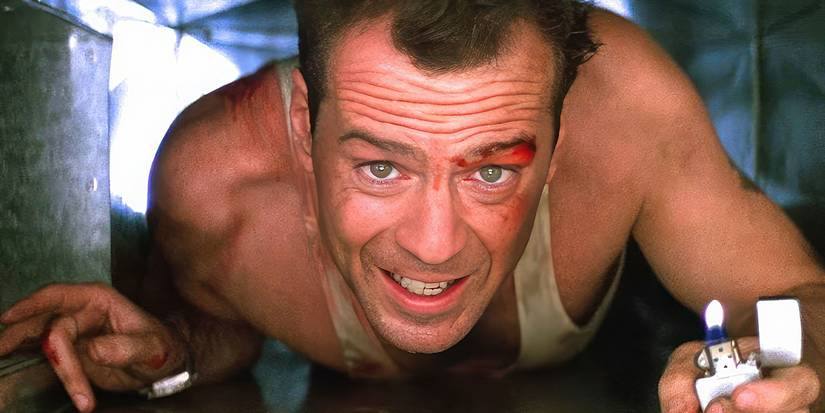
Die Hard follows NYPD Detective John McClane (Bruce Willis) as he arrives in Los Angeles for Christmas to reconcile with his estranged wife at her company’s party at the Nakatomi Plaza. When he’s there, a group of highly organized and armed criminals, led by Hans Gruber (Alan Rickman), takes everyone hostage. McClane manages to slip away unnoticed and becomes the only hope to stop the terrorists from stealing from the vaults.
As one of the most iconic and influential action movies of all time, Die Hard is gripping because of its claustrophobic setting and increasingly intense situation. With McClane stuck in the wrong place at the wrong time, the storyline creates a constant sense of peril. McClane’s isolation, limited resources, and injuries make his survival feel precarious. Added with Alan Rickman’s cold and cunning villain, this timeless classic never lets the tension up. All of these qualities make Die Hard a quintessential 1980s action film and an intense film to watch, even if you’ve seen it before.
8
‘A Nightmare on Elm Street’ (1984)

A Nightmare on Elm Street follows Nancy Thompson (Heather Langenkamp) and her group of high school friends in the idyllic town of Springwood. They are all plagued by the same increasingly terrifying nightmares of Freddy Krueger (Robert Englund), a disfigured man with a striped sweater and a claw hand. Their nightmares become a ground for survival because if Freddy kills them in their dream, they die in real life. Now, Nancy must race against time to uncover Krueger’s dark past and stop him.
Wes Craven introduces a unique premise and, quite aptly, a new nightmare as sleep and dreams become a hunting ground. The brilliant concept makes the characters vulnerable even when they are supposedly resting, lending itself to truly nightmarish, surreal horror that goes beyond typical slasher violence. Heather Langenkamp’s performance as Nancy Thompson is central here, portraying her as a smart, resilient final girl who must maintain extreme psychological endurance to defeat the creature that feeds on fear. Robert Englund’s terrifying performance is sure to give audiences nightmares of their own. The unique blend of psychological horror and visceral special effects cements it as one of the scariest films of all time.
7
‘Predator’ (1987)

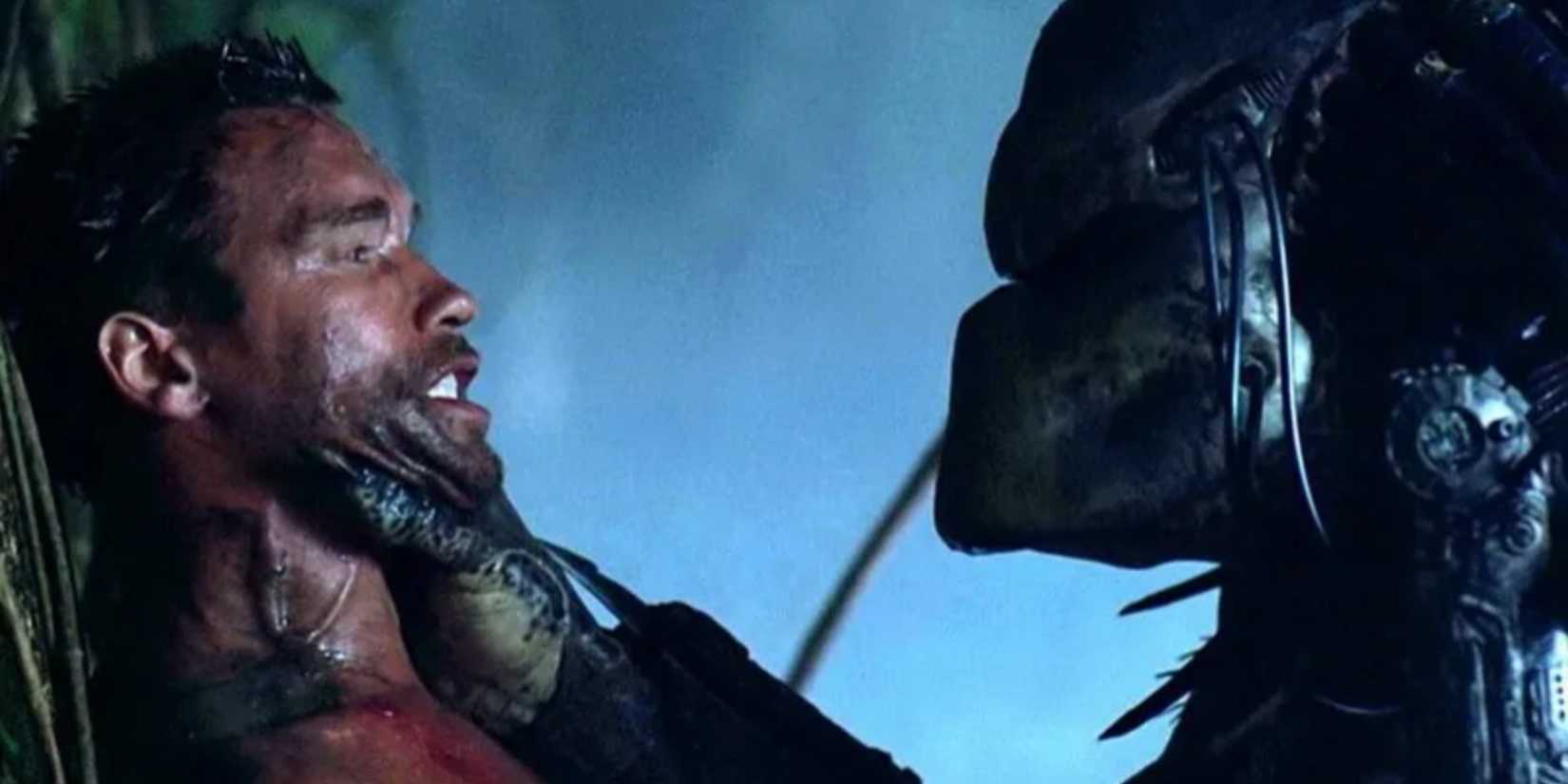
Predator follows a team of elite U.S. special forces commandos, led by the veteran Major Dutch Schaefer (Arnold Schwarzenegger), who is dispatched to a remote Central American jungle to retrieve a foreign cabinet minister. However, after infiltrating the jungle and encountering an enemy camp, they quickly realize they are being hunted by something dangerous and not human: a technologically advanced extraterrestrial warrior stalking and systematically eliminating them as the ultimate game.
Predator turns the tables around as the special forces are rendered helpless against a true apex predator. With the story stripping them of their confidence and firepower, the tension becomes more palpable as the Yautja is invisible, cunning, and way more powerful. Arnold Schwarzenegger’s performance as Dutch is simply iconic, and his final, stripped-down confrontation alone is worth a spot on this list, as he embraces raw survival techniques. As one of the best films of the 1980s, The Predator is a masterclass in building dread through thermal-vision point-of-view shots and the unsettling creature’s sounds, creating an intense, visceral action-horror experience.
6
‘Escape from New York’ (1981)

Set in a dystopian 1997 where New York has been converted into a maximum security prison, Escape from New York follows Snake Plissken (Kurt Russell) on a mission to rescue the President of the United States (Donald Pleasence), whose Air Force One is hijacked by terrorists. Plissken, a decorated war hero-turned-outlaw, has 24 hours to save the President and get pardoned for his crimes.
Directed by John Carpenter, Escape From New York is intense thanks to its gritty setting and high-stakes pressure. With New York turned into a brutal playground, Plissken must navigate a dark and lawless urban landscape that used to be one of the greatest cities in the world. Kurt Russell’s performance as Snake Plissken is iconic, and his actions contribute significantly to the film’s tense atmosphere. The neo-noir visual style and Carpenter’s atmospheric, minimalist score heighten the feeling of relentless danger. While often classified as a B-action movie, Escape From New York never feels inferior to other great action films of the decade.
5
‘The Evil Dead’ (1981)

The Evil Dead follows a group of five college friends, Ash Williams (Bruce Campbell), his sister, his girlfriend, and a couple of their friends, who drive to a remote cabin nestled in the woods for a weekend getaway. While exploring the dusty, isolated cabin, they discover a mysterious ancient text, the Naturom Demonto, or Book of the Dead, along with a tape recording of incantations. When they play the recording, they unwittingly unleash demonic entities known as Deadites, which possess them one by one.
Despite its low-budget and DIY qualities, the film’s intensity is overwhelming, which ultimately earned it a rare NC-17 rating. Director Sam Raimi effectively utilized whatever was on his plate to create a chaotic and almost claustrophobic experience by using the classic cabin-in-the-woods trope. With highly aggressive camera work and practical effects, The Evil Dead plunges the viewers into a non-stop display of shock. The plot forces Ash into the agonizing position of having to brutalize and destroy the people he cares about to survive. Bruce Campbell’s early performance perfectly captures this terrifying descent into madness. It’s an iconic role that has never been recast until today.
4
‘Fatal Attraction’ (1987)
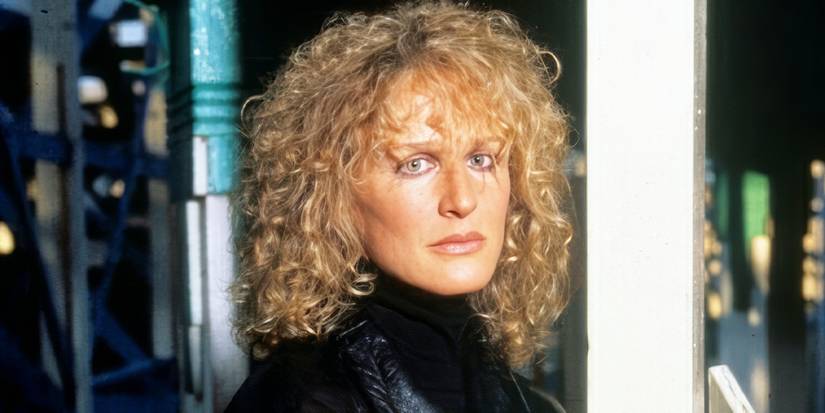
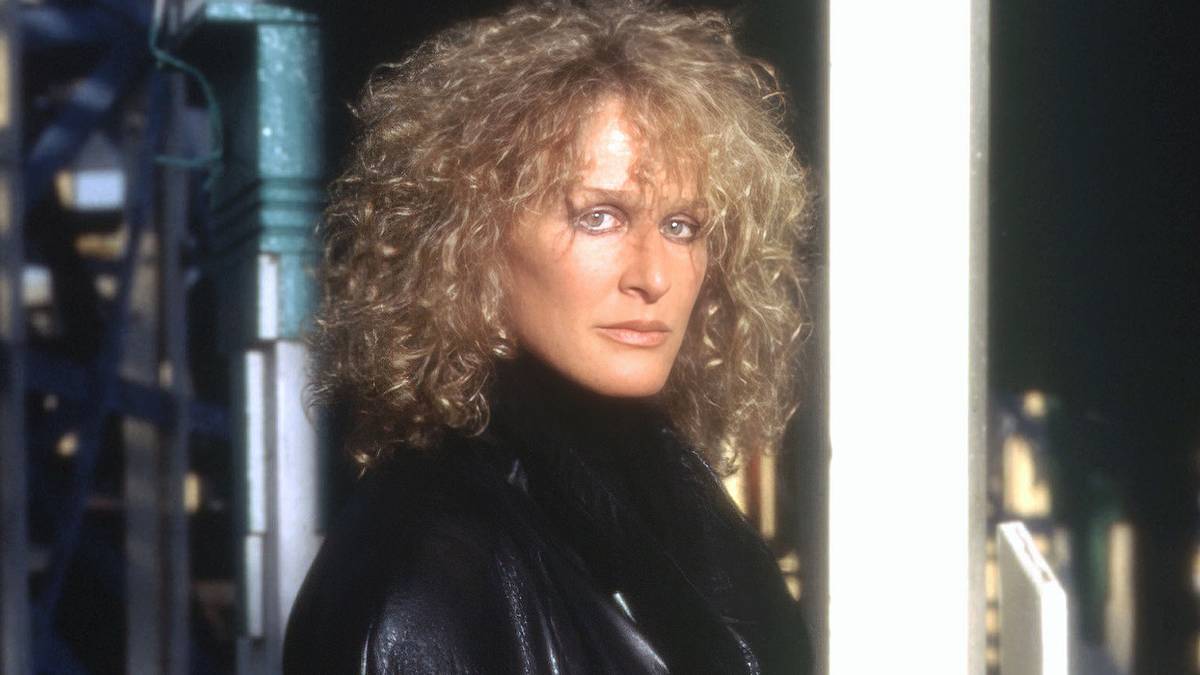
Fatal Attraction follows Dan Gallagher (Michael Douglas), a successful Manhattan lawyer, who enjoys a passionate weekend fling with Alex Forrest (Glenn Close), an editor at a publishing house, while his wife and daughter are away. However, Alex refuses to accept that their affair is over. When Dan attempts to return to his normal family life, Alex begins terrorizing him, from repeated phone calls to kidnapping his daughter.
Fatal Attraction is undoubtedly one of the darkest and most intense films of all time. Glenn Close’s iconic, Oscar-nominated performance is the film’s core as she seamlessly switches from a seductive woman into a violent, unpredictable character driven by obsession. The storyline taps into a very relatable and universal fear of consequence, where a casual infidelity can cause an absolute nightmare. Adrian Lyne drives the tension masterfully, earning the film a total of six Oscar nominations. Fatal Attraction is often credited with reigniting the erotic thriller trend in the 1980s and 1990s, and is one of the very few films that resonated with both critics and audiences.
3
‘The Fly’ (1986)
The Fly centers on Seth Brundle (Jeff Goldblum), an eccentric and brilliant but socially awkward scientist who invents a pair of telepods that can teleport matter across space. While trying to perfect the system, he decides to use himself as a test subject. Little does he know, a common housefly entered the transmitter chamber with him. His machine is confused and merges him and the insect at a genetic level. While initially experiencing superhuman energy and confidence, Seth soon begins a grotesque and painful transformation into a man-fly hybrid.
Unlike a typical monster movie, the true horror lies in the tragic plot where a brilliant, lovable man slowly becomes a repulsive monster due to hubris. The Fly is a story of metamorphosis and loss, making the body horror deeply personal and emotionally devastating. Jeff Goldblum’s magnificent, manic performance as Brundle perfectly captures the character’s descent. The legendary, repulsive special effects depicting the Brundlefly transformation are intensely visceral. With David Cronenberg at the helm, The Fly stands as one of the perfectly directed horror films of all time.
2
‘Come and See’ (1985)
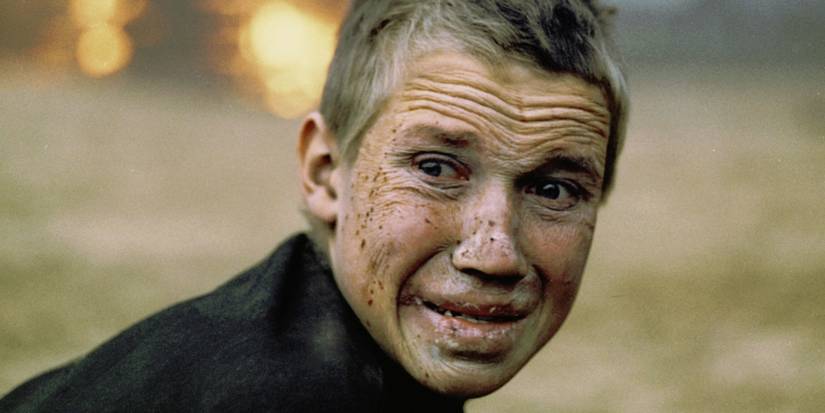
Set in German-occupied Belarus in 1943, Come and See follows Flyora (Aleksei Kravchenko), a young, determined Belarusian boy who is drafted from his village to join a Soviet partisan group fighting the Nazi invasion. Left behind while the others leave for an assignment, Flyora soon returns to his village to find his family and neighbors gone. As he continues his journey, he descends into an increasingly surreal and nightmarish hellscape of wartime atrocities.
As an anti-war film, Come and See is often cited as one of the most intense war movies ever made due to its unflinching, agonizingly realistic depiction of trauma and genocide. The film’s power comes from its relentless focus on the victims, particularly Flyora, whose face physically and psychologically deteriorates as he witnesses increasingly brutal acts of cruelty. Director Elem Klimov utilizes jarring sound design, highly expressive close-ups, and a dreamlike realism to put the viewer directly into Flyora’s horrifying experience. Kravchenko’s performance as Flyora is heartbreaking, capturing the transformation from innocence to psychological damage.
1
‘The Thing’ (1982)

Set at an American research station in Antarctica during the harsh winter, the events in The Thing start when a helicopter from a nearby Norwegian base pursues and attempts to kill a husky dog that arrives at the camp. After investigating the wrecked Norwegian station, the Americans discover the remains of something horrific and learn that they have unknowingly brought a deadly, parasitic extraterrestrial lifeform into their base. The alien creature can perfectly imitate any living organism, including humans.
Now reappraised as one of the best horror thrillers of all time, this John Carpenter film was met with a negative response upon its release. The film’s legendary, groundbreaking special effects, depicting the creature’s biological transformations, are incredibly unsettling. While the grotesque creature effects are memorable, the element that makes The Thing incredibly intense is the psychological state where paranoia becomes a weapon as lethal as the Thing itself. Led by Kurt Russell in a phenomenal performance, The Thing masterfully sustains an atmosphere of hopelessness and visceral dread until its final scene.
Source link
-

-

-

-

-


