
Drama is a tricky genre to get right, easily running the risk of being hammy or melodramatic. At its best, though, it can also be the most powerful and lasting. The greatest dramas leave an indelible emotional mark on the audience and shape the nature of cinema itself. They don’t simply impress in the moment or provoke admiration for craft; they linger, quietly reshaping how we think about the world.
Across decades, cultures, and styles, the films below represent drama at its most affecting and impactful. Some are intimate and domestic, others vast and historical, but all of them understand that emotional power comes from honesty rather than manipulation. They defined generations and became synonymous with the power of cinema to provoke something truthful within us.
10
‘Kramer vs. Kramer’ (1979)
“You know, I’m not gonna fight you anymore.” This domestic drama reflected major social and cultural changes that were happening at the time, particularly in the West. Attitudes toward marriage and divorce were rapidly changing, producing a new sense of liberation but also anxiety and instability. The story centers on Ted Kramer (Dustin Hoffman), an ambitious advertising executive whose wife, Joanna (Meryl Streep), leaves him and their young son, forcing him to suddenly become a single parent. He grows into the role, but things take a painful turn when his wife returns and seeks custody.
Crucially, this 1979 dramatic masterclass treats divorce not as a moral failure but as an emotional fracture, where love and resentment coexist uneasily. Parenthood here is messy, exhausting, and deeply human. This message comes through in the way that Kramer vs Kramer treats Ted and Joanna equally, refusing to simplify either into a stereotype. Likewise, the courtroom scenes are devastating precisely because the lawyers reduce intimate family life to one-sided legal arguments.
9
‘The Red Shoes’ (1948)


“Why do you want to dance?” The Red Shoes is a drama of obsession disguised as a fairy tale. It’s one of the very best movies from the directors Michael Powell and Emeric Pressburger (collectively known as The Archers). Inspired by Hans Christian Andersen’s story, it follows a young ballerina (Moira Shearer) torn between her devotion to dance and her desire for romantic fulfillment. However, it’s not a comforting film about following one’s passion; rather, it’s a warning about how identity can be consumed by ambition.
Indeed, The Red Shoes makes clear that greatness comes at a steep cost. Here, art demands total surrender, often at the expense of ordinary happiness. The famous ballet sequence externalizes the heroine’s inner conflict, turning her psychological turmoil into a visual spectacle. We get intricate choreography and sumptuous cinematography, with striking close-ups that heighten the drama. It’s a brilliant fusion of style and content.
8
‘Manchester by the Sea’ (2016)

“I can’t beat it.” Manchester by the Sea is deeply bleak, but also honest and moving. Casey Affleck delivers a committed, Oscar-winning performance as Lee Chandler, a withdrawn janitor who returns to his hometown after the sudden death of his brother and is named guardian to his teenage nephew (Lucas Hedges). As Lee navigates practical responsibilities, the film slowly reveals a devastating personal tragedy that has shaped his inability to move forward.
Unlike many dramas of this kind, Manchester by the Sea refuses easy answers or feel-good endings. Instead, director Kenneth Lonergan presents grief as something that does not resolve neatly or transform into wisdom. Pain persists, resurfaces, and reshapes daily life. The film’s structure mirrors memory itself, with past and present colliding unexpectedly. There are moments of humor and tenderness, but they never dilute the weight of loss. Ultimately, Manchester by the Sea stands out because it acknowledges a hard truth rarely shown on screen: some wounds do not heal, but we can learn to live with them.
7
‘Bicycle Thieves’ (1948)

“I want my bicycle.” Bicycle Thieves is a devastating portrait of dignity under economic pressure, one of the finest works of Italian neorealism. Set in postwar Italy, it revolves around a father (Lamberto Maggiorani) who finally secures a job, only to have his bicycle, the tool he needs to work, stolen on his first day. He and his young son (Enzo Staiola) spend the day searching the city, growing increasingly desperate as hope fades. The plot is deceptively simple, but the emotional impact is profound. The film is morally clear without being sentimental.
The presence of the child intensifies everything, turning the story into an inheritance of shame and empathy. It’s deeply personal, yet it makes a broader comment on society. Here, poverty is not treated as background, but as an active force shaping the characters’ every decision. The father’s final choice, driven by humiliation and despair, exposes how easily survival can erode ethics.
6
‘Raging Bull’ (1980)

“You never got me down, Ray.” Raging Bull is a brutal character study about self-destruction and emotional isolation. An Oscar-winning Robert De Niro carries most of it single-handedly as boxer Jake LaMotta, whose ferocious intensity in the ring is matched by paranoia and cruelty in his personal life. The movie charts his rise and fall, but the real drama lies in his inability to connect with others without violence or control. His story becomes a portrait of masculinity turned corrosive, strength stripped of self-awareness.
In other words, Raging Bull is powerful but deeply sad. LaMotta understands his failures only after he has destroyed everything around him. The stark black-and-white cinematography gives the story a sense of memory and regret, while the boxing scenes feel punishing rather than triumphant. More than four decades on, Raging Bull is still affecting, ranking among Scorsese’s very best.
5
‘Schindler’s List’ (1993)
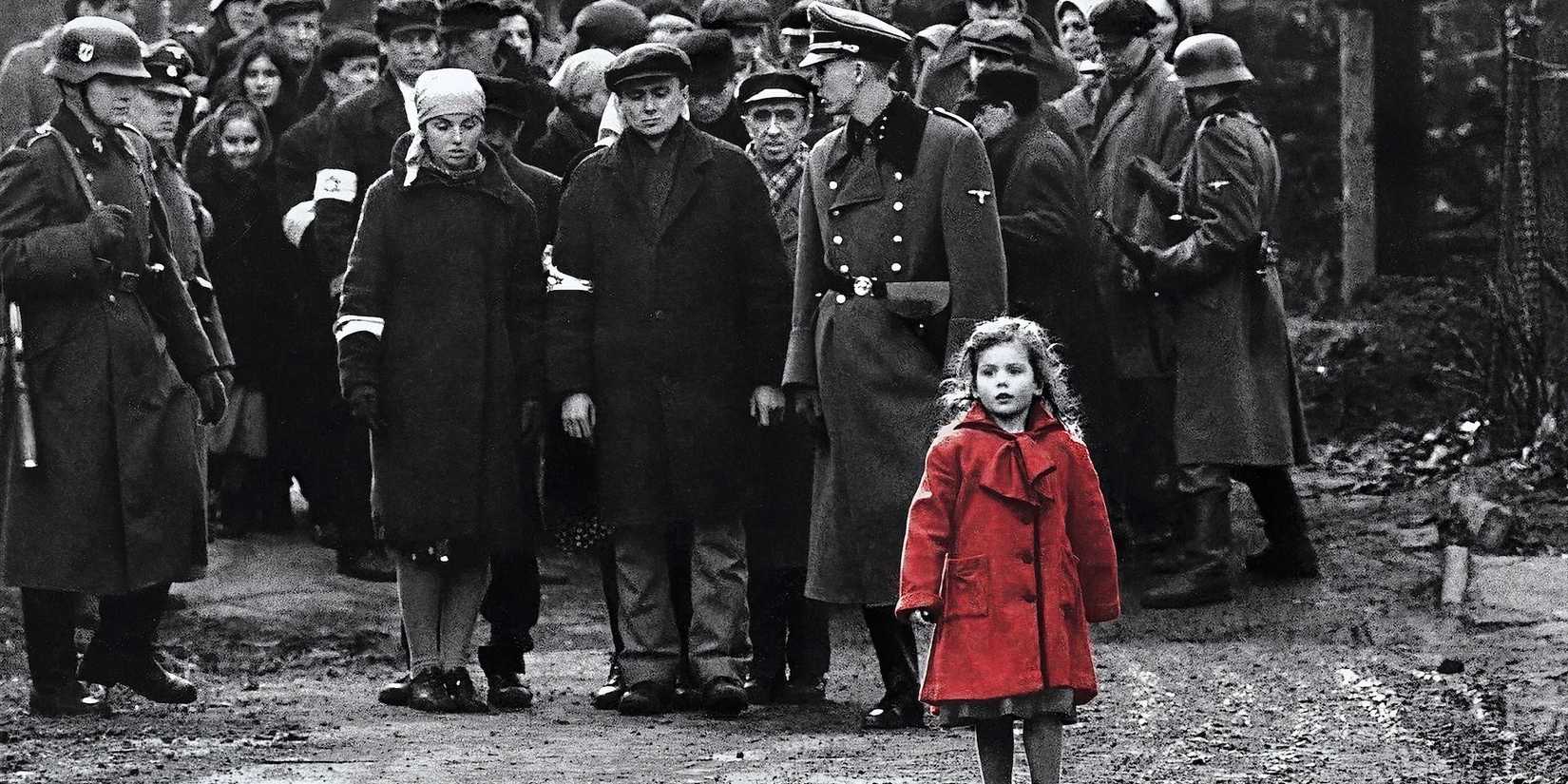
“Whoever saves one life saves the world entire.” Back in 1993, Schindler’s List represented a new kind of undertaking for Steven Spielberg, seeing the blockbuster director attempt to convey historical tragedy and moral weight. This project could easily have failed, but instead the finished product is a modern classic, a powerful act of remembrance. It brings to life the story of Oskar Schindler (Liam Neeson), a German industrialist who gradually shifts from opportunism to moral action as he saves Jewish workers from the Holocaust.
Spielberg avoids sensationalism, using stark imagery and quiet moments to convey unimaginable horror. The emotional weight accumulates through small gestures (names, lists, absences) rather than spectacle. This approach comes through most strikingly in Schindler’s late realization of what more he could have done, one of cinema’s most devastating moments and a highlight of Spielberg’s filmography. All in all, Schindler’s List is not just an impressive movie but an important one.
4
‘The Shawshank Redemption’ (1994)
“Get busy living, or get busy dying.” 1994 was a banner year for cinema, but its most enduring classic is arguably Frank Darabont‘s adaptation of the Stephen King novella. The Shawshank Redemption follows Andy Dufresne (Tim Robbins), a banker sentenced to life in prison for a crime he claims he didn’t commit. Over decades of imprisonment, he forms a deep friendship with fellow inmate Red (Morgan Freeman) while navigating the brutality and corruption of institutional life.
What makes the film so powerful is its belief in human decency without naivety. It’s a tribute to hope, sending an uplifting message without ever feeling contrived or false. Darabont and his cast understand that freedom isn’t just physical escape, but the preservation of inner life against relentless erosion. Themes aside, The Shawshank Redemption also features one of the best depictions of male friendship in movie history, a kind we see all too rarely. The bond between Andy and Red cannot help but be touching, whether on the first viewing or the fiftieth.
3
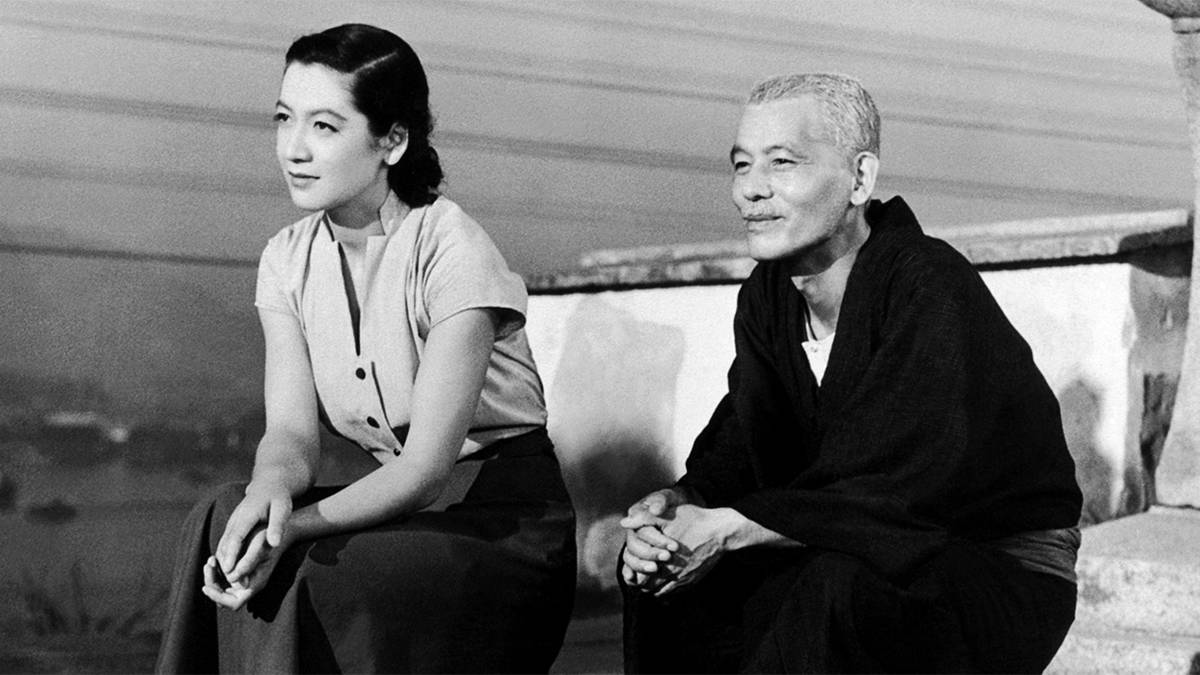
‘Tokyo Story’ (1953)

“Isn’t life disappointing?” Tokyo Story is a masterpiece of emotional understatement. It’s about an elderly couple (played by Setsuko Hara and Chishū Ryū) who travel to Tokyo to visit their grown children, only to discover that they are largely an inconvenience in their busy modern lives. The plot is minimal, almost incidental, yet the emotional impact is profound. The drama builds through silence, routine, and spatial composition, allowing disappointment and love to coexist quietly.
The movie is rooted in a very specific time and place, and yet its message is universal. The generational gap, the unspoken regrets, and the quiet acceptance of change feel painfully familiar across cultures. Perhaps it’s because director Yasujiro Ozu treats his characters with such empathy and gentleness. He never manipulates the audience’s emotions or peddles in melodrama, instead making us understand these people and their struggles. And, perhaps, our own.
2
‘12 Angry Men’ (1957)


“It’s not easy to raise my hand and send a boy off to die without talking about it first.” This classic is still the best courtroom drama ever made. 12 Angry Men follows twelve jurors tasked with deciding the fate of a teenage boy accused of murder. What begins as a near-unanimous vote for conviction slowly unravels as one juror insists on discussing reasonable doubt. From here, the plot unfolds entirely within a single room, relying on dialogue, performance, and moral tension, and it delivers on all counts.
The story is gripping and deeply resonant, making smart statements on democracy and justice that still ring true today. (Perhaps even more than they did in 1957). In particular, 12 Angry Men shows how prejudice, impatience, and ego can distort judgment, and how careful reasoning can challenge entrenched beliefs. At its core is a faith in the better aspects of our nature and our capacity to persuade and listen.
1
‘Citizen Kane’ (1941)

“Rosebud.” Citizen Kane is generally praised for its technical innovation, and rightly so. It pioneered a smorgasbord of techniques that are still in use today. However, it also deserves credit for its emotional core, one that has retained its power across the decades (whereas most films of its era now feel painfully dated). Orson Welles stars (and directs and writes and produces) as newspaper tycoon Charles Foster Kane, whose life is defined by immense influence and gradual isolation. The plot unfolds through multiple perspectives, each offering a fragment of truth about who Kane was.
Welles uses form to reinforce theme, showing how memory distorts and simplifies a life too complex to summarize. In the process, he raises difficult questions about identity, self-perception, and the struggle to connect. The famous final revelation is devastating not because it explains everything, but because it explains so little. Not for nothing, many consider Citizen Kane the greatest film ever made.
Source link
-

-
-

-

-


