

There truly is a movie for every occasion. If someone wants to laugh, throw on a comedy; if they want to cry, perhaps a romantic tear-jerker; and sometimes, people want to feel an unrelenting pressure that makes them curl up in the fetal position. If the last category were a section in a Blockbuster Video, it would be called “Cinematic Panic Attacks.”
As daunting as some of the movies in this select category can be, they’re also examples of visionary voices and top-tier actors collaborating to make something unique and special. There’s a cathartic safety in watching people being pushed to their extremes and seeing characters persevere or fold under the pressure in front of them. With that in mind, we’ll take a look at some of the very best movies that feel like full-length panic attacks.
‘Boiling Point’ (2021)
A fateful night for a chef immersed in a self-destructive crisis plays out in Boiling Point. Head Chef Andy Jones (Stephen Graham) has everything riding on the success of his restaurant, Jones & Sons, but a series of mistakes reveals deeper issues in his personal life. Throughout one dinner service, Andy attempts to maintain control over his livelihood and support his staff while the pressure of his responsibilities rises to an uncomfortable level.
There are no bombs to defuse or world-ending stakes in Boiling Point, but that doesn’t stop the film from creating a claustrophobic sense of impending doom for Andy. Helping create the building tension of the night is the stunning achievement of filming the movie as one long, uninterrupted take, which follows the happenings in the restaurant for 92 minutes. The success of the film would inspire a spin-off television series of the same name that revisited the characters six months after the events of the film.
‘Saturday Night’ (2024)


Moviegoers get a peek into the opening night of one of television’s longest-running institutions on Saturday Night. A dramatic recreation of the events leading up to Saturday Night Live’s premiere episode, the film follows producer Lorne Michaels (Gabriel LaBelle) as he attempts to corral his performers and crew. Facing a skeptical network and a production that seems primed to implode, Lorne takes multitasking to a new level to create television history.
Comedy fans will no doubt enjoy all the references in Saturday Night, but even someone with no knowledge of the comedians or the show itself will get swept up in the chaos of the movie. Anytime a movie establishes a ticking clock, in this case, an immovable live broadcast, every minor problem creates a major source of anxiety for the characters. That feeling is contagious for the viewer, but in an exhilarating way, as the talented group of performers never loses their sense of humor even when the world appears to be crashing down around them.
‘The Coffee Table’ (2022)

Controversial, shocking, and laced with a darkly humorous sensibility, The Coffee Table captures a hopeless feeling of panic and despair. The film follows Jesús (David Pareja), a young father who is entrusted to watch his infant while his wife runs errands in preparation for a family gathering at their apartment. After a tragic accident occurs involving a newly purchased coffee table, the father attempts to hide what transpired, delaying the inevitable reveal of the truth.
Knowing what The Coffee Table is about will likely create anxiety before pressing play, and the feeling snowballs until the very end. As an audience, we’re trapped inside the apartment with Jesús, knowing that there’s no conceivable happy ending or a way to reverse what’s been done. Watching The Coffee Table is like speeding toward a brick wall without the ability to change course, and the anticipation of the reveal will make cringing an involuntary reaction.
‘Beau Is Afraid’ (2023)

Audiences weren’t quite sure how to interpret Beau Is Afraid, but one thing is for certain: the movie simulates a fever dream perfectly. Joaquin Phoenix stars as Beau Wasserman, a man who is, as the title would suggest, afraid of virtually everything around him. Although stricken with anxiety, Beau attempts to visit his overbearing mother, but a series of mishaps turns his trip into a never-ending nightmare of his worst fears realized.
Everyone has seen a dream sequence in a movie where nothing feels quite right, like reality has been scrambled out of order, creating a disorienting experience. That’s what Beau Is Afraid feels like from beginning to end. This Ari Aster gem could easily be called one long nightmare that the main character never has the luxury of waking up from. Admittedly, this unique picture is a challenging watch that won’t be for everyone, but it admirably goes to dark places most other films wouldn’t dare attempt.
‘Requiem for a Dream’ (2000)
Requiem for a Dream is the movie that should be shown in high schools to warn kids about drugs and Jared Leto. The film follows a group of individuals who each see their lives destroyed by addiction to drugs. As their dependence escalates, so too does their desperation to get another fix, regardless of the pain it inflicts on themselves or those around them.
Requiem for a Dream is so effectively disturbing to those who watch the movie that it makes a comfortable home in your brain for a few days (or weeks) after it’s over. In terms of recreating the feeling of a panic attack, Ellen Burstyn’s performance as Sara Goldfarb, a woman who becomes ravaged by her pill addiction, is painfully uncomfortable. Sara hallucinating an interaction with a television show is one of the scariest non-horror movie scenes, a testament to director Darren Aronofsky’s vision and Burstyn’s talent.
‘Whiplash’ (2014)


In Whiplash, young musician Andrew Neiman (Miles Teller) pursues the life of a drummer by studying at a respected conservatory in New York City. His dedication to his dream will be tested when he encounters the frighteningly intense instructor Terence Fletcher (J.K. Simmons). Determined to excel despite Fletcher’s abusive methods, Andrew’s love of music becomes an obsession that has the capability of destroying his life.
On paper, no one would think a movie about jazz drumming would rattle the nerves, but Whiplash turns an artistic expression into a punishing exercise. This extremism is largely due to Simmons’ Oscar-winning turn as Fletcher, who attacks his students with a sadistic fervor that makes each of his appearances riveting and anxiety-inducing. Fletcher’s approval, which will always be out of reach, looms over every decision Andrew makes, creating a tailspin born from unbearable pressure that the audience feels secondhand.
‘Crank: High Voltage’ (2009)

Jason Statham pushes himself to an adrenaline-depleting limit in the over-the-top sequel Crank: High Voltage. After hitman Chev Chelios (Statham) improbably survives the events of Crank, he wakes up to find his heart replaced with an artificial one that runs on a limited battery. Now on a quest to retrieve his heart, Chev will fight through a wave of criminals who want him dead while finding new electrical sources to keep his fake ticker pumping.
They say there’s no bad idea in brainstorming, and all those ideas made it into Crank: High Voltage. The action movie refuses to take itself even 10% seriously as it overwhelms the audience’s senses with absurd set pieces that ride the line between hilarious and bizarre. By the time an electrified Chev hallucinates a fight as a towering kaiju battle, it’s understandable for the audience to think they’re having a panic attack, a stroke, or a superpowered combination of both.
‘Climax’ (2018)

A moment to unwind for a dance troupe escalates into a collective madness in the excruciatingly intense French film Climax. Setting up shop in an abandoned school, a professional dance company caps off an exhausting rehearsal with an after-party to celebrate, unaware that their refreshments have been compromised. After drinking sangria spiked with LSD, the dance troupe experiences a night of hellish hallucinations that lead to disastrous, fatal consequences.
Climax was shot without a script, predominantly using dancers with limited or no prior acting experience, and these decisions give the film a loose, improvisational tone that makes the party look accessible and natural. This approach is vitally important to establish, because around the time the audience feels immersed with the group, all hell breaks loose as the effects of the drugs take hold. There are no heroes or villains to establish a traditional narrative, just psychedelic suffering that will make everyone buy a D.A.R.E. shirt once the credits roll.
‘Good Time’ (2017)

A panic attack would probably be a more welcome experience for the main characters of Good Time. A bank robbery gone awry results in one of the perpetrators, Nick (Benny Safdie), being arrested, while his brother Connie (Robert Pattinson) desperately searches for a way to free him. Over one long night, Connie will make one bad decision after another to keep himself and Nick from spending the next chunk of their lives in prison.
Good Time is a fascinating and stressful watch because the audience is tethered to a character like Connie, who is incapable of making a good decision at any point in the story. Despite Connie making it hard to root for him, there is still a fraying of the nerves that comes from watching a rat attempt to escape a maze. Even in a sprawling city, the walls always feel like they’re closing in around him, and the truth isn’t far off.
‘Uncut Gems’ (2019)
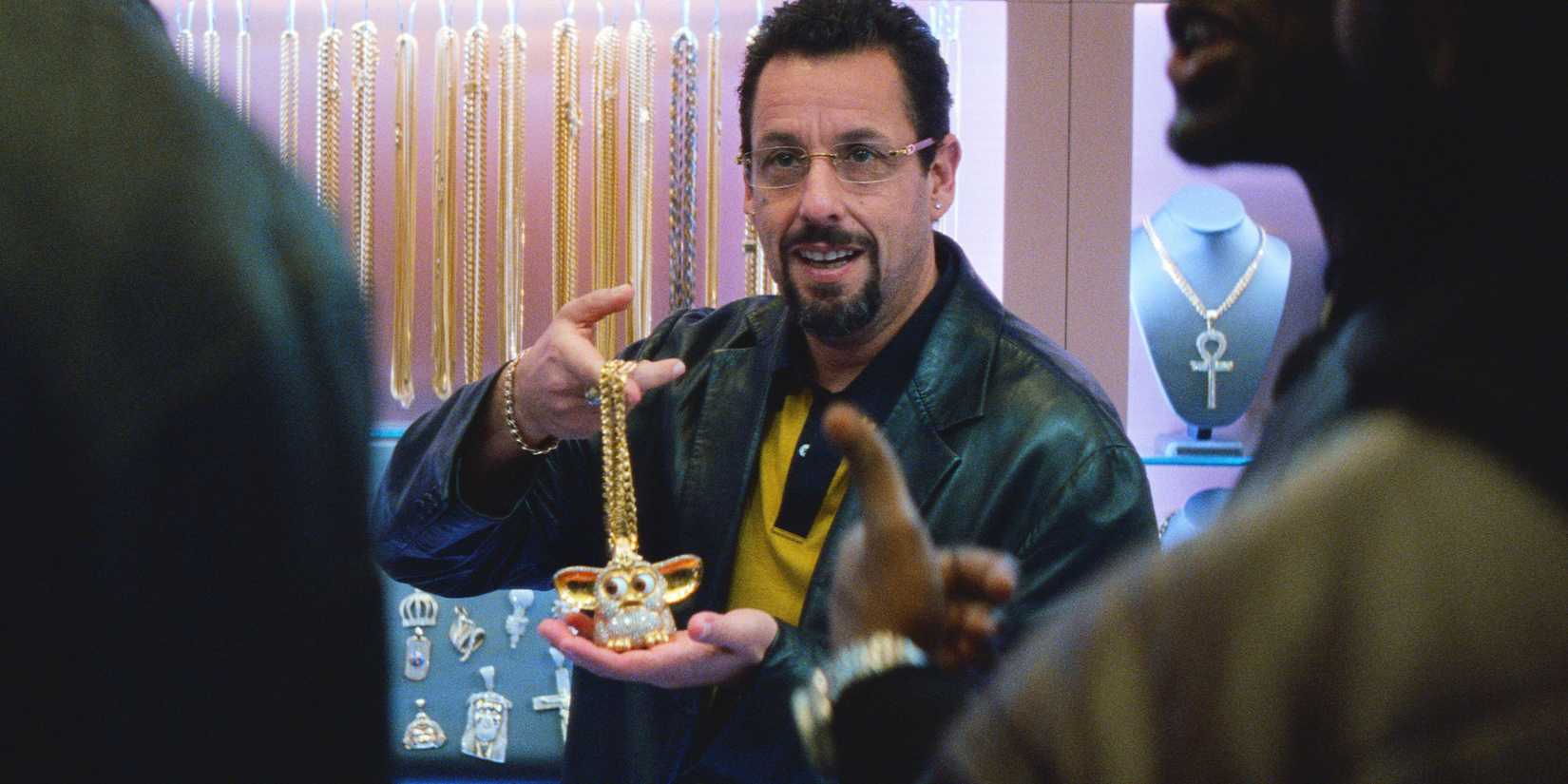
Adam Sandler gives a mesmerizing performance as a compulsive gambler with more debts than friends in Uncut Gems. The film follows Howard Ratner (Sandler), a jewelry store owner caught between paying off his gambling debts and putting any money in hand down on the next bet that could make all his problems go away. Regardless of the imminent danger he faces, Howard continues to push his luck while staying one step ahead of the people he owes money to.
The concept of a panic attack and the emotional response from watching Uncut Gems are possibly one and the same. Directing duo Benny and Josh Safdie perfected the art of escalating tension between Good Time and Uncut Gems, showcasing a manic hopelessness in its protagonists who refuse to accept defeat regardless of the fact that it has already arrived. A reckless forward momentum carries Howard through rapid-fire conversations that never seem to properly end or begin, and the viewer can only watch as their stomach tightens from the stress on screen.
Source link
-

-
-

-

-


