

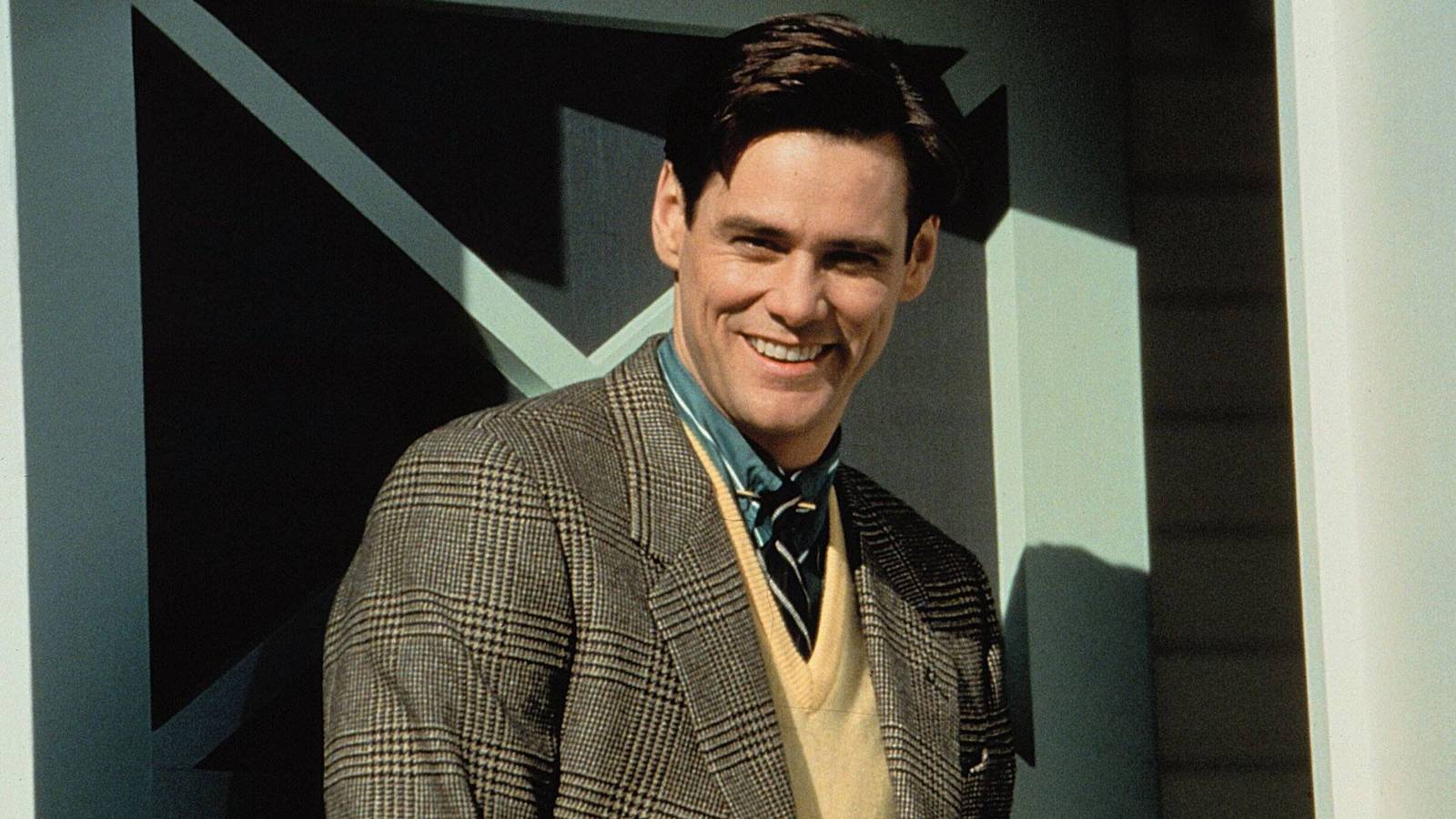
Science fiction has always been a genre sold on the imagination, and the best sci-fi movies have taken that to the next level. Instead of imagining what the future could look like, many of the greatest films in the genre accurately predicted the future. When the films initially screened, the technology, social patterns, and political shifts had not happened yet. The movies allowed the story to live in a world where these things were either dreams or nightmares, depending on the themes of the story.
However, as time rolls on, many old movies create discussions about each piece of the future that silently clicks into place, both in building the future and destroying institutions. The classic sci-fi movies explored computers, AI assistants, surveillance culture, predictive policing, outrage media, and the blurring of lines between the government helping its people and supporting big business. In apocalyptic, dystopian, and utopian fiction, the number of things that come true is terrifying.
Some of the sci-fi movies made specific technical predictions that arrived within a generation, sometimes surprising anyone who thought the ideas were too far-fetched when the movies were released. Others predicted the cultural and political shape of the 21st century with an often disturbing accuracy that brings a new level of fear to the original dystopian stories. These science fiction films all share the similarity that they no longer look like fiction, and are now warnings to the movie-going public.
2001: A Space Odyssey (1968)
Stanley Kubrick released 2001: A Space Odyssey in 1968, a movie about space travel and the journey to the possible origin of the universe. Those ideas are as imaginative and unrealized as they were when the movie was released over five decades ago. Its 90% Rotten Tomatoes score shows how much the film connected with critics, and it continues to get theatrical re-releases and praise to this day.
One thing that stands out is the tech that Kubrick and co-writer Arthur C. Clarke predicted in the movie. This includes the iPads, as astronauts read newspapers on slim portable tablets called Newspads. In a lawsuit between Apple and Samsung about reading tablets, the lawyers for Samsung even brought the scene from 2001: A Space Odyssey to court to show Apple didn’t invent the idea (via Far Out Magazine). The movie also used video calling and modern voice assistants.
Minority Report (2002)

Steven Spielberg’s Minority Report was a massive hit, making $358 million with an 89% Rotten Tomatoes score, while being based on Philip K. Dick’s story of the same name. This sci-fi action movie starred Tom Cruise as John Anderton, a futuristic police detective who is seen flipping through evidence on a visual effect that MIT researcher John Underkoffler designed as a concept (via Wired).
Underkoffler then brought the idea to his company, Oblong Industries, and released it as a product in 2012. This was gesture-controlled computing before it ever existed in real life. The movie also has a startling theme that has become more prevalent, with predictive policing, something that showed up in the real world a few years after Minority Report played in theaters, although it was Pre-Crime investigations without using psychic precogs as the movie did.
Her (2013)

Spike Jonze released his sci-fi movie Her in 2013, a film that had a loose sci-fi theme in a near future that looks a lot like what exists in the world right now. The movie stars Joaquin Phoenix as a lonely divorced man who gets a companion AI through his computer to befriend him when he realizes real life has become too hard to deal with. At the time that Her hit theaters, Siri was the top-of-the-line AI, and Samantha from the movie was pure fantasy.
However, AI companion platforms are a real thing in today’s world. Replika can build personalized AI partners for emotional support and romantic relationships, and there were over 30 million users as of August 2024 (via The Verge). There was another thing from Her that also came true, as Theodore’s job was to write letters for someone else, something that many people now offer on Fiverr.
The Truman Show (1998)

The Truman Show came out in 1998 and presented a world that followed one man named Truman with the use of hidden cameras. The twist was that Truman was born in this world, and he had no idea that he didn’t live in the real world, with no knowledge of the actors pretending to be his friends and the cameras that followed his every moment. It was the biggest show on television in this fictional world, and it predated the explosion of reality TV.
Shows like The Real World were already on television at the time, but that was more of a competition series with reality TV vibes. However, The Truman Show accurately showed the entire interest in watching strangers living their lives on television, with both Survivor and Big Brother launching within two years of this movie. The idea of broadcasting a personal life for entertainment also predicted the influencer phenomenon on social media that remains prevalent today.
Network (1976)

If The Truman Show predicted the rise of reality TV before it became popular, it was Network 22 years earlier that really slammed home the idea of influencers on television. Directed by Sidney Lumet and written by Paddy Chayefsky, Network told the story of a newscaster named Howard Beale who grew outraged and had a nervous breakdown on live television. The ratings skyrocketed, so the producers decided to allow him to keep cutting loose on television, no matter how it mentally affected him.
The entire idea of the television news purposefully putting someone on television with the sole purpose of outrage culture is a little too familiar in today’s world. The difference is that Peter Finch’s Howard Beale was truthfully angry, but the producers’ attempt to weaponize his anger to raise ratings and make the public angry as well is a key trait of most TV news shows today. It also predicted things like Jerry Springer, Howard Stern, and social media apps that survive on monetizing anger.
Blade Runner (1982)

Ridley Scott’s Blade Runner showed a future where humans built Replicants that looked and acted like humans, but whose sole existence was to work menial jobs. When the Replicants gained self-awareness and wanted to live their own lives, the blade runners were sent to retire them. The biggest theme of the movie was the megacorporations that towered over the cities, making residents seem small and helpless in their might.
This theme predicted the rise of Apple, Google, and Amazon, among others, whose corporate worth is bigger than that of many nations. The ruined atmosphere and rain-soaked streets, while animals are nearing extinction, and the wealthy are living on off-world colonies, remain relevant in today’s world of haves and have-nots. It is also notable to see the digital billboard advertising flooding urban space, which is normal in today’s world.
WarGames (1983)

WarGames is an interesting movie because it influenced politics almost immediately after its release. Directed by John Badham, the movie stars Matthew Broderick and Ally Sheedy, and it follows a teenage hacker who accidentally hacks into a government defense system and almost causes a World War. It foreshadowed the idea of hacker groups and their ability to break into secure areas that were, at one time, impossible to breach.
However, the real influence of this movie on the future came thanks to President Ronald Reagan. After Reagan watched the movie, he signed NSDD-145 roughly 15 months later, which was the first U.S. presidential directive on computer security (via The New York Times). This movie also led to the Computer Fraud and Abuse Act of 1986. All this was based on a movie’s plot, but the fact that AI has been proven not to tell a simulation from a real war attack is also relevant in today’s world.
Idiocracy (2006)

Mike Judge wrote and directed Idiocracy, a movie that the studio buried. It only made under $500,000 worldwide because of the studio dumping the film, but it became a massive success on home video and DVD rentals. Idiocracy has since become a cult classic, and it is one of the biggest rebound stories in Hollywood history. However, even when it exploded on home video, many critics slammed the movie for its ridiculous storyline that was too far-fetched to come true.
However, this was a movie that accurately predicted a world where people voted based on pop culture and entertainment reasons, without knowledge of actual issues. Political commentators on TV even began to invoke Idiocracy when discussing elections and political decisions. The movie also predicted the rise of anti-intellectualism and the rise of corporations’ control in the direction of political decisions.
Total Recall (1990)

Paul Verhoeven directed Total Recall, a sci-fi movie starring Arnold Schwarzenegger as a man who has implanted memories so he can live an exciting life for one day, but then he begins to suspect that there is more to it than a fictional story. Along the way, there were ideas that showed up which seemed, at the time, to be sci-fi nonsense that could never be made. However, the fully autonomous robotic taxi accurately predicted today’s self-driving vehicles.
Rekall, the company that implanted the fake memories, predicted the rise of research into memory manipulation and direct brain-computer interfaces. The movie’s themes also predicted talks today about internet access, billionaire-funded space colonization, corporate authoritarianism, and even the idea of one day colonizing Mars.
They Live (1988)

John Carpenter’s They Live is a cult favorite sci-fi movie with “Rowdy” Roddy Piper starring as a drifter who discovers, by accident, that aliens have already assimilated on Earth and are posing as humans as they drive political and business decisions to improve their control over the planet. The entire idea that Carpenter pushed was that the aliens used advertising to send subliminal messages that lured citizens into doing anything they wanted, even against their own well-being.
This has been shown today to be a real tactic of advertising companies. While They Live had commands hidden in the messages like “Obey” and “Consume,” those ideas are also implanted into advertising today. At the time, it seemed almost like magic, but today, companies use A/B testing to determine what words will get people to act. The idea of the hidden elite controlling the population is as strong today as it was when Carpenter used it as a fictional device in his sci-fi movie.
Source link
