

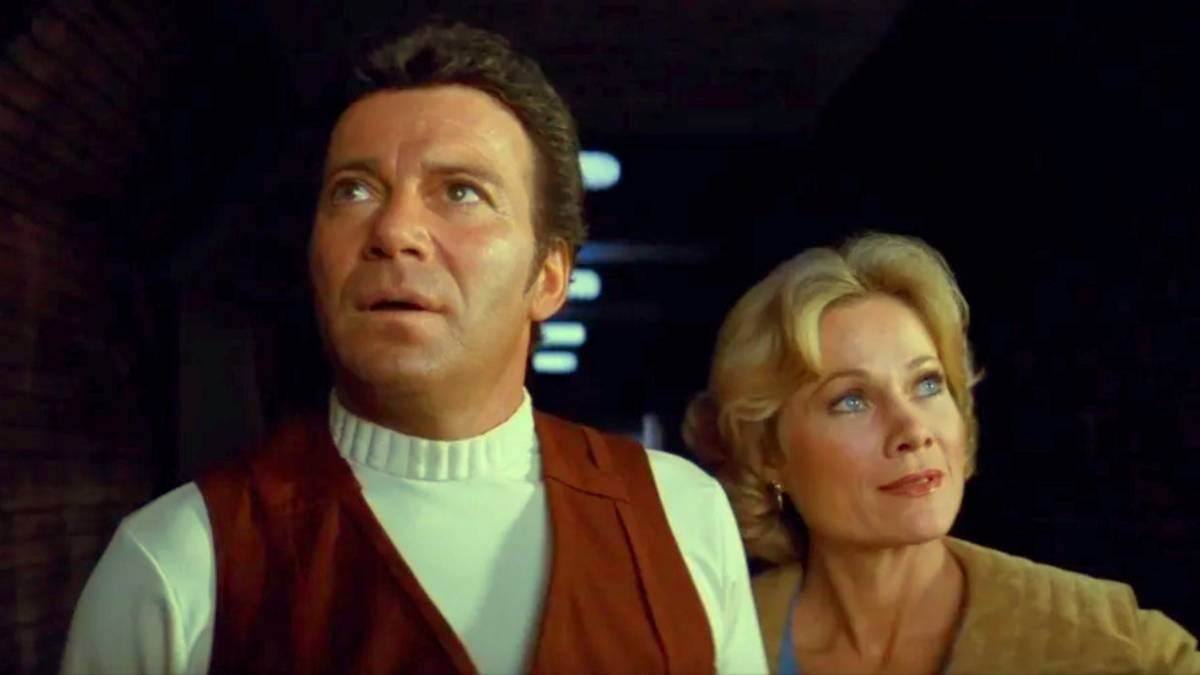
Star Trek II: The Wrath of Khan is undebatably one of the greatest sci-fi movies ever made. The 1982 sequel revolutionized the Star Trek brand while paving a path forward for all similar franchises. Forty-four years later, it’s still a timeless classic that outshines even many modern space-faring adventures.
While The Wrath of Khan sets a high bar, a select few other sci-fi films manage to live up to its excellence. From the strongest entries of rival franchises to creative standalone projects, these highly regarded sci-fi movies all measure up to or excel the greatness of Star Trek‘s second cinematic outing.
Blade Runner Is the Ultimate Sci-Fi Cult Classic
Blade Runner is set in a bleak cyberpunk future where synthetic humans, a.k.a. “Replicants,” live among humans. When a rogue group of highly advanced Replicants breaks out of a high-security compound and escapes to Earth, it falls upon Harrison Ford’s tortured blade runner, Rick Deckard, to hunt them down.
Blade Runner may not have had the cultural popularity it needed during its theatrical run, but the film has become a massive cult classic in the decades since its release. The 1982 sci-fi suspense thriller wrote the book on the dreary, cyberpunk, futuristic world that appears so often on the big screen today. It also eventually led to yet another cult classic sci-fi masterpiece in the form of Blade Runner 2049, which was released in 2017.
Aliens Is the Perfect Sci-Fi Action Sequel

Aliens, the sequel to Ridley Scott’s hit 1979 horror film Alien, takes things to the next level. James Cameron takes over the franchise, throwing Sigourney Weaver’s Ellen Ripley into yet another fight for her life against the ferocious xenomorphs. This time, Ripley is aided by new allies on an exoplanet mining colony, where she vows to protect a young girl amid the carnage.
Aliens is the rare sequel that improves on the original in almost every way. The battles are bigger and more intense without feeling like a parody. Meanwhile, the emotional stakes feel much higher as Ripley fights to protect more than just herself. The 1986 sequel turns what began as a sci-fi horror story and turns it into a full-blown action epic that is still fondly remembered forty years later as the best Alien film of all time.
The Thing Is the Pinnacle of the Creature Feature Sub-Genre

There is no creature feature better than John Carpenter’s The Thing. An adaptation of John W. Campbell Jr.’s 1938 novella, Who Goes There?, The Thing introduces a bizarre extraterrestrial creature that can imitate other organisms. When it begins to terrorize a group of researchers at an outpost in Antarctica, their paranoia slowly becomes their undoing as they realize the Thing could be any one of them.
The Thing manages to make a monster story work, even with limited visual effects and a small budget. It is the epitome of a perfect creature feature. Not only that, but the 1982 classic does what many of the best sci-fi stories do: using a fantastical beast to reveal mankind’s own inner turmoil and weakness.
Arrival Is a More Cerebral Take on the Sci-Fi Genre

From the mind of Denis Villeneuve, Arrival is a 2016 sci-fi film that prefers to take a more cerebral approach to the genre than most audiences would expect. The movie stars Amy Adams as Dr. Louise Banks, a linguistics professor who is tasked with learning how to communicate with an extraterrestrial spaceship that lands on Earth. With time running out and tensions high, Dr. Banks finds a surprising and emotional way to communicate with the aliens.
Unlike other blockbusters that deal with alien contact, Arrival takes things slowly, depicting surprisingly interactions between mankind and a new lifeform. The film may not be as action-packed as sci-fi fans might want, but it tackles intriguing questions of mortality, emotion, and the human condition. Ten years later, it is still one of Villeneuve’s best sci-fi flicks, despite heavy competition.
2001: A Space Odyssey Is an All-Time Classic

2001: A Space Odyssey pioneered modern sci-fi as we know it. Released in 1968, the film is based on the literature of Arthur C. Clark, following mankind’s investigation of a mysterious alien monolith that suddenly appears on Earth without explanation. The investigation quickly spirals out of control, however, as a more sinister threat reveals itself to the crew.
2001: A Space Odyssey tackles many of the themes that are still prevalent in the sci-fi genre today, including a fear of artificial intelligence, mankind’s fascination with alien lifeforms, and the potential for humanity to transcend its mortal form to become something more. The Stanley Kubrick-directed classic is also a turning point in the use of special effects, which have become a staple of the genre.
Dune: Part Two Is One of the Greatest Sci-Fi Flicks of the 21st Century

Dune: Part Two continues Denis Villeneuve’s impactful take on Frank Herbert’s classic sci-fi novel, which is often credited with inspiring iconic franchises like Star Wars. After the events of the first movie, Timothee Chalamet’s Paul Atreides builds a cult following for himself from the Fremen people of Arrakis. Branding himself as their messiah, Paul wages war against the villainous leaders of House Harkonnen, who deposed and murdered his father, and sets his sights on the throne of the Emperor.
Dune: Part Two boasts dazzling visual effects and a haunting story that does an excellent job of capturing the cautionary tale present in Herbert’s original literature. No other modern sci-fi franchise has been able to balance its core themes and visual spectacle in quite the same way as Dune. The film is everything that cinephiles want to see in a modern blockbuster, and sets the stage beautifully for the upcoming finale, Dune: Part Three, which hits theaters in December.
The Matrix Changed Hollywood (and Sci-Fi) Forever

The Matrix is, without a doubt, one of the most famous and impactful sci-fi films of all time. The 1999 film is set in a dystopian future where intelligent machines have trapped the human population in “The Matrix,” a virtual reality that resembles the height of their civilization. When Neo (Keanu Reeves) is freed from his trance, he finds himself swept up in a desperate mission to save the world as the leader of the revolution against the machines.
Much ink has been spilled on the tremendous impact that The Matrix has had not only on the sci-fi genre, but on film in general. Endless films have tried to replicate The Matrix in some form or other, and to various degrees of success. Its enthralling plot allows the film to explore some of the more niche areas of hard sci-fi without ever losing more casual viewers. The film is also bolstered by unforgettable action sequences, pioneering an entirely new way of filming fight scenes.
Children of Men is a Gritty Vision of a Dreary Future

Set in the far-off future of 2027, Children of Men depicts a world with no future. The film reveals that mankind has lost the ability to procreate, effectively putting an expiration date on humanity as a species. With civilization itself on the verge of collapse, bureaucrat Theo Faron (Clive Owen) discovers the first pregnancy in two decades. Knowing that she will be humanity’s last hope of survival, Faron does everything in his power to get her to safety.
Alfonso Cuarón’s 2006 dystopian thriller is a bleak look into humanity’s near future, depicting the chaos that might erupt should that future be taken away. While it is decidedly more grounded than other sci-fi films, Children of Men is nonetheless a brilliant exploration of the dystopian subgenre. It is also a technical marvel, with long one-shot sequences that are still impressive twenty years later.
Terminator 2: Judgment Day Is the Rare Sequel That Improves a Franchise

Image via TriStar Pictures / Courtesy of Everett Collection
A sequel to James Cameron’s hit 1984 sci-fi film, Terminator 2: Judgment Day, is better in almost every way. The 1991 follow-up features the return of Arnold Schwarzenegger’s killer robot from the future, only this time, he’s been reprogrammed to protect future freedom fighter, John Connor. With a new Terminator model out to destroy them all, the T-800 teams up with John and Sarah Connor to save the future yet again.
Terminator 2: Judgment Day is unquestionably the pinnacle of the iconic sci-fi franchise, raising the bar in terms of both action and story. The Terminator walked so that Judgment Day could run. Though the intense action is what sells the movie, Terminator 2 truly shines thanks to its deeply emotional story, which tackles whether or not humanity truly has the ability to change its future. This is exactly what sci-fi exists to discover, and Cameron’s killer sequel does so in style.
Solaris Is an Introspective Take on Science Fiction

Andrei Tarkovsky’s Solaris is still one of the best sci-fi films ever made. Based on Stanisław Lem’s novel, the 1972 Russian film takes place on a distant space station in orbit over the planet Solaris. Manned by only three scientists, the station’s mission goes awry when the entire crew simultaneously breaks down in emotional crises. The film then follows a psychologist as he travels to the station in hopes of getting to the bottom of these strange occurrences.
As one of the earliest big-screen sci-fi adventures, Solaris doesn’t revel in spectacle and action. Instead, it uses its expansive space setting to tackle something much more down-to-earth. Against a backdrop of the vast cosmos, Solaris is truly an exploration of “inner space,” and each person’s mind. Much like Star Trek II: The Wrath of Khan, the film prefers to focus on more human emotions, including grief, heartache, and redemption.
Source link
