
A great thriller does not just keep you engaged. That phrase is too weak for what the best ones do. The best thrillers invade your nervous system. They make your shoulders tighten without permission. They make ordinary objects feel loaded. A hallway becomes a threat. A phone call becomes a trap. That is what this list is about.
Not thrillers with one amazing sequence and a soggy middle. Not thrillers that coast on premise. Not thrillers you respect more than you feel. I mean movies that lock in early and never lose the line. Movies that know exactly when to push, when to withhold, when to mislead, when to let a performance take over the room, and when to stop before one twist too many turns electricity into a gimmick. These are the ones that do not ask for patience. They command it. And because this list is about thrillers, I do not care only about plot. I care about pressure. These ten absolutely understand that.
10
‘Blue Ruin’ (2013)
So many revenge thrillers pretend they are showing cost while secretly making vengeance look like an underground superpower. This movie does not do that for a second. What wrecks me about Blue Ruin is how little glamour it allows revenge. It shows revenge as clumsy, sad, badly planned, emotionally unhealed behavior carried out by a man who looks like life has already taken too much out of him before the blood really starts flowing. Dwight (Macon Blair) is one of the most quietly devastating thriller protagonists of the last decade because he does not enter the movie with mythic force. He feels fragile from the beginning. Not weak, fragile.
That is why the suspense works so well. Every move feels like it could go wrong because Dwight feels like someone who would absolutely be capable of getting in over his head. The violence lands harder because it is ugly, awkward, panicked. The emotional force comes from knowing the movie is not building toward triumph. It is building toward damage spreading. Blue Ruin is amazing because it knows a thriller can be intimate, brutal, and deeply mournful at the same time.
9
‘Prisoners’ (2013)

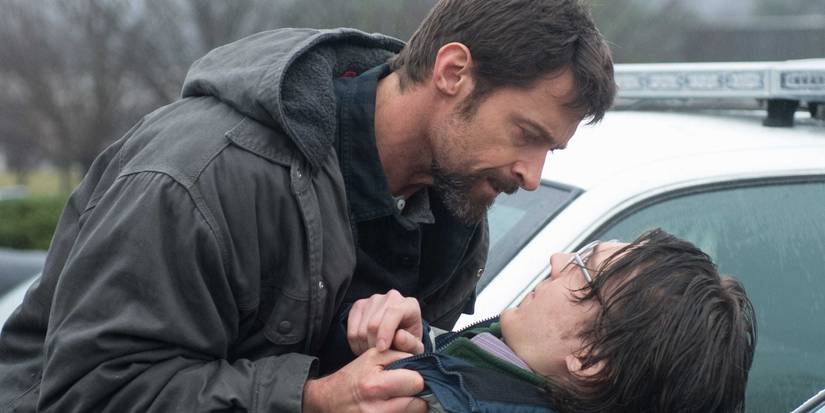
This movie feels like grief dragging itself through rain and concrete. From the first disappearance, Prisoners does not simply become tense. It becomes morally contaminated. It understands that a thriller about missing children cannot just be gripping. It has to feel like something sacred has been ripped out of the world, and every scene afterward has to live in the shadow of that rupture. The film follows Keller Dover (Hugh Jackman), a man whose entire identity is built on preparedness, protection, control, and moral certainty, and the film slowly forces all of that into a furnace instead of just making him a desperate father.
He’s like Liam Neeson in Taken. He is loving and terrifying in the same body. You understand him even when you start fearing what he is becoming. That is the kind of character work thrillers often skip in favor of momentum. This film doubles down on it. Loki (Jake Gyllenhaal) is one of my favorite thriller investigators because he feels haunted before the case even solves anything. And that is why the film is so effective from start to finish.
8
‘The Fugitive’ (1993)
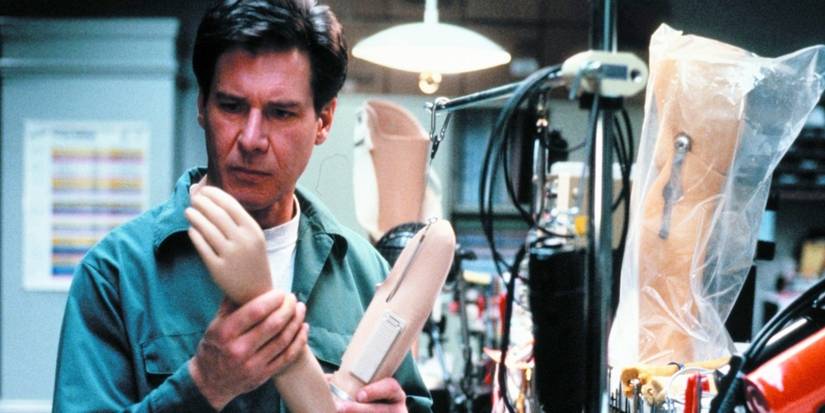
There is something almost holy about how cleanly The Fugitive moves. It does not waste time, and yet it never feels rushed. It understands that one of the purest pleasures in thrillers is watching intelligence operate under pressure. Richard Kimble (Harrison Ford)’s character is smart, resourceful, and driven, but the movie never lets him float into action-star invincibility. He looks tired. Cornered. Furious in a way that keeps having to stay practical. That practicality is the whole magic of the film.
Then Samuel Gerard (Tommy Lee Jones) shows up and turns the whole film into a duel of professional energies. He is sharp, dry, relentless, and fully alive in his own movie. The brilliance is that The Fugitive does not need the marshals to be stupid or corrupt to make Kimble sympathetic. Both sides have competence. That creates momentum with actual teeth. And that’s why it holds all the way through. It is one of those thrillers where every scene either traps, frees, or redirects the protagonist without ever feeling mechanical. The movie trusts velocity, but it earns it through character.
7
‘Gone Girl’ (2014)
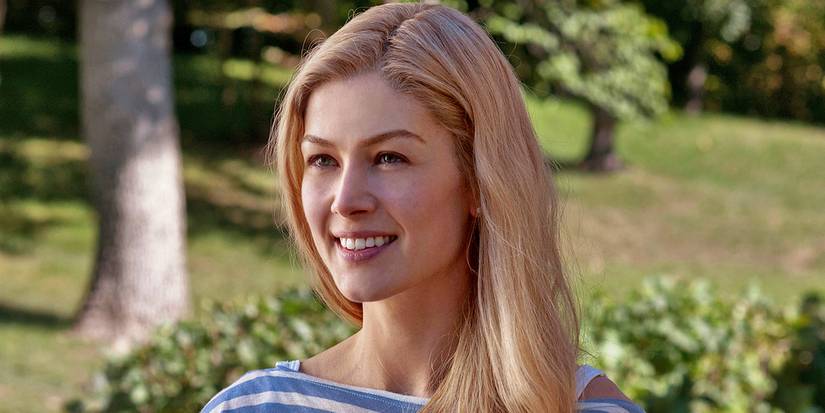
This is one of the nastiest American thrillers of the century, and I mean that lovingly. Gone Girl is amazing because it understands that marriage, performance, gender expectations, and media spectacle are already full of thriller energy before anyone starts disappearing. What makes the film sing is how cruelly precise it is about surfaces. Nick Dunne (Ben Affleck) and Amy Dunne (Rosamund Pike) are spouses in crisis. They are image managers, fantasy collaborators, mutual disappointments, and eventually each other’s most intimate enemies.
Affleck is perfect casting because his natural ambiguity becomes part of the movie’s design. He can look guilty, blank, aggrieved, stupid, and sincerely blindsided in the same scene. Pike, meanwhile, gives one of the great ice-blooded thriller performances. But the genius is that Amy is not merely a monster of intelligence. She is also a creature of humiliation, ego, theatricality, and rage. The performance works because she is horrifyingly alive. And once the film pivots, it never lets up. Every media beat, every false note of sympathy, every recalibration of power inside the relationship feels like poison becoming more concentrated. This is a thriller that keeps asking: what if the performance is the prison? What if winning means staying in the lie forever? That is such an ugly question, and the movie squeezes it until it sings.
6
‘No Country for Old Men’ (2007)
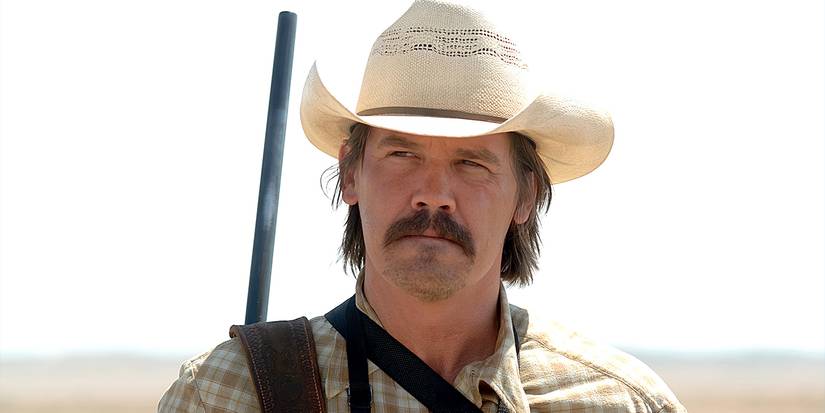
This film scares me in a way very few thrillers do because it does not behave like it owes you moral structure. It gives you money, pursuit, law, evil, and survival, and then steadily strips away the comforting idea that any of those things will arrange themselves into a shape you recognize. That is why the movie feels so cold. Not because it lacks feeling, but because it refuses false reassurance. Llewelyn Moss (Josh Brolin) is one of the smartest characters in any thriller on this list.
And then there is Anton Chigurh (Javier Bardem), who is terrifying precisely because Bardem never pushes him into flamboyant villain theater. But what deepens the film beyond pure dread is Sheriff Bell (Tommy Lee Jones). Bell is the soul of the movie. He can name the fatigue that comes from living long enough to realize the world no longer fits the moral equipment you brought into it. That sadness hangs over everything in this film.
5
‘Zodiac’ (2007)
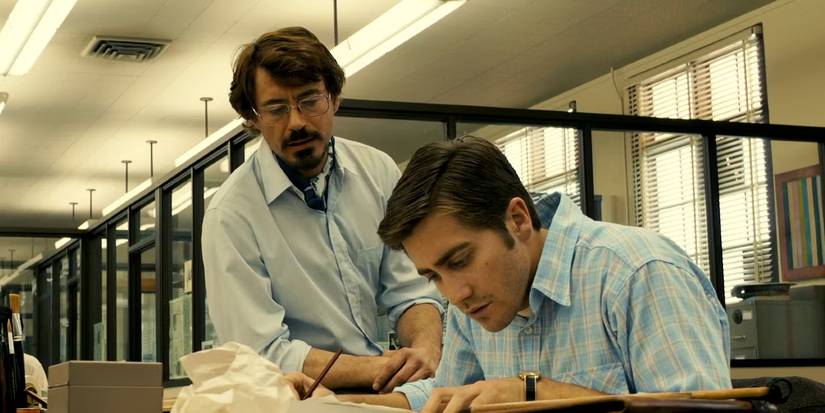
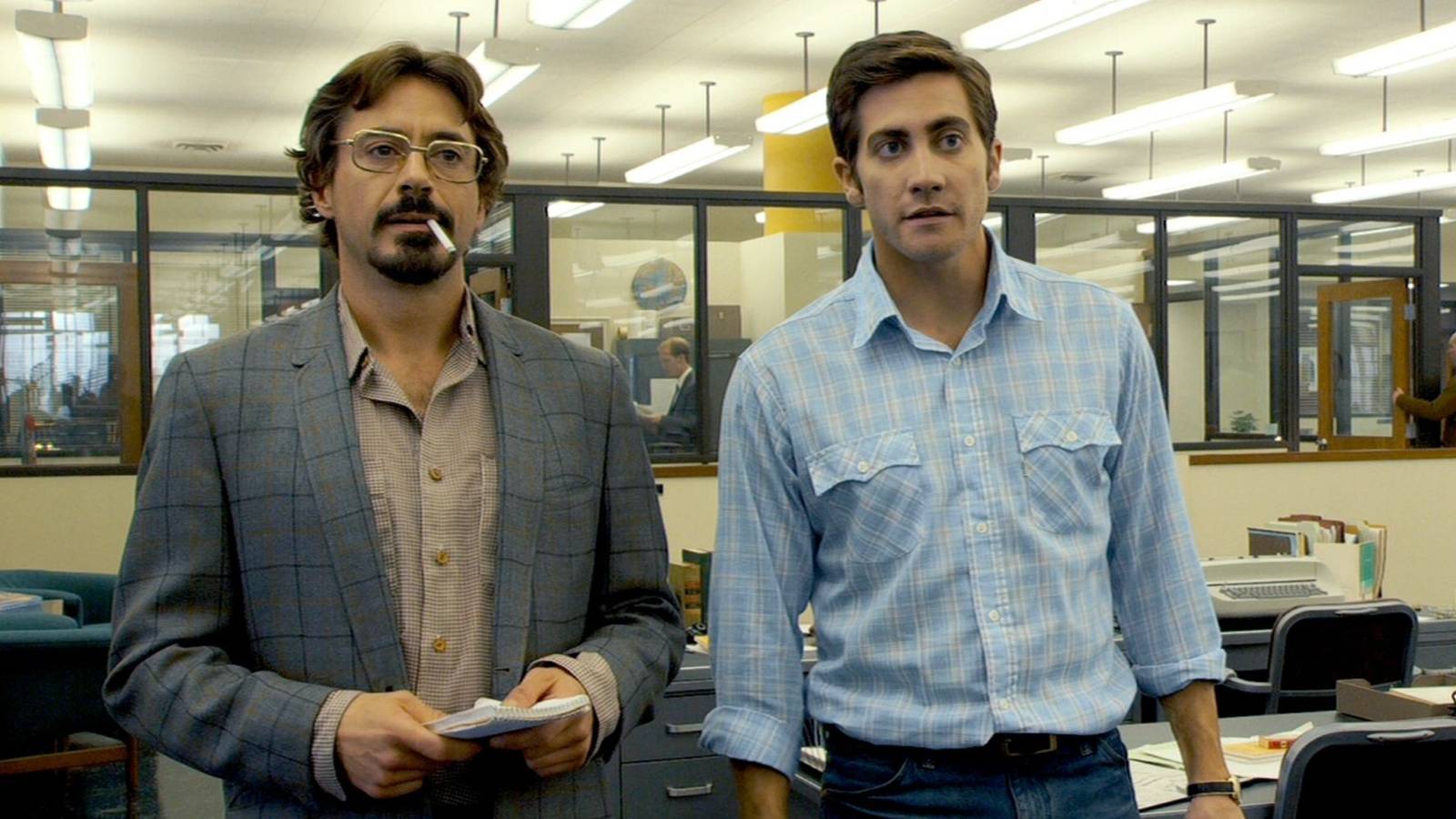
There are thrillers about catching a killer, and then there is Zodiac, which understands that obsession can become the real killer long before the case closes. This is one of the most hypnotic procedural thrillers ever made because it treats uncertainty not as a narrative inconvenience but as the whole emotional catastrophe. The killer is terrifying, yes. The inability to turn fragments into finality is even worse.
What makes the film so special is the way it keeps changing who the emotional center belongs to without ever losing pressure. Robert Graysmith (Jake Gyllenhaal) becomes the most obvious vessel for obsession, but the movie has already seeped into everybody long before he fully takes over. Dave Toschi (Mark Ruffalo) carries the fatigue of professionalism under absurd pressure. Paul Avery (Robert Downey Jr.) has all that wit and velocity curdling into corrosion. The whole film feels like talented men being slowly unstitched by the refusal of reality to become solvable. And the suspense is extraordinary. Hardly anything happens in the conventional sense, and your body still forgets how to relax.
4
‘Oldboy’ (2003)

Oldboy does not unfold. It stalks, taunts, humiliates, and detonates. Park Chan-wook makes the entire film feel like a revenge mechanism built by a sadist with a poet’s eye and a grudge against ordinary storytelling. It is operatic, ugly, stylish, sick, and emotionally ruinous in a way very few thrillers dare to be. What gives it its force is Oh Dae-su (Choi Min-sik) himself. Choi Min-sik plays him with such wounded animal intensity that the movie never becomes just a formal stunt. He is funny, pathetic, enraged, degraded, determined, and increasingly shattered as the truth tightens around him. You feel how imprisonment has curdled him. You feel how revenge gives him direction without giving him dignity back. That emotional degradation is crucial.
The film’s most disturbing revelations land because they do not just surprise him. They annihilate the parts of him that were still trying to remain human. And yes, the corridor hammer fight is iconic for a reason, but what makes the movie great is that its violence is not there merely to excite. Every blow feels like part of a larger moral architecture of punishment. By the end, Oldboy has become one of the bleakest thrillers ever made about what vengeance really wants: not balance, not justice, but total psychic occupation. It is relentless, and I love it for that.
3
‘The Silence of the Lambs’ (1991)

This movie is so completely in control of its own dread that revisiting it almost feels like revisiting a sacred object. The Silence of the Lambs is not just suspenseful. It is intimate with fear. It understands that terror gets worse when it is forced into conversation, when politeness and appetite share a room, when intelligence becomes a form of predation. Clarice Starling (Jodie Foster) is the heart of the film, and the reason it never becomes merely a serial-killer showcase.
And then there is Hannibal Lecter (Anthony Hopkins). What more can even be said at this point except that Hopkins somehow makes stillness feel carnivorous? The scenes between him and Clarice are iconic to this date because he sees too much, speaks too precisely, and turns language into touch. The film is amazing from start to finish because every scene either deepens Clarice or sharpens the shape of evil around her. Nothing is wasted. Not a glance. Not a pause.
2
‘Se7en’ (1995)
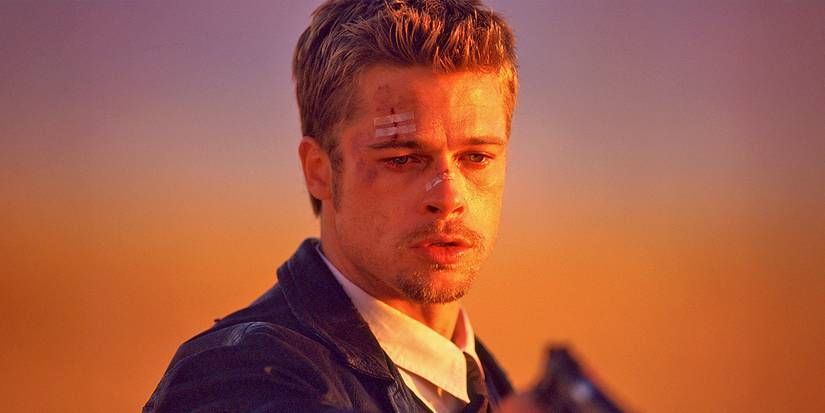
Another David Fincher addition to this list. And while some thrillers feel dark, Se7en feels damned. From the opening credits onward, the movie behaves as if the city has already surrendered to rot and the investigation is simply forcing two men to walk through the smell of it. This is one of the best character pairings in thriller history. Somerset (Morgan Freeman) and Mills (Brad Pitt) give the movie its weight in a way that any lesser actor might not have been able to. They are rival ways of surviving a world that seems spiritually diseased. Freeman gives Somerset a tired precision that kills me every time. Pitt, meanwhile, makes Mills hot-blooded enough to be reckless and sincere enough to be tragic. The movie needs both energies. Without Mills’ emotional impatience, the film becomes all despair. Without Somerset’s old grief, it loses its depth.
And then the murders. What makes them horrifying is not only their invention, but the way the movie turns each crime scene into a moral atmosphere. It makes you enter philosophies of punishment. The apartment of Sloth. The library nights. The long drives. The rain. The way John Doe’s (Kevin Spacey) logic keeps pressing inward until the film stops feeling like a manhunt and starts feeling like an argument with God.
1
‘Heat’ (1995)
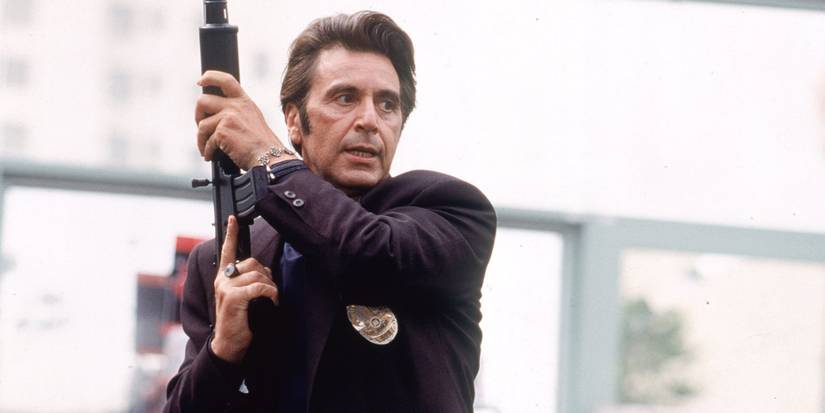
I love Heat with the kind of intensity that makes me want to defend it before anyone has even criticized it. This is not just one of the greatest thrillers ever made. It is one of the most complete. It has scale without bloat, character without softness, action without stupidity, and melancholy running through it like a private current. It is a thriller about professionals, yes, but what makes it immortal is that it is also about loneliness becoming a life philosophy. Firstly, its star-studded cast is unmatched. Neil McCauley (Robert De Niro) is one of the greatest movie criminals. Vincent Hanna (Al Pacino) is on the other side of the same wound.
Both these men know what the other has sacrificed to become this exact kind of person. And that is why Heat is number one. Not just because the bank robbery and shootout are still among the greatest action sequences ever filmed, though they are. Not just because Michael Mann directs cities better than most people direct actors, though he does. It is number one because it circles its characters again and again until the suspense becomes emotional, existential. That final airport runway sequence destroys me every time. Two men stripped of all the noise, all the systems, all the teams, all the urban architecture, just one chasing, one fleeing, both having followed their own nature all the way to its end. When that hand reaches out in the dark, Heat becomes more than a thriller. It becomes a tragedy that happened to carry a gun. And that, to me, is perfection.


Heat
- Release Date
-
December 15, 1995
- Runtime
-
170 minutes
Source link
-

-

-

-

-


