
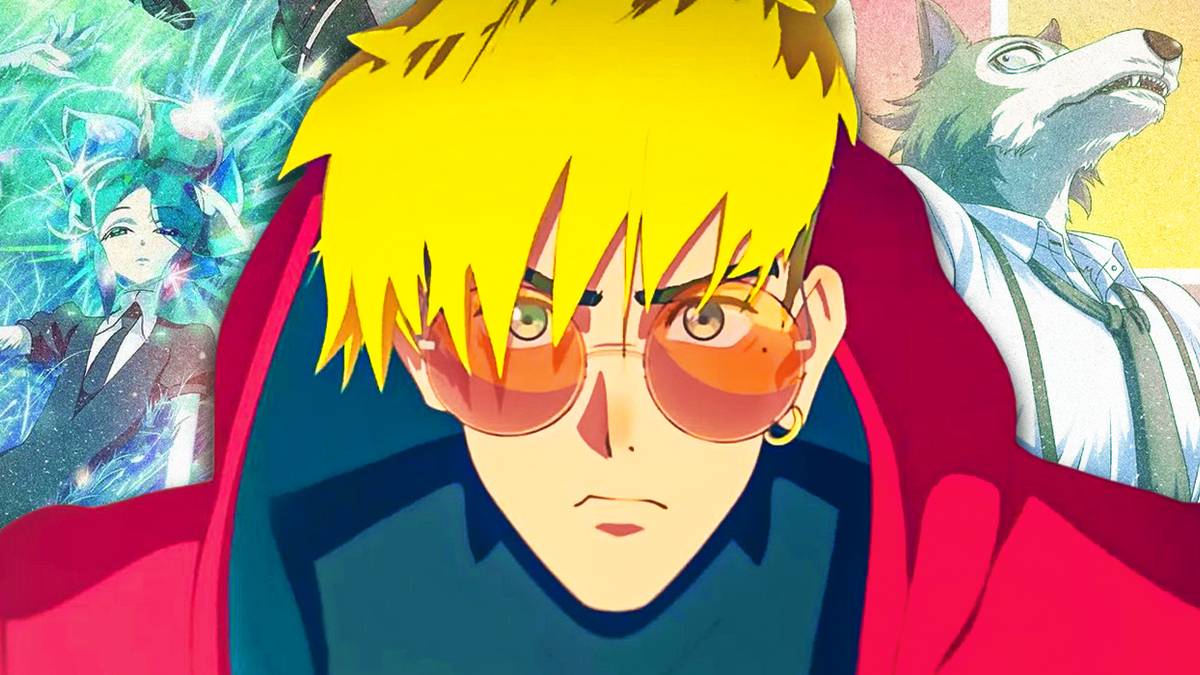
There are endless reasons that anime has become such a universally beloved storytelling medium, yet it’s a visual medium, first and foremost. An anime can have unforgettable characters, a brilliant story, and heightened action sequences, but none of that means anything if the series looks subpar. There’s tremendous pressure on anime studios to bring projects to life with strong visuals that do their stories justice. At the same time, there’s no one set style for anime, which leads to diverse visuals and animation.
Over time, the advent of evolving technology has led to the introduction of CGI elements into anime, either in a small capacity or as the central style. Many anime fans have pushed back against CGI anime and view it as a step backwards from the traditional visuals that initially made them fall in love with the medium. However, the presence of CGI in anime isn’t inherently problematic and there are even some series that get the most out of this visual style and use it to better express their themes.
Studio Orange’s Expressive CGI Does Land Of The Lustrous’ Gems Justice
Founded in 2004, Studio Orange has become the leading name in CG anime productions for the past two decades. Studio Orange has continually proven their skills by putting their stamp on big franchises, but Land of the Lustrous is one of their most impressive productions and an anime that elegantly justifies its use of CG elements. Land of the Lustrous is set in a world in which an immortal race of gem people are hunted by a predatory race known as the Lunarians.
Phos, a weak and fragile gem who is determined to preserve her people’s history and future, makes a stand against the Lunarians. CGI is a great way to illustrate this surreal world’s gem-based infrastructure. CG elements help these characters literally shine. Land of the Lustrous also uses its distinct visual style to produce exaggerated action and destructive physics for these gem characters.
Lupin III: The First Gives The Iconic Gentleman Thief A Successful CG Makeover
Monkey Punch’s Lupin III has a legacy that’s still going strong after six decades, with hundreds of hours of entertainment between its different series, OVAs, movies, specials, and more. Lupin III has even had the opportunity to crossover with other beloved anime franchises like Detective Conan and Cat’s Eye. 2019’s Lupin III: The First was initially met with skeptical reservations due to the film’s use of 3DCG visuals, a first for the franchise.
TMS Entertainment teamed up with the CGI animation studio, Marza Animation Planet, to successfully translate Lupin’s slapstick shenanigans and globe-trotting espionage to CGI. It would be easy for Lupin III: The First to fall flat and be deemed a fascinating misfire. However, the movie actually faithfully captures the anime’s madcap energy and Lupin’s exaggerated expressions. Lupin III: The First tells a fairly by-the-book story by Lupin III standards. That being said, the movie left audiences ready for future 3DCG Lupin III productions.
Beastars Is A Bona Fide Hit That’s Set In A Suspenseful World Of Segregated Animals


Beastars tells a story that’s both familiar and fantastical. Set in a world where anthropomorphic animals are the norm, a societal divide exists between herbivores and carnivores. Amidst this bias and hatred is the start of a tale of star-crossed lovers who seek to rise above these prejudices, all while a complex carnivore conspiracy unfolds. Beastars is like anime’s version of Zootopia and it’s found an audience who are just as big and passionate.
Studio Orange’s signature 3DCG style brings life to this unique world. Beastars‘ animation is so fluid and expressive that it makes a strong case for the advantages of CGI in anime. Beastars has become one of Studio Orange’s standout series, which has afforded them the luxury of releasing the final season on its own terms, rather than rushing towards a predetermined deadline.
Part 1 of Beastars’ final season aired in 2024, with Part 2 expected to finally be released in 2026. This additional wait has many fans hopeful that Beastars’ final episodes will be especially stunning and feature unprecedented visuals.


Beastars
- Release Date
-
October 10, 2019
- Network
-
Fuji TV, Netflix
-

Sayaka Senbongi
Radio DJ (voice)
-
Chikahiro Kobayashi
Legoshi (voice)



Dorohedoro’s Strange World Uses CGI To Come Alive
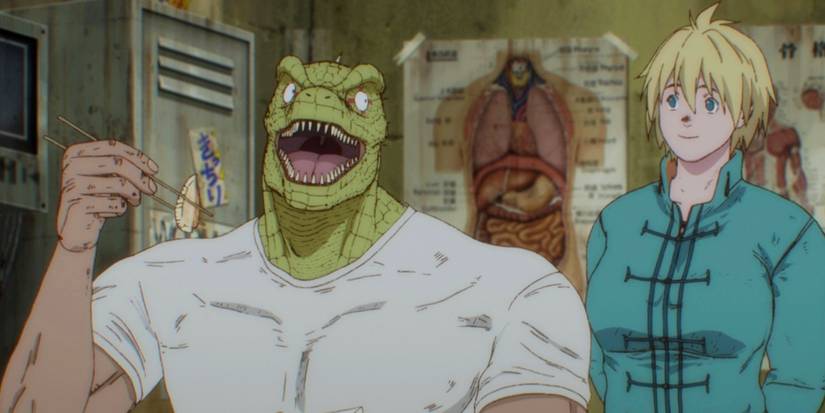
Dorohedoro is such an infinitely unique series that’s never lacking in ambition. The series is set in an absurdist, violent world that feels like some desolate Star Wars planet. Caiman, Dorohedoro‘s protagonist, is a reptilian-headed monstrosity who is in search of recovering his lost memories. Dorohedoro is rich in magic, monsters, murderers, and everything in between.
Dorohedoro‘s world is so strange that the anime’s CG-heavy aesthetic makes a lot of sense. It’s yet another element that adds to everything’s unnerving nature. Dorohedoro fans had pretty much given up hope on a second anime season, considering that the first season’s 12 episodes aired all the way back in 2020. However, MAPPA recently surprised audiences with the announcement that a second season will arrive in 2026.


Dorohedoro
- Release Date
-
2020 – 2025-00-00
Trigun Stampede Uses CGI To Give The Beloved ‘90s Series A Radical Reimagining
Trigun is a sci-fi/action/western hybrid that’s deeply emblematic of the ’90s. Its guilt-ridden gunslinger, Vash the Stampede, is an anime staple and a character who is likely to forever fill convention centers as cosplay. Trigun received a cinematic follow-up in 2010, but it’d be close to 15 years later for another proper series. 2023’s Trigun Stampede is another Studio Orange venture that leans into its reputation and Trigun‘s legacy in order to do something very different with the property.
Trigun Stampede isn’t a sequel to the original Trigun or even a more faithful adaptation of Yasuhiro Nightow’s manga. Instead, Trigun Stampede boldly reimagines the franchise, taking major liberties while retaining the core ethos, in order to do something different with the property. Even Vash’s iconic look undergoes a serious overhaul. 3DCG isn’t an aesthetic that seems like it would be a good fit for Trigun‘s world, yet Studio Orange rises to the occasion here.
This unique style helps Trigun Stampede establish its own identity and not eternally live in its predecessor’s shadow. There are some truly gorgeous visuals and gunplay sequences that should leave any seasoned Trigun fan pleased. Studio Orange is set to conclude their new Trigun story in 2026 with Trigun Stargaze.

Trigun Stampede
- Release Date
-
2023 – 2023-00-00
Hi Score Girl Uses CG To Celebrate A Nostalgic Decade Of Gaming

Hi Score Girl‘s 3DCG aesthetic feels like such a natural fit for this love letter to ’90s gaming, which makes it all the more surprising that this visual style wasn’t originally part of the plan. The CG route for Hi Score Girl came later into production, but it’s a decision that would ultimately aid the anime and make it feel more memorable in the process. Hi Score Girl is a tender, touching slice-of-life retro throwback where two introverted individuals find a sense of connection in their shared love for video games.
Hi Score Girl is a love letter to ’90s gaming, but also the decade’s classic rom-coms. The CG visuals lead to Hi Score Girl occasionally being presented in 60fps, rather than the standard 24fps, due to the anime’s use of video game footage. The end result blurs the lines between fantasy and reality, which is quite appropriate considering that Haruo and Akira often feel more at peace in video games than the real world.
Promare Adds 3D Elements To Its 2D World To Create A Distinctly Different Baseline


Studio TRIGGER has become one of the biggest and most beloved studios in the anime industry. TRIGGER had been wowing audiences with their television series, but 2019’s Promare marked their first feature film endeavor. TRIGGER decided to go for broke with their first movie and made sure that Promare‘s visuals adhered to even higher standards than their best series. Promare is set in a fiery world where spontaneous combustion and pyrokinetic abilities plague societies, while an intrepid team of heightened firefighters help keep the peace.
TRIGGER turned to Sanzigen Inc. for the film’s CGI, which is effortlessly interwoven into the 2D visuals. The end result is a more surreal visual style that has a geometric quality to certain elements. This effect adds an extra layer to action sequences, fire, and explosions, which are par for the course in Promare. Promare would lack the same impact without its implementation of 3DCG, even if it’s used for subtle accenting instead of stealing the show.


Promare
- Release Date
-
May 15, 2019
- Runtime
-
111 Minutes
-
Kenichi Matsuyama
Galo Thymos
-
-
Ayane Sakura
Aina Ardebit
-
Hiroyuki Yoshino
Remi Puguna
Children Of The Sea Beautifully Blends 3D & 2D Animation For Its Underwater Worlds

2019’s Children of the Sea is a serene, experimental anime movie that slipped through the cracks for many during the COVID-19 pandemic. Children of the Sea crafts an expressive story about a girl, Ruka, who finds herself drawn to aquatic life, especially after she meets two strange boys who seem to come from the sea. Children of the Sea gets a little lost in its grander mystery, but it’s a film that urges its audience to get lost in its vibes and the beauty of the ocean.
Children of the Sea‘s unique visual style is the best thing about the movie and Studio 4°C turns to a creative approach where CGI and 3D animation are seamlessly blended together with 2D visuals. The two contrasting looks work together to create a vibrant look that almost feels magical in nature. Plenty of anime will fully embrace CGI, but Children of the Sea is an important reminder of how it can be used to actually complement traditional animation.
Gantz: 0 Heightens Its Apocalyptic Horrors Through Realistic CGI Visuals

Hiroya Oku’s Gantz is a dark and disturbing mash-up of death game theatrics and a harrowing alien apocalypse. Gantz has taken on many different forms between manga, anime, live-action productions, and various expansions of its deep universe. 2016’s Gantz: 0 is a cinematic adaptation of the manga’s Osaka Arc, which prioritizes cruel carnage between otherworldly monsters and deadly weaponry.
Gantz: 0 was produced by Digital Frontier, a CG studio with impressive motion capture technology at their disposal. This results in an ultra-realistic look to Gantz: 0‘s animation that puts it somewhere between anime and live-action. This look isn’t for everyone, but it adds an extra creepy quality to Gantz‘s monsters. There are certain frames where it looks like these disturbing deities have come to life and entered the real world.

Gantz
- Release Date
-
2004 – 2004
- Network
-
Fuji TV, AT-X
-
Daisuke Namikawa
Kei Kurono (voice)
-
Hitomi Nabatame
Kei Kishimoto (voice)


Mamoru Hosoda’s Belle Turns To CGI To Flesh Out Its Digital Domain
Mamoru Hosoda is one of anime’s most exciting filmmakers, responsible for totemic titles like Wolf Children, Mirai, and The Boy and the Beast. 2021’s Belle features a heavy influx of CGI elements, yet it uses its digital environment as a way to lean into this heightened artifice. Hosoda’s Belle is a creative reimagining of the original Beauty and the Beast fairytale that uses the concept of digital avatars and online worlds as the subject of its characters’ transformations.
Suzu is an introverted high school student who can fully come out of her shell and express herself when she logs onto the digital world of “U,” where she becomes an acclaimed pop idol named Belle. Belle turns to CGI to craft its impossible online world and the surreal individuals who populate the domain. Belle isn’t Hosoda’s strongest film, but the visuals are undeniable and objectively stronger by incorporating 3D elements.

Belle
- Release Date
-
July 16, 2021
- Runtime
-
121 minutes
-
Kaho Nakamura
Suzu Naito / Belle (voice)
-
Ryo Narita
Shinobu Hisatake (voice)
Source link
-

-
-

-

-


