When a studio, director, and crew set out on a new production, all their hopes are that things will go as smoothly as possible. Sometimes they’re blessed with a frictionless shoot, where everyone gets along and works well together, and there are no major external factors that throw a wrench in the proceedings. But others are not so lucky. There are tensions on set, or it rains every day, or war breaks out while they’re on a location shoot.
And sometimes, the unthinkable happens: One of the lead actors dies in the middle of production. Not only is everyone involved dealing with a tragedy that affects them on a personal level, but they’re stuck in the impossible position of trying to carry on making a film. But perhaps the most surprising thing is that, in so many cases, they’ve found a way to finish production, whether by using body doubles, CGI, or inventive casting choices. The following are 12 films that lost a major player, but still managed to make it to theaters.
Giant

Although James Dean is regarded as an icon of 1950s cinema, he only starred in three feature films — and two of those were released after his untimely death in a car accident. “Rebel Without a Cause” had finished production before Dean died, but “Giant” wasn’t quite done when director George Stevens received the news that Dean had sustained fatal injuries in a crash at the age of 24. Dean had completed filming by that point — luckily, as we get to see his impressive performance in the Texan epic with minimal alterations — but there was a problem that became clear during the post-production period.
Several of Dean’s lines were found to be inaudible, and while ordinarily post-production allows actors to come in to re-record dialogue in just such occasions, for obvious reasons, that solution proved to be impossible. Instead, Stevens hired Nick Adams — who also appeared alongside Dean in “Rebel Without a Cause” as Chick, a member of Buzz’s antagonistic gang — to dub some of Dean’s dialogue for the finished production.
Brainstorm
Like her “Rebel Without a Cause” co-star James Dean, Natalie Wood also died young and under tragic circumstances. In 1981, she was in the middle of filming the science fiction movie “Brainstorm,” about a scientific breakthrough that allows you to record and re-experience sensory moments through a brain-computer link-up. But while on a break during production, she went on a weekend yacht trip with her husband Robert Wagner, her “Brainstorm” co-star Christopher Walken, and the ship’s captain. At some point in the night, she went overboard and was found dead in the water — no one has been able to adequately explain the accident, although allegations since then have been made suggesting foul play.
With the news of her sudden death, production on “Brainstorm” came to a standstill. Although the majority of Wood’s scenes had been filmed by this point, MGM seemed reluctant to move forward with the project. Eventually — and after other studios expressed their interest in buying the film out from under them — production continued, with a few minor scenes either cut or rewritten to exclude Wood.
All Dogs Go to Heaven
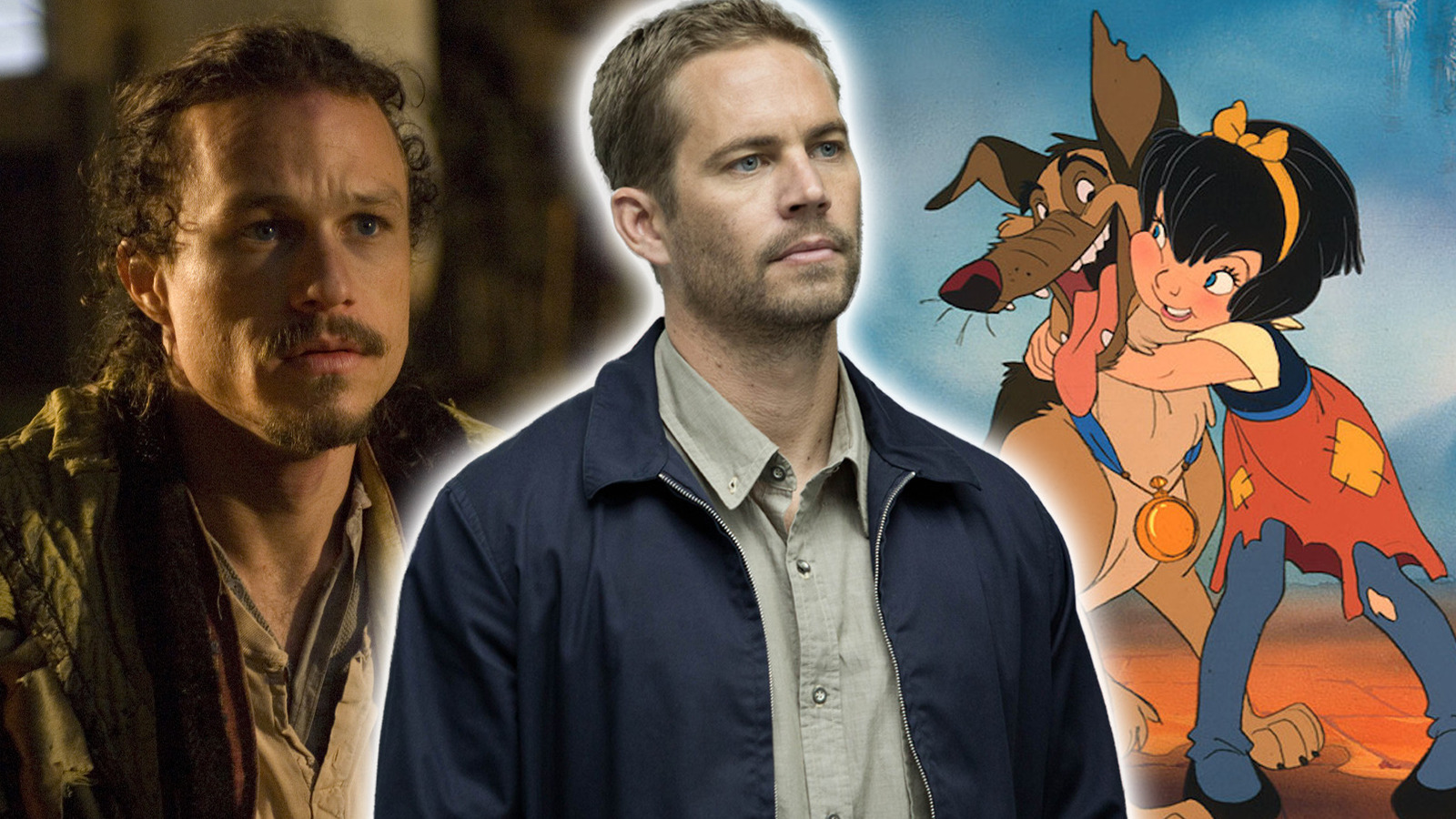
Judith Barsi, who died when she was just 11 years old, is the unfortunate heart of one of the most tragic stories in Hollywood history. A talented child actor, she began her career at the age of six, appearing in shows like “Cheers,” “St. Elsewhere,” “The Twilight Zone,” and “Punky Brewster.” But she’s best known for her work as a voice actor, playing Ducky in “The Land Before Time” and Anne-Marie in “All Dogs Go to Heaven,” both of which were released after her death. On July 25, 1988, Barsi was murdered alongside her mother by her father, who died by suicide shortly thereafter.
By the time of her death, Barsi had recorded all of her lines for “All Dogs Go to Heaven,” but since it’s an animated film, production was far from over. The team of animators had to use her recorded dialogue to inform their artwork, a process Don Bluth described as incredibly painful, telling Meridian Magazine in 2012 that “we couldn’t listen to the voice. Everybody would start tearing up … so it stopped everything for a while.”
Furious 7
For several years, Paul Walker was one of the chief stars of the “Fast and the Furious” franchise, all the way back to its humble origins when they were just racing cars and stealing electronics instead of saving the world. He played Brian O’Connor in six of the first seven “Fast and Furious” films, including “Furious 7.” But while he was in the middle of production on the film, he died in a car crash when his friend Roger Rodas lost control of his Porsche, slamming them into a concrete lamppost and killing them both. In the wake of this unexpected tragedy, work on “Furious 7” went on hiatus.
Walker had completed the majority of his scenes at the time of his death, but there were still some key moments that needed to be filmed. To finish the movie, director James Wan used his brothers Caleb and Cody as stand-ins for the late actor, along with some visual effects from Weta Digital. Although the release of the film was delayed to accommodate these changes — and, presumably, to discuss with Walker’s family the most respectful way of honoring him as they completed the project — it eventually came out in 2015 and earned over $1.5 billion at the box office, becoming the fourth-highest-grossing film of all time.
The Imaginarium of Doctor Parnassus
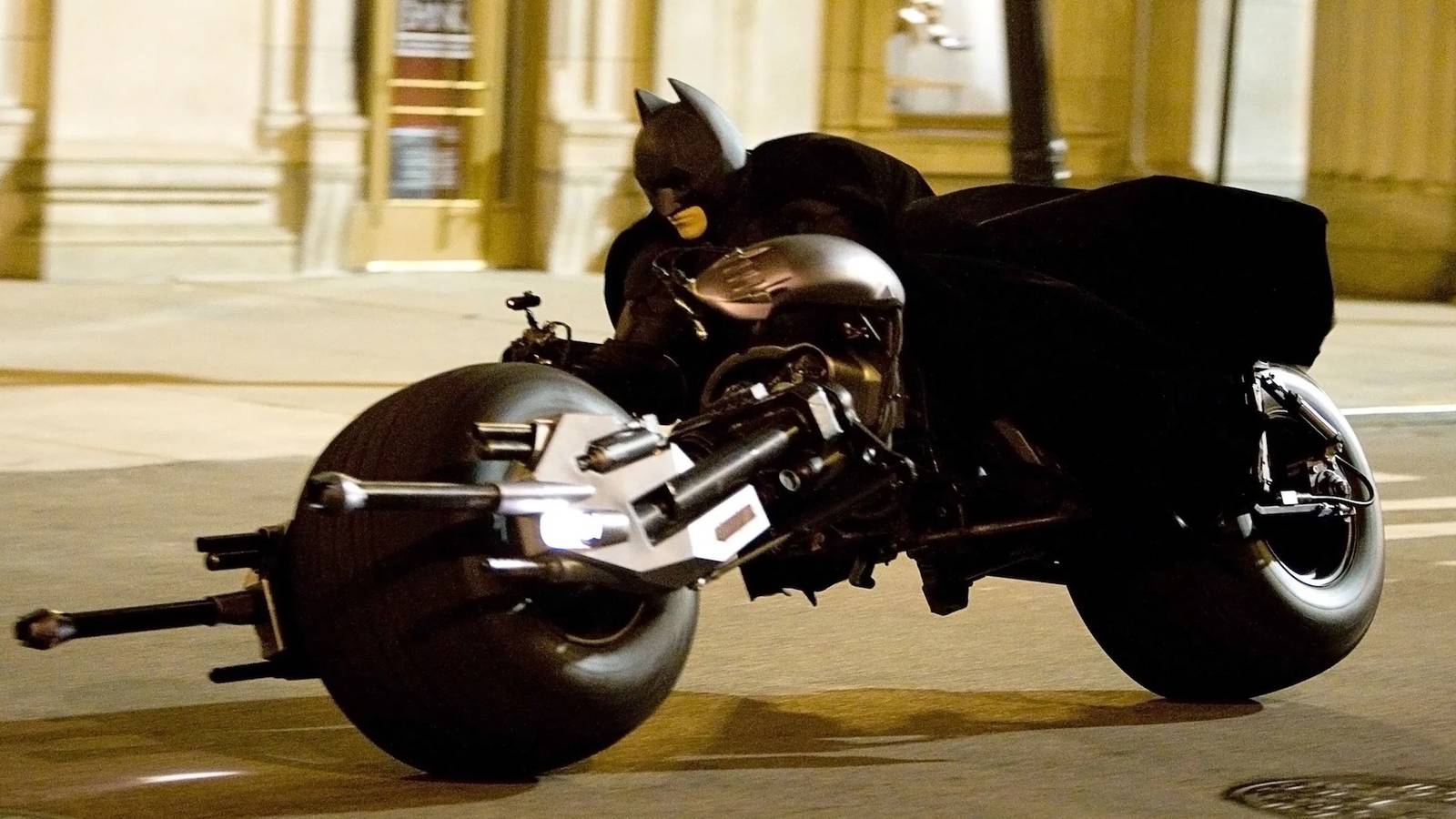
After he completed filming his performance as the Joker in Christopher Nolan’s “The Dark Knight,” Heath Ledger was poised to hit the top of the Hollywood heap. So it sent shockwaves through the entertainment community when he died at the age of just 28 in January 2008 — half a year before the release of “The Dark Knight” — from an accidental overdose of prescription drugs. At the time of his sudden death, he was in the middle of production on “The Imaginarium of Doctor Parnassus,” a fantasy film directed by Terry Gilliam.
Unlike many films on this list, which were almost completed when they lost their star under tragic circumstances, “The Imaginarium of Doctor Parnassus” was only about a third of the way through production, leaving Gilliam in a quandary of how to replace Ledger. In the end, he opted for a casting change that would honor Ledger’s performance while staying true to the spirit of the film. Since the character enters different dreamscapes, he brought in Johnny Depp, Jude Law, and Colin Farrell — the latter two of whom having been friends of Ledger’s, while Depp was a frequent Gilliam collaborator — to play various iterations of Doctor Parnassus, allowing the film to be completed with only minimal tweaks.
Shrek
Although nowadays it’s hard to imagine Shrek without his trademark Scottish accent, there was originally a very different approach to the lovable ogre. “Shrek” began development in the mid-1990s, and “Saturday Night Live” alum Chris Farley was tapped to play the lead role. The film was in production — and Farley had recorded the majority of his character’s dialogue — when the actor passed away in 1997 from an overdose of cocaine and heroin at the age of 33. “Shrek” ended up recasting the role in the wake of his death, bringing on fellow “Saturday Night Live” actor Mike Myers, who reinterpreted Shrek as a Scottish ogre.
Although it took the film in an entirely different direction, it ultimately proved to be a successful one. “Shrek” became a box office smash hit, generating three sequels and two spin-off films, with other projects currently in production. Still, we can’t help but imagine what the film might have looked like with comedy icon Chris Farley in the lead role.
Solomon and Sheba
When Tyrone Power was 17 years old, his father, Tyrone Power Sr., died in his arms of a heart attack while in the middle of production for “The Miracle Man” in 1931. Sadly, 27 years later, Power himself would suffer a similar fate, this time on the set of “Solomon and Sheba” in 1958. The actor was just 44 when he began to have symptoms of a heart attack in the middle of filming a duel, and he died shortly thereafter. Aside from the shock of losing one of Hollywood’s most beloved leading men, Power’s death left “Solomon and Sheba” in quite a production pickle.
They had filmed well over half of the film at this point, and according to contemporary news reports, many solutions were floated, from casting an older actor to play Solomon during the second half of the film (and thereby reducing the number of scenes that would need to be reshot) to scrapping it entirely. In the end, they decided to recast Tyrone Power with his close friend, Yul Bryner — although you can still see Power in some of the battle scenes.
Poltergeist III
“Poltergeist” was one of the creepiest horror films of the 1980s, and much of its success is thanks to the unsettling performance of Heather O’Rourke, the Freeling family’s youngest daughter Carol Anne. But despite strong turns from the cast, there was something about the production that seemed … well, cursed. Just months after the release of “Poltergeist” in 1982, Dominique Dunne, who played the eldest Freeling daughter, was murdered by her boyfriend at the age of 22, sending shockwaves through Hollywood. But that was far from the only tragic death associated with the “Poltergeist” franchise.
Years later, while in the middle of production on “Poltergeist III,” 12-year-old O’Rourke was admitted to the hospital, where she experienced cardiac arrest, and it quickly became evident that she needed emergency surgery to repair a congenital intestinal issue. Although she survived the surgery, she had another cardiac arrest, which ultimately ended her life. O’Rourke’s death was a devastating shock to everyone involved — director Gary Sherman said in a 2000 interview with JoBlo.com that he hadn’t even wanted to complete the film. Ultimately, the studio intervened. “They basically said, ‘Look, either you finish this or we’ll get somebody to finish it for you,'” Sherman explained. They ended up giving the film a new ending, complete with a body double to replace O’Rourke.
Saratoga
These days, Jean Harlow isn’t much of a household name, but trust us when we say that she walked so Marilyn Monroe could run (over subway grates in Manhattan). A blonde bombshell of the 1930s, she captivated audiences and garnered plenty of controversy at the height of her stardom. But what would become her final film — “Saratoga,” with her frequent co-star Clark Gable — seemed doomed from the very start.
Production initially had to be delayed by a month and a half after Harlow developed sepsis following dental surgery. A month into the film’s shoot, she began to experience symptoms of nausea, fatigue, stomach pains, and fluid retention. The following day, she was taken to the hospital, where it soon became clear that her largely non-descript symptoms masked a devastating diagnosis: At the age of just 26, Harlow was in end-stage kidney failure. By the next morning, she was dead.
So popular was Harlow that when the studio considered replacing her in “Saratoga,” they received enough public backlash for them to reverse course, instead using body doubles, dubbing, and rewrites to complete production. The result was a hit. In fact, “Saratoga,” released only two months after her death, was the biggest financial success of Harlow’s career.
Avalanche Express
For the latter part of his career, the hard-living Robert Shaw was, to be honest, never the most predictable actor to have on set. He was the kind of guy who would be black-out drunk one minute and put in an earth-shattering performance the next. Richard Dreyfuss certainly learned that during “Jaws.” But no one was expecting what happened during the production of “Avalanche Express,” a thriller about a Soviet army elite defecting to the West. Not only did Robert Shaw die before the film was finished, but the director, Mark Robson, did as well.
After 65 days of shooting, Robson suffered a fatal heart attack, leaving the film to be completed by Monte Hellman, who had recently taken over directing duties for “The Greatest” after its original director passed away. But just a couple of months later, “Avalanche Express” faced another massive setback. On August 28, 1978, Robert Shaw also died from a heart attack. His scenes were finished, but Hellman had to bring in another actor, Robert Rietti, to dub all of his dialogue after the decision was made to have the Russian characters (of which Shaw was one) would speak Russian rather than broken English. Despite the complicated and often tragic production process, “Avalanche Express” made it to theaters the following year.
Once Upon a Time in the West
Al Mulock was a familiar figure in Sergio Leone’s spaghetti Westerns — in “The Good, the Bad, and the Ugly,” he played the one-armed bounty hunter, while he’s in the role of Knuckles in “Once Upon a Time in the West.” But this latter film would turn out to be his last performance, as he died by suicide while on a location shoot in Spain.
Although the initial fall from his hotel window didn’t kill him, it seems likely that he punctured his lung, a medical emergency that quickly became dire as he was driven to the hospital on bumpy, rural roads. One story (possibly apocryphal) has Sergio Leone demanding that they get his cowboy costume back before he was taken to the hospital, so they could shoot some of the remaining scenes with a different actor. We don’t know if that’s true, but it certainly sounds like Leone.
Dark Blood
During the 1980s and early 1990s, River Phoenix had developed a reputation as one of the most promising young actors of his generation. The only question was what incredible performances he would gift audiences over the course of what, we presumed, would be a long and prominent career in Hollywood. Unfortunately, we would never find out. On Halloween 1993, the 23-year-old Phoenix overdosed outside The Viper Room, a club in West Hollywood, and attempts to resuscitate him were unsuccessful.
When Phoenix passed away, he had been in the middle of filming the neo-Western thriller “Dark Blood,” where he took on the role of the villainous Boy. Upon his death, the decision was made to shelve the uncompleted movie, and for a long time, that was the end of the story. But nearly 20 years later, director George Sluizer decided to dust off the footage he’d had in storage, and take another crack at it. The result is the version of “Dark Blood” that played at festivals in 2012, with a handful of scenes that were unfinished at the time of Phoenix’s death edited into the finished product with voiceover narration from Sluizer.
Source link
-

-

-
-

-