The 1970s are usually considered the peak of New Hollywood, and thus, probably the best and most prolific time to be a filmmaker. Away from the control of studios, with the Hays Code long dead, and with an audience that was increasingly ready to embrace darker, more revolutionary narratives, the filmmakers of the ’70s delivered auteur-driven tales that reflected the cultural mood. It’s during this decade that we get some of cinema’s most ambitious movies — The Godfather, Star Wars, Apocalypse Now, A Clockwork Orange — many of which have become foundational to understanding modern cinema.
In such an important decade for cinema, no year stands out more than 1975. As the mid-point of these ten years, 1975 saw the release of a few pictures that have become certified classics of the medium. The movies on this list spawned franchises, garnered acclaim, influenced trends, and inspired future filmmakers; a few even predicted the future landscape of entertainment and politics. They are so seminal that they have become synonymous with filmmaking itself, representing the peak of auteur cinema and leaving a rich legacy that few other movies of the decade have matched.
‘The Story of Adèle H.’
Isabelle Adjani received her first Oscar nomination for her towering work in the historical drama The Story of Adèle H. Based on the diaries of Adèle Hugo, the second daughter of iconic author Victor Hugo, the film chronicles how her unhealthy and obsessive attachment to a military officer leads to her eventual downfall. At the time of her nomination, Adjani was the youngest Best Actress nominee ever, at just twenty years old.
Director François Truffaut pulls a stunning trick here. He recognizes that Adèle’s obsession was unhealthy and that she may have been mentally ill. Yet, her determination, her absolutist approach to life and love, are so definitive that they become worthy of admiration. We do not condone or even empathize with her, but we can’t help but acknowledge her as a figure to reckon with. For her part, Adjani is all in on the tragedy of this tale, embodying Adèle’s single-mindedness with a commitment that’s quietly furious. All these years later, The Story of Adèle H. remains a piercing depiction of the horrors of misplaced love and a haunting tale of passion for the sake of it.
‘Three Days of the Condor’


The ’70s were a golden decade for paranoid movies, producing most of the greatest classics in this peculiar subgenre. One of the best is Sydney Pollack‘s Three Days of the Condor, starring two of New Hollywood’s defining stars, Robert Redford and Faye Dunaway. The film follows CIA codebreaker Joe Turner (Redford), who returns to his office to find everyone has been murdered, and the CIA higher-ups are somehow involved, launching him into a conspiracy where he must fight to stay alive.
Three Days of the Condor is bleak, and not in the “this ends badly” kind of way, but in the “nothing you do matters if the higher powers don’t want it to matter.” Redford is the perfect everyman in a one-man battle against a shadowy force, while Cliff Robertson and Max von Sydow are equally brilliant in their antagonistic roles. The film fits with the disenchanted, paranoid mood of the mid-1970s, a time when people were tired of being lied to and manipulated, yet couldn’t do much other than hope someone would hold these corrupt institutions accountable. The ending is a sobering reminder that sometimes, it takes more than a David to bring down a Goliath.
‘The Rocky Horror Picture Show’

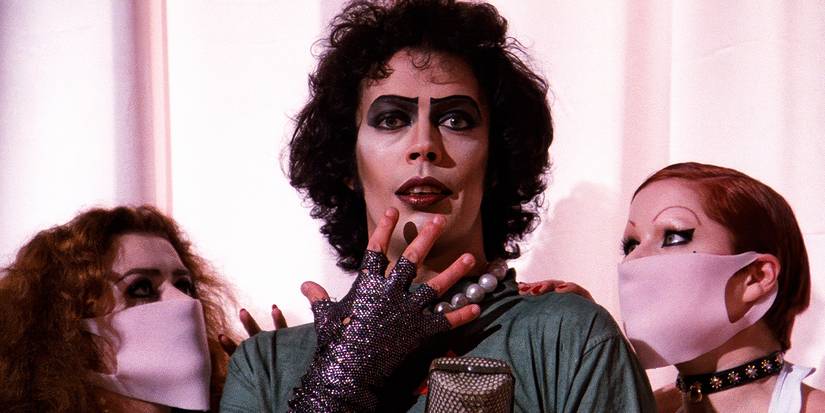
The Rocky Horror Picture Show was the original cult classic and the most iconic midnight movie ever made. Based on the Broadway sensation The Rocky Horror Show, the film centers on the meek couple of Janet (Susan Sarandon) and Brad (Barry Bostwick), whose car breaks down, forcing them to seek refuge in the castle of Dr. Frank-N-Furter (Tim Curry), a “sweet transvestite from Transsexual, Transylvania.”
The film was a genuine game-changer, carving a small but devoted niche that slowly turned it into a cultural sensation. Rocky Horror came to embody the cultural shift of the late 1970s, as society moved into a more open-minded phase and disco culture rose into the mainstream. Now, it’s widely considered a pillar of LGBTQ+ entertainment, a subversive, disruptive, and tantalizing phenomenon that revolutionized the way we look at pop culture and the musical genre overall. The songs are all peculiar bangers, eschewing typical showtune construction and sensibilities in favor of a more provocative approach that fits perfectly with its larger themes of change and norm deconstruction.
‘Dog Day Afternoon’

Al Pacino dominated the 1970s. Starting with the masterpiece that was The Godfather and ending with the underrated legal drama …And Justice for All, Pacino was arguably the poster child for New Hollywood. In 1975, he delivered what’s arguably his finest turn, as deranged and desperate criminal Sonny Wortzik in Sidney Lumet‘s crime biopic Dog Day Afternoon. The film dramatizes the 1972 robbery and subsequent hostage situation at Chase Manhattan in Brooklyn.
Pacino goes for broke here, with a performance that’s equal parts unhinged and heartbreaking. Much like his work, the film itself walks a fine line between anxiety and absurdity, basking in the premise’s wildness yet grounding it in a story deeply rooted in anti-authoritarian sentiment. Dog Day Afternoon is exhilarating but stressful, a movie that makes every second count, building up the tension but keeping the stakes incredibly human. Few crime movies can so effectively draw out their characters, and even fewer can make antiheroes seem so compelling and relatable. Today, Dog Day Afternoon remains a landmark of the crime genre and a beacon of anti-establishment cinema.
‘One Flew Over the Cuckoo’s Nest’

Miloš Forman‘s psychological drama One Flew Over the Cuckoo’s Nest is one of New Hollywood’s most emblematic pictures. In his Oscar-winning role, Jack Nicholson stars as Randle McMurphy, a man who feigns mental illness to avoid jail time for statutory rape. Instead, he’s sent to a mental institution, where he clashes with the sinister nurse Mildred Ratched (Louise Fletcher), who holds complete control over the place.
To call this movie “anti-authoritarian” would be an understatement. A furious critique of institutions’ cruelty and their inability to actually serve their purpose, the film is a harsh depiction of confinement, repression, and conformity, taking particular issue with the dehumanization that occurs in mental facilities. Nurse Ratched has become a monolith for this specific idea of oppression, representing dominance deprived of sympathy or humanity and making McMurphy’s rebellion against her take a universal meaning. One Flew Over the Cuckoo’s Nest became one of only three movies to win the Big Five Oscars for Best Picture, Director, Actor, Actress, and Screenplay.
‘Barry Lyndon’
Some have called it Kubrick‘s coldest movie, while others consider it his most underappreciated masterpiece. The fact remains that Barry Lyndon is a masterpiece of ’70s filmmaking and one of the medium’s most unforgiving character studies. Ryan O’Neal stars as Redmond Barry, a conniving Irish social climber who manipulates, lies, and cheats his way into the aristocracy in 18th-century England.
Visually, few movies compare to Barry Lyndon. The striking, Oscar-winning cinematography by John Alcott makes every frame look like a painting brought to life. Famously, the film used both candle and natural lightning to capture the atmosphere of the time, resulting in a haunting picture that is as immersive as it is eerie. Beyond its immaculate visual approach, the film is an unforgiving exercise in vapidness, a tale of a fleeting, feeble life and the man who so carelessly throws it away. Like many of Kubrick’s masterpieces, Barry Lyndon is demanding and challenging, provoking its audience to engage with it. Yet, it casts a spell so strong that it’s almost impossible to resist it, despite its best efforts.
‘Nashville’

Robert Altman directed many bangers throughout his career, but his greatest achievement is perhaps Nashville, an ode to Americana that is as astute today as it was in 1975. A large ensemble of Altman usuals and newcomers gathers here to paint a picture of the Nashville country and gospel music scene. It takes place in the days leading up to a concert gala endorsing an independent candidate for the presidency.
Here, Altman uses the country music scene as a microcosm for American politics at large, delivering a film that feels both profoundly of its time and surprisingly relevant in today’s divided and incendiary landscape. It’s also a study of celebrity and obsession, making a powerful statement on culture’s unhealthy attachment to the entertainment industry that seems all the more poignant today, when parasocial relationships have taken over the internet. The fact that Altman achieves it all through an interconnected story and a seemingly endless parade of characters is nothing short of impressive. Nashville is Americana distilled, both a love letter and a critique of the values that make the U.S. the country it is today.
‘Jaws’

The godfather of the blockbuster and the original summer movie event, Jaws is arguably the most important movie for modern filmmaking. Steven Spielberg‘s adaptation of Peter Benchley‘s 1974 novel broke records and became a cultural sensation, launching Spielberg’s career and forever altering cinema. The plot follows a marine biologist, a shark hunter, and a police chief who team up to kill a great white shark terrorizing a beach resort.
Beyond its well-known strengths — Spielberg’s direction, the performances from Roy Scheider, Richard Dreyfuss, and Robert Shaw, the now-iconic score from John Williams — Jaws is a triumph of ingenuity and resourcefulness. Limited by the budget and a malfunctioning mechanical shark, Spielberg improvised, keeping the shark off-camera most of the time and instead allowing its presence to linger. In the process, the director redefined tension for the big screen, creating one of cinema’s all-time greatest monsters and forever altering audiences’ perception of the thriller genre. Even today, Jaws is still effective, a true movie experience the likes of which we just don’t see anymore.
‘Jeanne Dielman, 23, Quai du Commerce, 1080 Bruxelles’

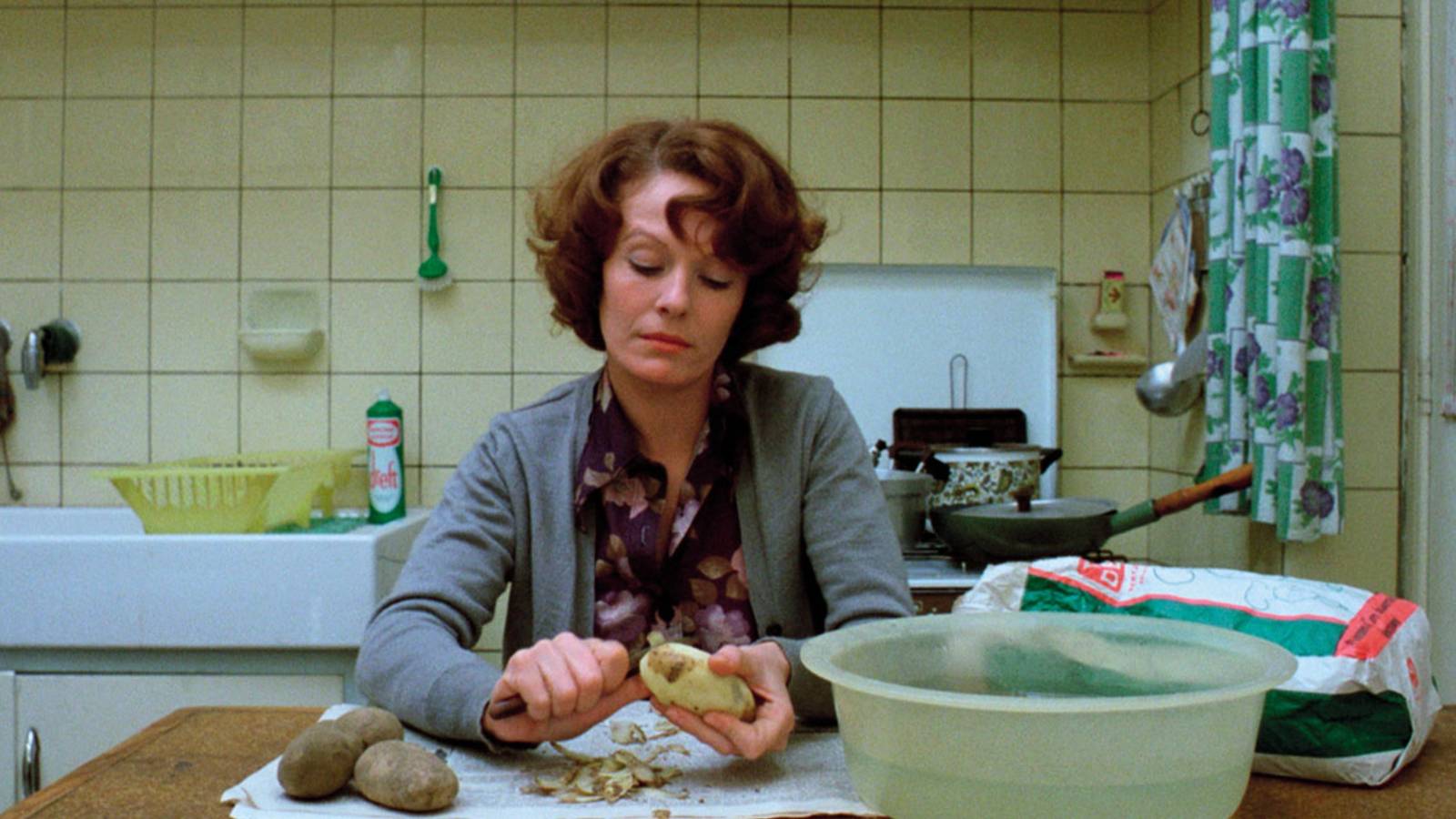
Quite possibly one of the most misunderstood movies in cinematic history, Chantal Akerman‘s Jeanne Dielman, 23, Quai du Commerce, 1080 Bruxelles is a gem of introspective filmmaking. Delphine Seyrig stars as Jeanne Dielman, a housewife who spends her days doing chores, caring for her teenage son, and performing sex work in the afternoons. After small disruptions begin to occur, Jeanne sees her life slowly spin out of control.
A classic of slow-burn cinema that’s more about mood than about plot, Jeanne Dielman feels like a subtle revolution. Anchored by a stunning turn from Seyrig and Akerman’s firm hand behind the camera, the film is cinema’s slowest, most introspective character study, a reflection on both the trappings and the quiet dignity that come with domesticity. This slice-of-life portrayal of near-ritualistic discipline slowly metastasizing into a need for dominance is rich in food for thought for all those who allow themselves to get lost in its stillness. Over fifty years later, Jeanne Dielman keeps whispering to us, perhaps now more than ever.
Source link
-

-

-
-

-