The Marvel Cinematic Universe has maintained its position as a global cultural juggernaut, effectively dominating the superhero genre with an unprecedented volume of interconnected projects. While the past years saw Marvel Studios struggle with critical reception and box office returns, the franchise is still making a comeback, as evidenced by the universal acclaim of Wonder Man and the high anticipation surrounding the upcoming second season of Daredevil: Born Again. This expansive calendar also includes the theatrical return of Peter Parker (Tom Holland) in Spider-Man: Brand New Day and the monumental assembly of heroes in Avengers: Doomsday. It’s no wonder that the sheer density of the current catalog often overshadows the experimental and frequently chaotic history of Marvel’s earlier cinematic efforts.
Before the turn of the century, the success of a Marvel property on the big screen was an anomaly rather than the standard. While the 1998 release of Blade, followed by X-Men and Sam Raimi’s Spider-Man, eventually established the modern superhero template, the preceding decades were filled with obscure projects that struggled to find an audience. These films often operated with minimal budgets and deviated significantly from the source material, resulting in productions that exist today primarily as curiosities for the most dedicated Marvel historians
5) The Fantastic Four
The 1994 iteration of The Fantastic Four exists as a legendary “ashcan” production, a term used for films created solely to preserve intellectual property rights without a genuine intention for public release. Produced by Bernd Eichinger and executive produced by Roger Corman for a meager budget of approximately $1 million, the project was intended to prevent the heroes’ film rights from reverting to Marvel. The cast, including Reed Richards (Alex Hyde-White) and Sue Storm (Rebecca Stab), reportedly remained unaware of the studio’s true motives, even participating in promotional tours before the film was abruptly shelved. This deception ensured that the production never reached theaters, despite the completion of a full-length feature that utilized practical effects to depict the cosmic powers of the titular team.
Despite its lack of an official release, The Fantastic Four eventually found a life through the underground bootleg circuit, becoming a cult phenomenon among collectors. The narrative follows the traditional origin story of the quartet, but the low-budget constraints are visible in every frame, from the rubbery prosthetic suit of Ben Grimm (Carl Ciarfalio) to the rudimentary CGI used for the Human Torch (Jay Underwood). Still, while it lacks the polish of modern adaptations, The Fantastic Four captures a certain campy earnestness that was lost in the more expensive reboots of 2005 and 2015.
4) Captain America

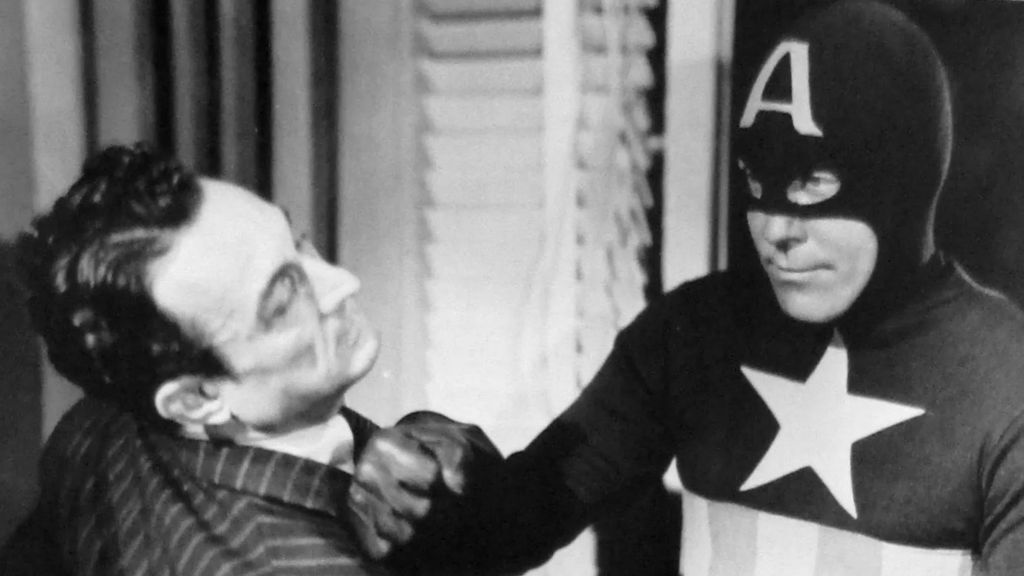
Long before Steve Rogers became a cornerstone of the MCU, the first cinematic appearance of the Star-Spangled Avenger occurred in the 1944 Captain America serial produced by Republic Pictures. This fifteen-chapter production utilized the hero to capitalize on the wartime fervor of the mid-1940s, yet it deviated so radically from the comic book lore that it is barely recognizable to modern fans. Instead of Steve Rogers, the protagonist is Grant Gardner (Dick Purcell), a District Attorney who dons the costume to battle a villain known as the Scarab (Lionel Atwill). Furthermore, the iconic circular shield is entirely absent from the production, replaced by a standard service revolver that the hero uses to shoot and kill criminals.
The production of Captain America suffered from significant creative friction, as Republic Pictures reportedly ignored many of the established traits of the character to fit the established formula of their action serials. This lack of fidelity resulted in a hero who felt more like a generic pulp detective than a super-soldier, lacking the serum-enhanced physical presence and moral clarity of the source material. While the serial was successful enough to warrant theatrical distribution, its legacy remains a bizarre footnote in Marvel’s history.
3) Generation X (1996)

In the mid-1990s, Marvel attempted to capitalize on the massive success of the X-Men animated series by producing a live-action television movie titled Generation X. Premiering on Fox in 1996, the film was designed as a pilot for a potential series focusing on the younger residents of the Xavier School for Gifted Youngsters. The narrative centers on Emma Frost (Finola Hughes) and Sean Cassidy (Jeremy Ratchford) as they mentor a new group of mutants, including a prominent role for Jubilee (Heather McComb). However, due to budgetary limitations, the producers could not include several popular characters from the comics, opting instead to create new, low-cost mutants like Buff (Suzanne Davis) and Refrax (Randall Slavin) to fill out the roster.
Generation X’s primary failing lay in its inability to translate the sophisticated themes of mutant prejudice into a compelling visual medium with a television budget. The result was a film that leaned heavily into the colorful, grunge-inspired aesthetics of the era, resulting in a tone that felt more like a teen drama than a superhero epic. Furthermore, the special effects were criticized for their poor quality, even by the standards of the mid-90s, which hindered the immersion required for a story about extraordinary abilities. Consequently, Fox declined to order a full series, leaving this project to fade into obscurity until the eventual success of the 2000 theatrical X-Men film rendered it an irrelevant relic of a pre-digital age.
2) Nick Fury: Agent of SHIELD
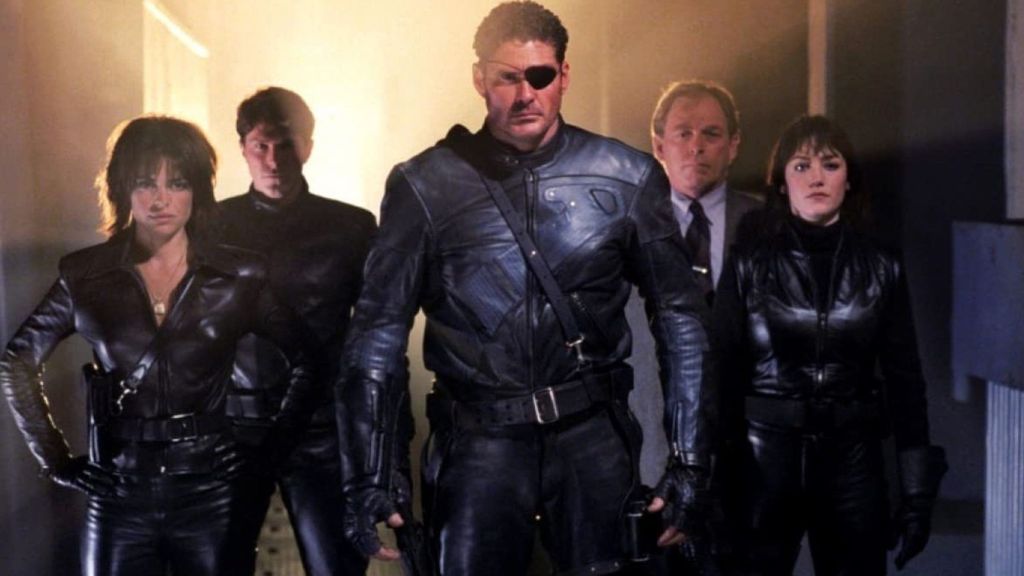
Before Nick Fury was reimagined for the MCU, David Hasselhoff portrayed the legendary superspy in the 1998 television movie Nick Fury: Agent of SHIELD. Written by David S. Goyer, the film attempted to bring the high-tech espionage of the comics to the small screen. The story follows Fury as he is brought out of retirement to stop HYDRA from releasing a deadly virus on Manhattan, featuring comic-accurate elements like the Helicarrier and Life Model Decoys. Hasselhoff’s performance leaned into the grizzled, cigar-chomping persona of the 1960s comics, providing a version of the character that was physically imposing and stylistically bold for the time.
Despite the involvement of a talented screenwriter and a committed lead, Nick Fury: Agent of SHIELD suffered from the inherent limitations of a broadcast television budget in the late 1990s. The visual effects for the SHIELD technology often appeared flat and unconvincing, which undermined the tension of the international spy narrative. Additionally, the film was released during a period when general audiences were still skeptical of comic book adaptations, leading to mediocre ratings and the cancellation of any plans for a recurring series.
1) Dr. Strange (1978)

The 1978 television movie Dr. Strange represents one of Marvel’s earliest attempts to bring the mystical side of their universe to a live-action audience. Produced for CBS, the film functioned as a feature-length pilot designed to launch a weekly series following the Sorcerer Supreme. Diverging from the classic comic beats, Peter Hooten stars as Stephen Strange, a psychiatric resident who discovers his magical heritage after being selected by an elderly sorcerer to protect the world from supernatural threats. The production is notably different from the modern psychedelic interpretations of the character, opting instead for a slow-paced, psychological approach that emphasizes the gothic horror elements of the 1970s.
The film features a memorable performance from Jessica Walter as Morgan Le Fay, who brings the primary antagonist who attempts to invade the mortal realm. However, the narrative’s deliberate pacing and lack of traditional superhero action alienated many viewers who were accustomed to the high-energy format of The Incredible Hulk series airing at the same time. While the production values were impressive for the late 70s, featuring atmospheric lighting and inventive practical effects, the show failed to capture enough ratings to secure a full season order. In addition, the movie attempts to show Stephen as an irresistible womanizer, and the many sexist tropes used for Morgan make it a movie that’s hard to watch with today’s standards.
Which obscure Marvel movie do you think is still worth watching? Leave a comment below and join the conversation now in the ComicBook Forum!
Source link
-

-

-

-

-