Science fiction has been one of cinema’s most prominent genres since the dawn of filmmaking, but some incredible sci-fi movies have been forgotten by the masses. Filmmakers have consistently used sci-fi concepts, including futuristic predictions, extraterrestrial invasions, space-faring epics, and alternate histories to test what it really means to be human. While masterpieces like Metropolis, 2001: A Space Odyssey, Star Wars, Interstellar, and countless more will always be remembered, some near-perfect sci-fi movies have fallen under the radar.
In recent years, science fiction has been gaining even more popularity in contemporary cinema. Massive hits such as Denis Villeneuve’s Dune and Arrival, James Cameron’s Avatar film series, Danny Boyle and Alex Garland’s reunion in 28 Years Later, and the Daniels’ surrealist Everything Everywhere All at Once, among many others, have stunned audiences. Many fantastic sci-fi movies, both recent and classic, haven’t been remembered so well; however, they deserve far more recognition.
Sunshine Is One of Danny Boyle’s Most Underrated Movies
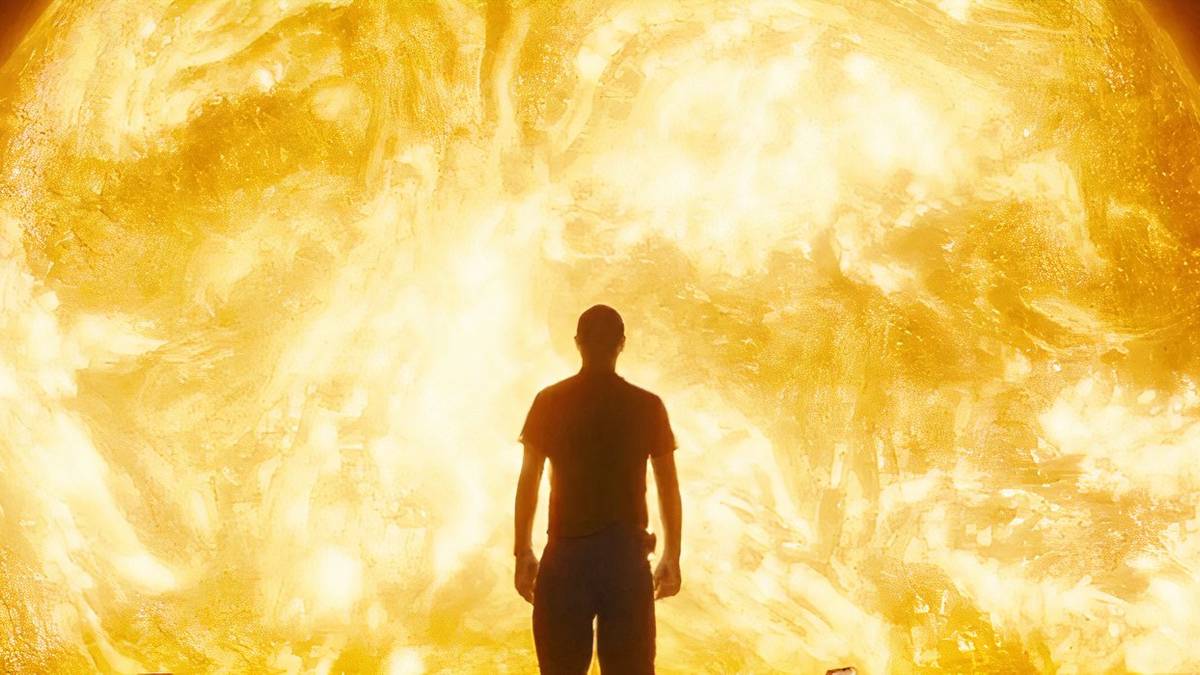
Released in April 2007, Sunshine marked the third collaboration between director Danny Boyle and writer Alex Garland, following 2000’s The Beach and 2002’s 28 Days Later. Featuring an ensemble cast including Chris Evans, Cillian Murphy, Rose Byrne, Michelle Yeoh, Mark Strong, and more, Sunshine follows a group of astronauts aboard the spaceship Icarus II. Their mission is to detonate a stellar bomb to reignite the dying sun, avoiding global cooling on Earth, but their mission goes awry when they find their doomed predecessor, Icarus I.
Despite following a team heading into deep space, Sunshine keeps its story grounded in humanity and character, exploring the toll the mission has on the astronauts more than the actual sci-fi elements. Visually breathtaking and thoughtfully crafted, Sunshine delivers a psychologically intense horror story while asking philosophical and moral questions. It’s an important sci-fi movie that deserves more than its 77% approval rating on Rotten Tomatoes, and one of Boyle and Garland’s strongest joint projects.
Color Out of Space Delivers Lovecraftian Sci-Fi Magic


Featuring a stand-out performance from Nicolas Cage and marking a successful adaptation of H. P. Lovecraft’s cosmic horror, Color Out of Space is a unique sci-fi flick that fell completely under the radar. Directed by Richard Stanley (Hardware, Dust Devil), Color Out of Space follows the Gardner family, who move to a remote farmhouse on the grounds of which, one night, a brightly-colored meteorite crashes and begins to affect the surrounding plant and animal life in strange ways.
Color Out of Space is visually arresting and completely unexpected. The viewer never knows what twist is coming next, blending cosmic horror with body horror and heavy science fiction in some innovative ways. Cage’s performance of a man descending into madness received acclaim and contributed to the movie’s 86% approval rating on Rotten Tomatoes. Including both mental and physical mutations and phenomena, Color Out of Space is a sci-fi movie that certainly shouldn’t be forgotten.
Silent Running Is Even More Relevant Today

Over the decades, science fiction has been used to spotlight some of the most pertinent and relevant themes and issues facing humanity in our real-world, modern-day society. The perfect example of this is Silent Running, which was released in March 1972, but which includes themes that are still important and relevant to this day. With a 71% approval rating on Rotten Tomatoes, Silent Running, the directorial debut of visual effects supervisor Douglas Trumbull, deserves far more recognition over five decades after its premiere.
In the wake of Earth’s forests going extinct, Silent Running follows botanist and ecologist Freeman Lowell (Bruce Dern), who maintains a variety of plants inside a greenhouse-like dome on a space freighter, being prepared for reforestation on Earth. When the corporation orders the jettison and destruction of these domes, Lowell hijacks his in an effort to save his plants. With the Earth’s forests and natural habitats in jeopardy in reality, Silent Running persists as one of the most important movies of our time.

Adapted from Arthur C. Clarke’s 1982 novel 2010: Odyssey Two, 2010: The Year We Make Contact acts as a sequel to Stanley Kubrick’s 1968 movie, 2001: A Space Odyssey. Directed by Peter Hyams (Capricorn One, Timecop), 2010 didn’t replicate the cultural impact of its predecessor, but it is regarded as a brilliant evolution from a cerebral sci-fi narrative to a suspenseful and character-driven story. Released in December 1984, 2010: The Year We Make Contact bridges hard sci-fi with an engaging and grounded narrative.
2010: The Year We Make Contact follows a joint mission between American and Soviet astronauts who travel to Jupiter to uncover what went wrong with the original Discovery One mission. The movie explores more overt Cold War themes, giving it an added layer of realism and humanity, while replicating the stunning visuals and thought-provoking cinematography from the original movie. Excellent as a sequel or as a standalone flick, 2010 delivers a thriller-style sequel to one of cinema’s most iconic sci-fi movies.
High Life Continued Robert Pattinson’s Career Shift
After appearing in the Harry Potter and Twilight franchises, Robert Pattinson made obvious choices to move his career away from fantasy to head in a more unique and stylistic direction. Before projects like The Lighthouse, Tenet, Mickey 17, The Drama, and more, Pattinson starred as Monte in 2018’s High Life, directed by French filmmaker Claire Denis (Beau Travail, Nenette and Boni). Exploring themes of isolation, eroticism, primal desire, human decay, criminality, and madness, High Life is unexpected, challenging, and evocative.
High Life isn’t for the faint of heart. It’s unsettling and surreal, and routinely focuses on heavy-hitting and extreme themes, including human violence and darkly erotic behavior as scientist Dibs (Juliette Binoche) runs sexual experiments on a group of criminals on a space mission heading towards a black hole. Widely regarded as one of the most disturbing yet brilliant sci-fi movies ever, it’s a shame High Life hasn’t received more recognition, especially considering it includes one of Robert Pattinson’s most striking and thematically deep performances.

Directed by Ecuadorian filmmaker Sebastián Cordero (Crónicas, Behind the Mist), Europa Report is one of the most impactful and scientifically realistic found footage sci-fi movies in recent memory. Real footage from the International Space Station was used as inspiration, while NASA scientists were consulted, and real-world data was used to produce the most accurate depiction of Jupiter’s moon. This contributed to Europa Report’s brilliant 81% approval rating on Rotten Tomatoes.
The movie recounts the fictional story of the first crewed mission to Europa, which the crew continues despite losing all communication with Earth. The slow-burning thriller effectively pulls off the found footage style to generate immense tension and dread while putting innovative and aesthetically beautiful visuals front and center. The production design in Europa Report is remarkable, and the movie is widely regarded as having put the science back into science fiction, so it deserves a lot more attention than it has received since its 2013 release.
Source link
-

-
-

-
-