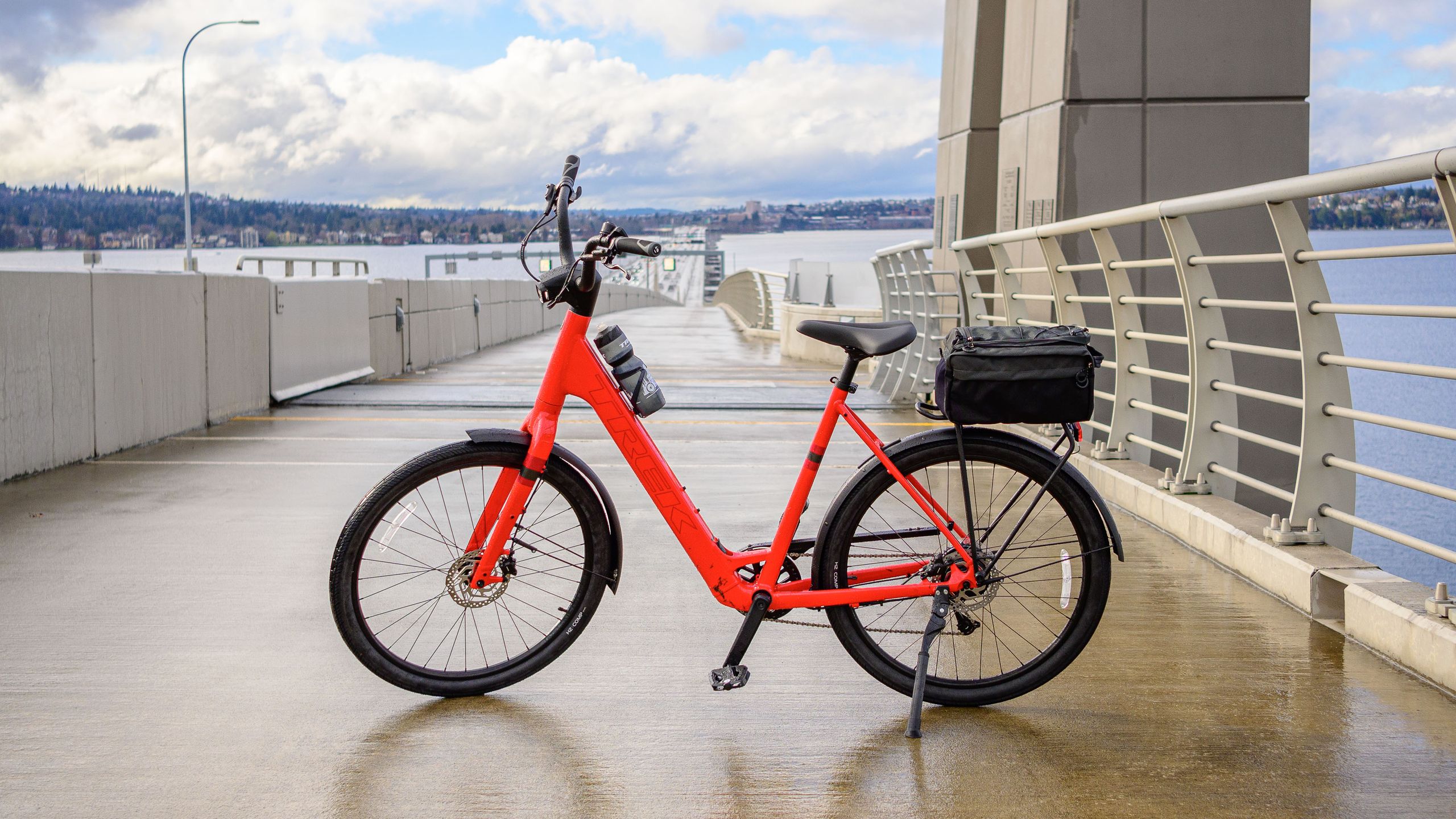
The best electric bikes make commuting easier and riding in general more fun for a vast array of riders. Of course, that means there are tons of e-bikes to choose from, each with different features, shapes, and sizes that may or may not make sense for your first e-bike purchase.
Fortunately, it’s easy to choose your first e-bike if you start with some basic decisions. Where will you be riding? How often? Over what type of terrain? And what will you be taking with you?
Those guiding questions will help you narrow your search. From there, you’ll need to know a few specifics about e-bikes in general that will give you a better sense of which e-bike will serve you most appropriately.
Class 1, 2, or 3
There are three classes of ebike, defined by the type of assist and max speed:
Class 1: Pedal assist only with a max assist speed of 20mph
Class 2: Pedal assist and throttle assist options with a max assist speed of 20mph
Class 3: Pedal assist (and sometimes throttle assist options) with a max assist speed of 28mph
You’ll need to decide what features you want your ebike to have before plunging cash on your first bike. Class 1 and 2 bikes are most common, with the major distinction being that class 2 ebikes have throttles. This comes in handy when you’re at a dead stop and want to get going quickly.
Class 3 ebikes are the fastest options you can get without getting something officially classified as a motorcycle. Most commuters won’t need this much speed, but if you’re going to be traveling long distances frequently and want an ebike that will get you through those miles fast, a class 3 ebike is your best bet.
Keep in mind, however, that many cities, towns, and trail networks have restrictions against class 3 ebikes, so it’s important to know the local laws.
Hub drive or mid drive
Your ebike’s motor will either live in the rear wheel’s hub, or in the bottom bracket area of the bike frame. Commuter-style ebikes are most likely to feature a rear hub motor, while mountain bikes are most likely to feature a mid-drive motor.
Rear hub motors tend to be more powerful because they deliver power directly to the rear wheel. Mid-drive motors drive power through the drivetrain to the rear wheel, which means some power gets lost along the way.
Most commuter-style e-bikes feature rear hub motors to maximize the amount of power you get. The downside is that all the motor’s weight is built into the rear wheel. This rotational weight has an outsized effect on the bike’s handling. It can also make rear tire and tube changes a bigger headache.
Mountain bikes, road bikes, and other performance-oriented e-bikes generally use mid-drive motors. While these are less powerful than hub motors, they are built into the bottom bracket area of the bike’s frame, which places all that weight lower and more centered on the bike. This improves handling significantly.
Generally, you’re better served by a rear hub motor unless you’ll be mountain biking off-road or looking for a more performance-oriented ride on-road.
Throttle or no throttle?
Class 1 and Class 2 e-bikes feature the same top assist speed of 20mph. But class 2 bikes feature a throttle. While not necessary for all riders, a throttle is a handy addition, especially for commuters who will be hauling cargo regularly.
While you can certainly use the throttle to simply not pedal while you’re riding, the real advantage comes at stop lights and stop signs, or any other time you’re getting your bike going from a dead stop.
There’s often a slight lag time between when you apply pressure to the pedals and when the assist kicks in. A throttle solves this problem by kicking the assist in immediately to help you get going. When you’re loaded down with bags from the grocery store, or when you just want to get through the intersection quickly to avoid car traffic, a throttle becomes exceptionally handy.
Cadence or torque sensor
Pedal assist systems use either a cadence sensor or a torque sensor to tell the motor when it should kick in, and how much power to deliver. But each sensor delivers that message in different ways.
A cadence sensor measures how quickly you turn your pedals. The faster you turn, the more assist power you get. A torque sensor, on the other hand, measures how much pressure you’re applying to your pedals. The more power you apply, the more assist you get.
Which one’s better? That depends on your riding style and preferences. A cadence sensor is best if you want more assistance from the motor when the going gets tough. For example, when you approach a hill and you shift into your easiest gear, you’ll be ‘soft-pedaling’ but the assist level will kick up, making it easier for you to get up the hill.
A torque sensor offers a more natural assist feel, and it gives you assist power based on how hard you’re pedaling to complement your input. This gives you a closer approximation of a natural bike riding feel. In other words, it will feel like you’re pedaling the bike, but you’re just stronger and able to get the bike up to higher speeds faster. It’s ideal for performance-oriented riders like mountain bikers and road cyclists.
Some e-bikes now come equipped with both types of sensors, and they allow you to toggle between them to get the exact type of ride quality you’re looking for. It’s best to test-ride some bikes to figure out which type of sensor makes the most sense for you.
Battery, dual batteries, and certification
Your e-bike is powered by a battery that lives on or in the bike. Many of them are now integrated into the frame and they are removable for charging or storage. Understanding the battery is an important consideration before buying any e-bike.
For starters, you may need more than one battery. If you commute long distances daily, haul a lot of cargo, or find yourself riding over challenging terrain packed with steep hills, your battery will drain faster. It can also drain more quickly based on weather conditions, and what level of assist you use.
Almost all brands advertise a maximum range per charge. This is usually presented in miles, and it’s based often on the lowest assist setting. Take that number to mean the amount of miles you’ll get out of a full charge in the most ideal conditions for the battery.
If you find yourself in need of extra battery life, choose a bike with a second battery, or buy a second battery to keep on hand should you need it.
And finally, be sure to choose an e-bike with a battery made from a reputable manufacturer. Look for brands that indicate Samsung or Tesla cells. It’s also becoming more common for e-bikes to come with batteries that are UL certified. This means they have passed basic testing for safety and efficiency.
Cargo
Choose your e-bike based on whether you’ll be hauling cargo regularly, and how much. If you’re planning big grocery runs, you’ll need a bike with a lot of storage capacity. But if you’re just looking to haul your backpack to work, you won’t need as much accommodation.
Cargo bikes come in various shapes and sizes. For big loads, you’ll want to lean toward a frontloader cargo bike like Yuba’s Supercargo. This features a big cargo area in front of the rider, and it’s very low to the ground to increase overall stability. These types of cargo bikes are often made to carry passengers, too.
For smaller cargo loads, an e-bike with a more traditional frame design is likely sufficient, though you’ll want to make sure there’s ample room in front and rear racks or baskets. You’ll also need to keep in mind that these bikes place the weight higher on the bike, which raises the center of gravity. That means you’ll need to work a bit harder to control the bike.
Whichever type of cargo bike you buy, make sure it has a solid kickstand for stability while loading and unloading, and a step-through design to make it easy to mount and dismount the bike.
Weight and size
E-bikes are heavier than regular bikes, since they integrate batteries, motors, and other peripheral devices that help operate the system. You’ll need to consider the overall weight of the bike, especially if you will regularly mount the bike on a car rack or tote it upstairs in an apartment building.
Keep in mind, too, that added weight affects the handling of the bicycle. Big cargo bikes are super useful, but they take more work to control and there’s a bigger learning curve. Light e-bikes are easier to handle and more fun and exciting to ride, but they may lack additional features that make them functional for commuting.
Be sure to consider your specific use case and choose a size of bike that works for you. Riding a bike that’s too large or bulky can make riding a cumbersome exercise. And riding an e-bike that lacks the features you really need might leave you wishing you’d sprung for the bigger, more capable rig.
Try before you buy
Once you have determined where an e-bike slots into your life, and you learn a bit about the form and function of various types of e-bikes, the best bike for you should become apparent quickly. Local bike shops are of course a great resource for learning even more about the various types of e-bikes, and it’s always a good idea to test ride a few before you invest.
Follow Digitpatrox on Google News and add us as a preferred source to get our up-to-date news, analysis, and reviews in your feeds.
More from Digitpatrox
Source link
-

-

-

-

-