Since epic movies are known for being big, it’s kind of fitting that some of the best of the bunch are also among the most well-known and widely celebrated movies of all time. To state the obvious, Lawrence of Arabia, Seven Samurai, and The Godfather are all epics of a different sort, and released in different decades, yet have the sorts of reputations where no one would argue against the notion of them being among the greatest films ever made.
There are smaller films, of course, that are also amazing, but let’s stick to the big ones for now. More specifically, what about the big films (the epics) that aren’t so well-remembered? If you know about a handful of these, or all of them, then congratulations, because you’re special. But they’re all older, and they don’t live on as classics to the same extent as most of the noteworthy epics people do know about, even if they’re all pretty great, and even if not quite perfect, ultimately only have faults of a more minor nature.
8
‘Chûshingura’ (1962)
Definitely not to be mixed up with the Keanu Reeves movie, 47 Ronin (2013), Chûshingura is also known as 47 Ronin, or maybe not quite, since it originally had the title of 47 Samurai. But it’s the same sort of premise, or both movies are based on the same historical event, though the 2013 version strays from history pretty damn dramatically, since it throws in full-on fantastical elements while foregrounding action to a greater extent.
There’s a little action in Chûshingura, at least compared to another film based on the same story: 1941’s The 47 Ronin, which is drama-focused. Anyway, Chûshingura works as an epic, running for nearly three and a half hours while telling a story about 47 masterless warriors trying to avenge their leader who was betrayed in a way that led to his death. There’s an impressive cast here, for this era of Japanese cinema, with Toshirō Mifune and Takashi Shimura being the most recognizable faces here by today’s standards.
7
‘Is Paris Burning?’ (1966)


You need quite a bit of stuff to fill a movie that’s just seven minutes shy of three hours, with Is Paris Burning? rising to the occasion by having so many characters, and many of them played by recognizable faces. It’s a strategy used more recently in Oppenheimer; this sense of “we need to have a few dozen people play a role in this narrative, so make them all already recognizable because of who plays them,” essentially. That’s kind of the strategy here.
And it works, with Is Paris Burning? being a largely comprehensible and compelling World War II epic about the liberation of Paris, seen from multiple points of view, necessitating an international cast. The size and scope, in that regard, also make it a good companion piece to The Longest Day, which is an admittedly stronger World War II movie with a big cast and a focus on a specific event from the Second World War shown from multiple points of view (that one’s about the D-Day landings in Normandy).
6
‘Those Magnificent Men in Their Flying Machines or How I Flew from London to Paris in 25 Hours 11 Minutes’ (1965)

A decently long movie with an incredibly long title, Those Magnificent Men in Their Flying Machines or How I Flew from London to Paris in 25 Hours 11 Minutes is pretty much what you’d expect it to be, and the title itself seems to be part of the joke. Those Magnificent Men in Their Flying Machines (a sensible abbreviation) is an epic, but also a comedy, and it’s a fairly interesting blend of those two genres.
Those Magnificent Men in Their Flying Machines is an acquired taste, and the kind of thing that won’t necessarily thrill or entertain everyone 60+ years later.
It’s about a competition that involves crossing the English Channel by air, specifically in 1910, when aviation was still in its very early stages. The competition attracts people from different parts of the world, but the film itself – and its style – is all very British. That might make it an acquired taste, and the kind of thing that won’t necessarily thrill or entertain everyone 60+ years later, yet it’s still a solid watch if you think anything about it sounds interesting, and it remains impressive on a technical front, too.
5
‘1492: Conquest of Paradise’ (1992)

1492: Conquest of Paradise is only partly remembered for being controversial, and a notorious box office flop, and not much more. It is, as you might guess from the title, about Christopher Columbus, his travels to the New World, and the early colonization of the Americas. Columbus is a divisive figure in history, and even if you don’t mind watching a movie about him, you might well mind the fact that, for whatever reason, Gérard Depardieu plays him in this movie.
Questionable casting and a difficult story/historical event aside, what 1492: Conquest of Paradise offers technically is much better than many give it credit for (again, of those who do remember its existence, or knew about it in the first place). The score here is an all-timer, and one of the best Vangelis ever composed, and 1492: Conquest of Paradise also looks stunning throughout. It’s overall much better than some other Ridley Scott epics that are a little more well-known, like Robin Hood (2010) and 2014’s Exodus: Gods and Kings.
4
‘The Three Treasures’ (1959)

Maybe The Three Treasures has no business being as long as it does, and if there are flaws here, it’s that length. It would be pretty amazing if it wasn’t an epic, so including it here feels a bit weird, but still… there’s enough that impresses within the framework of an epic for present purposes. Like Chûshingura, it’s a grand-scale Japanese epic with an all-star cast and, in fact, many of the people in Chûshingura were also in The Three Treasures, including the likes of Toshirō Mifune, Takashi Shimura, Setsuko Hara (best known for Tokyo Story and roles in other Yasujirō Ozu films), and Akira Takarada (best known for the original Godzilla, plus a bunch of its sequels).
These actors were all associated with Toho, and Toho produced The Three Treasures to commemorate 1000 films produced by the studio (Chûshingura, made later, was also a Toho production). As the studio’s 1000th film, no expense was spared, and The Three Treasures ends up being expansive and often technically dazzling as a fantasy epic, with a mythological story that features maybe a few too many moving pieces. It’s overstuffed, but the spectacle and ambition of it all are impressive, and if you do like classic Japanese cinema, you’ll definitely get something out of parts of it.
3
‘The Big Parade’ (1925)

Made before the first Academy Awards, The Big Parade probably gets overshadowed a little by Wings, which was made in time to be commemorated at the first Academy Awards, and was indeed the first Best Picture winner. Wings was about World War I, and also something of a romantic melodrama with a fairly epic runtime, and the same can be said about The Big Parade, even if the latter doesn’t focus on dogfighting the way Wings did.
Instead, The Big Parade is more about trench warfare and the experience of being on the ground during World War I, which could make it more comparable to All Quiet on the Western Front. Hell, that was another early Best Picture winner that might overshadow The Big Parade to some extent. This 1925 film is old (more than 100 years and stuff), yet it holds up well for something of its age, and the scope here can still be admired quite easily.
2
‘Die Nibelungen’ (1924)
Split into two parts, Die Nibelungen: Siegfried and Die Nibelungen: Kriemhild’s Revenge, Die Nibelungen is being counted as one massive movie here because the story told throughout both is the same, and also, both parts were released in the same year. The first is just under 2.5 hours, and pretty heavy on fantasy elements, while the second exceeds two hours by a little, and is a bit more grounded and emotionally intense.
Also, that second volume is, unsurprisingly, about revenge, specifically because of the events of the first volume and all. As a revenge epic, then, Die Nibelungen is really impressive, even if you don’t take its age into account. Much of it holds up better than you might expect a nearly five-hour silent movie to, and it’s well worth watching if you’ve already seen – and enjoyed – better-known Fritz Lang movies like Metropolis, M, and The Testament of Dr. Mabuse.
1
‘Waterloo’ (1970)


If you know about the Soviet version of War and Peace, you might also be aware of Waterloo, since Sergei Bondarchuk was the filmmaker behind both. His War and Peace adaptation is already a little less famous and talked-about than it should be, but it’s a little too well-known to appear here. Also, it’s essentially perfect, and the particular topic at hand is about near-perfect movies and all.
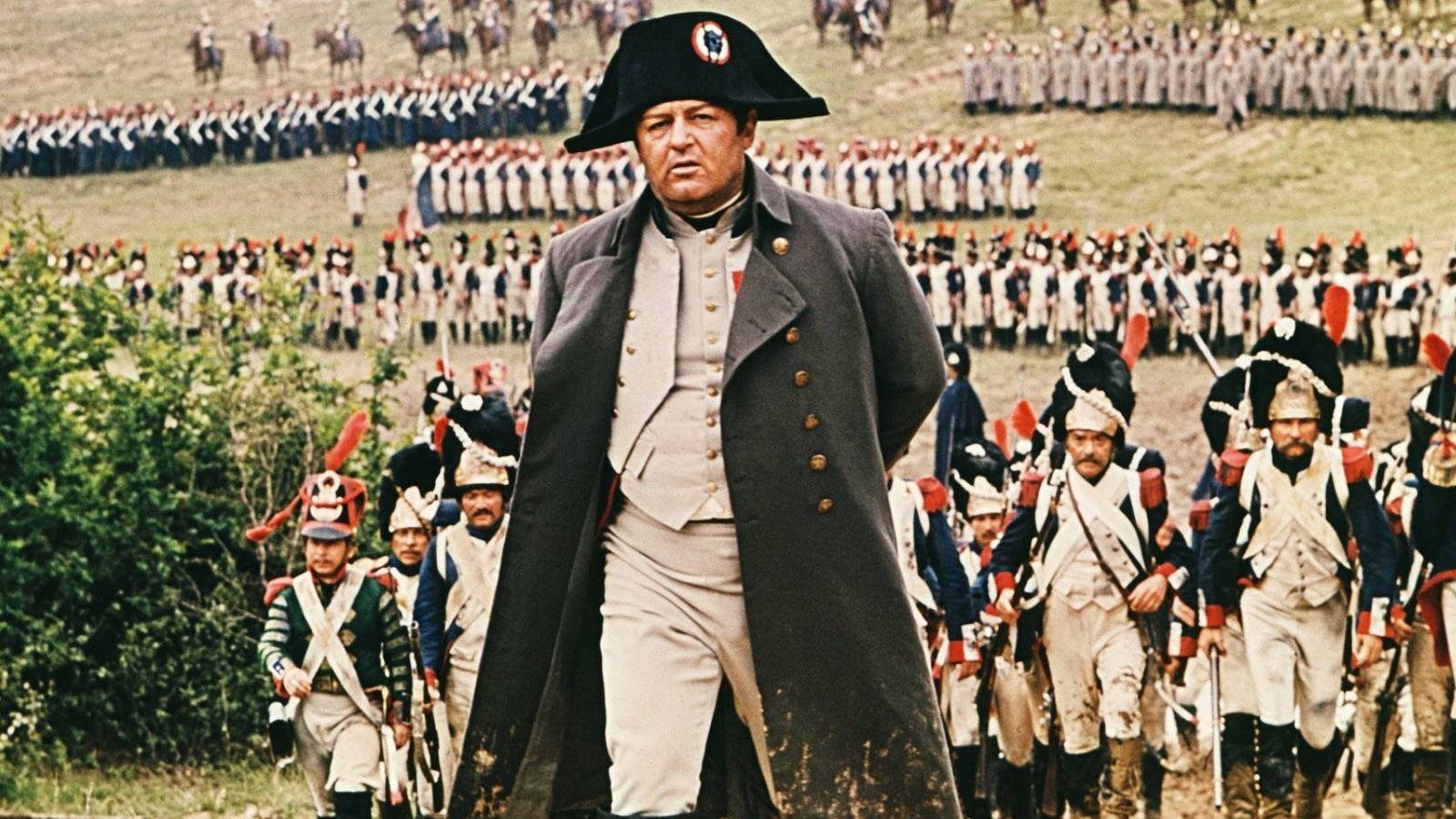
So, here’s Waterloo. It impresses in similar ways to War and Peace, and makes for a good companion piece (a companion Peace?), since War and Peace is also concerned with the Napoleonic Wars, while Waterloo is about Napoleon’s final defeat a couple of years after the battles depicted in War and Peace. Waterloo is a slightly rocky ride up until it gets to depicting the titular battle, but the whole sequence that is about the Battle of Waterloo itself is staggering in scope and ambition, and does have to be seen to be believed.


Waterloo
- Release Date
-
October 26, 1970
- Runtime
-
134 minutes
- Director
-
Sergey Bondarchuk
- Writers
-
H.A.L. Craig
-
Arthur Wellesley, Duke of Wellington
-

Rod Steiger
Napoleon Bonaparte
-
-
Jack Hawkins
General Sir Thomas Picton

Source link
-

-

-

-

-