

A certified sleep consultant explains what happens to your body when you stick to a regular bedtime

Had your mattress for 10 years+?
A new mattress could be just what you need to start sleeping through the night. Find the right option for your body and sleep needs in our guide to the best mattresses of 2026.
One of the biggest lessons I’ve learnt while writing about sleep for the best part of the last two years is that sleep regularity is crucial for both your sleep and long term health.
This figure speaks for itself, but curious about how exactly a consistent sleep routine can benefit you, I’ve called upon UK-based sleep and fatigue specialist Maryanne Taylor for the low down on how it changes your body after one night, one week, one month, and one year.
Key takeaways: At a glance
- Sleep consistency is crucial for sleeping well and boosting long-term health.
- After one day of setting a bed and wake time your concentration and mood should get a boost.
- After one week you should find you fall asleep faster and wake up easier as your hormone cycles regulate.
- After one month you should notice your body is physically and mentally repairing better. You may noticed improved immunity and appetite regulation, too.
- After a one year ‘sleep streak’ you should be at a reduced disease risk and experience better long-term health and resilience.
Why sleep consistency is so important
“Consistent sleep timing isn’t just about routine,” says Taylor, who is founder of The Sleep Works. “It anchors your body clock so your body knows when to prepare for sleep and when to wake up in the morning.”
Essentially, your body and brain learn to release the sleep-inducing hormone melatonin when you need to snooze, and suppress it when you need to wake up and be alert, reducing morning grogginess.
This way, “sleep becomes more predictable and reliable,” according to Taylor, “which supports more stable energy, focus, and productivity across the day” and “helps reduce the ‘tired but wired’ pattern many people struggle with.”

It also takes the guesswork out of sleep. You needn’t waste time or energy each night calculating how many hours of sleep you’ll get if you go to bed at X o’clock and wake up at X o’clock. You simply aim to go to bed on time and wake up when the alarm sounds — no mental calculations needed.
What happens to your body when you sleep at consistent times…
From regulating your internal body clock to stabilising your appetite and helping you fall asleep fast, there are plenty of reasons to establish a consistent bed and wake time.
Here’s exactly how your body responds to a consistent routine…
After one night
Of course, it takes more than one night to establish consistent sleep and wake times. But you may notice some benefits after nailing down those times on night one.
“Mornings [should] feel a little less sluggish and groggy”
Maryanne Taylor
While new studies and expert advice suggest sleep regularity and quality are just as important (potentially even more) as sleep duration, that still means hitting at least seven hours sleep is essential.
Sleeping for this amount of time ensures you enter all essential sleep stages (specifically deep and REM sleep) to flush toxins from the brain and wake up restored.
After one week
Sleeping at consistent times for a week trains your body’s internal clock, aka your circadian rhythm, to synchronize hormone release. After seven nights of sleeping consistently, Taylor says falling asleep and waking up should feel easier.
By the end of a week, you should notice improved sleep quality, reduced sleep latency, increased energy, and better emotional regulation.
You may even earn that Garmin Sleep Streak badge; awarded to those who get a 75+ sleep score for seven consecutive nights on a Garmin sleep tracker.
After one month
After one month, you should really be reaping the benefits of a consistent sleep routine. Your hormones should be operating on a reliable 24 hour cycle and you should notice yourself feeling sleepy around your established bedtime.
“Sleep feels more settled and predictable” after several weeks of consistent times, says Taylor. You should experience fewer wake-ups (good riddance, 3 a.m. club) and find easier to get back to sleep if you do experience the perfectly normal interruptions in sleep.

If you’re following a workout regime, you may also notice your body is physically repairing better between sessions as it will be easier for you to enter deep sleep stages (which are crucial for muscle repair and immunity) when you sleep at regular times.
It’s the same for REM sleep, which supports cognitive functioning. So, you should experience “better focus and less of the ‘tired but wired’ feeling,” says Taylor.
Moreover, your circadian rhythm is closely related to hunger hormones as well as those associated with sleep. With a better regulated system over the course of the month, you should find your appetite is more predictable. You’re likely to feel hungry at certain times of the day, ideally around meal times, and have less blood sugar spikes and crashes, which all equals more stable energy through the day.
After one year
By the end of 365 nights of consistent sleep timings, your body and brain will be working on a “default rhythm” as Taylor puts it. Sleep won’t be something you have to think about, but something your body and brain does naturally.

Getting seven hours rest at regular times over a year or more is a preventative measure you can take against health issues such as cardiovascular disease. Sleep consistency has the potential to reduce hospital admissions by up to 7%, predicts the study of 47 million nights of sleep data (from wearable devices used by 105,000 individuals over a number of years.)
What’s more, Taylor explains you should find it “easier to recover after disrupted nights or travel” once you’ve established a regular sleep time over the course of a year. This is because your body will lean towards its established timings, making it easier to reset after disruption.
Is there an ideal sleep and wake time?
So we know consistent sleep times are important, but are there golden bed and wake times to aim for? “There isn’t one ideal schedule, it depends on the person,” clarifies Taylor.
“The key is choosing a rhythm that fits your life and keeping it consistent,” she adds. “What matters most is that your sleep timing lines up with your natural body clock, not forcing a schedule that doesn’t suit you.”
As an early-bird rather than a night-owl, I find my ideal sleep time is 10pm, with a wake time of 6am. But you needn’t worry if you struggle to hit an ‘early’ bedtime — despite the age old saying that stipulates one hour of sleep before midnight is worth two after, which Taylor says lacks scientific backing.
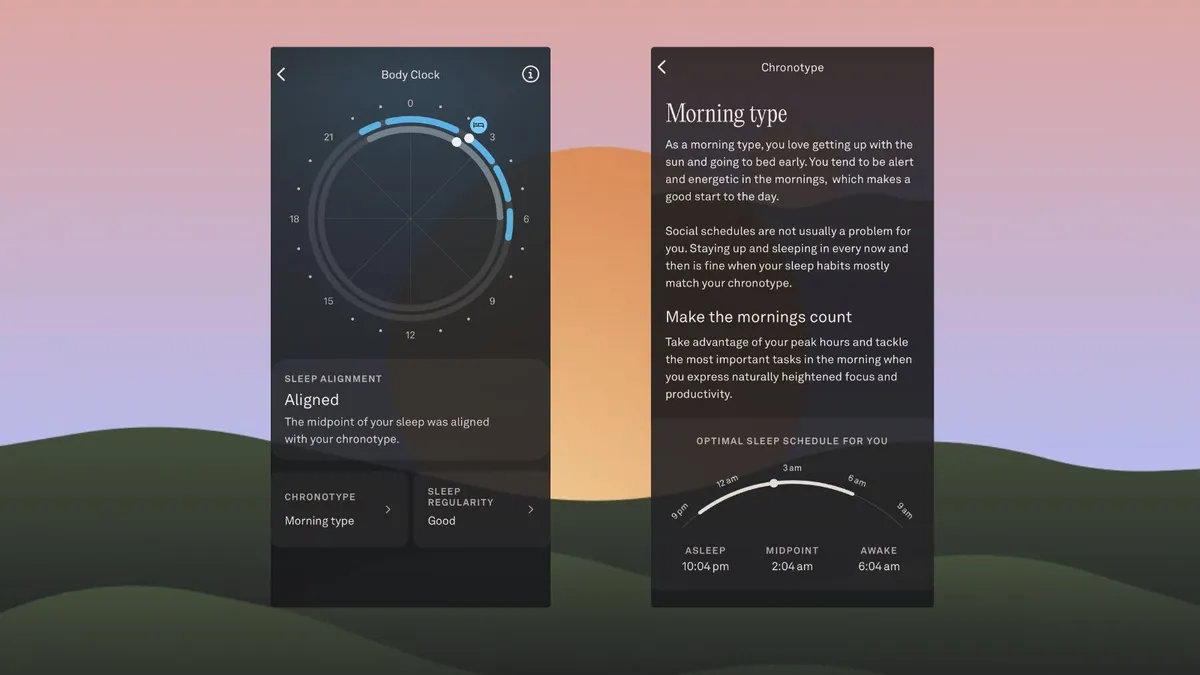
“Keeping your sleep and wake time consistent will have a much bigger impact than the exact hour you go to bed,” explains the certified sleep consultant. This is where understanding and working with your biological chronotype can help.
Thanks to my trusty Oura Ring, which I’ve worn for a full year and rate as the best sleep tracker on the market, I can keep track of my sleep schedule, measuring how well aligned it is with my early-bird chronotype.
Ultimately, it’s about finding a bed and wake time that works with your natural sleep tendencies and typical routine so that you can stick to it for the majority of nights throughout the week (remembering social plans or other commitments will sometimes get in the way and that’s okay.)

Follow Digitpatrox on Google News and add us as a preferred source to get our up-to-date news, analysis, and reviews in your feeds.
Source link
