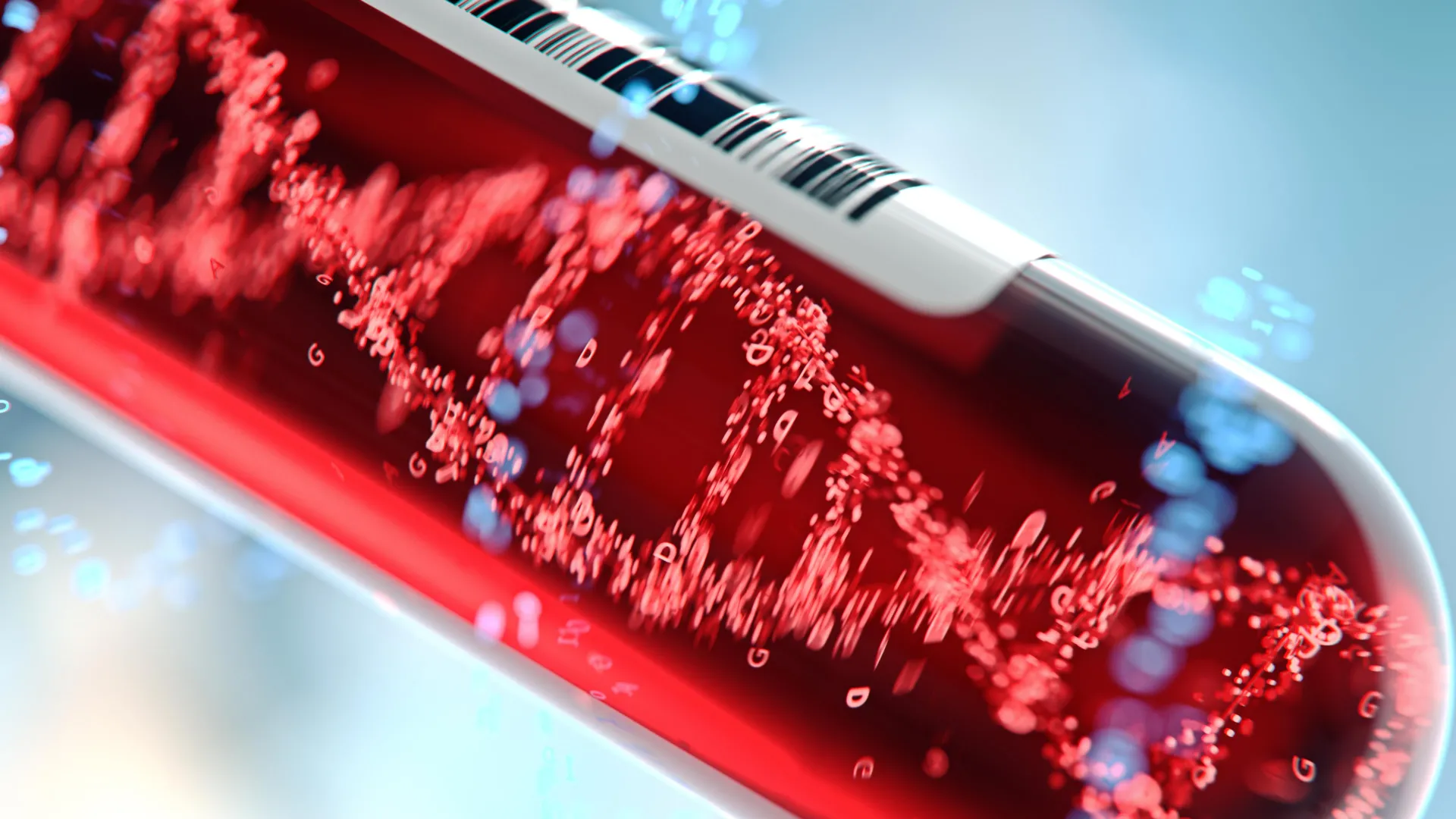
Researchers at the Johns Hopkins Kimmel Cancer Center have developed an artificial intelligence (AI) driven liquid biopsy that analyzes genome wide patterns of cell free DNA (cfDNA) fragments circulating in the blood. The test examines how these DNA pieces break apart and where they appear across the genome. Using this information, the system can identify early signs of liver fibrosis and cirrhosis and may also detect broader indicators of chronic disease.
The study, partly funded by the National Institutes of Health, was published March 4 in Science Translational Medicine. It marks the first time that this type of DNA fragmentation analysis, known as fragmentome technology, has been systematically applied to detecting chronic diseases unrelated to cancer. Previously, the approach had mainly been investigated as a method for finding cancer.
Genome Wide DNA Fragment Patterns Reveal Disease Signals
Liquid biopsies that measure cfDNA have already shown promise for identifying cancer. However, scientists have not widely explored their potential for diagnosing other illnesses. In this new research, investigators performed whole genome sequencing on cfDNA samples from 1,576 individuals with liver disease and additional medical conditions. By examining DNA fragments across the entire genome, they searched for patterns that might signal disease.
The team analyzed both the size of DNA fragments and their distribution throughout the genome, including repetitive DNA regions that have rarely been studied. Each analysis included about 40 million fragments spanning thousands of genomic regions, producing an enormous dataset compared with most liquid biopsy tests.
Machine learning algorithms processed this information to identify fragmentation patterns linked to disease. Using these patterns, researchers created a classification system that detected early liver disease, advanced fibrosis and cirrhosis with high sensitivity.
“This builds directly on our earlier fragmentome work in cancer, but now using AI and genome-wide fragmentation profiles of cell-free DNA to focus on chronic diseases,” says Victor Velculescu, M.D., Ph.D., co-director of the cancer genetics and epigenetics program at the Johns Hopkins Kimmel Cancer Center and co-senior author of the study. “For many of these illnesses, early detection could make a profound difference, and liver fibrosis and cirrhosis are important examples. Liver fibrosis is reversible in early its stages, but if left undetected, it can progress to cirrhosis and ultimately increase the risk of liver cancer.”
Why DNA Fragment Analysis Is Different
Unlike many liquid biopsy methods that search for specific cancer related gene mutations, the fragmentome approach focuses on how DNA fragments are cut, packaged and distributed throughout the genome. According to the researchers, this broader view makes the method applicable to conditions beyond cancer, including diseases that can eventually raise cancer risk. The study was also co led by Robert Scharpf, Ph.D., professor of oncology, and Jill Phallen, Ph.D., assistant professor of oncology.
“The fact that we are not looking for individual mutations is what makes this study so powerful,” says first author Akshaya Annapragada, an M.D./Ph.D. student in the Velculescu lab. “We are analyzing the entire fragmentome, which contains a tremendous amount of information about a person’s physiologic state. The scale of these data, coupled with machine learning, enables development of specific classifiers for many different health conditions.”
Early Detection Could Benefit Millions at Risk
Velculescu notes that roughly 100 million people in the United States have liver conditions that increase their risk of cirrhosis and liver cancer. Current blood based tests for fibrosis often lack sensitivity, especially in early stages of disease. Standard blood markers typically fail to detect early fibrosis and identify cirrhosis only about half the time. Imaging techniques such as specialized ultrasound or magnetic resonance scans can help, but these tools require equipment that is not always available.
“Many individuals at risk don’t know they have liver disease,” Velculescu says. “If we can intervene earlier — before fibrosis progresses to cirrhosis or cancer — the impact could be substantial.”
He adds that identifying these precursor conditions early may allow doctors to treat underlying diseases sooner and potentially prevent cancer from developing.
Study Origins and the Fragmentome Comorbidity Index
The research grew out of a 2023 Cancer Discovery study led by Velculescu that focused on the fragmentome of liver cancer. While studying patients with liver tumors, the scientists noticed that some individuals with fibrosis or cirrhosis showed mostly normal fragmentation profiles but contained subtle DNA signals linked to disease. This observation prompted the team to examine the fragmentome patterns associated specifically with liver fibrosis and cirrhosis.
In another analysis involving 570 people with suspected serious illness, researchers created a fragmentation comorbidity index. This measure distinguished individuals with high and low Charlson Comorbidity Index scores, a widely used metric that estimates how additional health conditions affect a person’s risk of death. The fragmentome based index predicted overall survival independently and in some cases proved more specific than traditional inflammatory markers. Certain fragmentation signatures also appeared to be associated with poorer clinical outcomes.
“The fragmentome can serve as a foundation for building different classifiers for different diseases, and importantly, these classifiers are disease-specific and do not cross-react,” Annapragada says. “A liver fibrosis classifier is distinct from a cancer classifier. This is a unique, disease-specific test built from the same underlying platform.”
Potential to Detect Other Chronic Diseases
The study also included people at elevated risk for a range of medical conditions. Researchers observed fragmentome signals linked to cardiovascular, inflammatory and neurodegenerative disorders. However, the study population did not include enough cases to build separate disease classifiers for each of these conditions. Instead, the findings suggest that the technology may eventually have wider medical applications, which researchers plan to investigate in future work.
The liver fibrosis assay described in the study remains a prototype and has not yet been introduced as a clinical test. The team’s next steps involve refining and validating the classifier for liver disease and exploring fragmentome signatures connected to other chronic illnesses.
Researchers and Funding
Along with Velculescu, Annapragada, Scharpf and Phallen, the research team included Zachariah Foda, Hope Orjuela, Carter Norton, Shashikant Koul, Noushin Niknafs, Sarah Short, Keerti Boyapati, Adrianna Bartolomucci, Dimitrios Mathios, Michael Noe, Chris Cherry, Jacob Carey, Alessandro Leal, Bryan Chesnick, Nic Dracopoli, Jamie Medina, Nicholas Vulpescu, Daniel Bruhm, Sarah Bacus, Vilmos Adleff, Amy Kim, Stephen Baylin, Gregory Kirk, Andrei Sorop, Razvan Iacob, Speranta Iacob, Liana Gheorghe, Simona Dima, Katherine McGlynn, Manuel Ramirez-Zea, Claus Feltoft, Julia Johansen and John Groopman.
Funding for the research came in part from the Dr. Miriam and Sheldon G. Adelson Medical Research Foundation, SU2C in-Time Lung Cancer Interception Dream Team Grant, Stand Up to Cancer-Dutch Cancer Society International Translational Cancer Research Dream Team Grant, the Gray Foundation, The Honorable Tina Brozman Foundation, the Commonwealth Foundation, the Mark Foundation for Cancer Research, the Danaher Foundation and ARCS Metro Washington Chapter, the Family of Dan Y. Zhang AACR Scholar in Training Award, the Cole Foundation and National Institutes of Health grants CA121113, CA006973, CA233259, CA062924, CA271896, T32GM136577, T32GM148383 and DA036297.
Source link
-

-

-

-
-