The Millennial generation is perhaps the most misunderstood of all. Not because we’re particularly complex; it’s just that we’ve sort of been a transition generation, a bridge between the 20th and 21st centuries. We lived through the rise of the internet, but rather than being born into technology, like Gens Z and Alpha, we had to adapt to it. We also entered the workforce after a recession and in a volatile environment, facing political and societal upheaval. Such a tough situation Millennials have had that we’ve been famously called “the unluckiest generation.”
The average Millennial has been shaped by their specific circumstances, and that also affects their cinematic taste. Themes of mental health, struggle, delusion, and ambition have been prevalent in our lives, and that usually reflects on the media we consume. It certainly applies to the movies we rewatch, especially for me, a thirty-one-year-old millennial who grew up in the 2000s on a healthy diet of Gossip Girl and Eternal Sunshine of the Spotless Mind. As a self-identified cinephile who seems to live in a perpetual state of melancholy, my taste in movies has always taken me back to the Golden Age of Hollywood, a byproduct of watching classic Mexican movies with my dad during my childhood weekends. Yes, I love me a good timeless movie, and I especially love to revisit a few. The classic movies on this list have a powerful chokehold on my Millennial mind, revealing much about me, and perhaps something about my generation, too.
10
‘Design for Living’ (1933)
You can instantly tell that Design for Living was made before the Hays Code went into effect. Remarkably modern and unexpectedly forward in its approach, the plot centers on the indecisive Gilda Farrell (Miriam Hopkins), who cannot choose between two lovers, artist George Curtis (Gary Cooper) and playwright Thomas Chambers (Fredric March). As the love triangle progresses, the three decide to do what seems like the only logical choice: living together in a platonic, three-way friendship.
How many other movies from the ’30s can claim to depict a situationship? Design for Living feels so bold in its depiction of romance, relationships, and attraction, so unrestrained and free-spirited that it seems incredible that it was made nearly a century ago. I mean, the movie ends in what can only be described as a throuple, for crying out loud! It benefits greatly from the fact that its three stars have unbelievable chemistry together, to the point where you’re often rooting for them all to be together, somehow. Couple that with that ‘ole Lubitsch touch, the one that walks a tightrope between suggestion and action, and you get a movie that feels more timely than half the offerings currently playing in theaters. It was risqué at the time, but it seems outright miraculous today.
9
‘Ninotchka’ (1939)


“Garbo laughs.” That’s the tagline used to promote the 1939 romantic comedy Ninotchka, starring the woman who arguably remains, to this day, the biggest star Hollywood has ever seen, Greta Garbo. Here, Garbo plays Nina Ivanovna, a stoic and aloof diplomat from the Soviet Union who arrives in Paris to secure the sale of stolen jewels recovered during the Russian Revolution. For his part, Count Leon d’Algout (Melvyn Douglas) attempts to recover the jewels for their original owner. Chaos and romance ensue.
At the time, Ninotchka was a breath of fresh air for Garbo fans, who were used to seeing her in a state of perennial distress. In her movies, she either died or her love interest died. Sure, she made misery look flawless, but there’s only so much tragedy a person can withstand. Then came Ninotchka, and the reason it was a hit in 1939 is the same reason it remains a rewatchable hit today: Garbo doesn’t simply laugh: she is giddy with love, dances, and thrives — she lives. Few things are better than seeing someone’s walls fall through the sheer enjoyment of learning to appreciate life, and that’s what Garbo does here. Eighty-seven years later, Ninotchka remains a triumph, not just for Garbo’s performance, but for the cleverness of its script.
8
‘Rebecca’ (1940)

Everybody has their favorite Alfred Hitchcock movie. Some like Vertigo, others prefer Psycho, and I’m sure there’s someone out there who likes I Confess. My favorite Hitchcock is a basic one, but I prefer to see it as reliable. In Rebecca, Joan Fontaine plays an unnamed woman who quickly falls for the charming and enigmatic Maxim de Winter (Laurence Olivier). She marries him and becomes the second Mrs. de Winter, travelling to his estate, Manderley. There, she becomes haunted by the ghost of his dead first wife, Rebecca, and by the manipulations of Manderley’s housekeeper, Mrs. Danvers (Judith Anderson).
Rebecca is famously the only Hitchcock effort to win Best Picture at the Oscars, and it couldn’t have happened to a better movie. Drowning in Gothic sensibilities that go hand-in-hand with The Master’s famous proclivity for near-unbearable suspense, the film is a masterclass in tension that never forgets the romantic aspect of the story. Few classic actors brooded like Olivier, and he’s at his broodiest here. Couple that with a perfect ingenue turn from Fontaine and with Anderson giving one of cinema’s all-time great villain performances, and you have a flawless movie about love, regret, and the inability to let go of the past. Rebecca is spellbinding, a movie that compels you to revisit it by mere virtue of its atmospheric, irresistible allure.
7
‘His Girl Friday’ (1940)
Full disclosure: it took me way too long to finally cross this classic off my watchlist. Indeed, I didn’t watch His Girl Friday until I was in my mid-twenties, but I was instantly hooked. Cary Grant, arguably the most charming and versatile leading man in classic Hollywood, stars as newspaper editor Walter Burns, whose ace reporter is also his ex-wife, Hildy Johnson (Rosalind Russell). When she announces she’s getting married again and also leaving, Burns convinces her to investigate an ambitious story with him, attempting to win her back.
Grant was especially great when he had a partner who could keep up with him — West, Dunne, Hepburn, Bergman — but Russell is perhaps his one true match. The pair is irresistible in His Girl Friday, bouncing off each other with the quick-witted ability of two seasoned pros. It helps that the screenplay they’re working with, by the great Charles Lederer, is among the most clever of the 1940s, kinetic, hilarious, and insightful. His Girl Friday makes romance seem exciting; in this movie’s eyes, the most exhilarating experience a person can have is getting to know someone else, intimately and completely. Watching Grant and Russell share a passion — physical, emotional, and intellectual — is far more enthralling than watching a thousand cars explode.
6
‘Ball of Fire’ (1941)

Barbara Stanwyck is one of my all-time favorite actresses. A remarkably gifted performer equally adept at melodrama, noir, comedy, and romance, Stanwyck was one of Classic Hollywood’s greatest gifts, and few movies utilize her skills better than 1941’s Ball of Fire. She stars opposite Gary Cooper, perhaps the Golden Age’s finest leading man, in a tale about a free-spirited woman wanted by the police and the mob who falls for an uptight encyclopedia writer looking to update his knowledge on everyday slang.
The plot is delightfully dumb, but dammit if Stanwyck and Cooper aren’t magic together. You can’t go wrong with the unique dynamic between a firecracker of a woman and a stick-in-the-mud man, and these two take it to another level. Cooper is brilliant as the square professor, but Ball of Fire is really Stanwyck’s movie, and she knows it: she’s confident, brassy, hilarious, and irresistible. Stanwyck made another all-timer in 1941, The Lady Eve, opposite Henry Fonda. That would’ve been another worthy inclusion on this list, since I also think it has aged beautifully. However, I figured two Stanny movies would be more than enough, and as it turns out, she made another movie that I simply cannot resist.
5
‘Now, Voyager’ (1942)
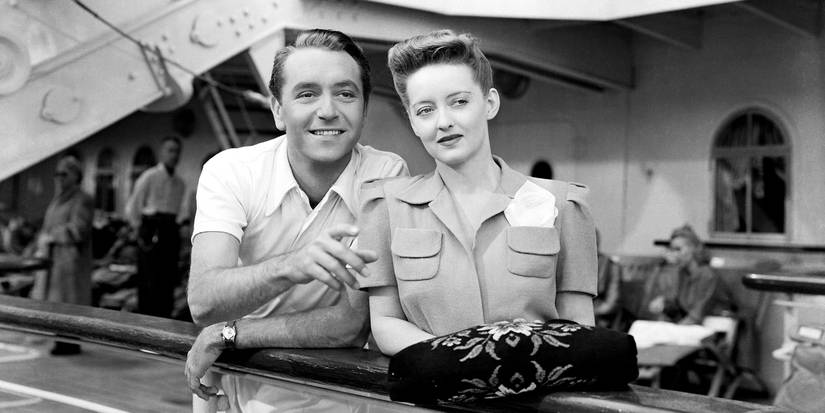
Bette Davis is my favorite actress, and Now, Voyager is my all-time favorite movie. I have watched it once a year since I was 19, and each of those twelve times has been like rediscovering an old friend whom I seem to be constantly missing. Based on the eponymous 1941 novel, the film tells the classic ugly-duckling-into-beautiful-swan story of Charlotte Vale (Davis), a sheltered and self-hating woman who comes into her own and falls in love during her time away from her domineering mother.
Here, Davis gives one of the greatest performances of her career. Although best known for her villainous roles, Davis is stellar as the meek Charlotte, a woman so paralyzed by indecision, self-doubt, and self-sabotage that she cannot fathom a life away from the darkness. At first sight, Now, Voyager is a coming-of-age tale in adulthood, but what fascinates me about it is how weirdly tragic it is, and how it wears its melancholy on its sleeve. In this film, happiness is not a real possibility, only a semblance of it. Yet, in that semblance, true fulfillment can be found; it won’t be what you expected or wanted, but it’s real and within reach, if only you stop asking for the moon and just enjoy the stars.
4
‘Double Indemnity’ (1944)

Watching classic cinema as a millennial Latino is such an odd experience. You can be watching what you believe is the greatest movie you’ve ever seen, and suddenly BAM — there’s Charlton Heston in brownface. Such occurrences can be expected, since it was another time, but it’s odd when you find a movie that you can entirely enjoy without a single complaint. Double Indemnity is such a movie, a noir so riveting and seductive that it’s pretty much the definition of perfect.
Stanwyck strikes again, this time as cinema’s greatest femme fatale, Phyllis Dietrichson, who manipulates Fred MacMurray‘s dumb and horny insurance salesman into killing her husband to trigger the double indemnity clause in his insurance policy. Double Indemnity is the noir par excellence, the pillar upon which the entire genre rises. If you were to only watch one film noir in your life, it should be this one. Again, it’s largely thanks to Stanwyck, whose panther-like movements and sultry attitude make her one of cinema’s best and most formidable villains. The dialogue crackles and Billy Wilder‘s direction beckons, making for an unforgettable movie that keeps getting better with the years.
3
‘Humoresque’ (1946)

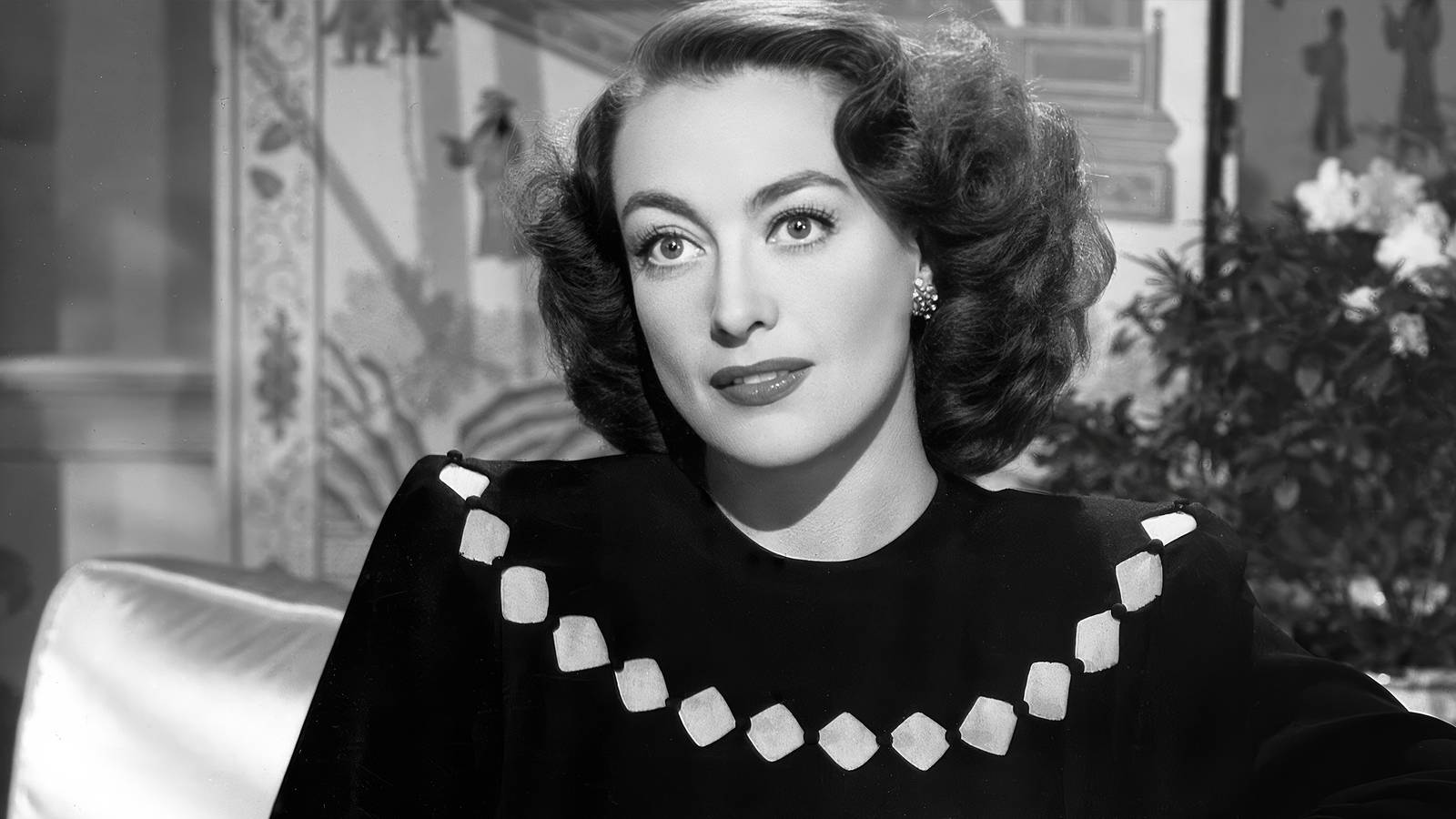
Although her legacy has been somewhat tarnished by the more scandalous aspects of her private life, Joan Crawford remains one of the silver screen’s most striking talents and one of the most beautiful faces to have ever graced it. Nowhere is she more regal, composed, or in control than in the 1946 melodrama Humoresque, where she stars opposite John Garfield as an older woman who becomes the patron and eventual lover of a young violin player.
Humoresque is a film of its time, meaning it has some… interesting ideas about female sexuality and the freedom to express it. However, at its core, it remains a doomed story about all-consuming romance and the love that arrives too little, too late. Here, Crawford is at the peak of her stardom and acting abilities, delivering a powerful portrayal of passion hindered by regret. The now-iconic sequence where she — spoilers for an eighty-year-old movie — walks into the ocean to drown herself is the stuff of Classic Hollywood dreams. She’s broken yet dignified, selflessly sacrificing herself for her one true love. It’s all so melodramatic that it becomes powerful, a prime example of the type of cinema that Classic Hollywood produced and that we sadly don’t get to see much of anymore.
2
‘Notorious’ (1946)


Cary Grant and Alfred Hitchcock made several movies together, but the one that has always captivated me the most is Notorious. Grant stars opposite Ingrid Bergman in a noir tale of spies and seduction. The plot follows U.S. government agent T.R. Devlin (Grant), who recruits Alicia (Bergman), the daughter of a Nazi war criminal, as a spy to seduce Alexander Sebastian (Claude Rains), a Nazi hiding in Brazil.
Although heavily praised as the Master of Suspense, Hitchcock doesn’t get nearly enough credit for how good he was with romance. Both movies of his that I love the most are romances with heavy genre elements, and Hitchcock is fantastic at capturing the inherent eroticism in everyday situations that exists when two people are attracted to each other. Here, Grant and Bergman are dynamite together; yes, the movie is a spy tale of Nazis and double-crossing, but it’s also sexy. It’s all so elegantly staged, so precise and purposeful — every choice is a potential trap, every word a deadly weapon, and every glance between Grant and Bergman a fiery poem. Eighty years later, Notorious is still the biggest masterpiece of the spy genre.
1
‘The Innocents’ (1961)
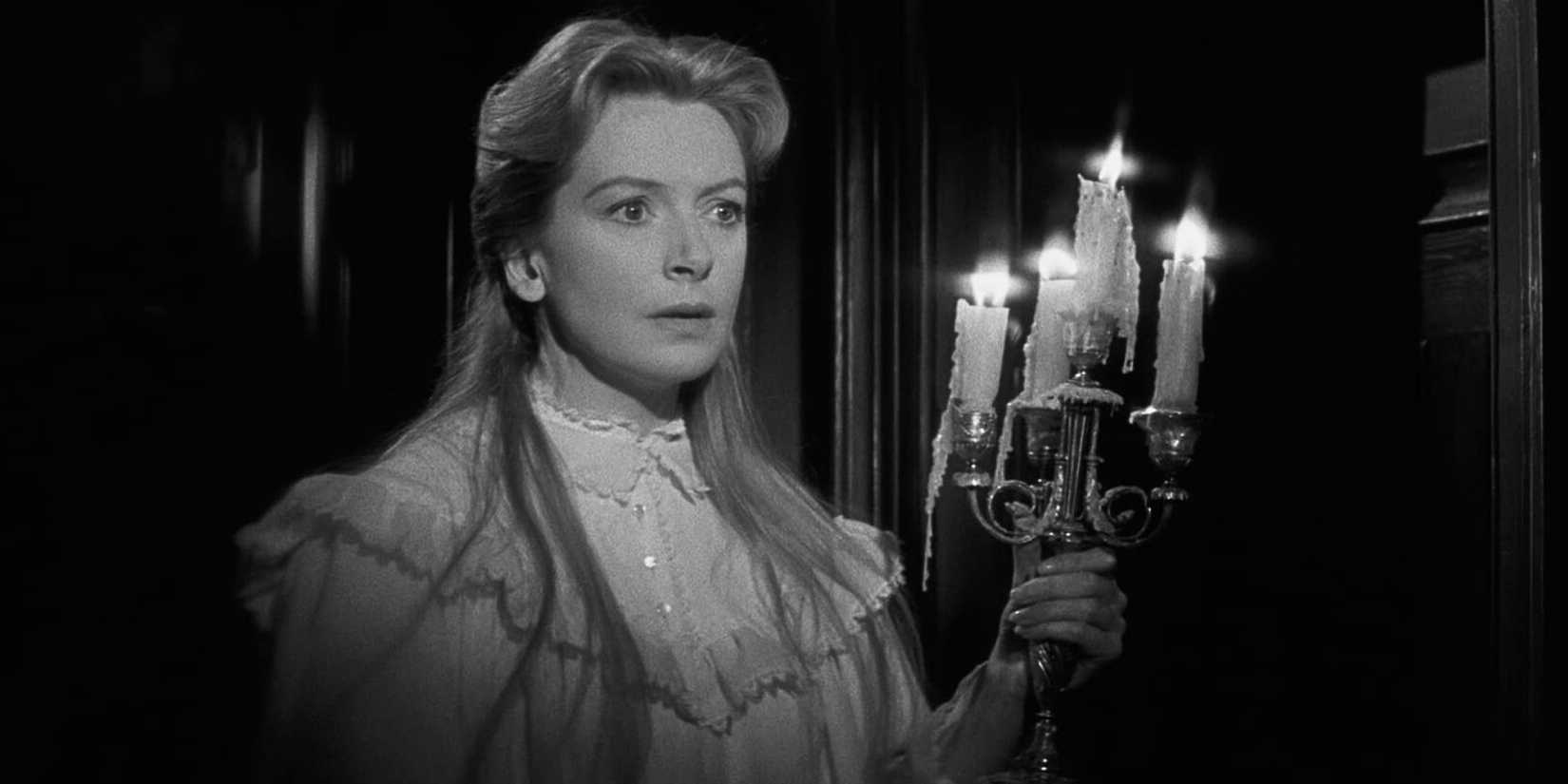
So, I don’t particularly like horror. I don’t much enjoy getting scared, and the 2004 movie The Grudge traumatized my twelve-year-old self so badly that I have never warmed up to the genre completely. I do appreciate the artistry and narrative approach of a few horrors, like The Exorcist or Hereditary, but the one movie that I actively enjoy and often revisit is The Innocents. Deborah Kerr, the Amy Adams of the 1940s and ’50s, stars in this adaptation of Henry James‘ The Turn of the Screw as a governess who believes her wards’ country house is haunted by ghosts.
What I love about The Innocents is that it’s not exactly a horror movie; rather, it’s a psychological study of paranoia, desperation, and the thin line between sanity and insanity (because it is a thin line). Atmospheric and anxiety-inducing, the film is all about the dread of thinking you know something but being unable to be certain of it, awareness without certainty or trust. There comes a point when The Innocents becomes so tense that it’s almost unbearable. It’s a masterclass of dread and a movie that invites countless revisits to enjoy not just how lush and clinically staged everything is, but also to appreciate Kerr’s tour de force. Truly an all-time great horror.
Source link
-
-

-

-

-