A North Carolina legislative candidate is questioning the state’s ability to fairly count ballots in his race because the state’s top election watchdog endorsed his opponent.
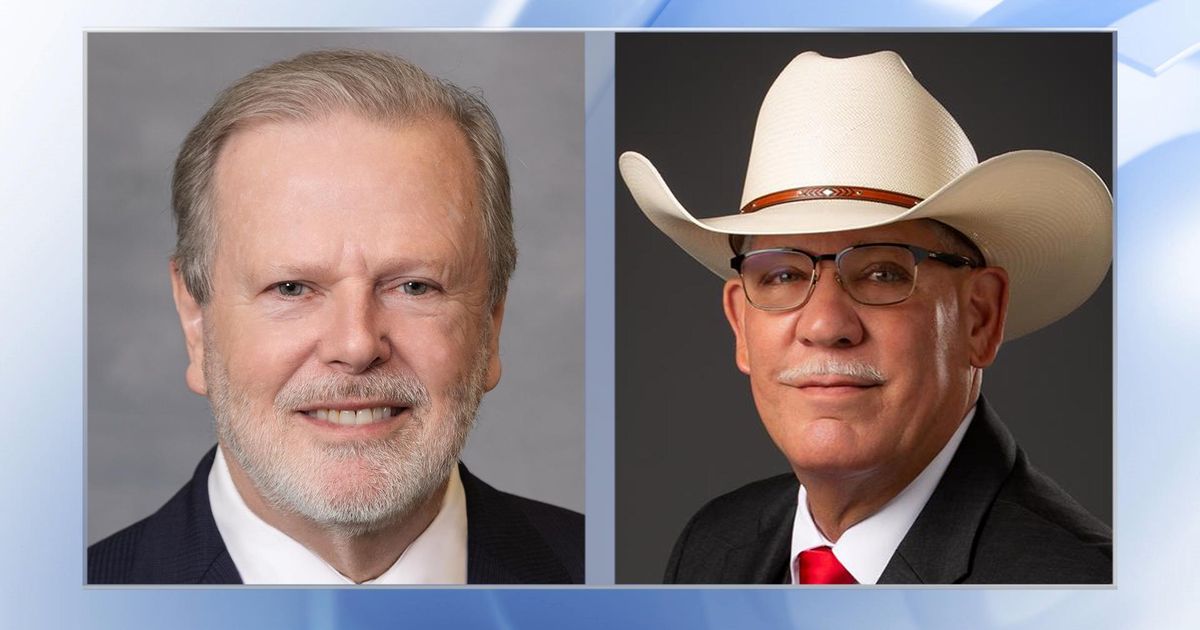
Sam Page leads Senate leader Phil Berger by two votes in the Republican primary for the state’s 26th Senate District, which covers Rockingham and Guilford counties. Page had 13,077 votes and Berger had 13,075 after early votes and Election Day ballots were tallied Tuesday.
Elections officials still need to count provisional ballots and ballots from military and overseas voters. That’s expected to happen by the end of next week. Candidates can request a recount my March 17 if they’re still within one percentage point of each other after all ballots are counted.
Berger is one of the state’s most influential Republican legislators, and a Page win would upend the power structure in the chamber.
A recount would be overseen by county and state elections officials appointed and overseen by Republican State Auditor Dave Boliek. Boliek last month campaigned in support of Berger, who has led the Senate for more than a decade. Berger played an influential role in passing the law that moved oversight of the state’s elections from the state’s Democratic governor to the Republican auditor. And Boliek has leaned on Berger’s bench to staff his office: Boliek’s chief of staff was previously a top lawyer for Berger at the legislature, and Boliek’s spokesperson is Berger’s former spokesperson.
Because of those connections, Page on Wednesday called on Boliek to recuse himself from the process. “It seems like a big ethical conflict,” Page said. “I want to make sure that when people cast their ballot for their candidate, it gets counted.”
Randy Brechbiel, the auditor’s spokesman, said Boliek wasn’t available for an interview on Wednesday. “The State Board of Elections has issued a thorough description of the process,” Brechbiel said in a statement. “The State Auditor’s Office has no role in that process.”
Jason Tyson, a spokesman for the state Board of Elections, dismissed the notion that Boliek would influence the ballot-counting process. “There’s no influence here from the auditor’s office at all,” Tyson said. “The public can be assured that this is going to be a safe and secure process that’s outlined by law, that is not going to have influence, political influence in any way, shape or form.”
Boliek in the past has promised he can carry out his watchdog job impartially.
“I was elected in a partisan election,” Boliek, a Republican, told WRAL in an interview last month. “But in completing the job, I represent and work on behalf of all North Carolinians, regardless of their political party. And when it comes to voting, voting is sacred in this country. It is sacred in this state.”
Berger’s campaign didn’t immediately respond to a request for comment.
Page isn’t the only one raising questions about impartiality. Political operatives on both sides of the aisle are also calling for independent oversight of a possible recount.
Sloan Rachmuth, a Page supporter who has advised Republican candidates in the state, questioned whether Boliek can remain neutral. “The appearance of a conflict of interest can be just as damaging as an actual conflict,” she said in a social media post. “[Boliek] showed terrible judgment making an official endorsement in a primary.”
“Voters have serious trust issues with this recount,” Rachmuth added in another post. “Those issues will only grow.”
Morgan Jackson, a political strategist representing top-ranking Democrats in the state, raised similar concerns.
“Republicans are putting their thumbs on the election apparatus and trying to pick winners and losers and trying to influence winners and losers,” he said in an interview Wednesday with WRAL. “And when you see something like the state auditor campaigning for a candidate on the ballot — when the state auditor is the person who picks not only the state board of election members, but the county board of election members — that’s concerning.”
Jackson helped run Roy Cooper’s successful campaigns for governor, and Cooper spent years overseeing the elections board himself; state law used to give the governor, not the auditor, power over the elections board. Jackson acknowledged that Cooper endorsed political candidates while he also oversaw the elections board, and he defended that.
The difference between Cooper’s approach and Boliek’s approach, he said, is that it goes beyond just the person overseeing the agency making endorsements and also includes the professional staff now. State Elections Director Sam Hayes in June pushed state lawmakers for permission to hire or fire elections board workers over their personal political views. And Boliek created a new job, for someone to train and oversee county elections staff, that he then gave to former North Carolina Republican Party boss Dallas Woodhouse.
“It has been a time-honored tradition, and ethically, that elections officials stay out of campaigning and stay out of politics,” Jackson said. “And this new Republican-controlled board has decided that’s not not important anymore.”
While Jackson said Cooper tried to stay out of the day-to-day operations of the elections board — he even left Kim Strach, an appointee of former Republican Gov. Pat McCrory, in charge of state elections for years — Jackson alleged that Boliek has overseen a much more partisan operation. Cooper appointees on the elections board replaced Strach after consulting Jackson, WRAL reported. Cooper told WRAL at the time that he didn’t have any conversations about removing her, but it was done while he was governor.
Karen Brinson Bell, who replaced Strach under Cooper, was sometimes accused of partisanship by Republicans. Some GOP politicians disapproved of a legal settlement she signed in 2020 to extend the deadline for mail-in ballots, even though the settlement was approved unanimously by the board’s Republican and Democratic members. When Republicans retook control of the elections board last year, their first action was to fire Brinson Bell.
Intense ballot review ahead
It could take weeks for the state elections board to certify the Berger-Page race — a process likely to come under intense scrutiny from both sides. Up first for review: provisional and absentee-by-mail ballots.
Voters receive a provisional ballot at the polls if there’s a discrepancy between the information provided in-person and the information election workers have on file. For instance, if a voter shows up to vote at the wrong precinct, they are given a provisional ballot. If a voter requests to participate in a primary that doesn’t align with the political party on their voter registration, they are given a provisional ballot.
State records show there are nearly 200 provisional ballots to review in the race: 137 in Rockingham County and 52 in Guilford County. County election officials will research voters’ eligibility before deciding whether each provisional ballot will count. They’re expected to finish the provisional ballot count by Friday, which is also the deadline for voters to fix mail-in ballots that have a minor deficiency. Officials will also count overseas and military ballots by the March 13 county canvass.
The Berger and Page campaigns can challenge the eligibility of the absentee ballots, and county officials will consider those challenges when they canvass. If the candidates are within one percentage point of each other, they can request a recount by noon on March 17. If that happens, the state board of elections would advise county election officials to complete their recount by a certain date.
—WRAL state government reporters Paul Specht and Will Doran contributed to this report.
Source link
-
-

-

-

-