Astronomers have uncovered an extraordinarily ancient star that offers a rare glimpse into the universe’s earliest chapters.
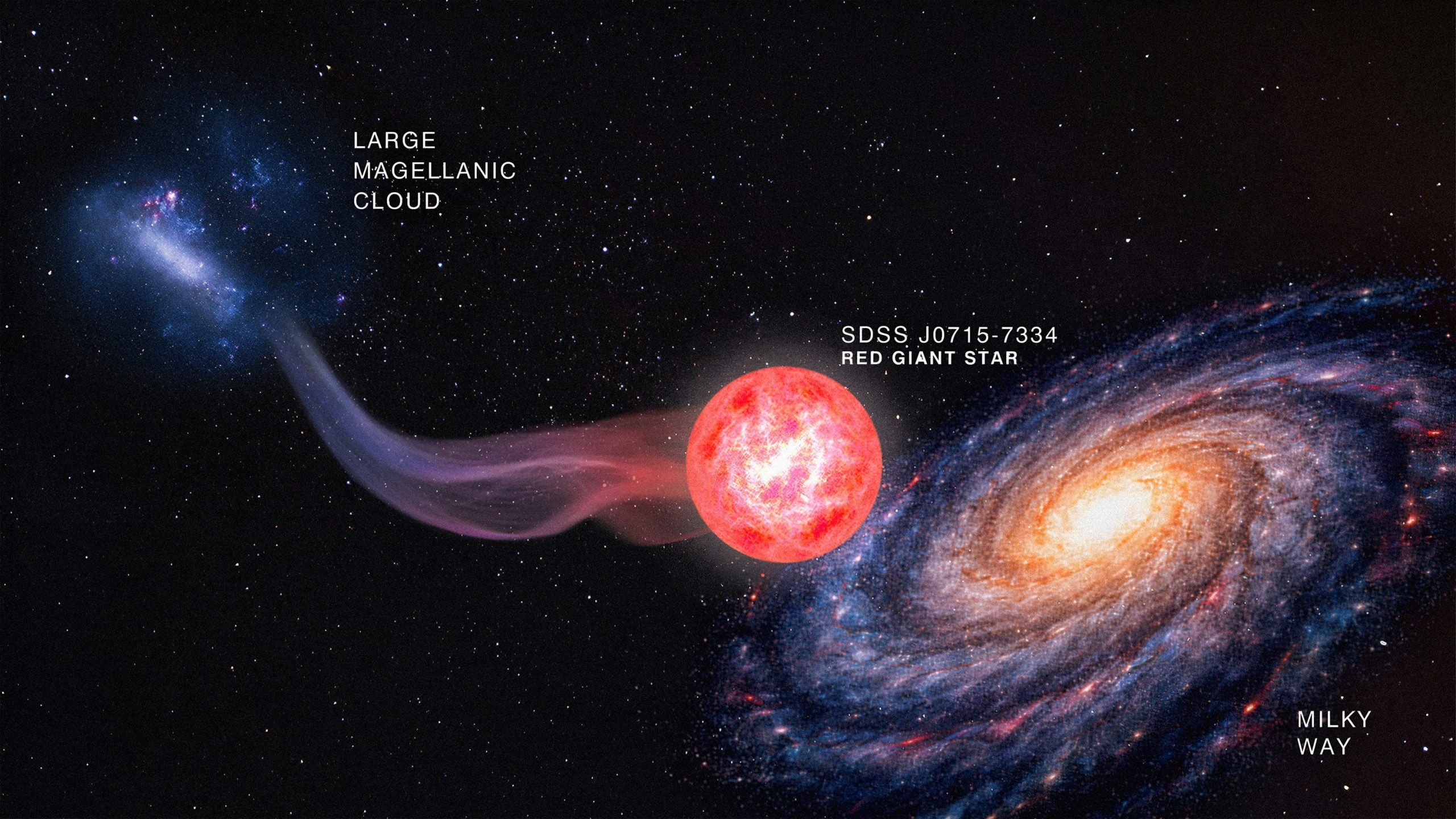
An international team of astronomers has identified the most chemically pristine star ever observed, named SDSS J0715-7334, using data from the Sloan Digital Sky Survey-V (SDSS-V) along with follow-up observations from the Magellan telescopes at Carnegie Science’s Las Campanas Observatory in Chile. The discovery is detailed in Nature Astronomy.
The research was led by University of Chicago astronomer Alexander Ji, a former Carnegie Observatories postdoctoral fellow, and included Carnegie astrophysicist Juna Kollmeier, who oversees the fifth generation of SDSS. The team determined that this star belongs to only the second generation of stars formed in the universe, emerging a few billion years after the Big Bang.
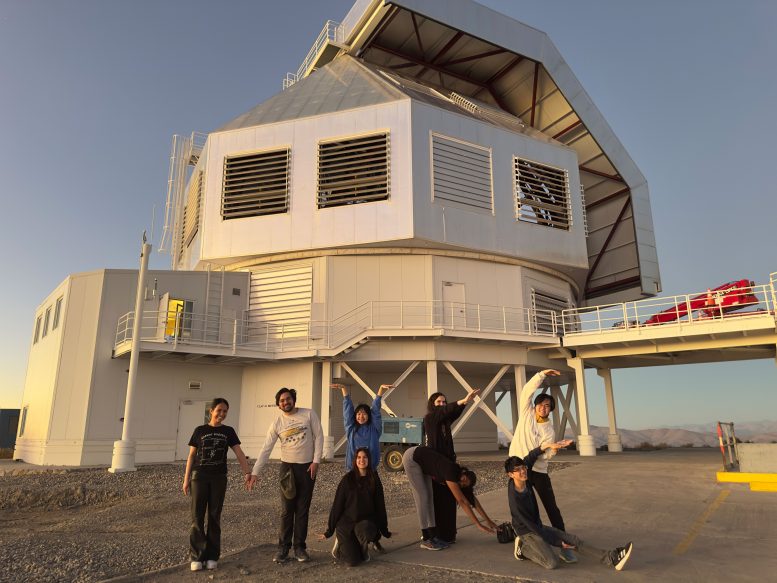
“These pristine stars are windows into the dawn of stars and galaxies in the universe,” Ji explained. Several of his and Kollmeier’s co-authors on the paper are undergraduate students from UChicago, whom Ji brought to Las Campanas on an observing trip for spring break last year. “My first visit to LCO is where I really fell in love with astronomy, and it was special to share such a formative experience with my students.”
From the Big Bang to the First Stars
The universe began as an extremely hot and dense mixture of particles following the Big Bang. As it expanded, it cooled, allowing neutral hydrogen gas to form. Over hundreds of millions of years, regions with slightly higher density collapsed under their own gravity, giving rise to the first stars, composed almost entirely of hydrogen and helium.

These early stars burned intensely and had short lifespans. Before they died, they created heavier elements through nuclear fusion and then scattered those materials into space through powerful explosions. Later generations of stars formed from this enriched material, gradually increasing the variety of elements found throughout the universe.
Why Metal-Poor Stars Matter
“All of the heavier elements in the universe, which astronomers call metals, were produced by stellar processes—from fusion reactions occurring within stars to supernovae explosions to collisions between very dense stars,” said Ji. “So, finding a star with very little metal content in it told this group of students that they’d come across something very special.”
Scientists like Ji and Kollmeier search for stars from the second and third generations because they preserve clues about how star formation evolved over cosmic history. Since individual stars from the earliest era cannot yet be directly observed, astronomers instead look for ancient survivors closer to home.
“We have to look in our cosmic backyard to find these objects, because we can’t yet observe individual stars at the dawn of star formation. Since these stars are rare, surveys like SDSS-V are designed to have the statistical power to find these needles in the stellar haystack and test our theories of star formation and explosion,” explained Kollmeier.
The Sloan Digital Sky Survey is one of the most influential astronomical projects ever conducted. Its current phase collects millions of optical and infrared spectra across the sky, using telescopes in both hemispheres, including the du Pont telescope in Chile and Apache Point Observatory in New Mexico.
Using SDSS-V data, Ji and his students identified stars with extremely low levels of heavy elements. They then used the Magellan telescopes to collect high-resolution spectra and confirm their findings. During their first observing run, in the early morning hours, SDSS J0715-7334 was verified as the most pristine star known.
“The ecosystem of telescopes at Las Campanas was critical to nearly every aspect of this breakthrough work, from the du Pont data collected as part of SDSS-V’s Milky Way mapping efforts to the Magellan observations that showed exactly how special SDSS J0715-7334 really is,” said Michael Blanton, Director and Crawford H. Greenewalt Chair of the Carnegie Science Observatories.
A Collaborative and Educational Experience
Las Campanas hosts four Carnegie telescopes, and this project relied heavily on two of them, demonstrating how advances in instrumentation continue to expand scientific discovery.
The students’ experience reflected this collaborative environment. On their first night, they observed SDSS-V data collection at the du Pont telescope. The following evening, they carried out their own observations using the Magellan Clay telescope.
After the discovery, Ji adjusted the remainder of the semester so students could focus on analyzing their results, giving them direct experience with how flexibility can drive scientific progress.
“When I was an undergraduate, I greatly preferred doing research to taking classes. I’m delighted that Alex’s course was transformed into a curriculum of discovery and I’d like to ensure surveys like SDSS-V and Gaia have the power to make that the norm and not the exception,” Kollmeier said.
What Makes This Star So Unique
Detailed analysis revealed that SDSS J0715-7334 contains less than 0.005 percent of the Sun’s metal content. It has only half as many heavy elements as the previous record holder and shows especially low levels of iron and carbon. It is also 40 times more metal-poor than the most iron-poor star previously identified.
By combining these observations with data from the European Space Agency’s Gaia mission, the team found that the star is located about 80,000 light-years from Earth and likely formed outside the Milky Way before being drawn into our galaxy.
“Training the next generation of astronomers is critical to the future of our field. And building excitement about the practice of science by undertaking projects like this is a great way to ensure that curious-minded young learners can see themselves in astrophysics,” Ji concluded. “My time as a postdoc at Carnegie was pivotal to my professional growth and I am thrilled that I was able to pay that experience forward by bringing my students to Las Campanas.”
Reference: “A nearly pristine star from the Large Magellanic Cloud” by Alexander P. Ji, Vedant Chandra, Selenna Mejias-Torres, Zhongyuan Zhang, Philipp Eitner, Kevin C. Schlaufman, Hillary Diane Andales, Ha Do, Natalie M. Orrantia, Rithika Tudmilla, Pierre N. Thibodeaux, Keivan G. Stassun, Madeline Howell, Jamie Tayar, Maria Bergemann, Andrew R. Casey, Jennifer A. Johnson, Joleen K. Carlberg, William Cerny, José G. Fernández-Trincado, Keith Hawkins, Juna A. Kollmeier, Chervin F. P. Laporte, Guilherme Limberg, Tadafumi Matsuno, Szabolcs Mészáros, Sean Morrison, David L. Nidever, Guy S. Stringfellow, Donald P. Schneider and Riley Thai, 3 April 2026, Nature Astronomy.
DOI: 10.1038/s41550-026-02816-7
Never miss a breakthrough: Join the SciTechDaily newsletter.
Follow us on Google and Google News.
Source link
-

-
-

-

-