
In an evolving health landscape, emerging research continues to highlight concerns that could impact everyday wellbeing. Here’s the key update you should know about:
Scientists turn an invasive aquatic weed into a high-performance biodegradable sanitary pad, demonstrating how sustainable materials could reduce plastic waste while maintaining menstrual hygiene safety.
Study: Biodegradable Menstrual Pads from Hydrophytic Weeds: Sustainability Assessment, Absorption Performance, and Microbial Safety. Image Credit: Joel 100×35 Por.Ahi.PR / Shutterstock
A recent study in the journal Processes developed a laboratory-scale approach for producing a biodegradable absorbent material from water hyacinth for sanitary pads.
Effective menstrual protection is essential to the physical, mental, and economic well-being of the approximately 300 million people menstruating at any given time. Access to safe, hygienic, and affordable menstrual products is critical for preventing infections, supporting educational and professional participation, and maintaining dignity.
Modern menstrual protection methods have advanced to provide reliable and comfortable hygiene management. Over the years, the use of disposable sanitary napkins has increased due to greater health literacy, social awareness, and government initiatives. While these products are essential for health, their poor biodegradability and improper disposal contribute significantly to the environmental burden.
Typical sanitary pads are made from non-biodegradable materials such as polyethylene, polypropylene, superabsorbent polymers, and polymeric films. These materials persist in the environment for extended periods and contribute to pollution. The widespread use of petroleum-based polymers further elevates the carbon footprint, as these materials can remain for centuries and contribute to environmental pollution, including the potential formation of harmful byproducts such as dioxins or methane during certain waste treatment or disposal processes.
Synthetic fibers in sanitary pads, such as polyester and polypropylene, degrade into microplastics under environmental stress. Microplastics accumulate in ecosystems and pose risks to organisms and public health by contaminating water and soil and entering the food chain.
Research has increasingly focused on biodegradable, plant-based absorbents such as bamboo, banana fiber, corn husks, and agricultural residues to improve absorbency and reduce environmental impact. However, much of this work has focused primarily on biodegradability and absorbency, with comparatively limited investigation of antimicrobial performance during actual product use, which is important for microbial control and odor management.
Developing hyacinth-based biodegradable sanitary pads production
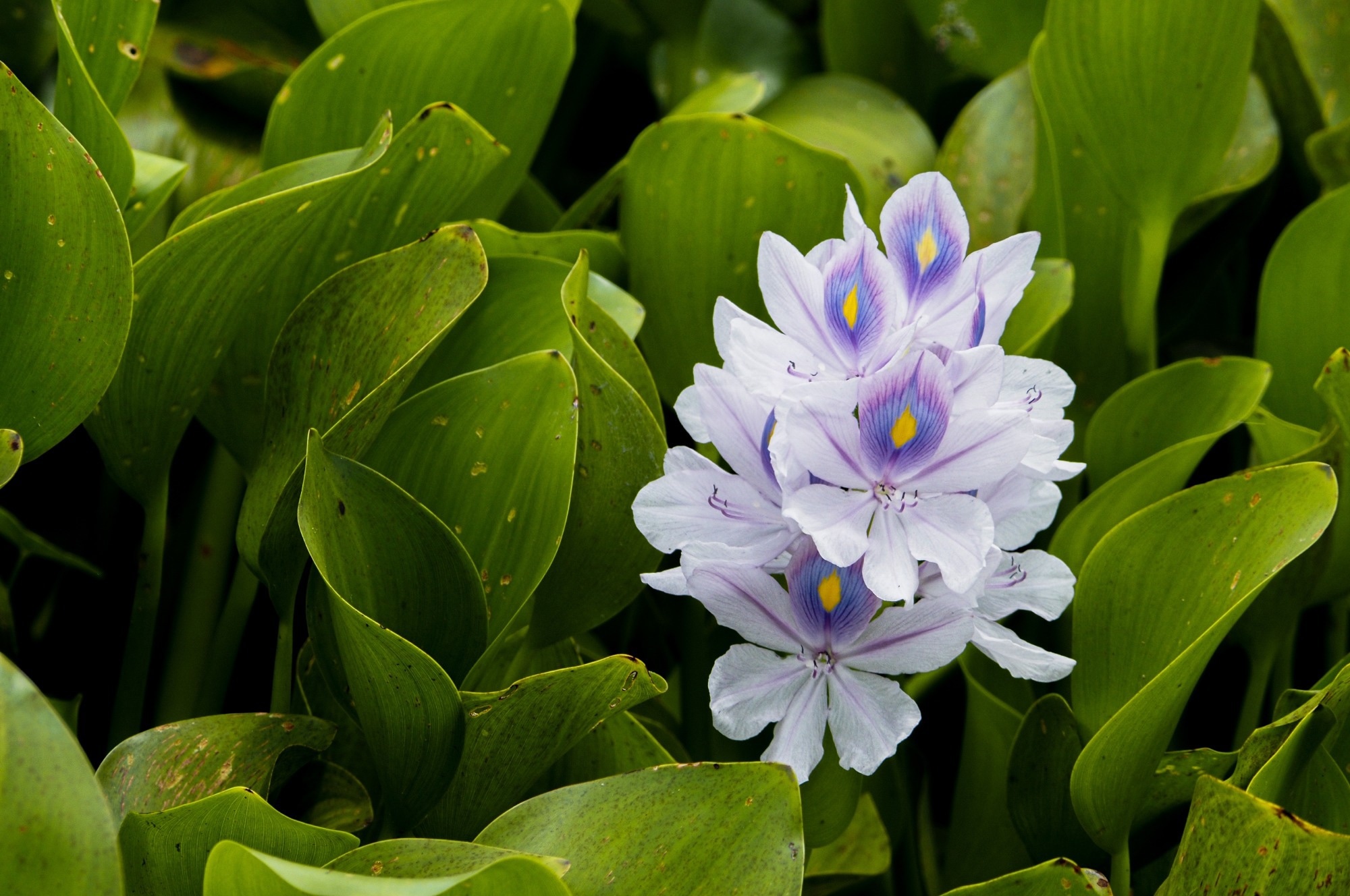
Water hyacinth (Eichhornia crassipes) is an invasive aquatic plant known for its rapid growth and high biomass, often causing significant environmental and economic challenges. Despite these issues, its cellulose-rich, porous, and renewable fibers offer excellent liquid absorption capacity. Previous research also suggests the plant contains compounds with natural antibacterial activity, making it attractive for use in absorbent hygiene products.
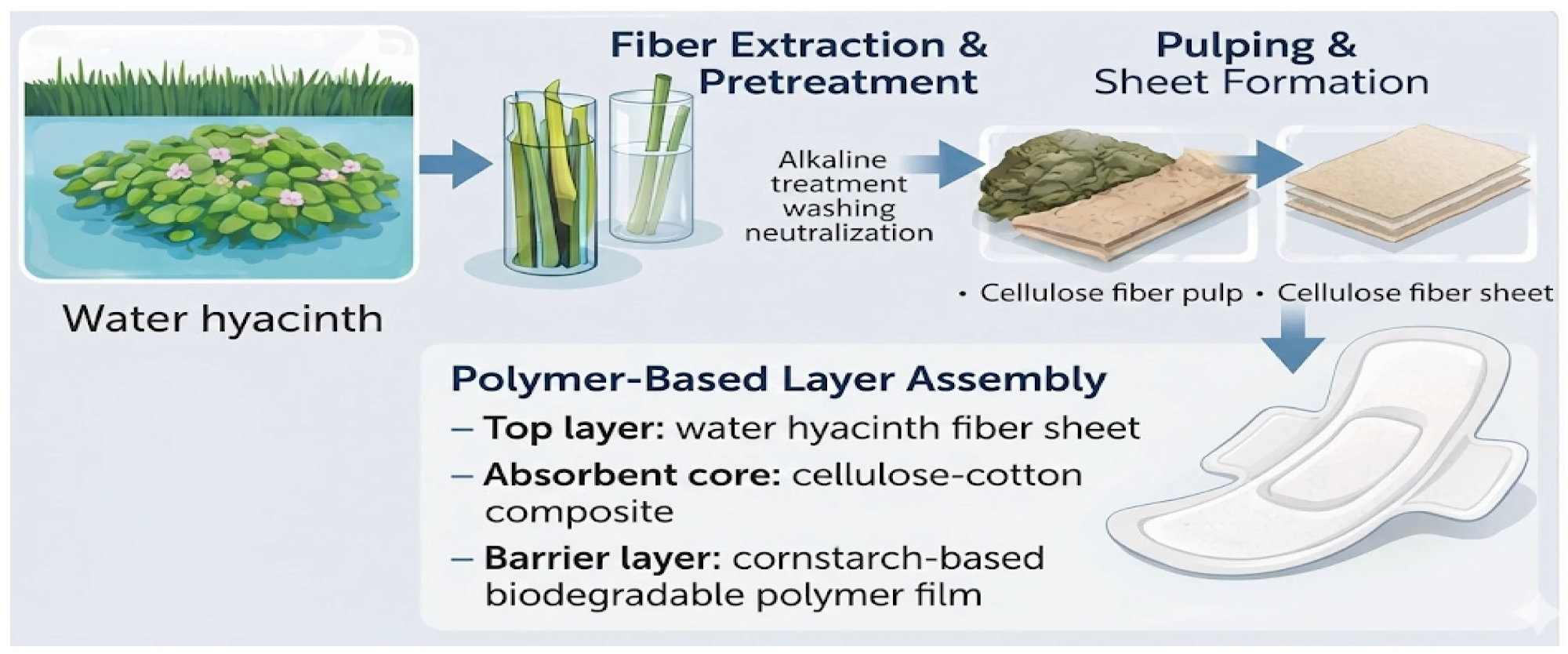

Fabrication process of water hyacinth-based sanitary napkins. The figure illustrates the sequential steps, including collection of the Eichhornia crassipes, fiber extraction and alkaline pretreatment (washing and neutralization), pulping and cellulose sheet formation, and polymer-based-layer assembly. The final multilayer structure consists of a water hyacinth fiber sheet as the top layer, a cellulose–cotton composite absorbent core, and a cornstarch-based biodegradable polymer film as the barrier layer.
Researchers developed sanitary pads by blending cotton with water hyacinth fibers to create effective, comfortable, safe, and environmentally sustainable products. Water hyacinth petioles, rich in cellulose, were thoroughly cleaned and pulped with sodium hydroxide at 90 °C to produce absorbent fibers. These fibers were then processed into absorbent sheets without the use of bleaching agents or synthetic additives during sheet preparation.
The resulting sanitary pad featured a multilayer structure consisting of a water-hyacinth fiber top sheet for skin contact, an absorbent core for fluid retention, and a biodegradable barrier to prevent leakage. By replacing some conventional synthetic components with soft, breathable, and compostable water hyacinth fibers, the design improves both user comfort and environmental sustainability.
Alkali-treated fibers were powdered to increase their surface area and enhance absorbency, ensuring superior fluid uptake. A cornstarch-based barrier and canvas paper support provided leak protection and structural integrity, while heat sealing eliminated the need for synthetic adhesives, further supporting product biodegradability.
Absorbency, a critical property for menstrual pads, was evaluated by applying a fixed 10 mL methylene blue dye solution to the pad and recording the absorption time, thereby assessing the pad’s efficiency in managing menstrual flow. Biodegradability was determined by burying the pads in soil at room temperature for 90 days and measuring weight loss over time.
Improved performance of hyacinth-based sanitary pads
Absorbency tests demonstrated that both water hyacinth and cotton pads in this laboratory comparison absorbed 111 mL of fluid, whereas the commercial pad evaluated retained 71 mL under the same experimental conditions. This superior absorbency highlights the advantages of natural fiber products, as materials such as cotton and bamboo can absorb several times their weight and often outperform some commercial synthetic products in controlled laboratory tests.
Blending water hyacinth fibers with cotton further improved fluid retention, surpassing the performance of the commercial pad included in the comparison. Optimized material processing and fiber treatment were critical for achieving maximum absorbency in these natural-fiber pads.
The pH level of sanitary pads plays a key role in user comfort and vulvar health. While the vagina maintains an acidic environment (pH 3.5–4.5), sanitary pads must have a pH between 6.0 and 8.5 to meet safety standards. The newly developed water hyacinth-based pad consistently exhibited a pH of 6.87, comfortably within regulatory guidelines.
Bioburden testing, which measures microbial contamination in pads, showed that hyacinth-based sanitary pads contained 360 CFU/g bacteria and less than 1 CFU/g yeast – both well below safety thresholds. This low microbial presence confirmed the product’s safety and quality.
Ensuring sanitary pads are free of pathogens, such as Staphylococcus aureus, is essential for user safety and skin compatibility. Testing confirmed that water hyacinth pads were entirely free of S. aureus and other microbial growth, indicating excellent pathogen safety and suitability for extended skin contact.
Statistical analysis validated the pad’s skin-compatible pH, minimal bioburden, and absence of harmful bacteria, confirming compliance with safety standards.
Characterization and biodegradability of hyacinth-based sanitary pads
Scanning electron microscopy (SEM) analysis showed that untreated water hyacinth fibers were coated with lignin, pectin, and hemicellulose, which obscure the individual fibers. Following alkali treatment, these impurities were removed, producing a rougher fiber surface and stronger inter-fiber interactions.
Fourier transform infrared (FTIR) spectroscopy confirmed that chemical treatment increased the relative cellulose content and reduced signals associated with hemicellulose and lignin components. This was evident from the pronounced cellulose absorption bands and diminished signals from non-cellulosic components.
X-ray diffraction (XRD) analysis demonstrated that chemical treatment raised the crystallinity index of water hyacinth cellulose from 53.21% to 62.56%, reflecting the removal of amorphous material and improved structural order. Increased crystallinity enhances the mechanical properties and stability of biodegradable products.
Biodegradability tests showed that the sanitary pad degraded rapidly, achieving 70% decomposition in 40 days and approximately 95% in 60 days – significantly faster than typical petroleum-based sanitary products that degrade much more slowly under natural conditions. This rapid breakdown results from the pad’s high cellulose and hemicellulose content and low lignin levels, making it highly compostable and environmentally friendly. Additionally, using water hyacinth supports sustainable management of this invasive species.
Conclusions
The study highlights that sanitary napkins made from water hyacinth fibers offer a promising, sustainable alternative to conventional products, combining effective performance with significant environmental benefits. Because the sanitary pads were fabricated and evaluated at laboratory scale under controlled experimental conditions, further development, user trials, and industrial-scale validation will be necessary to refine these materials and processes and support broader adoption of greener menstrual hygiene products.
Journal reference:
- Vijayakumar, G., Baskar, S., Raghupathy, S., & Rangarajulu, S. K. (2026). Biodegradable Menstrual Pads from Hydrophytic Weeds: Sustainability Assessment, Absorption Performance, and Microbial Safety. Processes. 14(6). DOI: 10.3390/pr14060918, https://www.mdpi.com/2227-9717/14/6/918
-

-
-

-

-


