
In an industry obsessed with franchises and runtime, short films thrive on intimacy, risk, and purity of vision.
Yet for the filmmakers behind them, the experience is a paradox. They create in a golden age of access to filmmaking tools but also in a wasteland for the distribution of their work, a contradiction that demands an entrepreneurial spirit just to be seen.
Through the journeys of three directors with short films nominated for Best Animated, Best Documentary, and Best Live Action Short Film at the 2026 Academy Awards, which this year will be handed out March 15, a clearer picture emerges. The short film is not merely a stepping stone to feature films but a laboratory for craft, a strategic calling card, or a vehicle for passion projects.
You can see these filmmakers’ cinematic visions when the 2026 Oscar Nominated Shorts screen at Sky Cinemas on Friday, February 20.
While the market offers little incentive for short films to be made, the impulse to create remains deeply personal. As director Alison McAlpine, nominated for Best Documentary Short Film for Perfectly a Strangeness, puts it, “We weren’t thinking about the market. We were just playing.”
Her film, set in Chile’s Atacama Desert and centered on three donkeys wandering among astronomical observatories, isn’t just improbable Oscar fare; it’s nearly anti‑commercial.
“Our film is an indie film,” she says. “There’s no studio backing. I was very lucky to work with an extraordinary crew in Chile and Quebec.”
McAlpine’s affection for her subjects is unfeigned. “I have a weakness for donkeys,” she says. “They’re underdogs, beasts of burden. Their pace of walking slows us down, allows us to appreciate our world, perhaps.”
Perfectly a Strangeness
Director John Kelly’s Retirement Plan, nominated for Best Animated Short Film, grew out of a personal reckoning. “The film was inspired by feeling overwhelmed by the amount of emails I had,” he says with a laugh. But the result, a quietly comic meditation on burnout and modern work, became “the most personal film I’ve ever made.”
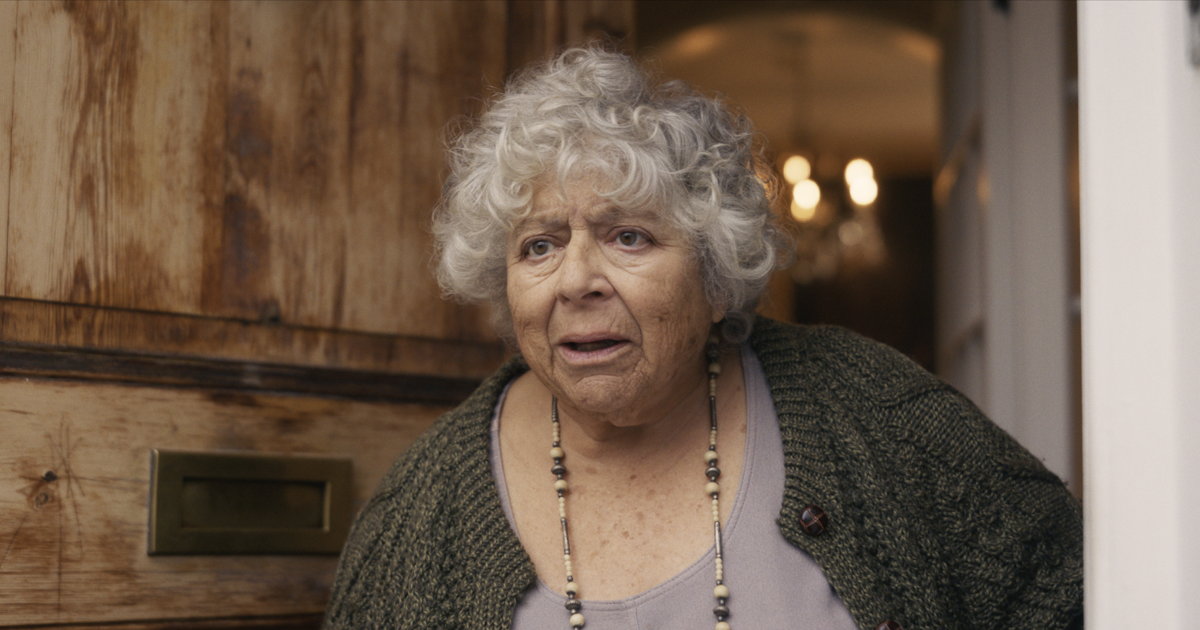
And for producer James Dean, nominated for Best Live Action Short Film for A Friend of Dorothy, it was a way to champion new talent. “Lee Knight was a first‑time director, but I could tell he definitely had something and had so much passion for this project,” Dean says. “There’s a lot of him in it. That’s something you want to see in a filmmaker.”
Together, these films embody an old truth: that an artistic impulse outweighs commercial calculus. “Nobody would be in short films to make money,” Dean notes. “They’re all driven by passion.”
Short films are where filmmakers learn — and relearn — their craft. Each of these nominees treated the form as a kind of workshop, refining technique, testing disciplines, and balancing creative control with collaboration.
Kelly’s route to animation combined his twin passions. “I used to draw comics growing up and made my own indie zines,” he says. “One of them got sold to a producer in Hollywood when I was around 20.”
For Retirement Plan, he worked with animators Eamonn O’Neill and Marah Curran using Moho, which he called “a lesser‑known animation software, but it’s amazingly flexible.” The goal, he says, was to “capture some of the spontaneity of the script and performance” without the laborious grind that animation usually demands. “I’d never heard of it before, but Eamonn and Marah suggested it, and it was exactly what we needed.”
While Kelly’s creative path unfolded through animation’s boundless movement, McAlpine chased natural light and stillness, and Perfectly a Strangeness pushed her craft to new aesthetic heights.
“We used wonderful Hawk Anamorphic lenses because I wanted near‑panoramic visions of the donkeys,” she says. “It’s my first film using cinematic lenses, and sometimes huge ones, to get the condor.”
Shooting digitally but working with a colorist to “take away that hard digital feel,” she pursued a sensorial quality that matched her subject’s quiet grace. “There was attention to light and shadow. There’s no manipulation, as the sky is extraordinarily beautiful on its own. I wanted to create a film that transported people,” she says.
A Friend of Dorothy‘s production was a four‑day sprint. “You’re always trying to reduce everything to its bare minimum so the money you do raise goes on the screen,” Dean says.
“Lee turned out to be a brilliant director of actors. He nurtured performances out of Miriam Margolyes and Alistair Nwachukwu,” he recalls. “You could feel it. The whole crew could feel it.”
While the experience of making a short film is a worthy endeavor in itself, every project must eventually step into the long shadow of its next form, either as calling card, blueprint, or proof of concept.
For Kelly, strategy began before production. Casting Domhnall Gleeson, beloved for his work in Peacock’s The Paper and the recent Star Wars sequels, was a long shot. “He’s very selective,” Kelly says. “I heard him on a podcast saying he wanted to do more comedy. I made a video of me talking to the camera with references and music. It was a bit of a love letter.” That personalized gambit worked. “He read the script all the way through in one take. It was lovely to watch; I had a stupid smile the whole time,” he says.
Moments like these — calculated yet personal — reveal how short films often double as both creative expression and strategic positioning. For filmmakers working from the outside of Hollywood and looking in, short films declare their artistic intent.
“This is my mission statement,” Kelly says. “I want to make animation for adults in a way I haven’t seen out there. Something accessible and funny, but with a bit of depth.”
Shorts, in this light, are manifestos, the proof of concept for a filmmaker’s future work. But even the boldest manifestos need an audience, and for shorts, finding one demands creativity. Distribution for shorts, too, requires ingenuity.


Retirement Plan
“Short films don’t really have a home,” says Kelly. “There’s no natural place for them in the world. They’re often thought of as stepping stones.”
For most creators, financing is a patchwork of favors and self‑funding, and distribution is largely festival‑based. It’s hard to pin down where you can even stream most short films. More likely than not, you can find them on YouTube but not on most major streaming platforms like Netflix.
“Disney+ is really good at incorporating shorts they acquire. Obviously, all the Pixar shorts are on there, but they’ve also licensed a lot of interesting independent shorts,” Kelly says. “Having that platform legitimize your work among a broad audience is the dream for a short filmmaker.”
But you won’t find Retirement Plan streaming on Disney+ in North America: The New Yorker has distribution rights to the project in the U.S. and Canada.
A Friend of Dorothy producer Dean estimates, “There are thousands and thousands of films that have been made this year, many of them very good, and we’re lucky enough to have ended up on the Oscar nominations list with four other films. It’s wild to think about.”
But only a fraction reaches any audience at all.
Therefore the festival circuit, Dean notes, remains the only sustainable ecosystem. “Launching it strongly with a strong first screening, getting into the right initial festival. For us it was Raindance in London, then going to the Heartland Indy Shorts Festival in Indiana, and HollyShorts in Los Angeles.,” he says. “Those were the significant festivals for us.” The team won major audience awards at both, “but juries can have different agendas,” he adds. “You take what you can.”
For him, surviving in the short‑film world is an act of persistence and mentorship. “I’d executive‑produced a lot of shorts before, but often that’s a light touch like helping financially, reading the script,” he says. “With this one, I was all in.”
His next step is expansion. “We are definitely in the business of making A Friend of Dorothy into a feature film. Audiences want to be with these characters for longer,” he says. “We’re developing the outline, starting on the script as people are stepping up with their interest because of the Oscar nomination.”
Together, these three filmmakers paint a portrait of short cinema as both fragile and fiercely alive. Dean calls it “a rich world of talented, enthusiastic people. It’s very innocent in a way and very fresh.”
McAlpine echoes that purity of purpose: “What’s been so wonderful about Perfectly a Strangeness is that we never thought about the market. It’s a film that began with Arts Council funding. It’s very low budget, though it looks much more expensive than the budget was.”
For most, the real reward lies in the space to explore without compromise. In resisting the market’s obsession with scale — its need for franchises, synergy, and spectacle — the short film preserves cinema’s most vital principle: the freedom to play. ◀
Joshua Encinias writes about entertainment, travel, and culture. His work frequently appears in MovieMaker Magazine, LOST iN travel guides, and Brooklyn Magazine. Based in New York City, he comes from a long line of New Mexican Enciniases. You can follow him on X @joshencinias.
Source link
-

-

-
-
-


